
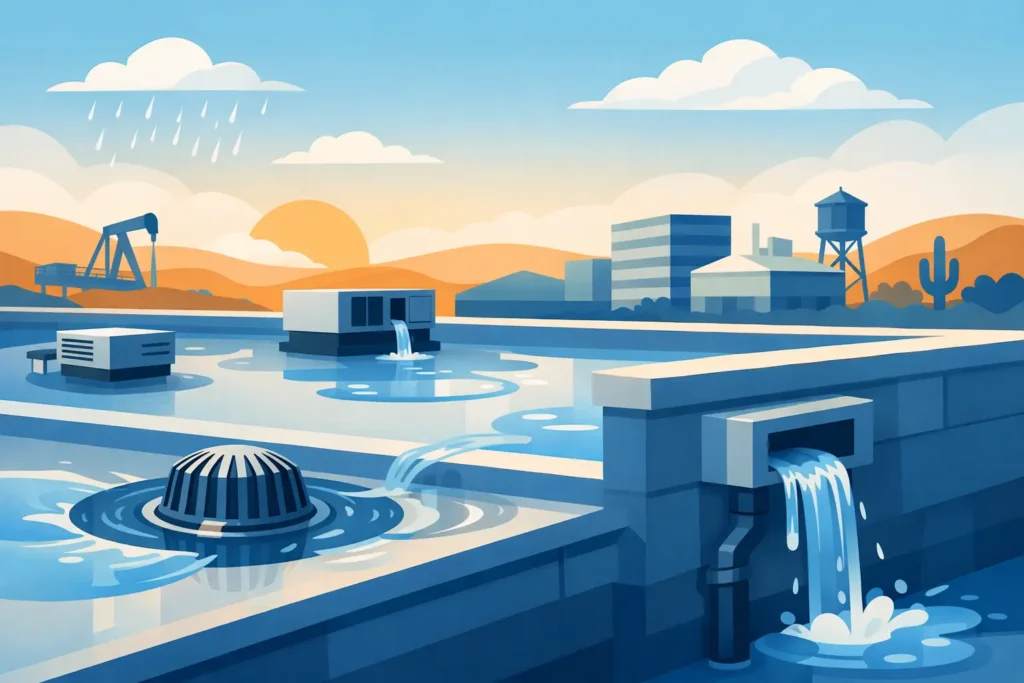
A commercial roof can look sound from the ground while holding inches of water above your business. That standing water adds weight, works its way into seams, accelerates surface wear, and turns a small drainage issue into a leak that disrupts tenants, inventory, and daily operations. The best commercial roof drainage solutions are not one-size-fits-all products. They are properly designed systems that move water off the roof based on the building’s size, roof structure, membrane type, and local weather conditions.
For El Paso property owners, drainage design has to account for long dry periods, intense sun exposure, wind-driven debris, and sudden heavy rain events. A roof may not see frequent rain, but when storms arrive, its drains, scuppers, gutters, and slopes need to work immediately.
What Makes Commercial Roof Drainage So Important?
Commercial low-slope roofs are built to shed water, not necessarily to look steep from the street. Small changes in elevation direct water to designated outlets. When that slope is insufficient, a drain is clogged, or an outlet is undersized, water stays on the roof longer than it should.
Ponding water is more than a cosmetic concern. It can place added stress on the roof deck and structure, weaken roofing materials over time, encourage algae or debris buildup, and expose weak seams and penetrations. On roofs with insulation below the membrane, repeated moisture intrusion can reduce insulation performance and create larger repair areas.
The right approach starts with identifying why water is collecting. A blocked drain and a roof with poor slope may produce the same puddle, but they require very different repairs. A professional inspection should look at drainage pathways, roof elevations, outlet condition, flashing, membrane seams, and signs of deck deflection before recommending a solution.
The Best Commercial Roof Drainage Solutions Depend on Roof Design
The best commercial roof drainage solutions work as a complete system. Roof slope carries water toward an outlet, the outlet moves it through or off the building, and regular maintenance keeps that path clear. The following options are commonly used on commercial properties, but each has a specific role.
Interior Roof Drains
Interior drains are common on large flat and low-slope commercial roofs. Water flows to drain bowls set at low points in the roof, then moves through internal piping. Because the piping is protected within the building, it is less exposed to exterior damage and can provide a clean appearance along the building perimeter.
These systems are especially effective for larger roof areas, provided they have enough drains in the right locations. A single drain in the center of a wide roof may leave water sitting along the edges. Proper drain placement, drain sizing, and tapered slope are what make interior drainage reliable.
Interior drains do require attention. Strainers can clog with leaves, dirt, roofing granules, and windblown debris. If a drain backs up, water may spread across a large section of roof before anyone notices the problem. Facility managers should have drains inspected and cleaned on a routine schedule, especially before monsoon-season storms.
Scuppers and Downspouts
Scuppers are openings through a parapet wall that allow water to leave the roof and enter a conductor head, downspout, or exterior collection system. They are a practical choice for many commercial buildings because they make drainage visible. When water is spilling through a scupper during rain, you can see whether the system is moving water as intended.
Scuppers can be effective for smaller roof sections and roofs where the building design supports perimeter drainage. They must be large enough to handle expected rainfall, installed at the proper elevation, and flashed carefully to prevent leaks around the opening.
The trade-off is that exterior downspouts are exposed to impact, wind, and blockage. They can also discharge water too close to the building if extensions or site drainage are not considered. Water should be directed away from the foundation, walkways, entrances, and loading areas.
Gutters and Edge Drainage
Commercial gutters collect water at the roof edge and carry it to downspouts. They are often used on metal roofing, sloped commercial roofs, awnings, and smaller buildings with rooflines that can drain toward the perimeter.
A well-installed gutter system protects exterior walls, landscaping, and pedestrian areas from concentrated runoff. It can also help prevent water from washing down stucco, staining masonry, or collecting near the building foundation.
Gutters are not the best answer for every flat commercial roof. Long runs can overflow if they are undersized, poorly pitched, or packed with debris. In El Paso, wind can quickly deposit leaves, dust, and loose material in open gutters. Regular cleaning matters just as much as initial installation quality.
Tapered Insulation for Positive Slope
When water ponds because the roof lacks adequate slope, tapered insulation is often one of the most effective long-term solutions. Instead of applying insulation at one uniform thickness, tapered insulation is designed with gradual elevation changes that guide water toward drains or scuppers.
This approach can be incorporated during a commercial roof replacement or major restoration. It improves drainage without requiring significant structural framing changes in many cases. It may also improve thermal performance, which can support indoor comfort and energy efficiency in El Paso’s demanding heat.
Tapered insulation adds material and design cost, so it is not always necessary for a roof with isolated low spots. But if ponding is widespread, it can prevent repeated patchwork repairs that never address the real cause of the water problem.
Crickets and Saddles Around Roof Obstacles
Mechanical units, skylights, curbs, parapet transitions, and other rooftop obstacles can interrupt water flow. Crickets and saddles are raised, angled sections built to divide water and direct it around these obstructions toward drains or scuppers.
Without them, water can sit behind an HVAC curb or against a wall, placing constant pressure on flashing and membrane seams. These details are small compared with the full roof area, but they often make the difference between a roof that drains consistently and one that develops recurring leaks in the same locations.
Emergency Overflows Are a Necessary Backup
Primary drains and scuppers should handle normal rainfall. Secondary drainage provides a visible backup if a primary outlet becomes blocked or overwhelmed. This may include overflow scuppers, secondary drains, or other code-compliant drainage provisions.
An overflow is not meant to replace proper maintenance. Its job is to prevent water from rising to a level that threatens the roof structure or pushes water into the building. If water is coming through an overflow, treat it as a warning that the primary system needs immediate attention.
For occupied offices, retail spaces, warehouses, and multifamily buildings, this backup protection is especially valuable. It gives property managers a chance to respond before drainage failure turns into an interior damage claim.
Match the Drainage Plan to the Roofing System
Drainage details must be compatible with the roof itself. TPO, modified bitumen, roof coatings, spray foam, metal roofing, and other systems all require the correct flashing methods at drains, scuppers, penetrations, and edges.
For example, a drain repair on a TPO roof may require careful membrane welding and replacement of damaged flashing. A coated roof may need the drain area cleaned, reinforced, and recoated so water cannot work underneath the system. Spray foam roofing can be shaped to improve localized drainage, but widespread ponding may still call for more substantial slope correction.
This is why a drainage project should not be treated as separate from the roof. The outlet may be the visible problem, while the real issue is failing flashing, deteriorated membrane, wet insulation, or an improperly designed roof assembly.
Maintenance Protects Every Drainage System
No drainage design can perform well if drains and gutters are neglected. Commercial roof maintenance should include clearing debris from strainers and scuppers, checking downspouts for obstructions, inspecting seams and flashings near low points, and documenting areas where ponding remains after rain.
Property owners should also watch for warning signs between scheduled inspections. Stains on ceilings, bubbling paint, damp insulation, rust around drain components, overflowing gutters, and water near exterior walls all deserve prompt attention. Waiting for a small leak to become obvious can increase repair costs and create avoidable disruptions.
MAK Roofing & Construction can evaluate your commercial roof as a complete system, including drainage paths, roof condition, insulation needs, and exterior water management. That full-project view helps building owners avoid repairs that solve one symptom while leaving the source of the problem in place.
A dependable drainage system should stay out of sight during a storm because it is doing its job. If water is ponding on your roof, overflowing at the edge, or appearing inside your building, schedule an inspection before the next heavy rain puts more stress on your property.