
Table of Contents
- How Durable Material Selection Shapes Property Comfort
- Thermal Performance of Roofing Materials
- Energy Efficient Building Materials That Cut Utility Costs
- Durable Exterior Siding Options for Weather and Moisture Resistance
- Acoustic Performance and Indoor Environmental Quality
- Sustainable Materials, LCA Data, and Green Building Certification
- Maintenance-to-Comfort Ratio: What Durable Material Selection Costs Long-Term
- Frequently Asked Questions
Last Updated: August 26, 2026
How Durable Material Selection Shapes Property Comfort
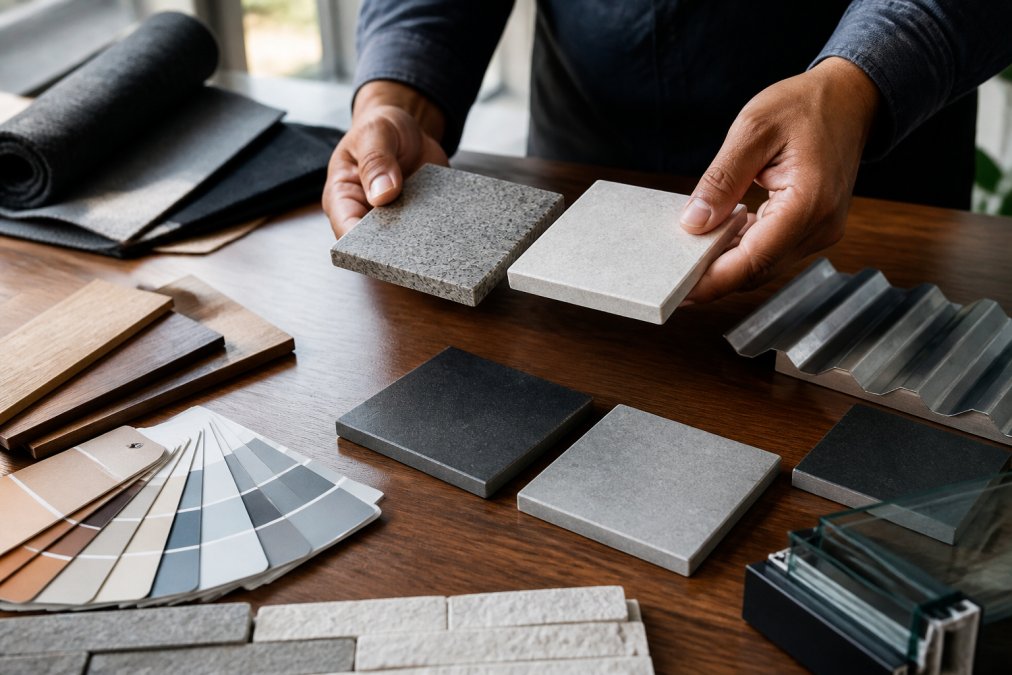
Durable material selection is the systematic process of choosing building components based on their long-term performance across thermal, acoustic, moisture, and structural criteria. Get it right, and your property delivers consistent indoor comfort for decades. Get it wrong, and you’re patching, replacing, and paying inflated utility bills every few years.
This guide from MAK Roofing & Construction breaks down exactly how material choices translate into measurable comfort outcomes across roofing systems, insulation, siding, acoustics, and sustainability. We’ll show you which materials perform best in demanding climates, what technical specifications actually matter, and how to avoid the mistakes that turn a renovation investment into a recurring expense.
Most guides conflate durability with hardness. A material can be physically tough and still fail at thermal regulation, moisture control, or acoustic attenuation. True performance means excelling across all four comfort dimensions simultaneously.
Durable material selection isn’t about picking the hardest product. It’s about matching material properties to your specific climate, use case, and long-term comfort goals.
Thermal Performance of Roofing Materials
Thermal performance is the single biggest lever in residential and commercial comfort, and the roof is where that lever is most exposed. The roof accounts for a significant share of total building heat gain in hot climates. Two technical specifications drive most of this: R-value (resistance to conductive heat flow) and U-value (the rate of heat transfer through a material assembly). Lower U-values and higher R-values both point toward better thermal insulation performance.

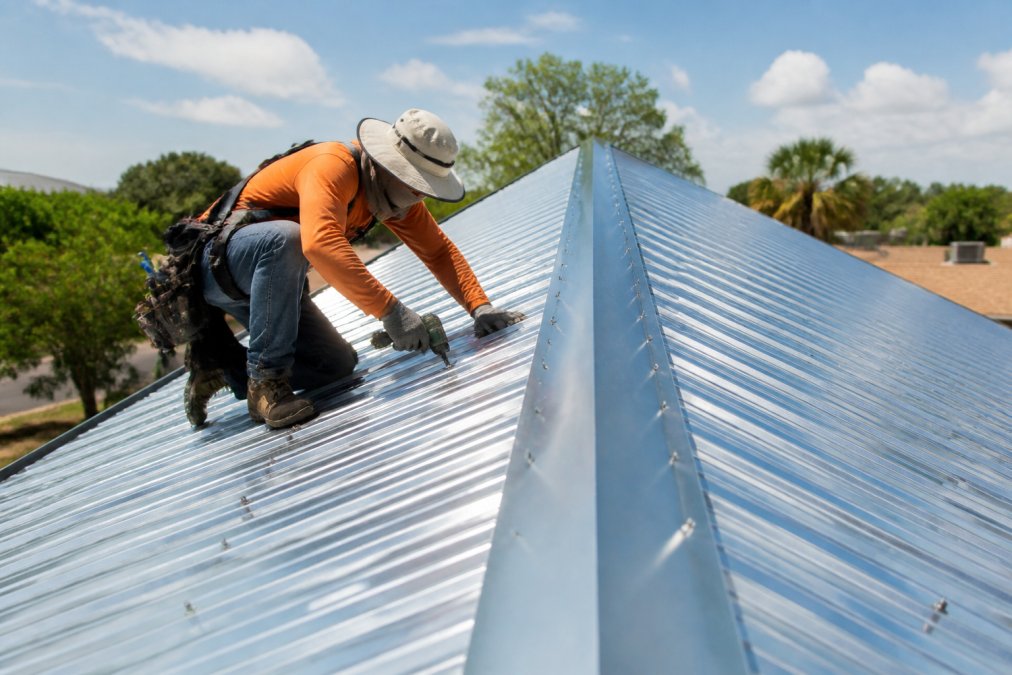
Thermal bridging, when a conductive material like a metal fastener creates a path for heat to bypass insulation, is often overlooked. Even a well-insulated roof assembly can underperform significantly if thermal bridging isn’t addressed during installation.
Metal Roofing: Reflectivity, R-Value, and Thermal Bridging
Metal roofing reflects a large portion of incoming solar radiation rather than absorbing it, directly reducing attic temperatures and cooling loads. Steel and aluminum panels with ENERGY STAR-rated reflective coatings further improve solar reflectance index, which matters most in climates with prolonged sun exposure.
The tradeoff with metal is thermal bridging at fastener points. Clip-mounted standing seam systems largely solve this by eliminating through-fasteners. When properly installed with continuous insulation beneath the metal, these systems achieve strong overall thermal performance.
Architectural Shingles and SBS-Modified Asphalt
Architectural shingles occupy the middle ground between cost and performance. SBS-modified (styrene-butadiene-styrene) asphalt formulations improve flexibility across extreme temperature ranges, reducing cracking and granule loss in climates with large temperature swings. Pairing these shingles with a radiant barrier in the attic and adequate ventilation significantly improves their effective thermal performance.
Energy Efficient Building Materials That Cut Utility Costs
The building envelope is only as strong as its weakest thermal link. Energy efficient building materials work as a system: roofing, insulation, windows, and doors must be coordinated to prevent heat gain in summer and heat loss in winter.
According to the U.S. Department of Energy’s Building Technologies Office, air leakage and inadequate insulation are the leading causes of energy waste in residential buildings.
Spray Foam Insulation and Radiant Barriers
Spray foam insulation is the most effective single-material solution for eliminating air infiltration. It expands on application to fill every crack and void, creating an airtight thermal and air barrier in one step. Closed-cell spray foam achieves high R-values per inch and acts as a vapor barrier, preventing moisture vapor transmission into the wall or roof assembly.
Spray foam’s performance advantage over batt insulation comes primarily from air sealing, not just R-value. A perfectly air-sealed assembly with moderate R-value often outperforms a high-R-value assembly with air gaps. Installation requires specialized equipment and professional expertise.
Radiant barriers work differently by reflecting radiant heat before it reaches the insulation layer. Installed in attic spaces, foil-faced radiant barriers can meaningfully reduce attic temperatures during peak summer heat, performing best when combined with adequate attic ventilation and traditional insulation beneath them.
Combine spray foam at the attic deck with a radiant barrier facing down toward the living space for maximum heat rejection. This two-layer approach addresses both radiant and conductive heat pathways simultaneously.
Triple-Pane Windows and High-Performance Entry Doors
Triple-pane windows add a third glass layer and two insulating gas-filled cavities, significantly reducing U-values compared to standard double-pane units. ENERGY STAR Most Efficient-rated triple-pane windows are engineered for climates with intense solar exposure and large temperature swings. Fiberglass and composite frames outperform vinyl in dimensional stability under heat, preserving seal integrity over time.
High-performance entry doors address the entry door gap through polyurethane foam cores combined with weatherstripping and warm edge glazing. Many models carry ENERGY STAR certification and resist warping in extreme heat.
Durable Exterior Siding Options for Weather and Moisture Resistance
Exterior siding is the first line of defense against moisture intrusion, UV degradation, and wind-driven debris. The wrong choice creates compounding problems: water infiltration leads to mold, structural damage, and reduced indoor environmental quality.
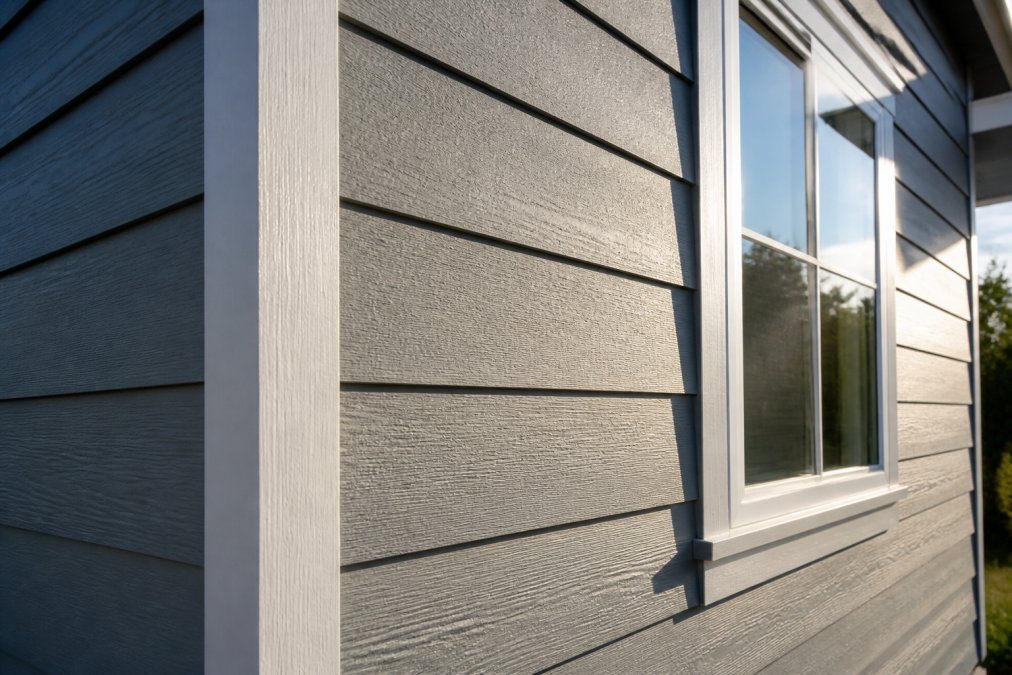
The best durable exterior siding options balance weather resistance with moisture vapor transmission control. A siding system that traps vapor inside the wall assembly is as damaging as one that lets liquid water through.
Fiber cement siding is the strongest performer across most comfort-relevant criteria. It resists moisture absorption, UV fading, impact damage, and pest intrusion. It does not expand and contract with temperature changes the way wood does, preserving paint adhesion and joint integrity. Fiber cement is also non-combustible, contributing to fire-rated wall assemblies.
Engineered wood siding offers visual approximation of natural wood with better dimensional stability and factory-applied moisture barriers. It performs well when installed with proper flashing and drainage planes.
Stucco is a traditional exterior finish with strong thermal mass characteristics. A properly applied three-coat stucco system provides meaningful resistance to wind-driven rain and UV exposure, and contributes to the building’s overall acoustic performance.
| Siding Material | Moisture Resistance | Thermal Mass | Maintenance Level | Fire Resistance |
|---|---|---|---|---|
| Fiber Cement | Excellent | Moderate | Low | Non-combustible |
| Engineered Wood | Good | Low | Moderate | Treated |
| Stucco (3-coat) | Good | High | Low-Moderate | Non-combustible |
| Vinyl | Moderate | Low | Very Low | Melts under heat |
Acoustic Performance and Indoor Environmental Quality
Most property owners focus on thermal comfort and overlook acoustic performance until they’re living with the problem. Sound transmission class (STC) ratings measure how well a building assembly blocks airborne sound. Higher STC values mean less noise transfer between rooms or from exterior sources.
Chronic exposure to elevated noise levels affects sleep quality, stress response, and cognitive function. According to the Environmental Protection Agency’s guidance on noise and health, indoor noise environments directly affect occupant health and wellbeing.
Stone wool insulation, such as ROCKWOOL Safe’n’Sound, is specifically engineered for acoustic performance in interior wall and ceiling assemblies. Its dense fiber structure absorbs sound energy rather than simply slowing transmission. It is also non-combustible, adding fire resistance without sacrificing acoustic performance.
At the building envelope level, exterior mass contributes significantly to sound attenuation. Stucco, fiber cement, and masonry all reduce sound transmission from traffic, wind, and weather events. Triple-pane windows also contribute meaningfully to acoustic isolation.
Selecting insulation based solely on R-value will leave acoustic performance unaddressed. Use stone wool in interior partitions for sound control and [spray foam](/insulation-spray-foam-insulation/) at the building envelope for air sealing and thermal resistance.
Sustainable Materials, LCA Data, and Green Building Certification
Sustainability in material selection is increasingly evaluated through lifecycle assessment (LCA) methodology rather than simple recycled-content claims. Lifecycle assessment quantifies the environmental impact of a material across extraction, manufacturing, transportation, installation, use, and end-of-life disposal.
A material with high recycled content but short service life may carry a larger carbon footprint per year of service than a virgin-material product that lasts three times as long. The relevant metric is life cycle cost and environmental impact per year of performance.
Cross-laminated timber (CLT) stores biogenic carbon sequestered during timber growth, partially offsetting manufacturing emissions. It also performs well structurally, thermally, and acoustically.
Metal roofing carries strong LCA credentials. Steel and aluminum are among the most recycled materials in construction, and their long service life (40-70 years) distributes manufacturing carbon footprint across a much longer period than asphalt shingles (20-30 years).
Green building certification programs, including LEED and the Passive House standard, provide third-party verification frameworks for material and system performance claims. As documented in the U.S. Green Building Council’s LEED reference guide, sustainable procurement practices and material transparency documentation are now core components of high-performance building certification.
Maintenance-to-Comfort Ratio: What Durable Material Selection Costs Long-Term
Durability and low maintenance are not the same thing. A material can be physically strong and still require frequent attention to maintain its comfort performance. The maintenance-to-comfort ratio measures how much ongoing effort and cost a material demands relative to the comfort it delivers over its service life.
A premium material requiring minimal maintenance over 40 years often carries a lower true life cycle cost than a budget material needing recoating, resealing, or partial replacement every five to seven years. The calculation includes labor, materials, disruption to occupants, and temporary comfort degradation while maintenance is deferred.
| Material | Typical Service Life | Maintenance Frequency | Comfort Impact if Deferred |
|---|---|---|---|
| Metal Roofing | 40-70 years | Low (inspect annually) | Minimal if fasteners checked |
| Architectural Shingles | 20-30 years | Moderate (inspect after storms) | Leaks accelerate if granule loss ignored |
| Fiber Cement Siding | 25-50 years | Low (repaint every 10-15 years) | Moisture intrusion if paint fails |
| Spray Foam Insulation | 30+ years | Very Low (no degradation) | None if properly installed |
| Triple-Pane Windows | 20-40 years | Low (seal integrity check) | Thermal performance drops if seals fail |
| Stucco (3-coat) | 50+ years | Low-Moderate (crack repair) | Moisture infiltration if cracks ignored |
A common mistake is selecting materials based on best-case service life without accounting for the maintenance discipline required to reach that lifespan. Metal roofing that isn’t inspected for fastener corrosion will fail prematurely. Spray foam improperly installed degrades faster than its theoretical lifespan suggests. Fiber cement siding that loses paint adhesion begins absorbing moisture within a single wet season.
Pair every durable material selection with a defined maintenance schedule built into your renovation planning from the start. Properties that follow manufacturer-recommended maintenance intervals consistently outperform those that treat maintenance as optional. Materials specified for a hot, arid climate with intense UV exposure will have different maintenance requirements than the same materials installed in a humid coastal environment.
The maintenance-to-comfort ratio is the most honest measure of a material’s true value. A low-maintenance material that performs consistently over 40 years almost always outperforms a cheaper option that requires repeated attention and delivers degraded comfort between service intervals.
For homeowners and property managers evaluating a full renovation or roofing replacement, working with a contractor who understands both material science and local climate conditions is essential. Over 16 years of experience, MAK Roofing & Construction has specified and installed roofing systems, exterior finishes, and insulation assemblies calibrated to the specific thermal, UV, and wind demands of the desert Southwest.
Choosing the right materials for lasting property comfort means addressing thermal regulation, moisture control, acoustic performance, and long-term maintenance requirements as a unified system. MAK Roofing & Construction brings over 16 years of hands-on experience to every project, offering custom-designed roofing systems, professional stucco installation, and comprehensive project management from start to finish, with bank financing options available for qualified projects. Request a Video Estimate from MAK Roofing & Construction and get a material specification plan built around your property’s specific performance requirements.
Frequently Asked Questions
How does material selection impact energy efficiency in a home?
Material selection determines how much heat enters or escapes your building envelope. High R-value insulation like spray foam reduces thermal bridging, while reflective metal roofing lowers heat gain by reflecting solar radiation. Triple-pane windows cut U-value losses at openings. Together, these energy efficient building materials reduce the load on your HVAC system, which directly lowers monthly utility costs and improves year-round thermal comfort.
What is the most durable building material for a house?
No single material wins across every application. For roofing, standing-seam metal typically offers the longest service life and strongest weather resistance. For insulation, closed-cell spray foam maintains its performance without degrading. For exterior walls, fiber cement siding resists moisture vapor transmission, impact, and rot. The best durable material selection matches the specific structural role, local climate, and life cycle cost targets for each part of the building.
Can durable materials reduce long-term home maintenance costs?
Yes. Materials with a high durability index, such as stone wool insulation, metal roofing, and fiber cement siding, require fewer repairs and replacements over a 30-year horizon. While upfront costs are higher, life cycle cost analysis consistently shows that low-maintenance materials outperform cheaper alternatives when total ownership costs are tallied. Fewer service calls and longer replacement cycles are where the real savings accumulate.
What are the key factors to consider when selecting building materials for longevity?
Prioritize thermal performance (R-value and U-value), moisture vapor transmission resistance, structural integrity under local wind and impact loads, fire-rated assembly compliance with applicable codes, and volatile organic compound levels for indoor environmental quality. Climate-responsive design matters too: desert climates demand high solar reflectance and hygroscopic control, while wetter regions weight vapor barrier performance more heavily. Matching material properties to your specific conditions is the foundation of sound durable material selection.
This article was written using GrandRanker