
Table of Contents
- What Makes MCA Clay Roof Tile Stand Out
- Best Roofing Materials for Desert Climates
- Clay Roof Tile Installation Cost: What to Expect
- Energy Efficient Roof Insulation Pricing 2026
- MCA Clay Tile vs. Concrete and Other Roofing Materials
- Maintenance, Long-Term Care, and Sustainability
- Which Clay Roof Tile Profile Should You Choose?
- Frequently Asked Questions
Last Updated: August 24, 2026
What Makes MCA Clay Roof Tile Stand Out
MCA clay roof tile is one of the most durable and architecturally refined roofing materials available. At MAK Roofing & Construction, we’ve worked with clay tile systems for over 16 years, and the performance difference compared to synthetic alternatives is consistently significant. The material is fired from natural clay, giving it inherent resistance to heat, moisture, and fire that no coating can fully replicate.

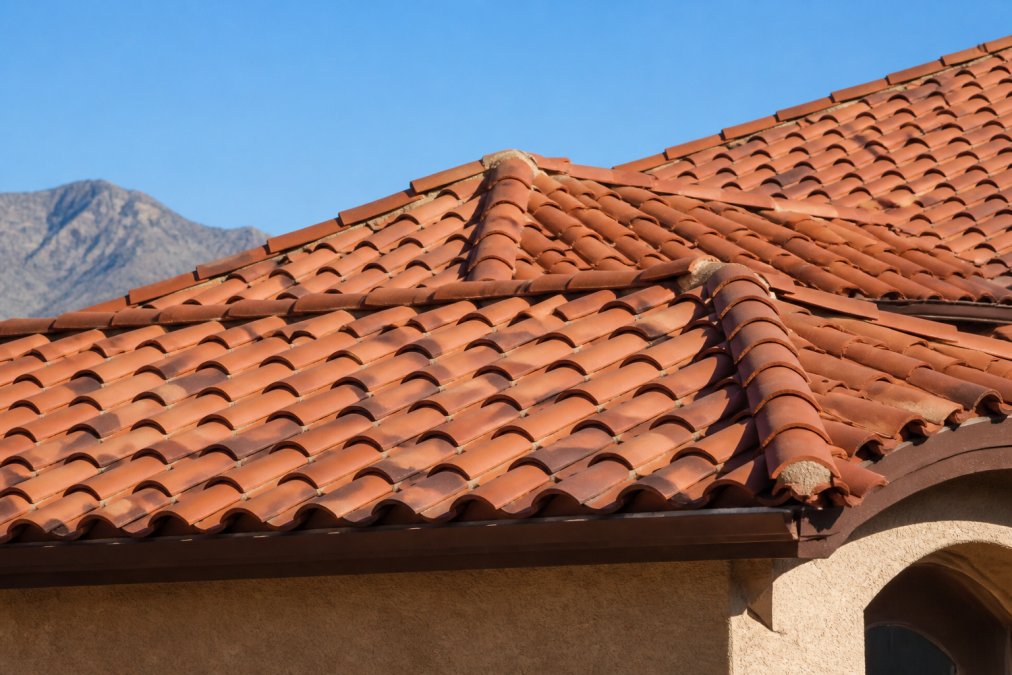
MCA stands out through precision ceramic technology and a broad product line. While most manufacturers offer narrow profile ranges, MCA produces one-piece mission tile, flat tile, and barrel tile in glazed and unglazed finishes, allowing contractors to match almost any architectural design without compromise.
One-Piece Mission Tile: Manufacturing Process and Material Composition
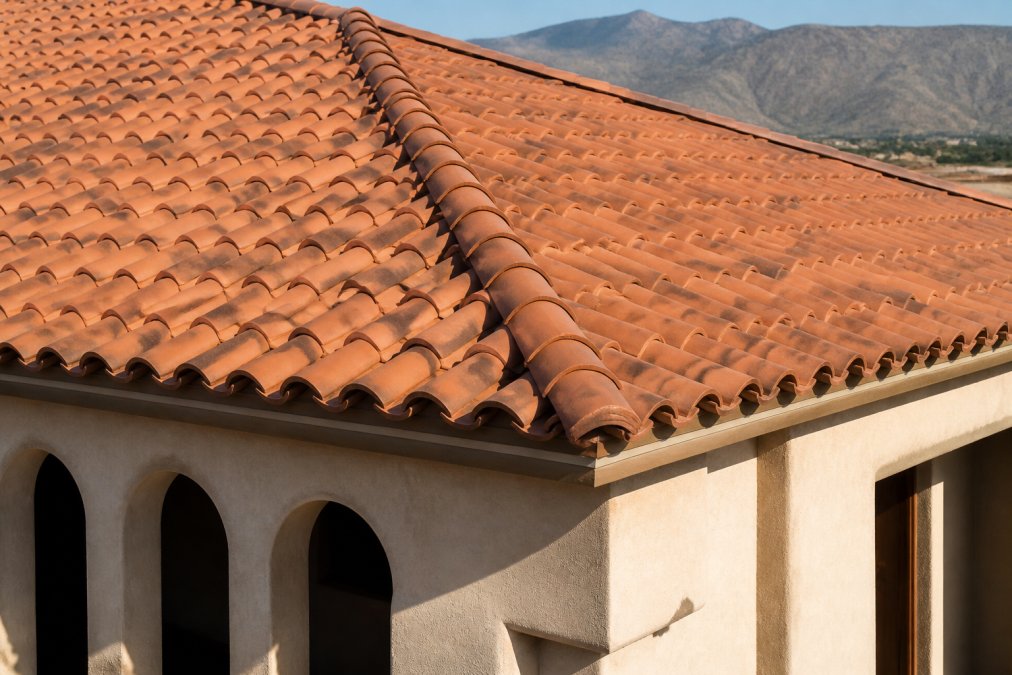
The MCA One-Piece “S” Mission Tile is manufactured from natural clay that is extruded, shaped, and kiln-fired at high temperatures. This process produces a tile with low moisture absorption, high structural integrity, and consistent dimensional tolerances. The tapered mission profile mimics traditional two-piece barrel tile without added weight and labor.
Each square covers 75 pieces, reducing installation time compared to comparable tiles from other manufacturers. The tile carries a Class A fire rating under ASTM E108 testing, the highest classification available. Wind resistance ratings reach 120 MPH for standard installations and up to 155 MPH in engineered configurations, making it suitable for high-wind regions.
The dense-fired ceramic does not conduct heat like metal or asphalt. The air gap created by the curved profile adds passive insulation, reducing heat transfer into the attic space below.
Glaze and Finish Options: Matte, High Gloss, and Natural Terra Cotta
MCA clay roof tile is available in three primary finishes: natural terra cotta, matte, and high gloss glazed.
Natural terra cotta is unglazed clay with color from iron content in raw materials, producing warm red tones associated with Spanish and Mediterranean architecture. Color retention is strong because the pigment is baked into the ceramic composition.
Matte finish tiles offer a broader color spectrum including earth tones and cooler neutrals while maintaining a non-reflective surface. These suit contemporary and transitional designs.
High gloss glazed finish tiles are fired with vitreous glaze that produces a sealed, reflective surface. The glaze reduces moisture absorption to near zero and adds color stability, making them ideal for coastal or high-humidity environments.
Best Roofing Materials for Desert Climates
Clay roof tile is an excellent roofing material for desert climates because its ceramic composition handles extreme heat, UV exposure, and rapid temperature swings well. Clay does not degrade under prolonged UV radiation like asphalt shingles, and it does not expand and contract like metal panels.
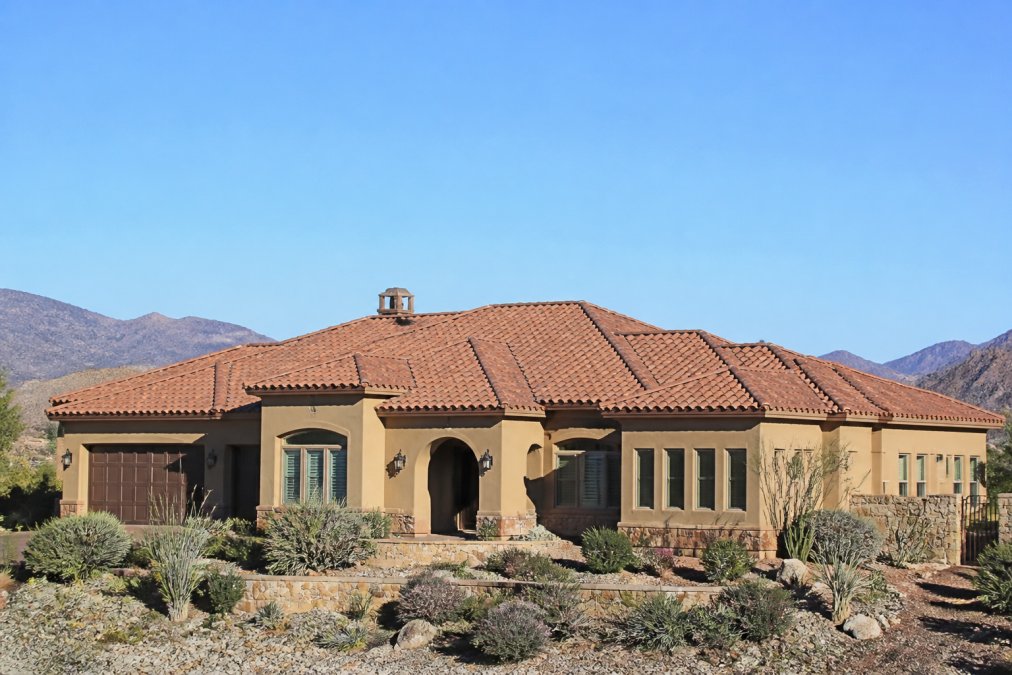
The barrel and mission tile profiles create a ventilated air channel between tile and roof deck, acting as a thermal buffer. This passive ventilation is why clay tile roofs have dominated desert residential construction for centuries.
Thermal Performance and Weather Resistance in Extreme Heat
Clay roof tile thermal performance depends on the material’s heat capacity and the profile’s ventilation geometry. High-density ceramic stores and releases heat slowly, reducing peak heat transfer into the attic compared to low-mass materials like asphalt shingles. The air gap further interrupts the heat conduction path.
For desert climates with intense solar exposure, this combination produces measurable attic temperature reductions, lowering air conditioning loads. Many clay tile systems qualify for Cool Roof ratings through the Cool Roof Rating Council’s certified product directory, supporting energy code compliance.
Clay tile’s low moisture absorption means the tile does not swell, crack, or degrade from repeated wet-dry cycles. Properly installed underlayment and flashing provide waterproofing; the tile sheds water and resists impact.
Durability: Fireproof Ratings, Wind Resistance, and Moisture Absorption
Clay roof tile is classified as fireproof. The Class A fire rating under ASTM E108 provides the highest fire resistance recognized by U.S. building codes, critical in desert regions with elevated wildfire risk.
Wind resistance depends on tile weight and attachment method. Heavier clay tiles resist uplift well when set in mortar or mechanically fastened per manufacturer specifications. MCA’s one-piece mission tile is rated for high-wind conditions, covering most Southwest residential applications.
Moisture absorption in quality clay tile is low. Dense-fired ceramic absorbs far less water than concrete tile, minimizing freeze-thaw damage when occasional desert freezing occurs.
Clay Roof Tile Installation Cost: What to Expect
Clay roof tile installation costs more than most other roofing materials. This reflects three factors: higher tile material cost, structural assessment and potential reinforcement, and the need for contractors with specific clay tile experience.
For accurate pricing, contact MAK Roofing & Construction directly for a project-specific estimate. Costs vary based on roof pitch, tile profile, underlayment specification, and structural reinforcement needs. The National Roofing Contractors Association’s roofing cost resources provides useful baseline figures.
The long-term cost picture is favorable. Clay tile roofs regularly last 50+ years with minimal maintenance, while asphalt shingles require replacement every 15-25 years. Over 50 years, total cost of ownership for clay tile often matches or beats multiple asphalt replacements.
Installation Specifications and Roof Layout Considerations
Clay tile installation requires minimum roof pitch for proper drainage. MCA specifies a minimum 3:12 pitch for standard installations, with steeper pitches preferred for maximum weather resistance. Roof layout must account for tile coursing, ridge and hip details, and valley flashing placement.
Structural load is critical. Clay tiles weigh significantly more than asphalt shingles, and older homes may require reinforcement before installation. A qualified contractor should perform structural assessment before any clay tile project begins.
Key installation specifications to verify:
- Minimum roof pitch: 3:12 (verify with tile manufacturer’s installation guide)
- Underlayment: minimum two-layer felt or synthetic equivalent per local code
- Fastener type: corrosion-resistant nails or screws per ASTM standards
- Mortar bedding: required at ridges, hips, and rakes; not used in field tile courses
- Overhang at eave: follow tile manufacturer’s specified dimension for water shedding
Common Installation Mistakes and How to Avoid Them
The most common mistake is improper fastening. Over-driven tiles crack; under-fastened tiles shift in high wind. Follow the manufacturer’s nailing pattern exactly and use specified fastener types.
A second frequent error is inadequate underlayment. The tile sheds water; underlayment provides actual waterproofing. Cutting corners on underlayment is the primary cause of premature clay tile roof failures.
Never reuse old underlayment when replacing a clay tile roof. Even if existing tiles are reinstalled, aged underlayment’s waterproofing integrity cannot be verified. Failing underlayment beneath intact tiles is the most common cause of interior water damage on clay tile roofs.
A third mistake is poor mortar application at ridges and hips. Mortar applied too thick or thin cracks over time, allowing water infiltration at vulnerable roof points.
Energy Efficient Roof Insulation Pricing 2026
Energy efficient roof insulation pricing in 2026 varies based on material type, R-value requirements, and whether work is combined with new roofing or performed as standalone retrofit. Clay tile roofs create a natural opportunity to upgrade insulation during installation because the roof deck is accessible.
The most cost-effective approach is addressing insulation during roofing. Adding rigid foam above the deck or spray foam below during clay tile installation adds project cost but eliminates separate insulation work later. According to the U.S. Department of Energy’s guidance on roof insulation and energy codes, proper attic insulation is one of the highest-return energy efficiency improvements for hot-climate residential properties.
Request a detailed estimate breaking out material and labor costs separately. The right insulation strategy depends on existing attic configuration, local energy code requirements, and whether you’re targeting a Cool Roof rating.
| Insulation Type | Typical Application | Key Benefit |
|---|---|---|
| Rigid foam above deck | New construction or full re-roof | Continuous thermal barrier, no thermal bridging |
| Spray foam below deck | Retrofit or addition to existing attic | Air sealing plus insulation in one application |
| Blown-in attic insulation | Standalone retrofit | Cost-effective R-value improvement for existing homes |
| Radiant barrier | Attic floor or roof deck | Reduces radiant heat gain in hot climates |
MCA Clay Tile vs. Concrete and Other Roofing Materials
MCA clay roof tile performs well against concrete tile on three criteria that matter most in desert climates: weight, moisture absorption, and long-term color retention. Concrete tile is heavier than comparable clay profiles, increasing structural load requirements. Concrete also absorbs more moisture, which can accelerate surface degradation in wet-dry environments.
The aesthetic gap between genuine clay and concrete imitations is visible on close inspection. Products like Eagle Roofing’s Capistrano line mimic natural clay reasonably well from a distance, but the surface texture and natural variation from kiln-fired ceramic cannot be fully replicated in concrete.
If budget is primary and the requirement is specifically mission tile profile, quality concrete tile can be a reasonable compromise. But for projects prioritizing longevity and authentic material character, genuine clay tile is appropriate, and the cost difference narrows significantly over 30 years.
Against asphalt shingles, clay tile is a superior option. Asphalt shingles are cost-effective short-term solutions. UV degradation, granule loss, and thermal cycling failure accelerate in high-heat, high-UV environments. Clay tile does not have these failure modes.
Compared to metal roofing, clay tile offers superior thermal mass and traditional aesthetics. Metal roofing has advantages in weight and certain low-slope applications, but for steep-slope residential work in Spanish or Mediterranean architectural contexts, clay tile is appropriate.
Maintenance, Long-Term Care, and Sustainability
Clay roof tile maintenance is minimal compared to other roofing materials. The tile itself requires no painting, sealing, or surface treatment. Routine maintenance consists of annual visual inspections, debris removal from valleys and gutters, and prompt replacement of cracked or broken tiles.
The most common maintenance issue is broken tiles from foot traffic. Clay tile is strong under compressive load but can crack under point impact. Any roof access for HVAC service, solar installation, or inspection should be performed by personnel trained to walk on tile without cracking it.
From a sustainability standpoint, clay tile is one of the most environmentally sound roofing materials. Raw materials are natural clay and minerals. Manufacturing uses kiln firing, producing a product with service life far exceeding alternatives. Some clay tile products, such as those from Boral Roofing, carry Cradle to Cradle Gold certification, using recycled raw materials and producing a fully recyclable end product. Long service life means fewer replacement cycles, less landfill waste, and lower cumulative resource consumption.
Clay tile’s sustainability advantage is not just material composition. It’s about replacement frequency. A roof lasting 50 years instead of 20 eliminates one full replacement cycle, significantly reducing material consumption and construction waste over the building’s lifetime.
For homeowners planning clay tile installation and maximizing long-term value, the maintenance checklist is:
- Annual visual inspection from ground level for cracked, slipped, or missing tiles
- Biannual gutter and valley cleaning to prevent debris buildup and water backup
- Prompt replacement of broken tiles to prevent underlayment exposure
- Inspection of mortar at ridges, hips, and rakes every 10 years
- Verify roof penetrations remain properly sealed after major weather events
Which Clay Roof Tile Profile Should You Choose?
The right clay roof tile profile depends on architectural style, roof pitch, and structural capacity.
Mission tile (one-piece “S” or two-piece barrel) suits Spanish Colonial, Mediterranean, and Southwest styles. The curved profile creates shadow lines and visual depth defining these traditions. One-piece mission tile simplifies installation and reduces weight compared to traditional two-piece systems without sacrificing aesthetics.
Flat tile suits contemporary, Craftsman, and low-profile designs. It produces a cleaner, more uniform surface, often chosen for modern builds where mission tile would look anachronistic.
Barrel tile (two-piece pan and cover) is the traditional system used in authentic Spanish and Mediterranean construction. It produces the most pronounced profile and deepest shadow lines. Installation is more complex and labor-intensive, reflected in installation cost.
| Profile | Best Architectural Style | Installation Complexity | Weight vs. One-Piece |
|---|---|---|---|
| One-Piece Mission (“S”) | Spanish, Mediterranean, Southwest | Moderate | Lower |
| Two-Piece Barrel | Traditional Spanish, authentic Mediterranean | Higher | Higher |
| Flat Tile | Contemporary, Craftsman, Modern | Moderate | Comparable |
For most residential projects in desert climates, one-piece mission tile offers the best combination of authentic appearance, installation efficiency, and structural load management. Two-piece barrel tile is right when authentic historical character is priority and structure supports additional weight.
MAK Roofing & Construction specializes in custom clay tile roofing systems for desert climate construction. With over 16 years of experience and comprehensive project management from structural assessment through final installation, the team handles every detail. Financing options are available for qualified homeowners. Request a Video Estimate from MAK Roofing & Construction to get a project-specific assessment and material recommendation for your property.
=== FAQ ANSWERS (audit these too, same rules) ===
[1] Q: What is the life expectancy of an MCA clay tile roof?
A: MCA clay roof tiles are built to last 50 years or more with proper maintenance. Because they are fired ceramic products, they resist cracking, fading, and moisture absorption far better than asphalt shingles. The key factor in longevity is correct installation: a properly laid clay tile roofing system on a structurally sound deck can outlast the home’s other exterior materials by decades.
[2] Q: Are clay tiles good for roofs in hot desert climates?
A: Clay tiles perform exceptionally well in desert climates. Their ceramic composition naturally reflects solar heat rather than absorbing it, which reduces attic temperatures and lowers cooling loads. The air gap created by barrel and mission tile profiles adds a layer of thermal performance that flat roofing materials cannot match. For homes in high-heat, low-humidity regions, clay remains one of the most practical roofing materials available.
[3] Q: Is a clay tile roof more expensive than other roofing materials?
A: Upfront, clay tile installation costs more than asphalt shingles and often more than concrete tile alternatives. However, the long service life, low maintenance requirements, and energy savings from improved thermal performance offset the initial investment over time. Pricing varies based on tile profile, color, roof pitch, and structural requirements. Contact a licensed roofing contractor for a site-specific estimate before comparing quotes.
[4] Q: What are the main downsides of clay roof tiles?
A: Clay tiles are heavier than most other roofing materials, which sometimes requires structural reinforcement before installation. They are also more brittle underfoot than concrete tiles, meaning foot traffic during maintenance must be handled carefully. Installation is more labor-intensive than asphalt shingles, which affects clay roof tile installation cost. Despite these factors, their durability and weather resistance make them a sound long-term choice for most residential projects.
[5] Q: How do MCA clay tiles perform under extreme weather conditions?
A: MCA’s One-Piece S Mission Tile carries a Class A fire rating under ASTM E108 and is tested for high-wind performance up to 120 MPH under Metro-Dade County standards. The fired clay manufacturing process produces a tile that resists moisture absorption, UV degradation, and temperature cycling. These properties make MCA clay roof tile a strong performer in climates with intense sun, monsoon-season rain, and wide daily temperature swings.
Frequently Asked Questions
What is the life expectancy of an MCA clay tile roof?
MCA clay roof tiles are built to last 50 years or more with proper maintenance. Because they are fired ceramic products, they resist cracking, fading, and moisture absorption far better than asphalt shingles. The key factor in longevity is correct installation: a properly laid clay tile roofing system on a structurally sound deck can outlast the home’s other exterior materials by decades.
Are clay tiles good for roofs in hot desert climates?
Clay tiles perform exceptionally well in desert climates. Their ceramic composition naturally reflects solar heat rather than absorbing it, which reduces attic temperatures and lowers cooling loads. The air gap created by barrel and mission tile profiles adds a layer of thermal performance that flat roofing materials cannot match. For homes in high-heat, low-humidity regions, clay remains one of the most practical roofing materials available.
Is a clay tile roof more expensive than other roofing materials?
Upfront, clay tile installation costs more than asphalt shingles and often more than concrete tile alternatives. However, the long service life, low maintenance requirements, and energy savings from improved thermal performance offset the initial investment over time. Pricing varies based on tile profile, color, roof pitch, and structural requirements. Contact a licensed roofing contractor for a site-specific estimate before comparing quotes.
What are the main downsides of clay roof tiles?
Clay tiles are heavier than most other roofing materials, which sometimes requires structural reinforcement before installation. They are also more brittle underfoot than concrete tiles, meaning foot traffic during maintenance must be handled carefully. Installation is more labor-intensive than asphalt shingles, which affects clay roof tile installation cost. Despite these factors, their durability and weather resistance make them a sound long-term choice for most residential projects.
How do MCA clay tiles perform under extreme weather conditions?
MCA’s One-Piece S Mission Tile carries a Class A fire rating under ASTM E108 and is tested for high-wind performance up to 120 MPH under Metro-Dade County standards. The fired clay manufacturing process produces a tile that resists moisture absorption, UV degradation, and temperature cycling. These properties make MCA clay roof tile a strong performer in climates with intense sun, monsoon-season rain, and wide daily temperature swings.
This article was written using GrandRanker