

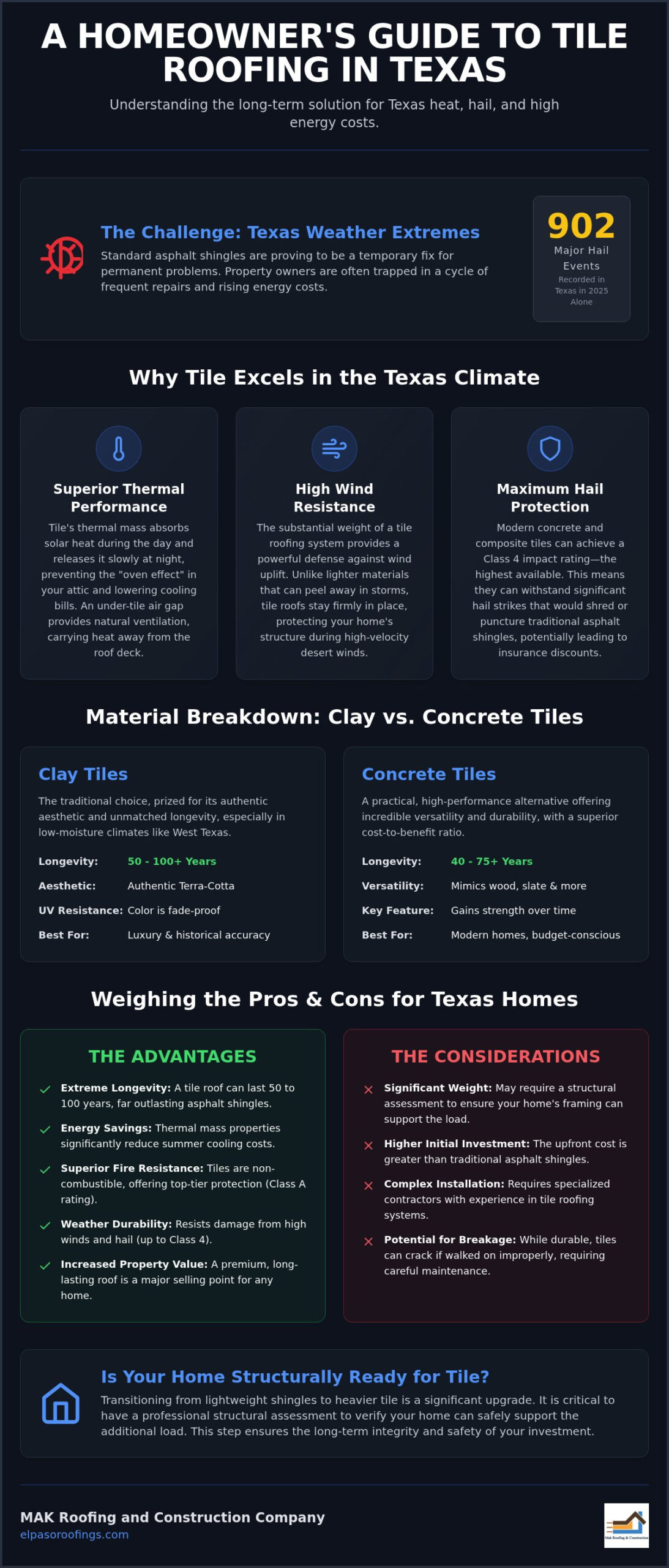
With 902 major hail events recorded across Texas in 2025 alone, the standard asphalt shingle is increasingly becoming a temporary solution for a permanent problem. If you’ve spent recent summers watching your cooling bills climb or worrying about West Texas wind speeds, you aren’t alone. Many property owners feel trapped in a cycle of frequent repairs and high energy costs. Understanding the tile roofing pros and cons Texas residents deal with is the first step toward a more stable, long-term solution for your home or commercial building.
Whether you are in the El Paso area or looking for expert guidance from a family-owned team like Mike and Mike Roofing in North Texas, selecting the right contractor is essential for a lasting installation.
We recognize that choosing a roof is a significant capital decision. It’s about more than just aesthetics; it’s about structural integrity and thermal performance. You likely want a roof that can actually last 50 years or more while providing a measurable shield against the sun. This guide provides a clear roadmap to help you navigate these complex benefits and drawbacks. We’ll examine how tile performs in our specific climate, the reality of structural weight requirements, and how modern materials can significantly increase your property value while lowering monthly overhead.
Key Takeaways
- Understand how the thermal mass of clay and concrete tiles helps maintain lower indoor temperatures during intense Texas heatwaves.
- Navigate the critical tile roofing pros and cons Texas homeowners face, from superior fire resistance to the specific weight requirements of your home’s framing.
- Learn to distinguish between clay, concrete, and composite options to ensure your investment matches both your budget and your home’s architectural style.
- Identify the structural assessments needed to transition from shingles to tile and how to verify if your property can support the additional load.
- Discover how choosing Class 4 impact-rated tiles can lead to insurance premium discounts and long-term protection against frequent hail events.
Why Tile Roofing is a Texas Desert Staple
In the arid stretches of West Texas, a roof is more than just a shelter; it’s a critical thermal barrier. Tile roofing is a high-durability system that utilizes various types of roof tiles, including clay, concrete, and composite materials. While homeowners often focus on the aesthetic appeal, the shift from luxury to necessity in modern desert construction is driven by environmental performance. In cities like El Paso and Las Cruces, where summer temperatures frequently exceed 100°F, traditional asphalt shingles often struggle to maintain their structural integrity over time. Tile doesn’t just sit on your house; it works for it.
Historically, Mediterranean and Spanish architectural styles have dominated our region for a reason. These designs weren’t just about heritage; they were about heat management. When evaluating tile roofing pros and cons Texas property owners must consider that these materials were engineered for environments exactly like ours. Stucco and tile go together because they are both designed to breathe and reflect the intense UV radiation common in the Borderland.
Thermal Mass and Energy Efficiency
The science of thermal mass is the primary reason tile excels in the desert. Unlike thin shingles that transfer heat directly into your attic, tile absorbs solar radiation during the day and releases it slowly at night. This delay prevents the “oven effect” that often plagues Texas homes in July and August. By the time the heat would normally penetrate the living space, the sun has set and the material begins to cool.
An essential component of this system is the air gap created beneath the tiles during installation. This space acts as a natural buffer, allowing air to circulate and carry heat away before it ever touches the roof deck. Regarding modern efficiency requirements, thermal mass is defined as the ability of a material to store heat energy, which directly helps properties meet 2026 Texas energy standards by reducing peak cooling loads during the hottest parts of the day.
Wind and Hail Resistance in West Texas
High-velocity desert wind events are a constant threat in our region. The sheer weight of a tile system provides a natural defense against wind uplift. While lighter materials might peel away or flap during a spring windstorm, tile stays grounded. This stability is vital for maintaining the secondary water barrier and preventing long-term structural damage.
Impact resistance is another area where modern engineering has changed the conversation for property owners. Many people worry about breakage, but modern concrete tiles often carry a Class 4 impact rating. This is the highest rating available, indicating the material can withstand significant hail strikes that would shred traditional shingles. When you weigh the tile roofing pros and cons Texas weather presents, the durability of tile against our frequent hail events becomes a deciding factor for long-term protection.
Material Breakdown: Clay vs. Concrete vs. Composite
Selecting the right material involves balancing initial investment with long-term performance. In West Texas, the relentless UV index tests the limits of any building material. When evaluating tile roofing pros and cons Texas homeowners often find that the specific material choice determines how well the roof resists fading and thermal expansion over decades. Clay and concrete remain the industry standards, but 2026 has seen a significant rise in composite options for specific structural needs.
Clay Tiles: Longevity and Aesthetic
Clay is the traditional choice for authentic Spanish Colonial architecture. Its natural terra-cotta composition is chemically stable, which means the deep reds and oranges won’t bleach out after years of intense sun exposure. You can choose between natural matte finishes or glazed tiles that offer a glass-like protective layer. In the low-moisture environments of West Texas, a well-installed clay roof can last between 50 and 100 years. This longevity makes it the gold standard for luxury desert estates where permanence is a priority.
Concrete Tiles: Durability and Versatility
Concrete tiles are a practical, high-performance alternative for modern Texas homes. They are generally more cost-effective than clay while offering incredible customization. Manufacturers now mold concrete to mimic the texture of weathered wood shakes or hand-split slate, providing a high-end look at a lower price point. A unique characteristic of concrete is the curing process. These tiles actually gain structural strength over time as they continue to hydrate and harden when exposed to the elements.
For the average homeowner, concrete offers a superior cost-benefit ratio. It provides the fire resistance and wind protection required in our region without the premium price of imported clay. If you want to see how these materials look on local properties, reviewing recent tile roofing installations can help you visualize the final result on your own home.
Composite Tiles and Energy Performance
If your home’s framing isn’t rated for heavy masonry loads, composite tiles are an emerging 2026 solution. These are often manufactured from a blend of resins and recycled materials. They offer the same deep profiles as traditional tiles but at a fraction of the weight, often eliminating the need for expensive structural reinforcement. Regardless of the material you choose, the energy savings are documented. The EPA on cool roofing benefits highlights how reflective surfaces and high thermal mass reduce the urban heat island effect. This is particularly vital in growing areas like El Paso where dense construction can trap heat during the day.
The Comprehensive Pros and Cons of Tile in Texas
Weighing the tile roofing pros and cons Texas property owners face requires a shift in perspective from short-term savings to generational value. This material isn’t just a covering; it’s a structural investment. The primary advantage is an unmatched lifespan. While standard shingles might require replacement every 15 to 20 years due to UV degradation, a tile system often outlasts the mortgage itself. Fire resistance is another critical factor in our dry, fire-prone regions. Clay and concrete are non-combustible materials, providing a significant safety barrier for your family and assets that other materials simply cannot match.
There are, however, specific drawbacks to consider. The most immediate challenge is the high initial investment. The “sticker shock” is real, as the upfront cost is significantly higher than asphalt alternatives. Additionally, tiles are fragile under foot. Walking on a tile roof without specific training can lead to cracked or broken pieces. This makes it essential to ensure that any person accessing your roof, such as a solar installer or a satellite technician, understands how to distribute their weight properly.
The Financial Argument: ROI and Property Value
In the El Paso real estate market, tile roofing acts as a permanent upgrade that bolsters resale value. Buyers in our area recognize the long-term stability and luxury aesthetic of the material. Beyond resale, you may qualify for insurance premium reductions. The Texas Department of Insurance provides for credits for homeowners who install Class 4 impact-resistant products, which includes many modern tile systems. When you amortize the cost over 50 years, the math changes in your favor. You aren’t paying for three separate shingle roofs over several decades; you’re investing in a single, durable system that holds its value.
The Maintenance Reality
Many property owners believe tile requires zero maintenance, but this is a myth. You must clear debris from valleys and inspect the flashing periodically to ensure water flows correctly. While the tiles themselves are incredibly durable, the underlayment typically follows a 20-year replacement cycle for traditional felt or up to 50 years for high-quality synthetic options. The underlayment is the hidden heart of a tile system, acting as the primary waterproofing layer that protects your home’s structural integrity from the inside out. Regular inspections prevent minor debris build-up from becoming a significant drainage issue.

Is Your Texas Home Structurally Ready for Tile?
Transitioning from asphalt shingles to a masonry system is a significant structural shift for any property. While shingles typically weigh between 230 and 300 pounds per square, tile ranges from 600 to 1,100 pounds per square. This weight difference is perhaps the most critical technical entry in the list of tile roofing pros and cons Texas homeowners must evaluate. If you own an older home in Horizon City or Socorro that was originally built for shingles, the existing rafters might not be spaced or sized to handle this increased load safely without modification.
Many modern properties are designed with “tile-ready” framing, but older desert homes often require a detailed evaluation. A roof that is perfect for shingles might lack the necessary bracing for clay or concrete. Signs that your home is a candidate for tile without modification include high-pitched roofs with 2×6 or larger rafters spaced 16 inches on center. However, even these homes require a professional eye to confirm that the load-bearing walls can transfer the weight down to the foundation.
The Inspection Process
A professional evaluation goes beyond a surface check of the shingles. We examine the rafters and trusses in the attic for signs of stress, bowing, or improper spacing. In Texas building codes, we distinguish between dead load and live load. The dead load refers to the permanent weight of the roofing materials themselves. The live load accounts for temporary weights, such as workers or the extreme pressure from high desert winds. If the dead load of the tile exceeds the original design of the house, we look for signs of deflection in the attic space. For structures that cannot support traditional masonry, “lightweight” composite tile options provide a solution by mimicking the look of clay without the massive weight.
Reinforcement and Retrofitting
If your home requires more strength, retrofitting is a common and reliable solution. This often involves sistering rafters or adding structural purlins to distribute the weight across the framing more effectively. These methods ensure that the roof remains stable for the next 50 years. At MAK Roofing and Construction, we act as the comprehensive project steward. We coordinate directly with structural specialists to ensure every installation meets local safety requirements and building codes. You can learn more about our comprehensive roofing and remodeling process to see how we manage these technical details from start to finish.
Ensuring your home is structurally sound is the first step toward a successful installation. If you are unsure about your property’s capacity to handle a heavier system, you should request a professional structural assessment before making your final material selection.
Choosing the Right Tile Roofing Partner in West Texas
Finding a qualified contractor is often the most difficult part of the process. While many general laborers can install asphalt shingles, tile roofing is a specialized masonry craft. This “expertise gap” often leads to installation errors that compromise the roof’s lifespan. When you weigh the tile roofing pros and cons Texas homeowners must consider, the quality of the installation is what ultimately determines if the investment is successful. A poorly installed tile system will leak at the flashing or shift during high desert winds, regardless of how much you spent on the materials.
Local knowledge is indispensable in West Texas. Our region has specific wind uplift requirements and unique flashing challenges where the roof meets stucco walls. A contractor who doesn’t understand El Paso’s environmental demands may fail to secure the tiles properly or overlook the importance of a precision-fit underlayment. Before signing any contract, you should ask your roofer specific questions:
- How many local tile projects have you completed in the last three years?
- How do you handle structural reinforcements if my home isn’t currently rated for the weight?
- What specific underlayment materials do you use for our high-UV climate?
- Do you provide a comprehensive seal between the tile and the existing stucco?
MAK Roofing’s 16-Year El Paso Legacy
With 16 years of local experience, we’ve seen how the desert climate affects every type of roofing system. Our deep understanding of El Paso’s architectural styles allows us to install desert-proof tile systems that stand up to the heat and wind. We operate with a “More Than” philosophy. Because we also specialize in stucco application and remodeling, we approach your roof as part of a comprehensive building envelope. This dual expertise ensures a superior exterior seal at the critical junctions where the tile meets the wall, preventing common moisture intrusion issues. Our background in remodeling means we handle structural issues and rafter reinforcements with professional precision, rather than treating them as an afterthought.
Next Steps for Your Property
Your journey toward a permanent roofing solution begins with a detailed assessment. We don’t just look at the surface; we evaluate the rafters, trusses, and the existing building envelope to ensure a safe transition. Once the structural integrity is confirmed, we help you navigate the selection of colors and profiles that best suit your property’s architectural style. Whether you’re in Horizon City, Las Cruces, or Socorro, our goal is to provide a roof that offers lasting security and curb appeal.
If you’re ready to move beyond temporary shingle replacements, it’s time to consult with a seasoned local expert. You can Get a Professional Tile Roofing Estimate from MAK Roofing to determine if a tile system is the right long-term investment for your property.
Securing Your Property for the Next Half-Century
Deciding on a new roof is a significant investment that requires balancing immediate costs with lifelong performance. By weighing the tile roofing pros and cons Texas property owners encounter, you can move away from the cycle of frequent shingle replacements and toward a permanent solution. Whether you select the timeless aesthetic of clay or the versatile durability of concrete, a properly installed tile system provides thermal protection and wind resistance that standard materials can’t match. It’s a choice that prioritizes structural stability and consistent energy savings.
MAK Roofing and Construction brings 16 years of El Paso roofing expertise to every project. As a locally owned and operated business, we utilize specialized tile installation crews who understand the specific demands of our desert environment. We don’t just lay tiles; we manage the entire structural process to ensure your home or commercial building is fully protected. If you’re ready to upgrade your property’s exterior with a system built for the desert, Schedule Your Professional Tile Roof Consultation with MAK Roofing today. We look forward to helping you secure your home’s future.
Frequently Asked Questions
How much heavier is a tile roof than asphalt shingles?
A tile roof is approximately three to four times heavier than traditional asphalt shingles. While shingles typically weigh between 230 and 300 pounds per square, concrete or clay tiles can range from 600 to 1,100 pounds per square. This significant weight difference is a primary technical factor in the tile roofing pros and cons Texas homeowners must consider. It ensures the roof stays secure during high winds but requires a confirmed structural foundation.
Does a tile roof really lower my cooling bills in Texas?
Yes, tile roofing can noticeably reduce your cooling costs by acting as a thermal barrier. The material’s high thermal mass allows it to absorb heat during the day and release it slowly at night, preventing attic temperatures from spiking. Additionally, the natural air gap created beneath the tiles provides constant ventilation. This combination reduces the strain on your air conditioning system during the intense 100°F+ summer days common in West Texas.
Can I walk on my tile roof to clean the gutters?
You should avoid walking on your tile roof whenever possible because the individual pieces are susceptible to cracking under concentrated pressure. If access is necessary for maintenance, you must use specific weight distribution techniques or walk on the head of the tiles where they overlap the battens. It is generally safer to hire a professional who has the training to navigate the surface without causing structural damage or compromising the waterproofing layer.
How long does a tile roof installation typically take in El Paso?
A standard tile roof installation usually takes between one and three weeks, depending on the complexity of the home’s design and the need for structural reinforcement. This process is more labor-intensive than a shingle installation because every tile must be precision-fitted and secured. Factors like weather conditions and the architectural style of your property in El Paso or Las Cruces will also influence the final project timeline.
Will hail stones break my clay or concrete roof tiles?
While extreme hail can damage any material, many modern concrete tiles carry a Class 4 impact rating, which is the highest level of protection available. These tiles are designed to withstand significant strikes that would typically destroy asphalt shingles. However, clay tiles can be more brittle during severe storms. Choosing a high-impact rated tile is a critical strategy for managing the tile roofing pros and cons Texas weather presents.
Do I need to reinforce my house to switch from shingles to tile?
Many older homes require structural reinforcement to support the added weight of a tile system. If your rafters are spaced 24 inches apart or utilize smaller lumber, you will likely need to add bracing or sister the rafters to meet local building codes. A professional structural assessment is the only way to determine if your specific framing can handle the load of a masonry roof safely without risking long-term deflection.
What is the lifespan of the underlayment on a Texas tile roof?
The underlayment typically lasts between 20 and 50 years, depending on the material quality. Traditional felt underlayment often requires replacement every 20 to 30 years, even if the tiles themselves remain in perfect condition. Modern synthetic underlayments offer a longer lifespan, often matching the 40 to 50-year durability of concrete tiles. Regular inspections are necessary to ensure this secondary water barrier remains intact and functional against the intense Texas sun.
Are there lightweight tile options available for older homes?
Yes, composite tiles offer a lightweight alternative for homes that cannot support the weight of traditional clay or concrete. These materials are manufactured from a blend of resins and recycled products, providing the classic aesthetic of a tile roof at a fraction of the weight. Using composite options often allows property owners to avoid expensive structural retrofitting while still enjoying the fire resistance and longevity benefits of a professional tile system.