
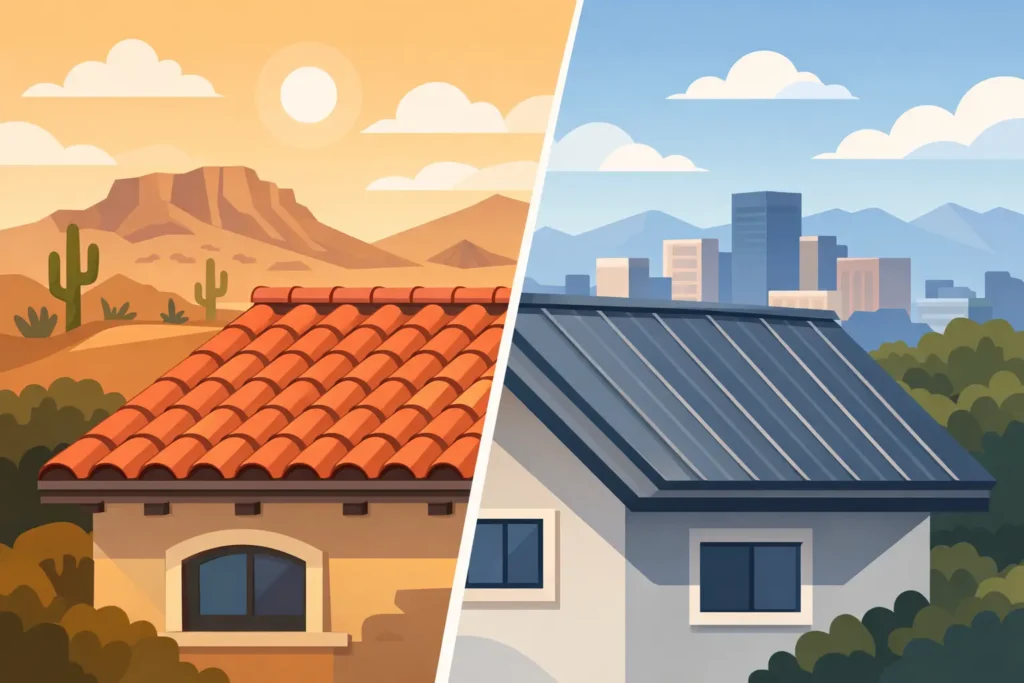
A roof in El Paso has to handle more than an occasional rainstorm. It faces intense sun, wide temperature swings, wind-driven dust, hail, and monsoon weather that can expose weak installation details fast. When comparing tile versus metal roofing, the best choice is rarely about which material is universally better. It is about which complete roofing system fits your building, budget, structure, and long-term plans.
Tile and metal are both premium roofing options with long service lives when they are professionally installed. They differ sharply, however, in weight, appearance, maintenance needs, upfront investment, and how they perform on a particular property. A careful assessment before installation can prevent expensive surprises later.
Tile Versus Metal Roofing in El Paso Conditions
El Paso’s dry climate can be favorable to both tile and metal roofing, but the heat changes the conversation. Roofing materials expand, contract, absorb heat, and depend on proper ventilation and underlayment to protect the structure below. The visible roof covering matters, but the materials beneath it matter just as much.
Tile roofing is known for its substantial, architectural appearance. Clay and concrete tile systems can perform for decades, and their profile creates an air space that can help reduce direct heat transfer into the roof deck. Tile is also noncombustible and stands up well to sun exposure without fading in the same way many painted surfaces can.
Metal roofing reflects a meaningful amount of solar heat, particularly when it has a light-colored or reflective finish. A properly designed metal system can help reduce heat gain and support better energy efficiency. Metal panels are also highly resistant to cracking and can shed rain quickly, which is valuable when heavy monsoon rain moves through the area.
Neither option should be selected based on material alone. Roof pitch, attic insulation, ventilation, drainage, flashing details, and the condition of the underlying decking all affect the final performance of the roof.
How Tile Roofing Performs
Tile is often the right fit for homeowners and property owners who want a classic Southwestern, Mediterranean, or Spanish-style roofline. It adds visible character and can complement stucco exteriors, masonry, and higher-end residential architecture throughout the El Paso area.
Strengths of tile roofing
A quality tile roof can have exceptional longevity. The tiles themselves may last for many decades, though the underlayment beneath them will generally need attention sooner. This is an important distinction. A tile roof is not maintenance-free simply because the tiles are durable.
Tile also offers strong resistance to fire, insects, and UV exposure. Its weight gives it a solid presence on the roof, and correctly secured tile can perform well in windy conditions. Individual broken tiles can often be replaced without removing the entire roofing system.
For owners focused on curb appeal and a lasting architectural look, tile can be a major advantage. It is available in many profiles, colors, and finishes, from traditional barrel tile to flatter modern styles.
Trade-offs to consider with tile
Weight is the first consideration. Tile is much heavier than metal, shingles, and many other roof coverings. Before a tile roof is installed, the framing and roof deck must be evaluated to confirm the structure can support the load. If reinforcement is needed, that can affect the total project cost and timeline.
Tile can also crack when struck by large hail or when people walk on it improperly. Professional access is especially important for HVAC work, solar-related construction, satellite equipment, and repairs near the roof. A broken tile may look minor, but it can allow moisture to reach the underlayment if it is not addressed.
The underlayment is another major factor in the lifetime cost of tile. Even if the tile surface still looks excellent years from now, aging underlayment, failed flashing, or worn penetrations can cause leaks. Routine inspections help identify these conditions before water reaches decking, insulation, drywall, or interior finishes.
How Metal Roofing Performs
Metal roofing is a strong option for property owners who want a clean profile, low roof weight, and dependable weather resistance. Standing-seam metal roofs are especially popular for modern homes, commercial buildings, additions, patios, and properties where long panels and concealed fasteners are a good design match.
Strengths of metal roofing
Metal is lightweight compared with tile, making it suitable for many structures that would not support a tile installation without modifications. It is also durable, fire-resistant, and available in reflective finishes designed to manage solar heat.
A properly installed standing-seam system has fewer exposed fasteners than many other metal roof styles. That can reduce common maintenance concerns around washers and fastener penetrations. Metal panels also shed debris and water efficiently, which helps prevent standing moisture on sloped roof sections.
For commercial property owners, metal can be especially practical on buildings with large roof areas, additions, awnings, or design features that need a long-lasting, professional finish. It can also be a good choice when a roof needs to work with solar equipment, provided the attachment method and roof penetrations are planned correctly.
Trade-offs to consider with metal
Metal roofing requires precise installation. Panel layout, clips, fasteners, trim, flashing, ridge details, and transitions around chimneys or walls must be handled correctly. A metal roof can be an excellent investment, but poor workmanship can create problems at seams, penetrations, and edges.
Some owners are concerned about noise during rain or hail. With a properly built roof assembly that includes solid decking, insulation, and attic space, interior noise is usually manageable. Still, sound expectations should be discussed before selecting a system, especially for rooms directly below a low-slope or vaulted metal roof.
Metal can also dent in a severe hail event, depending on panel thickness, profile, and impact level. A dent does not always mean the roof is leaking or needs replacement, but it can affect appearance. Choosing the right panel gauge and finish for the property is part of making a durable decision.
Cost, Lifespan, and Maintenance
The upfront price of both tile and metal is usually higher than a standard asphalt shingle roof. The installed cost depends on roof complexity, tear-off requirements, access, deck repairs, flashings, insulation needs, structural work, and the specific product selected. A simple roof with clean lines costs very differently from a roof with multiple valleys, steep sections, skylights, parapet transitions, and equipment penetrations.
Tile may involve higher structural and installation costs because of its weight and labor-intensive layout. Metal may offer a lower structural burden, but premium standing-seam systems require skilled fabrication and detailed installation. It is wise to compare complete proposals rather than judging by a material price alone.
Both systems benefit from regular inspections. Tile roofs should be checked for cracked, slipped, or missing tiles, along with underlayment and flashing conditions. Metal roofs should be inspected for loose trim, damaged sealants, panel movement, corrosion around details, and issues at penetrations.
For commercial buildings, scheduled maintenance is especially valuable. A small flashing issue can become a larger disruption when it affects offices, inventory, tenants, or operations. Keeping records of inspections and repairs also helps owners plan future capital expenses with fewer surprises.
Which Roof Is Right for Your Property?
Choose tile when architectural character, a traditional Southwest appearance, and long-term visual appeal are leading priorities, and the building can support the added weight. Tile can be an outstanding system for established homes and properties where the roof is a defining design feature.
Choose metal when you want a lighter roof, strong solar performance, efficient water shedding, and a clean contemporary or commercial appearance. Metal is often a practical choice for homes, commercial facilities, additions, and properties that need durable performance without the structural demands of tile.
There are cases where neither is automatically the right answer. A low-slope commercial roof may be better served by TPO, spray foam, coatings, or modified bitumen. A home with an urgent leak may need repairs and a roof condition assessment before a full replacement decision makes sense. The right material depends on the entire building, not just the roof surface.
A professional inspection can identify deck damage, framing limitations, drainage concerns, ventilation gaps, and flashing issues before they become change orders during construction. MAK Roofing & Construction helps El Paso property owners evaluate roofing systems with the full project in view, including repairs, replacement, exterior work, insulation, and related construction needs.
The most useful next step is to look past the showroom sample and evaluate the roof you actually have. Schedule an appointment for a clear assessment, ask how the proposed system will handle El Paso heat and weather, and choose the option that protects your property for the years you plan to own it.