

- BY adminMak
- POSTED IN Uncategorized
- WITH 0 COMMENTS
- PERMALINK
- STANDARD POST TYPE
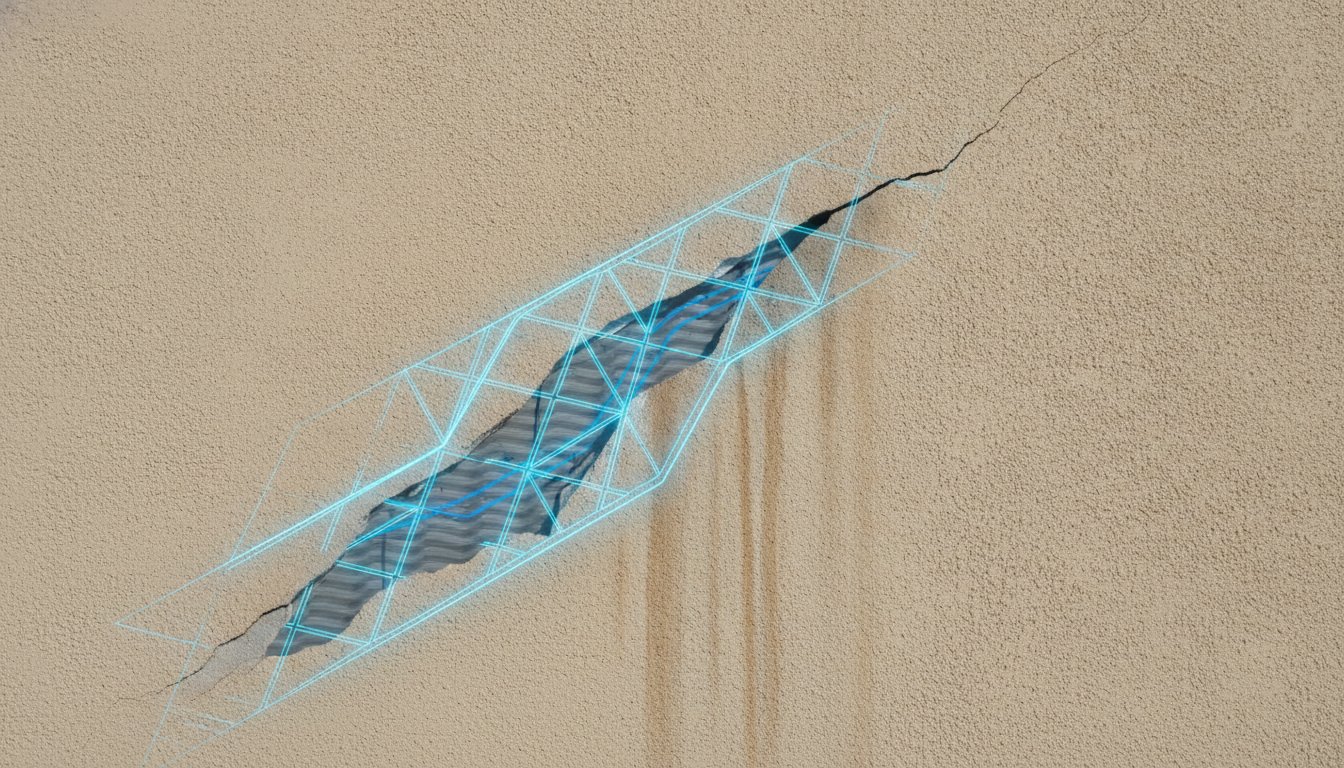
Is that small hairline crack on your exterior a simple cosmetic blemish, or is it a silent warning that your home’s structural integrity is already under attack? In El Paso, where temperatures can swing from 35°F to 97°F, your home’s exterior is constantly expanding and contracting. You likely chose stucco for its legendary durability, but when the August monsoons arrive, even a minor gap can lead to significant moisture intrusion. Understanding the right approach to repairing stucco water damage is the difference between a quick surface fix and a long-term structural solution.
We know the anxiety that comes with spotting brown stains or bubbling finishes on your walls. It’s difficult to tell if you’re facing a minor patch job or a deeper issue with the underlying lath and moisture barrier. This guide will help you accurately assess the health of your home’s exterior system so you can act before mold or rot takes hold. You’ll learn how to identify early warning signs, evaluate the extent of the damage, and understand the professional steps required to restore a fully waterproof seal. By the end, you’ll have a clear roadmap for protecting your home against the unique environmental stressors of the desert southwest.
Key Takeaways
- Learn to distinguish between surface-level hairline cracks and “stucco tears” that signal deep moisture intrusion behind your walls.
- Understand how El Paso’s extreme temperature swings and monsoon cycles create unique vulnerabilities in your home’s exterior system.
- Determine when a simple patch is sufficient and when repairing stucco water damage requires addressing rusted wire lath or a soft substrate.
- Discover the methodical steps involved in a professional restoration, from removing damaged layers to ensuring a seamless, waterproof finish.
- Find out why local expertise in both roofing and wall systems is essential for achieving a truly integrated, climate-resistant home exterior.
Identifying the Warning Signs of Stucco Water Damage
Identifying early warning signs is the first step in repairing stucco water damage. Many homeowners ignore small cracks, assuming they are purely aesthetic. However, stucco is a complex system of layers rather than a single coat of masonry. To understand why these systems fail, it helps to understand what is stucco in a modern construction context. It’s essentially a rigid cement shell designed to shed water. When that shell cracks, moisture finds a path to the softer, vulnerable materials hidden behind it.
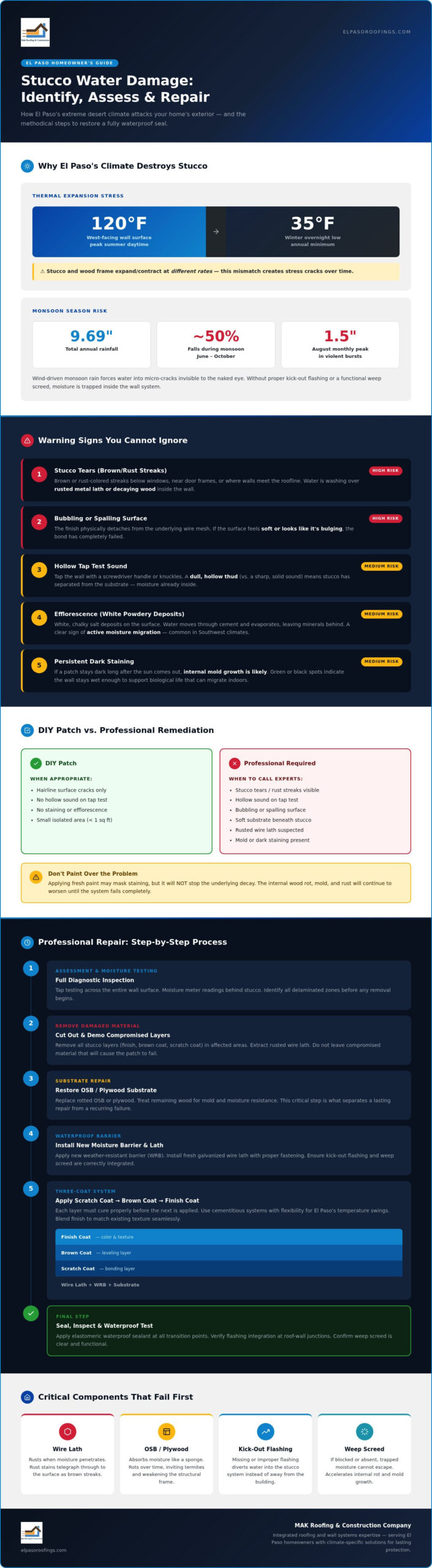
You should look specifically for “stucco tears.” These are brown or rust colored streaks that usually appear under windows, near door frames, or where walls meet the roofline. They indicate that water is washing over rusted metal lath or decaying wood inside the wall. Bubbling or “spalling” is another critical red flag. This occurs when the stucco finish physically detaches from the underlying wire mesh. If the surface feels soft or looks like it’s bulging, the bond has failed completely.
You can perform a simple “tap test” to check for delamination. Use the back of a screwdriver or your knuckles to lightly tap across the wall surface. A healthy wall sounds solid and sharp. If you hear a dull, hollow thud, the stucco has likely separated from the substrate. This hollow sound often means moisture has already compromised the internal layers, creating a gap between the cement and the home’s frame.
Visual Symptoms You Cannot Ignore
Efflorescence is a common sight in the Southwest. This looks like a white, powdery salt deposit on the surface. It occurs when water moves through the cement and evaporates, leaving minerals behind. It’s a clear sign of active moisture migration. Similarly, persistent dark staining suggests that moisture is trapped. If a patch of stucco stays dark long after the sun comes out, internal mold growth is a high probability. Green or black spots on the surface indicate that the wall stays wet enough to support biological life, which eventually migrates into your living space.
The Internal Impact of External Damage
Behind the stucco, most El Paso homes use OSB or plywood as a substrate. When water breaches the exterior, this wood absorbs moisture like a sponge. Continuous dampness leads to wood rot, which weakens the home’s frame over time. It also creates an ideal environment for termites, which are attracted to soft, decaying wood. Many people try to hide these issues with a fresh coat of paint. This is a mistake. Surface painting might mask the staining, but it doesn’t stop the decay. Successful repairing stucco water damage requires addressing these internal failures before they compromise the entire structure.
Why Stucco Fails in the El Paso Desert Climate
Stucco is often viewed as the ideal desert material, but the El Paso climate presents a unique set of stressors. The primary culprit is thermal expansion. In June, average highs hit 96°F, and daytime surface temperatures on a west-facing wall can easily exceed 120°F. By night, these temperatures drop significantly. This constant cycling causes the rigid stucco shell to expand and contract at a different rate than the wooden frame beneath it. Over time, this movement leads to stress cracks. While the Historic Stucco Repair Guide provided by the National Park Service highlights traditional lime-based mixtures, modern El Paso homes require specific cementitious systems with enough flexibility to survive these shifts.
Soil composition also plays a role. Many local neighborhoods are built on sandy or clay-heavy soils that shift as moisture levels change. When your foundation settles even slightly, the inflexible stucco cannot bend, resulting in structural breaches. These openings become the entry points for moisture during our intense monsoon cycles. Addressing these issues early is vital for repairing stucco water damage effectively before the damage spreads to the home’s interior.
Monsoon Season and Flash Flooding Risks
El Paso receives about 9.69 inches of rain annually, but nearly half of that arrives during the monsoon season between June and October. August is particularly brutal, often delivering over 1.5 inches of rain in sudden, violent bursts. Wind-driven rain during these storms can force water into micro-cracks that are otherwise invisible. Without proper “kick-out” flashing where a roof meets a wall, water pours directly into the stucco system rather than away from it. If your home lacks a functional weep screed at the base of the wall, that moisture becomes trapped against the foundation, leading to the “stucco tears” mentioned earlier.
The Heat Factor: Expansion and Brittle Stucco
Extreme heat doesn’t just cause expansion; it makes the material brittle. When stucco loses its limited elasticity due to decades of UV exposure, it begins to pull away from windows, doors, and expansion joints. This separation creates a “pocket” where moisture can collect during a summer downpour. Once water is trapped behind the shell, the 100-degree heat creates a greenhouse effect, accelerating wood rot and substrate decay. If you are concerned about the integrity of your exterior, a professional evaluation of your stucco application can prevent minor cracks from turning into expensive structural repairs.
Assessing the Damage: DIY Patching vs. Professional Remediation
Homeowners often view stucco as a monolithic wall, but it is actually a multi-layered drainage system. When you approach repairing stucco water damage, you must first determine if the issue is a surface-level crack or a failure of the internal moisture barrier. A simple bucket of patch material might hide a hairline fracture, but it won’t stop a structural rot issue. Experts at the Building Science Corporation detail Why Modern Stucco Fails, noting that the “perfect storm” occurs when moisture cannot escape the wall cavity, leading to catastrophic substrate decay.
Professional moisture testing is essential for larger damaged areas. While a surface may look dry, moisture meters can detect high humidity levels deep within the OSB or plywood substrate. Ignoring these internal readings can lead to a full wall failure. A $200 DIY patch today can easily mask a problem that results in a $20,000 remediation project next year. Evaluating the cost-benefit ratio requires looking past the surface and understanding the health of the entire building envelope.
When to Tackle it Yourself
If you find small hairline cracks less than 1/16th of an inch wide, a DIY approach is often sufficient. You will need high-quality acrylic caulk or a specialized stucco patch compound, a putty knife, and matching paint. These minor repairs prevent wind-driven rain from entering the system. However, DIY patches have significant limitations in high-moisture areas like El Paso’s shaded corners. If a crack has widened to more than 1/4 inch, it has likely transitioned from a surface hairline to a structural breach that requires more than a simple filler.
When Professional Expertise is Mandatory
Professional intervention is required when you observe large-scale delamination or if the wall feels soft to the touch. These symptoms indicate that the Water Resistive Barrier (WRB) has been breached. A comprehensive project steward doesn’t just slap on new cement; they ensure the WRB is properly integrated with window flashing and the roofline. This “More Than” approach distinguishes a seasoned local expert from a general handyman. Professionals address the root cause by:
- Inspecting and replacing rusted wire lath that has lost its structural grip.
- Removing and replacing rotted wood substrate to prevent termite attraction.
- Ensuring the weep screed is clear and functional to allow future drainage.
- Matching the texture and color of the existing finish for a seamless aesthetic.
If you’re dealing with rusted lath or soft substrate, repairing stucco water damage is no longer a cosmetic task. It is a structural restoration that requires industrial-literate expertise and climate-specific knowledge.
Step-by-Step Guide to Repairing Stucco Water Damage
Remediating a moisture breach requires more than a surface patch. It demands a systematic approach to repairing stucco water damage that addresses every layer of the building envelope. We follow a methodical four step process to ensure the wall is not just restored, but improved to withstand the El Paso climate.
- Step 1: Removal and Exposure. Using a circular saw with a diamond tipped masonry blade, the technician cuts a clean perimeter around the damaged area. We remove the compromised stucco until we reach sound, dry material. This exposes the underlying wire lath and moisture barrier for a full inspection.
- Step 2: Substrate Restoration. If the OSB or plywood substrate is soft, black, or showing signs of mold, it must be replaced. We also remove any rusted wire lath, as oxidized metal cannot provide the structural grip needed for new cement coats.
- Step 3: Moisture Barrier Integration. We install a new Water Resistive Barrier (WRB), ensuring it is lapped in a “shingle fashion” under the existing barrier. This ensures any future moisture that reaches this layer will drain down and out rather than into the wall cavity.
- Step 4: The Three-Coat System. We apply a scratch coat to bond with the lath, followed by a brown coat to level the surface. Once cured, we apply the finish coat to match your home’s existing aesthetic.
Preparing the Repair Zone
Success begins with how we “square off” the repair area. Cutting straight, vertical edges allows the new cement to sit firmly against the old material. We clean these edges thoroughly to remove dust and loose debris that could cause the repair to separate later. Most importantly, we ensure the internal wall cavity is 100% dry. Sealing a wall while the studs or substrate are still damp will trap moisture and trigger immediate rot. We use high grade moisture meters to verify the zone is ready for closure.
The Finishing Touches: Texture and Paint Matching
Matching the existing texture is where craftsmanship truly shows. Whether your home features a heavy lace, a fine sand, or a traditional dash finish, we replicate the pattern to ensure the repair is invisible. After the cement has fully cured, we often recommend an elastomeric coating. Unlike standard paint, these coatings have a high degree of elasticity, allowing them to bridge micro-cracks that form during 100 degree summer days. While we can paint just the repair zone, painting the entire wall section is the only way to achieve a truly seamless, professional look. If you’ve noticed signs of failure on your exterior, our team provides the expert stucco application needed to secure your home’s perimeter.
Choosing a Local Expert for Stucco Restoration in El Paso
Selecting a contractor for repairing stucco water damage requires more than a simple price comparison. In the desert Southwest, your home’s exterior is a complex system that must withstand intense UV radiation and sudden monsoon flooding. A general handyman might offer a quick patch, but a specialized project steward understands how the moisture barrier, lath, and cement layers work together to protect your structure. MAK Roofing and Construction Company brings 16 years of local experience to every project, ensuring that repairs are engineered for the specific environmental challenges of the El Paso region.
There is a distinct advantage to hiring a company that understands both roofing and wall systems. Water intrusion rarely starts in the middle of a flat wall; it often begins at the roofline, around parapets, or near complex flashing points. Because we specialize in both tile and flat roofing alongside stucco application, we can identify and seal the actual source of the leak. This integrated approach prevents the cycle of recurring damage that often plagues homeowners who hire single-service providers. When you review a stucco estimate, look for transparency regarding substrate inspection and moisture barrier replacement. A thorough estimate should outline a plan for remediation, not just a surface-level cosmetic fix.
The MAK Roofing and Construction Company Difference
Our team operates as a comprehensive project steward, managing every phase of the restoration from initial demolition to the final custom paint match. We don’t utilize high-pressure sales tactics. Instead, we provide a methodical assessment based on nearly two decades of work in El Paso, Horizon City, and Las Cruces. We prioritize structural integrity by using high-quality materials designed for thermal stability. This commitment ensures that your home remains waterproof and aesthetically consistent for years to come. Our “start-to-finish” management style means you deal with one professional team that carries the weight of the entire project’s success.
Requesting Your Professional Stucco Assessment
Hidden moisture is the greatest threat to your home’s value. By the time you see a brown stain or a bubbling finish, the internal substrate may already be compromised. We use professional diagnostic tools to identify these issues before they evolve into expensive structural disasters. Choosing a locally owned and operated contractor provides the peace of mind that comes from community-rooted accountability. We understand the local building codes and the unique behavior of desert-adapted construction materials. If you suspect your exterior has been breached, take the first step toward a permanent solution. Contact MAK Roofing for a professional stucco evaluation to secure your home’s perimeter and prevent further decay.
Secure Your Home’s Future Against the Desert Elements
Protecting your El Paso home requires a shift in perspective. Stucco isn’t just a decorative layer; it is a critical protective system designed to manage moisture and withstand extreme thermal shifts. Successfully repairing stucco water damage involves more than patching a crack. It requires a methodical restoration of the moisture barrier and substrate to ensure long-term structural integrity. By identifying symptoms like stucco tears or hollow thuds early, you can prevent minor issues from evolving into costly remediation projects.
MAK Roofing and Construction Company brings over 16 years of local experience to every project. As an A+ rated contractor, we specialize in desert-durable systems that are engineered for the unique climate of the Southwest. We don’t just fix the surface; we restore the entire building envelope to provide lasting security for your property. Don’t wait for the next monsoon season to test your home’s defenses. Get a Professional Stucco Repair Estimate Today and ensure your exterior remains a solid, waterproof barrier for years to come.
Frequently Asked Questions
How can I tell if my stucco has water damage?
You can identify water damage by looking for localized staining, “stucco tears” beneath window corners, or a white powdery substance called efflorescence. If you notice the surface is bubbling or peeling, it indicates that moisture has breached the exterior shell. A dull, hollow sound when tapping the wall also suggests that the cement has detached from the underlying wire lath due to internal rot or moisture accumulation.
Is it worth repairing stucco, or should I replace it?
Repairing localized damage is highly cost-effective if the underlying wooden substrate remains structurally sound and the moisture barrier is intact. However, if water intrusion has caused widespread wood rot or rusted the wire lath across an entire wall, a full replacement may be necessary. A professional assessment helps determine if the damage is cosmetic or if the system has failed completely, requiring a more comprehensive structural restoration.
How much does it cost to repair stucco water damage in El Paso?
The cost of repairing stucco water damage depends on whether the issue is a surface crack or a deep-seated structural failure. Professional remediation involves labor for demolition, substrate replacement, and the application of a traditional three-coat cement system. Factors such as the height of the wall, the specific finish texture, and the need for scaffolding will influence the final investment required to secure your home exterior.
Can I just paint over water-damaged stucco?
Painting over damaged areas is a temporary cosmetic fix that often accelerates structural decay by trapping moisture. If you apply paint over damp or bubbling stucco, you prevent moisture from evaporating out of the wall cavity. This creates a greenhouse effect in the El Paso heat, leading to rapid mold growth and substrate rot. You must address the moisture source and repair the physical damage before applying any finish coatings.
How long does a professional stucco repair take to complete?
Most professional repairs take between three to seven days to complete, depending on the size of the repair and current humidity levels. Each layer of the three-coat system requires adequate drying time to ensure a proper bond and maximum structural strength. While the physical application is efficient, the curing process cannot be rushed if you want a durable, waterproof result that withstands extreme desert temperature swings.
What causes stucco to bubble or peel away from the wall?
Bubbling, also known as delamination, occurs when moisture gets trapped between the stucco and the moisture barrier or substrate. This often happens when repairing stucco water damage was neglected, allowing the wire lath to rust and lose its grip on the cement. In our local climate, extreme thermal expansion can also cause the rigid shell to pull away if the system was installed without proper expansion joints or weep screeds.
Does homeowners insurance cover stucco water damage repair?
Homeowners insurance typically covers damage resulting from sudden, accidental events like a burst pipe or severe storm damage. However, repairs for long-term issues caused by lack of maintenance or gradual wear and tear are often excluded from standard policies. You should review your specific coverage and consult with a professional to document the source of the moisture before attempting to file a claim for exterior remediation.