

- BY
- POSTED IN Blog
- WITH 0 COMMENTS
- PERMALINK
- STANDARD POST TYPE
Table of Contents
- What A&M Roofing Offers and How It Compares
- Residential and Commercial Roofing Services to Know
- Roof Repair vs Replacement Guide: How to Decide
- Roof Replacement Cost Estimate: What Drives the Price
- Roofing Material Comparison: Best Options for Hot, Dusty Climates
- Questions to Ask a Roofer Before Signing Any Contract
- Why MAK Roofing & Construction Stands Out as an A&M Roofing Alternative
- Conclusion: Choosing the Right Roofing Contractor
- Frequently Asked Questions
Last Updated: August 23, 2026
What A&M Roofing Offers and How It Compares
A&M Roofing El Paso is a GAF-certified contractor offering roof installation, replacement, storm damage repair, and insurance claim assistance. Their no-subcontractor policy and use of GAF materials are genuine selling points, with largely positive customer reviews.
However, a&m roofing is not the only strong option in the area. Homeowners planning complex jobs, commercial property managers dealing with flat-roof leaks, or anyone needing full-service work beyond roofing should compare options. MAK Roofing & Construction, with over 16 years of experience, offers spray foam, TPO, elastomeric coatings, metal roofing, and complete home remodeling, services a roofing-only company cannot provide.
| Contractor | GAF Certified | Commercial Roofing | Full-Service | Financing | Free Estimate |
|---|---|---|---|---|---|
| A&M Roofing El Paso | Yes | Limited | No | Not confirmed | Yes |
| MAK Roofing & Construction | Yes | Yes (TPO, Spray Foam, Coatings) | Yes | Bank financing available | Yes |
GAF certification is a baseline, not a differentiator. The real question is whether your contractor can handle your project’s full scope, from material selection to commercial systems to financing.
Residential and Commercial Roofing Services to Know
Roofing services split into two fundamentally different disciplines, and not every contractor handles both well.
Residential Roofing Installation and Replacement
Residential roof installation fits a new roofing system onto a home, either on new construction or as a full replacement. For most homeowners, the decision comes down to material choice, contractor reliability, and warranty coverage.
A&M Roofing’s residential work centers on GAF shingle products, a reputable manufacturer with strong warranties. For homeowners wanting straightforward shingle replacement, a&m roofing is reasonable. For metal roofing, spray foam systems, or custom designs accounting for desert climate demands, the gap becomes apparent quickly.
A common mistake is selecting a contractor based on GAF certification alone. Certification confirms minimum installation standards and enhanced warranties but does not guarantee the contractor can handle every roof type, manage complex projects, or provide energy-efficient solutions that reduce utility bills in hot climates.
Commercial Roofing: TPO, Spray Foam, and Protective Coatings
Commercial roofing differs fundamentally. Flat and low-slope roofs require systems built for standing water, UV exposure, and thermal expansion, challenges shingle-focused contractors typically cannot address.
TPO (Thermoplastic Polyolefin) systems are single-ply membranes widely used on commercial flat roofs. They reflect UV radiation, reduce cooling loads, and resist puncture and chemical exposure. According to the National Roofing Contractors Association’s technical resources, TPO is among the most commonly specified commercial roofing systems in the United States.
Spray foam roofing applies seamless polyurethane foam directly to the roof deck, then covers it with protective elastomeric coating. It eliminates seams, the most common failure point on flat roofs, and provides excellent insulation. For commercial property managers dealing with recurring monsoon-season leaks, spray foam is often the most durable long-term solution.
Protective coatings, including silicone and elastomeric systems, extend existing commercial roof life without full tear-off, offering cost-effective solutions when the underlying deck remains sound.
A&M Roofing’s commercial capabilities are not prominently detailed in their public materials, representing a meaningful gap for commercial property owners.
Roof Repair vs Replacement Guide: How to Decide
Choosing between repair and full replacement is consequential. The right answer depends on roof age, damage extent, and long-term cost trajectory.
Signs You Need Emergency Roof Repair
Emergency roof repair is necessary when damage creates immediate risk of water intrusion, structural compromise, or interior damage:
- Active leaks during or after rain, especially near penetrations, valleys, or flashing
- Missing or displaced shingles following a storm
- Visible sagging in the roof deck when viewed from the attic
- Daylight visible through roof boards in the attic
- Damaged or separated flashing around chimneys, vents, or skylights
- Granule loss concentrated in specific areas
Storm damage repair timelines and contractor availability often collide. Filing your claim promptly and having a contractor document damage immediately after the storm strengthens your position with your insurer.
Never ignore a small leak. A minor intrusion unaddressed through one monsoon season can saturate roof decking, promote mold growth, and turn a straightforward repair into a full replacement. The cost difference is significant.
When a Full Roof Replacement Makes More Sense
Full replacement is the better investment when repair costs exceed roughly a third of replacement cost, when the roof approaches the end of its service life, or when repeated repairs have failed to resolve underlying issues.
Other indicators favoring replacement:
- Multiple existing shingle layers already installed
- Widespread granule loss across the entire surface
- Persistent interior moisture or mold despite previous repairs
- Roof more than 20 years old with systemic deterioration
Replacement also presents the opportunity to upgrade materials. Homeowners switching to metal roofing or spray foam systems often see measurable cooling cost reductions in desert climates.
Roof Replacement Cost Estimate: What Drives the Price
Roof replacement cost estimates vary based on several factors. Any contractor quoting a firm price without thorough inspection should raise a flag. Main cost drivers include:
| Cost Factor | Impact on Price |
|---|---|
| Roof size and pitch | Larger, steeper roofs require more material and labor |
| Material type | Metal and foam systems cost more than standard shingles |
| Existing damage | Deck rot or structural issues add repair costs |
| Tear-off layers | Multiple existing layers increase labor time |
| Flashing and penetrations | Chimneys, skylights, and vents add complexity |
| Warranty tier | Enhanced manufacturer warranties carry a premium |
The most accurate path is a professional inspection followed by a written estimate. MAK Roofing & Construction provides free evaluations as the right starting point.
Ask for an itemized estimate, not a single lump-sum number. A line-by-line breakdown lets you compare contractors accurately and understand exactly what is included in the scope of work.
According to the Insurance Information Institute’s guidance on roof claims, homeowners who document pre-existing roof conditions and maintain repair records are better positioned when filing storm damage claims. A professional inspection before storm season is both a maintenance strategy and insurance risk management.
Roofing Material Comparison: Best Options for Hot, Dusty Climates
The right roofing material for a desert climate is not necessarily the most popular nationally. Hot temperatures, intense UV radiation, dust accumulation, and occasional severe storms create a demanding environment that eliminates some materials from consideration.
Here is how main options compare for arid, high-heat properties:
- Metal roofing: Excellent UV reflectivity, long service life, and wind and fire resistance. Metal roofs shed dust more effectively than textured shingles and maintain performance across decades. Higher upfront cost typically outperforms shingles on a lifetime cost basis.
- TPO membrane (commercial): Highly reflective white surface reduces cooling loads significantly. Best suited to flat and low-slope commercial roofs. Resistant to UV degradation and thermal cycling.
- Spray foam with elastomeric coating: Provides seamless waterproofing and strong insulation. The coating reflects solar heat and can be recoated to extend system life. Particularly effective for flat commercial roofs with recurring leak problems.
- Asphalt shingles: The most common residential option. GAF Timberline and similar architectural shingles perform adequately in moderate conditions, but high-heat climates accelerate granule loss and shorten service life.
- Modified bitumen: A durable option for flat residential roofs. More tolerant of temperature extremes than standard shingles, though not as thermally efficient as foam or TPO.
- Silicone coating systems: Applied over existing roofs to restore waterproofing and add UV reflectivity. A cost-effective life-extension strategy for structurally sound commercial roofs.
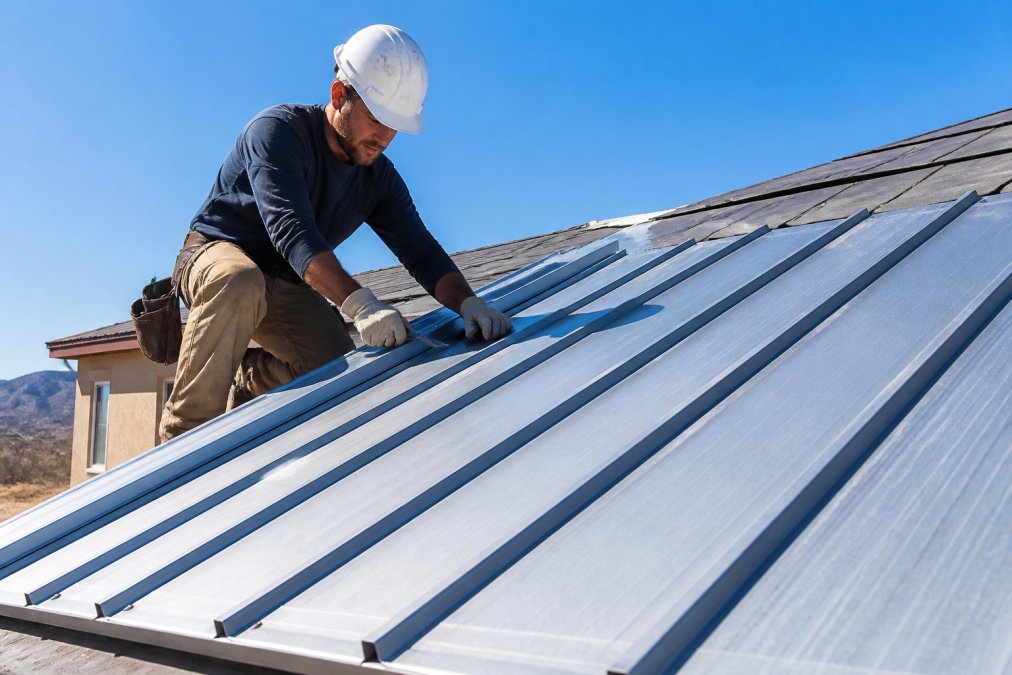
The real difference between good and poor material choices in this climate comes down to reflectivity and seam integrity. Materials that trap heat or rely on numerous penetration points fail faster under sustained UV exposure and thermal expansion.
As documented in the U.S. Department of Energy’s guidance on cool roofs, reflective roofing materials can meaningfully reduce cooling energy use in hot climates, making material selection a direct factor in long-term utility costs.
Questions to Ask a Roofer Before Signing Any Contract
Most homeowners ask the wrong questions during estimates. Price is not the most important variable. Contractor reliability, scope clarity, and warranty terms matter more.
Here are the questions to ask before signing anything:
- Are you licensed and insured in Texas? Verify independently. Hesitation or inability to provide documentation is a red flag.
- Do you use subcontractors? If yes, are they also licensed and insured? Quality varies significantly when work is passed to third parties.
- What does the warranty cover, and for how long? Separate the manufacturer’s material warranty from the contractor’s labor warranty.
- What is included in the scope of work? Tear-off, deck inspection, flashing replacement, and cleanup should be specified in writing.
- How do you handle unexpected damage found during the job? A professional contractor provides a change-order process, not verbal on-site agreements.
- Can you assist with my insurance claim? If storm damage is involved, ask whether the contractor has experience working with adjusters and documenting damage.
- What is the payment schedule? A large upfront deposit before work begins is a warning sign. Reasonable schedules tie payments to project milestones.
- How long will the project take, and what is your crew’s availability? Get a realistic timeline in writing.
According to the Federal Trade Commission’s consumer guidance on home improvement contractors, homeowners should always get multiple written estimates and verify contractor credentials before signing any agreement.
Never pay the full project cost upfront. Legitimate roofing contractors structure payments around project milestones. Full prepayment with no work completed is one of the most common patterns in contractor fraud.
Why MAK Roofing & Construction Stands Out as an A&M Roofing Alternative
The most important question when comparing a&m roofing to other local contractors is which contractor can handle your project’s full scope without requiring a second company.
Roof Inspection, Maintenance, and Gutter Services
MAK Roofing & Construction offers comprehensive roof inspections covering both residential and commercial properties. A thorough inspection examines the roof deck, flashing integrity, drainage, gutter condition, and any signs of moisture intrusion or structural compromise.
Gutter installation and repair is critical to a complete roofing system. Improperly pitched, clogged, or separated gutters direct water toward the foundation and accelerate roof edge deterioration. Treating gutters as an afterthought leads to preventable damage.
A practical roof maintenance checklist for hot, dusty climates:
- Inspect roof surface after every major storm for displaced or damaged materials
- Clear gutters and downspouts of debris at least twice per year
- Check flashing around all penetrations annually
- Inspect attic for signs of moisture, staining, or daylight penetration
- Schedule a professional inspection every two to three years, or after any significant storm event
- Recoat elastomeric or silicone systems on the manufacturer’s recommended schedule
- Document roof condition with dated photographs for insurance purposes
Financing Options and Project Management
One of the most common objections homeowners raise is upfront cost. MAK Roofing & Construction offers bank financing options, meaning a necessary repair or replacement does not have to wait until a homeowner has the full amount available. Many contractors claim to offer financing; fewer have actual bank financing arrangements in place.
The other differentiator is comprehensive project management from start to finish. For homeowners needing remodeling work, stucco repair, insulation, or solar panel installation alongside roofing, having a single contractor manage the entire scope eliminates coordination problems, schedule conflicts, and accountability gaps that appear when multiple contractors share a job site.
A&M Roofing is a solid roofing-only contractor. If your project is straightforward shingle replacement with a GAF warranty, they are reasonable. If you need commercial flat-roof work, a full remodel, or a contractor coordinating multiple trades, the comparison shifts decisively.
Conclusion: Choosing the Right Roofing Contractor
Finding the right roofing contractor in a competitive market is harder than it should be, especially when every provider claims to be licensed, insured, and customer-focused. The real differentiator is scope, experience, and the ability to deliver on complex projects without passing work to subcontractors or walking away mid-job.
Frequently Asked Questions
How do I verify if a roofing contractor is licensed and insured?
Ask the contractor to provide their license number and proof of general liability insurance and workers’ compensation coverage before any work begins. You can verify a Texas roofing contractor’s license through the Texas Department of Licensing and Regulation. A legitimate roofing professional will share these documents without hesitation. Contractors who are GAF certified, like MAK Roofing & Construction, have also met additional manufacturer training requirements, which adds another layer of credibility beyond basic licensing.
What are the signs that I need a full roof replacement instead of a repair?
A roof replacement is typically the right call when shingles are curling, cracking, or missing across large sections; when the roof is approaching or past its expected lifespan; or when repairs have been repeated within a short period without lasting results. Interior water stains, sagging decking, and significant storm damage affecting more than 30% of the surface are also strong indicators. A licensed roofing contractor can perform a professional roof inspection to give you a clear assessment before you commit to either option.
What questions should I ask a roofer before hiring them?
Before signing any contract, ask for proof of license and insurance, a written warranty covering both materials and labor, a detailed written estimate, and a clear project timeline. Find out whether they use subcontractors or their own trained crew, and ask how they handle unexpected damage found during the job. Also confirm whether they assist with insurance claims for storm damage. These questions help you separate reliable roofing professionals from contractors who may disappear mid-project.
Does MAK Roofing & Construction offer financing for roofing projects?
Yes. MAK Roofing & Construction offers bank financing options for qualifying customers, making it possible to move forward with roof repairs, replacements, or remodeling projects without paying the full cost upfront. This is particularly useful for homeowners dealing with unexpected storm damage or large-scale commercial roofing work. Contact MAK Roofing & Construction directly through elpasoroofings.com to ask about current financing terms and what you need to qualify.
Are there roofing materials better suited for hot, dry climates?
Yes. In hot, arid climates with intense UV exposure and dust, materials like metal roofing, TPO membranes, spray foam systems, and elastomeric or silicone coatings consistently outperform standard asphalt shingles in both durability and energy efficiency. Reflective roofing systems reduce heat absorption, which can lower cooling costs during peak summer months. MAK Roofing & Construction specializes in custom-designed roofing systems built around local climate conditions, so the material recommendation is matched to your specific property and usage.
MAK Roofing & Construction brings over 16 years of experience, GAF certification for both residential and commercial work, and a full-service model that covers roofing systems, remodeling, stucco, insulation, and solar installation. Bank financing options mean your project does not have to wait. Request a Video Estimate from MAK Roofing & Construction and get a clear picture of what your project actually requires before committing to any contractor.
This article was written using GrandRanker