

- BY
- POSTED IN Blog
- WITH 0 COMMENTS
- PERMALINK
- STANDARD POST TYPE

Table of Contents
- Start With a Roof Damage Inspection Checklist
- How to Document Storm Damage for Insurance
- What to Say to Insurance Adjuster for Roof Damage
- Know the Roof Insurance Claim Timeline
- Common Mistakes That Delay or Deny Roof Claims
- When to Call a Roofing Contractor Before Your Insurer
- Final Steps to File Your Roof Insurance Claim
- Frequently Asked Questions
Last Updated: September 7, 2026
Filing a claim after storm damage can feel overwhelming, but the process goes smoothly when you prepare correctly. Understanding how to prepare for roof insurance claims before the adjuster arrives is the difference between a quick payout and a months-long dispute. At MAK Roofing & Construction, our team has guided El Paso homeowners through this exact process for over 16 years. The preparation phase, not the inspection itself, is where most claims are won or lost.
Roof insurance claims are requests to your homeowner’s policy for coverage of roof repairs or replacement after damage. A successful claim depends almost entirely on the documentation you gather in the first 48 hours after the storm passes. Below, we’ll walk through the exact steps to protect your payout, from the initial inspection checklist to the final paperwork.
Start With a Roof Damage Inspection Checklist
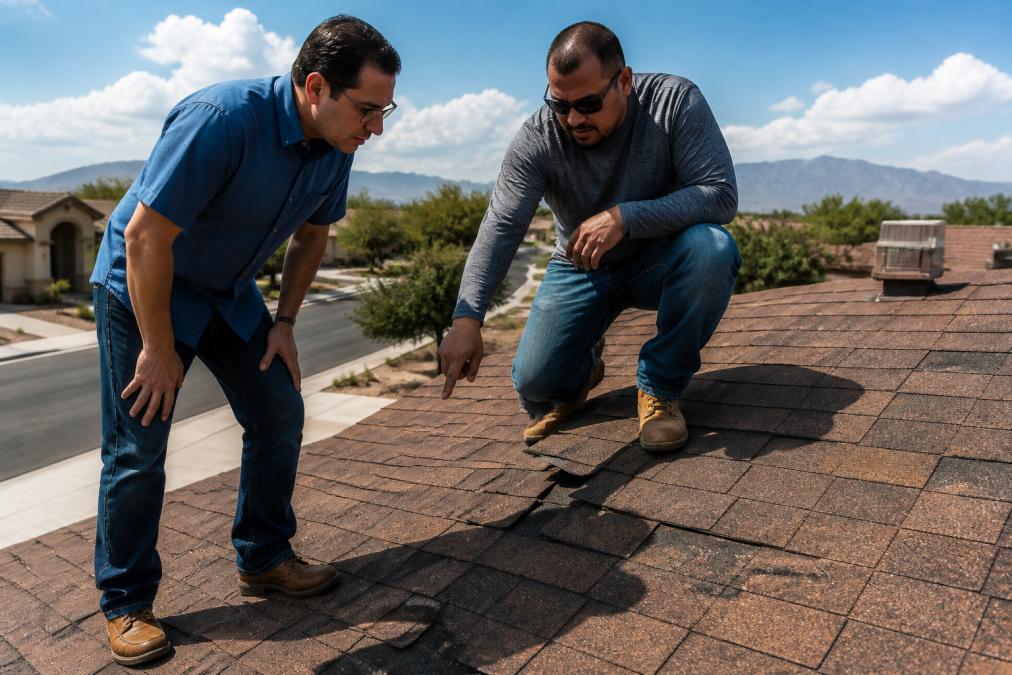
A thorough roof damage inspection checklist is your first line of defense against a denied claim. Walk your property methodically and document every sign of impact, no matter how small it appears.
Start on the ground with binoculars, scanning for missing shingles, dented gutters, or debris impact marks. Then move closer to check for granule loss in the gutters, which appears as sand-like buildup. Inside your home, look for water stains on ceilings, damp insulation, or cracked paint near rooflines.
Do not climb onto a steep or wet roof to inspect damage yourself. Slippery surfaces and hidden structural weakness cause thousands of fall injuries each year. Leave the roof walk to a professional and document from the ground or a ladder at the eaves.
For each issue you find, record its location, take a photo, and note the approximate size. This checklist becomes the backbone of your claim file.
How to Document Storm Damage for Insurance
Documenting storm damage for insurance requires visual evidence that tells a clear story to the adjuster. Grab your phone and capture everything before any temporary repairs begin.
Take wide-angle shots of the entire roof from multiple angles, then zoom in on each specific area of damage. Photograph the interior damage too, including ceiling stains and wet walls, since these prove the roof failure affected your living space. According to guidance on documenting property damage for insurance claims, you should photograph items before you move or discard them, as this evidence supports your claim amount.
Gather your paperwork while the photos are fresh:
- Your policy declaration page and policy number
- The date and type of storm event
- Receipts for any emergency repairs you made
- A written inventory of damaged items with estimated values
Keep a digital backup of every photo and document in cloud storage. If your claim escalates, you will need this file repeatedly.
What to Say to Insurance Adjuster for Roof Damage
Knowing what to say to the insurance adjuster for roof damage keeps the conversation productive and protects your claim. Be factual, concise, and let your documentation speak.
When the adjuster arrives, show them your inspection checklist and photo log. Point out each area of damage you identified and let them conduct their own assessment. Answer their questions directly, but avoid speculating about the age of the roof or the cause of damage if you are unsure.
You are not required to give the adjuster a recorded statement on the spot. If you feel pressured or unprepared, politely say you would prefer to review the questions with your contractor first and provide written answers. This is your right under most state regulations.
A common mistake is admitting uncertainty about whether damage existed before the storm. Let the adjuster draw their own conclusions from the physical evidence. Stick to what you observed, when you observed it, and how you responded.
Know the Roof Insurance Claim Timeline
The roof insurance claim timeline varies by insurer, but knowing the general sequence helps you manage expectations and push back when delays occur. Most carriers require you to report damage within one year of the loss event, though filing sooner is always wiser.
Here is the typical sequence after you file:
| Stage | What Happens | Typical Timing |
|---|---|---|
| Claim filed | You report the loss with photos and details | Day 1 |
| Adjuster assignment | Insurer assigns an adjuster to your case | 2-5 days |
| Inspection | Adjuster visits your property | 1-2 weeks |
| Estimate issued | Insurer calculates repair or replacement cost | 1-3 weeks |
| Payout or denial | You receive funds or a denial letter | 30-60 days total |
Weather events that affect many homes at once, such as a wide hailstorm across El Paso, can stretch these timelines considerably. Insurers prioritize claims in the order received, which is another reason to file immediately after documenting the damage.
Common Mistakes That Delay or Deny Roof Claims
Several common mistakes delay or deny roof claims, and most are entirely avoidable with a little foresight. The costliest error is making permanent repairs before the adjuster inspects the damage. Your policy may cover temporary tarping, but full replacement work done early can void your claim.
Failing to report interior water damage is another frequent oversight. If your ceiling shows a stain, the adjuster needs to see it during the initial visit. Waiting until later to report it complicates the claim and raises questions about whether the damage is new.
Skipping the contractor consultation is the third major error. An experienced roofer spots damage patterns that homeowners miss, such as subtle granule loss or lifted shingle tabs that indicate hail impact. Their documentation strengthens your claim file considerably.
When to Call a Roofing Contractor Before Your Insurer
Calling a roofing contractor before your insurer is often the smartest move you can make. A professional inspection gives you an independent damage assessment before the insurance company forms its own opinion.
In El Paso, where monsoon storms and hail events are common, many homeowners call us immediately after a severe weather system passes. We document the damage and provide a written estimate for repairs. This preparation means you approach the adjuster with confidence rather than guesswork.
Contractors also identify pre-existing wear that could complicate your claim. Knowing about these issues upfront lets you prepare honest answers before the adjuster raises questions. The Federal Emergency Management Agency guidance on disaster recovery emphasizes documenting damage thoroughly before beginning any cleanup or repair work.
Final Steps to File Your Roof Insurance Claim
To file your roof insurance claim, submit your completed documentation package through your insurer’s preferred channel, whether that is an online portal, mobile app, or phone line. Have your policy number and storm date ready when you call.
Your submission should include the inspection checklist, all photographs, receipts for emergency tarping, and any contractor estimates you obtained. Keep copies of everything you send and note the date and time of your submission.
After filing, stay organized. Track every conversation with your adjuster, including their name and the outcome of each call. If the initial payout seems low, you have the right to appeal with additional documentation from your contractor.
The single most important factor in a successful roof insurance claim is the quality of your documentation. Photograph everything, file within days of the storm, and get a professional inspection before the adjuster arrives.
Preparing for roof insurance claims in El Paso requires speed, organization, and the right documentation. The process is far easier when you have an experienced local contractor on your side who understands how storms damage roofs in this desert climate. MAK Roofing & Construction combines over 16 years of industry experience with comprehensive project management, so we handle the inspection and documentation while you focus on your family. We serve homeowners across El Paso, TX, with custom roofing systems built for the region’s intense heat and monsoon seasons. Get started with MAK Roofing & Construction and protect your home before the next storm hits.
Frequently Asked Questions
What evidence do I need for a roof insurance claim in Texas?
You need dated photos and video of the storm damage, including close-ups of missing or dented shingles, hail impact marks, and any leaks. Save any receipts for temporary repairs you made to prevent further damage. Your roof damage inspection checklist should also note the approximate age of the roof and the type of shingles installed. This evidence helps the adjuster verify that the damage came from a covered weather event.
Should I call a roofing contractor before my insurance company?
Yes, calling a contractor first is often the right move. A local roofer can perform a roof damage inspection checklist, identify what needs to be documented, and help you understand the extent of the loss. They can also perform emergency tarping to prevent interior damage. This gives you a clearer picture before you speak with your insurer, and many contractors will meet the adjuster on site.
What are the common reasons roof claims are denied in Texas?
Claims are often denied because the damage is deemed pre-existing wear and tear rather than storm-related. Missing the filing deadline is another common issue. Poor documentation, like not having photos taken right after the storm, weakens your case. In some situations, the policy may exclude certain types of damage. Reviewing your policy and having a contractor document findings promptly helps avoid these denial reasons.
How long do I have to file a roof insurance claim after a storm in El Paso?
Texas law generally allows one year from the date of the storm to file a claim, but your specific policy may set a shorter window. Waiting too long makes it harder to prove the damage came from that event, especially if another storm hits later. File your claim as soon as you notice damage and document everything right away to keep your roof insurance claim timeline on track.