

- BY
- POSTED IN Blog
- WITH 0 COMMENTS
- PERMALINK
- STANDARD POST TYPE

Table of Contents
- Flat vs Pitched Roof Maintenance Costs: What Decides the Difference
- Flat Roof Maintenance Costs in El Paso
- Pitched Roof Maintenance Costs in El Paso
- Cost Comparison: Flat vs Pitched Roof Over 20 Years
- Roof Inspection Cost in El Paso: Frequency and What to Expect
- Roof Maintenance Checklist for Texas Homes
- Energy Efficient Roof Insulation Pricing in 2026
- Conclusion: Budgeting for Your El Paso Roof
- Frequently Asked Questions
Last Updated: September 8, 2026
Flat vs Pitched Roof Maintenance Costs: What Decides the Difference
When El Paso homeowners ask about flat roof vs pitched roof maintenance costs, they are usually surprised to learn that the roof type is only half the equation. The bigger factors are material, drainage design, and how the roof handles our specific desert climate, where intense UV exposure and sudden monsoon storms punish roofing systems differently. At MAK Roofing & Construction, we have spent over 16 years tracking these variables across El Paso, TX, and the patterns are consistent enough to guide any budget.
The core distinction is simple: flat roofs cost less to inspect and patch but demand more frequent attention, while pitched roofs are more expensive to service per visit but require fewer interventions over time. A flat roof’s membrane is its weak point, vulnerable to ponding water and thermal expansion. A pitched roof sheds water naturally, shifting the maintenance burden to flashings, valleys, and the integrity of individual shingles or tiles.
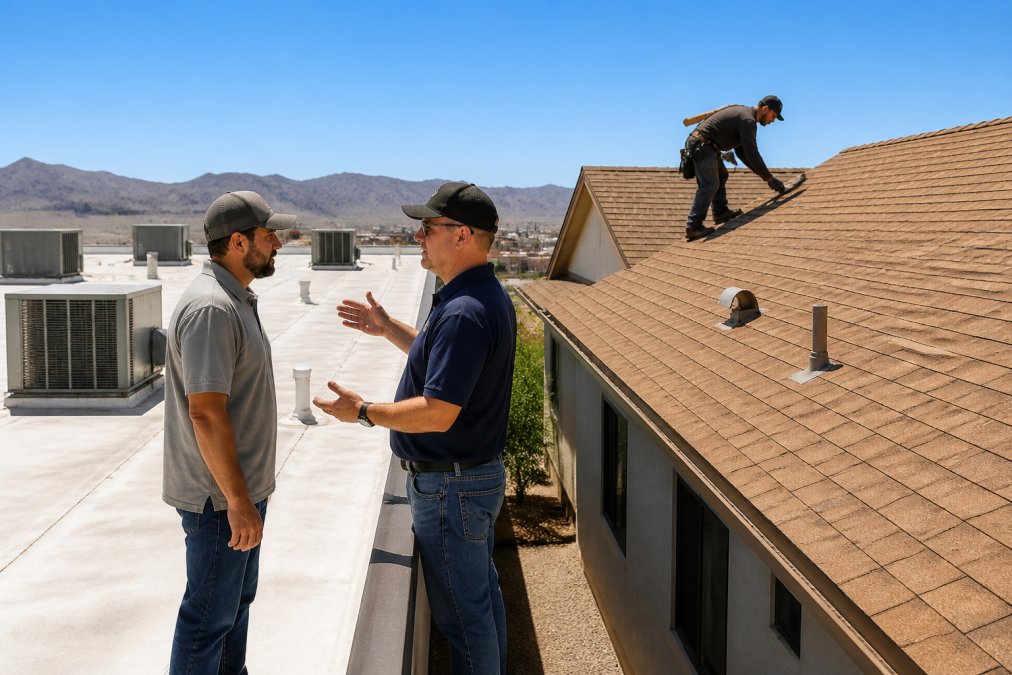
That tradeoff, frequency versus cost per event, is what decides your long-term roof maintenance costs. Understanding it before a problem appears lets you budget realistically instead of reacting to emergency leaks.
Flat Roof Maintenance Costs in El Paso
Flat roofs, common on El Paso commercial buildings and many modern homes, typically require maintenance two to three times per year. The primary tasks are clearing debris from drains and scuppers, inspecting the membrane for blisters or cracks, and reapplying protective coatings as they erode under UV exposure.
The cost drivers for flat roofs are access logistics and material type. A single-story home with a simple parapet is far cheaper to service than a multi-story commercial building requiring lifts or safety rigging. The roof maintenance costs also climb when the membrane is older, because patching aged material becomes less reliable and full replacement looms closer.
The most expensive flat roof mistake is ignoring standing water. After heavy rain, a pool that does not drain within 48 hours accelerates membrane degradation and eventually works its way into the deck below. A quick post-storm check prevents thousands in structural repair.
Because the flat roof surface is walkable and the inspection points are concentrated, a routine service visit is generally faster than on a pitched roof. That speed keeps individual visits affordable, but the annual total adds up because you schedule them more often.
Pitched Roof Maintenance Costs in El Paso
Pitched roofs, whether clad in asphalt shingles, metal panels, or clay tiles, follow a different maintenance rhythm. Many pitched roofs need only one thorough inspection per year, with targeted repairs limited to specific trouble zones.
The cost per visit runs higher for pitched roofs because the work is physically slower and riskier. Technicians must work at an angle, secure fall protection, and carefully navigate valleys where water converges at high velocity. Replacing a damaged shingle or resealing a flashing point takes more skill and time than a flat roof patch, and the labor rate reflects that.
Material choice heavily influences pitched roof maintenance costs. Asphalt shingles are the least expensive to repair individually but may shed granules over time, especially in El Paso heat. Metal panels resist UV damage well but require attention to fastener seals. Clay and concrete tiles are durable but brittle, and replacing a broken tile means matching color and profile.
The compensating advantage is longevity. A well-maintained pitched roof often goes several seasons between service calls, spreading the higher per-visit expense across a longer interval.
Cost Comparison: Flat vs Pitched Roof Over 20 Years
To see the real financial picture, compare both systems over a typical two-decade ownership period. Flat roofs generally need more frequent maintenance visits but lower cost per visit. Pitched roofs need fewer visits but each one costs more, and material replacement cycles differ.
| Cost Factor | Flat Roof | Pitched Roof |
|---|---|---|
| Typical service frequency | 2-3 times per year | 1 time per year |
| Cost per service visit | Lower | Higher |
| Primary failure point | Membrane, ponding water | Flashings, shingle damage |
| Material lifespan | Shorter, coating-dependent | Longer, material-dependent |
| Emergency repair likelihood | Higher after storms | Lower, localized |
| 20-year maintenance pattern | Steady, recurring | Intermittent, larger events |
The table shows why the comparison is not a simple “cheaper versus more expensive” question. Over 20 years, a flat roof may require more total visits, but a pitched roof can present one large expense, such as full re-flashing or significant shingle replacement, that offsets years of flat roof savings.
For El Paso specifically, monsoon season is the great equalizer. Both roof types face wind-driven rain and hail, and the quality of the original installation matters more than the roof geometry. A poorly detailed flat roof leaks sooner than a well-built pitched roof, and vice versa. What matters most is choosing a contractor who understands local weather patterns and builds accordingly.
Roof Inspection Cost in El Paso: Frequency and What to Expect
Roof inspection cost El Paso homeowners should budget for is a separate line item from maintenance, though the two often happen together. Many contractors bundle an inspection with routine maintenance, which reduces the effective cost of both services.
Schedule a professional inspection at least once per year, ideally before monsoon season begins in late spring. A pre-storm inspection catches loose flashings and worn seals while they are still cheap to fix. Adding a second inspection after a major hailstorm is prudent, since damage is not always visible from the ground.
What you pay for an inspection depends on roof complexity and access. A simple single-story pitched roof is quicker to assess than a large flat commercial roof with multiple penetrations. The inspection should cover membrane or shingle condition, flashing integrity, drainage function, and signs of interior moisture. Ask the contractor for a written report with photos so you have a record of the roof’s condition over time.
Skipping annual inspections to save a modest fee is a false economy. Small issues found during a routine visit cost a fraction of what an emergency repair costs after a storm has turned a minor defect into a leak. For reference, industry guidance on inspection frequency and what to look for is available from the National Roofing Contractors Association, which publishes standards for both flat and steep-slope systems.
Roof Maintenance Checklist for Texas Homes
A roof maintenance checklist for Texas homes should reflect the state’s climate reality: intense summer heat, occasional hail, and sudden heavy rain. Work through this list at least twice a year, once in spring and once in fall.
- Clear gutters, valleys, and flat roof drains of leaves, dust, and debris
- Inspect flashings around chimneys, vents, and skylights for lifted edges or rust
- Look for cracked, curled, or missing shingles, and check for granule loss in gutters
- Examine sealant joints on flat roofs and around roof penetrations
- Trim tree branches that overhang the roof and drop debris
- Check attic for signs of moisture, staining, or daylight showing through the deck
- Document findings with photos to track changes between inspections
Following this checklist does not replace a professional inspection, but it catches obvious problems early and gives you informed questions to ask when a contractor visits. For guidance on how Texas weather affects roofing materials and what to prioritize, Texas A&M AgriLife Extension publishes practical resources for homeowners in the state.
Energy Efficient Roof Insulation Pricing in 2026
Energy efficient roof insulation pricing in 2026 continues to be a major consideration for El Paso homeowners, because the desert sun makes cooling costs the dominant utility expense. Insulation is a separate investment from the roof covering itself, but it directly affects how hard your HVAC system works.
Pricing for insulation depends on the material type, the R-value needed for your climate zone, and whether you are insulating an attic floor or the roof deck itself. Spray foam, rigid board, and reflective barriers each have different cost profiles and performance characteristics. Rather than quoting a fixed price, which varies with square footage and accessibility, the smart approach is to have a contractor assess your current insulation levels and recommend a target R-value.
In El Paso’s climate, radiant barriers and reflective roof coatings can noticeably reduce heat gain during the summer. Pairing insulation improvements with a light-colored or reflective roof surface amplifies the benefit, cutting cooling load during peak months.
The Department of Energy provides guidance on insulation R-values by climate zone, which helps you verify that any recommendation you receive matches the official standard for West Texas. A properly insulated home not only lowers monthly bills but also reduces the strain on your roof system by minimizing temperature extremes in the attic space.
Conclusion: Budgeting for Your El Paso Roof
Budgeting for roof maintenance costs in El Paso comes down to matching the maintenance plan to the roof type, not chasing the cheapest single visit. Flat roofs need consistent, frequent attention. Pitched roofs need thorough annual inspections and readiness for occasional larger repairs. Both benefit from a pre-monsoon inspection and a documented maintenance history.
The contractor you choose matters as much as the roof design. A team that understands El Paso’s heat, dust, and storm patterns will catch issues that a generalist might miss, and will recommend materials and coatings suited to the local climate. MAK Roofing & Construction brings over 16 years of local experience to residential and commercial roofs, offering custom-designed systems and comprehensive project management from start to finish.
Frequently Asked Questions
How often should flat roofs be inspected compared to pitched roofs in El Paso?
Flat roofs in El Paso need professional inspections at least twice a year, ideally before and after monsoon season, because standing water and UV exposure accelerate membrane wear. Pitched roofs generally require one annual inspection, plus a check after severe hail or wind storms. The higher inspection frequency for flat roofs is a direct factor in their long-term maintenance costs.
Which roof type is more durable in the El Paso desert climate?
Pitched roofs with asphalt shingles or metal tend to handle El Paso’s intense sun and monsoon hail better than flat roofs. Flat roofing membranes expand and contract significantly with the region’s temperature swings, which leads to cracking and blistering over time. That said, modern flat roof systems with reflective coatings and proper drainage can perform well, but they typically need more frequent maintenance than a quality pitched roof.
What is the average lifespan of a flat roof versus a pitched roof?
A properly installed flat roof in El Paso typically lasts 15 to 20 years with consistent maintenance. A pitched roof with asphalt shingles lasts 20 to 30 years, while metal or tile pitched roofs can exceed 40 years. The shorter lifespan of flat roofing materials means replacement costs arrive sooner, which you should factor into your long-term maintenance budget.
Does a pitched roof offer better energy efficiency in El Paso?
Yes, a pitched roof with proper attic ventilation and insulation generally offers better energy efficiency in El Paso than a flat roof. The air gap between the ceiling and the roof deck helps dissipate heat. Flat roofs absorb more direct heat, but cool-roof coatings and energy efficient roof insulation can close that gap. Ask your contractor about 2026 insulation pricing to compare options.
How do local El Paso weather conditions affect roof maintenance costs?
El Paso’s intense UV rays, dust storms, and monsoon season with hail directly raise roof maintenance costs. UV exposure degrades roofing materials faster, dust clogs gutters and drains, and hail can dent metal or damage shingles. Flat roofs need more frequent cleaning to prevent standing water after monsoon rains. These conditions mean El Paso homeowners should budget for more frequent inspections than the national average.
Whether you manage a flat commercial roof or a pitched residential one, the goal is the same: catch small problems before they become expensive emergencies. A professional inspection and a clear maintenance schedule are the most cost-effective tools you own. Contact MAK Roofing & Construction for a video estimate and get a clear picture of your roof’s condition and the roof maintenance costs ahead.