

- BY
- POSTED IN Uncategorized
- WITH 0 COMMENTS
- PERMALINK
- STANDARD POST TYPE
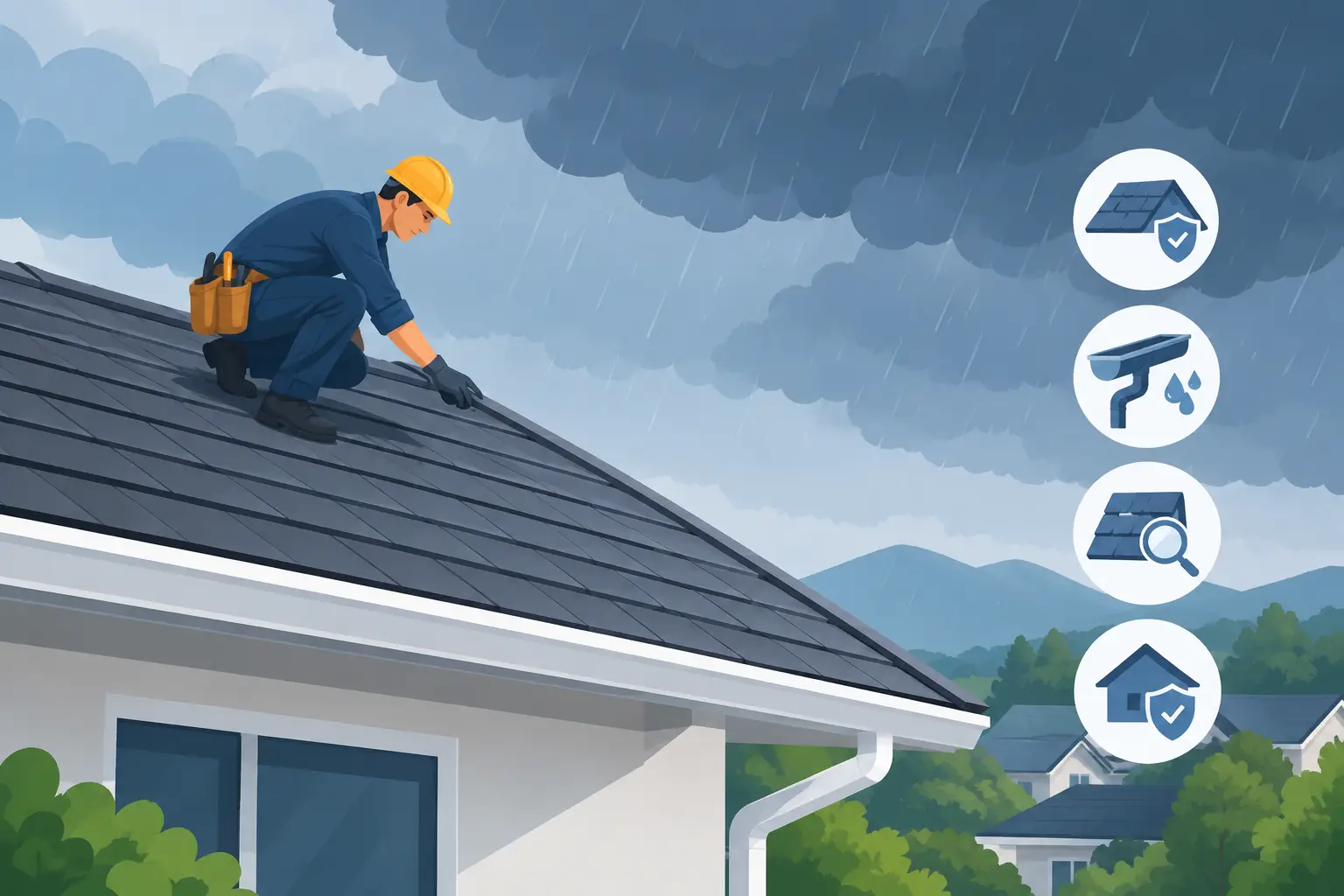
El Paso’s summer monsoon storms can turn a small roofing weakness into an active leak in a single afternoon. To prepare roofs for monsoon weather, property owners need more than a quick look from the ground. High winds, wind-driven rain, sudden temperature shifts, and debris can expose loose materials, blocked drainage paths, failed sealant, and flashing problems that stayed hidden during dry weather.
The best time to address those issues is before dark clouds arrive. A planned inspection and targeted repair can protect ceilings, insulation, walls, inventory, and the structural components beneath the roof deck. Whether you own a shingle-roofed home, a flat-roof commercial building, or a property with tile, metal, TPO, or spray foam roofing, monsoon preparation should be based on the condition and design of your specific roof.
Start With a Professional Roof Inspection
A roof may look sound from the driveway while having damage at penetrations, edges, valleys, or drainage points. A professional inspection gives property owners a clear picture of what needs immediate attention and what can be planned as future maintenance.
An experienced roofing crew should examine the full system, not just the field of the roof. That includes shingles, tiles, seams, underlayment where visible, flashing, vents, skylights, pipe boots, roof-mounted equipment, parapet walls, gutters, scuppers, drains, and areas where different roof sections meet. On commercial properties, the inspection should also account for ponding water, membrane condition, expansion joints, and rooftop HVAC curbs.
Interior evidence matters as well. Water stains, peeling paint, damp drywall, musty odors, or soft spots in a ceiling can indicate a roof leak, but the visible stain is not always directly below the entry point. Water can travel along decking, framing, wiring, or insulation before it appears inside. Finding the source early helps avoid unnecessary interior repairs later.
Repair Small Problems Before Storms Make Them Bigger
Monsoon rain is rarely gentle. Wind can drive water beneath lifted shingles, around loose flashing, and into small openings at roof transitions. A minor issue that might survive a light rain can fail under a fast-moving storm.
Common repairs include replacing damaged or missing shingles, resetting loose tile, securing metal panels, repairing cracked pipe boots, resealing penetrations, and correcting deteriorated flashing. On low-slope roofs, open seams, punctures, blisters, worn coatings, and damaged membrane edges deserve prompt attention. A roof coating can extend service life in the right situation, but it is not a substitute for repairing wet insulation, failed seams, or significant substrate damage first.
Property owners should be cautious about do-it-yourself roof repairs, especially on steep slopes, tile surfaces, or commercial flat roofs. Walking in the wrong area can crack tile, damage a membrane, or create a safety risk. Temporary patch products may slow a leak, but they can also conceal a larger failure and make a later repair more difficult to diagnose.
Pay Close Attention to Flashing and Penetrations
Most leaks do not begin in the middle of an undamaged roof field. They begin where the roof is interrupted or changes direction. Flashing around chimneys, skylights, vents, walls, and roof-mounted equipment has to direct water away from vulnerable joints.
Sealant at these locations can dry out and crack under El Paso’s intense sun. Fasteners can loosen, and metal flashing can shift over time. A monsoon-ready inspection should verify that flashing is firmly secured, properly integrated with the roofing material, and free of gaps that allow wind-driven rain inside.
Clear Drainage Paths From Roof to Ground
Water needs a reliable path off the roof. When gutters, scuppers, downspouts, roof drains, or valleys are blocked by leaves, dirt, gravel, or windblown debris, water can back up where it does not belong. On a sloped roof, that may push water beneath shingles or tile. On a flat roof, it can create standing water that places added stress on seams and membranes.
Clean gutters and downspouts before the monsoon season, then check them again after major wind events. Make sure downspouts discharge away from the foundation and do not flood walkways, patios, or entry areas. If water regularly overflows gutters, the problem may be a blockage, undersized gutter capacity, improper slope, or a drainage layout that needs improvement.
Commercial roofs require the same attention at a larger scale. Drains and scuppers should be open, strainers should be intact, and debris should be removed from low areas. Ponding water may point to drainage concerns or insulation settlement. Some standing water after a storm can evaporate without immediate failure, but recurring ponding should be evaluated because it can shorten the life of many low-slope roofing systems.
Secure the Roof Edges and the Area Around Your Property
High winds test roof edges first. Loose fascia, damaged drip edge, unsecured coping, and deteriorated perimeter materials can allow wind to get under the roofing system. Once uplift begins, damage can spread quickly across a section of roof.
Look around the property for branches, loose patio covers, unsecured outdoor furniture, and other items that could become airborne. Trim branches that hang over the roof when practical, especially dead or weakened limbs. Keep in mind that aggressive trimming or tree removal near a building may require a qualified professional to avoid damage to the roof, power lines, or surrounding structures.
For businesses and multifamily properties, managers should also inspect rooftop equipment and access points. Loose panels, damaged equipment curbs, and unsecured access hatches can create both leak risks and safety concerns during severe weather.
Choose Repairs and Materials That Fit El Paso Conditions
The right approach depends on roof type, age, slope, budget, and long-term plans for the property. A localized repair may be the smart choice when the roof is generally in good condition and the problem is limited. If leaks are recurring, materials are near the end of their service life, or storm damage reveals widespread wear, replacement may offer better value than repeated patching.
Shingle roofing remains a practical option for many homes, but damaged shingles and underlayment need to be addressed before the rainy season. Tile roofs can provide long-lasting protection, yet cracked tiles, displaced pieces, and aging underlayment beneath the tile can still allow water intrusion. Metal roofing performs well when panels, fasteners, closures, and flashing are properly installed and maintained.
For low-slope residential and commercial roofs, TPO, modified bitumen, spray foam, and coating systems each have different strengths. TPO can offer durable seam-welded protection. Modified bitumen is a proven multi-layer option. Spray foam can create a continuous surface and may support energy-efficiency goals when it is properly coated and maintained. Roof coatings can help protect eligible existing systems and reflect heat, but their success depends on sound preparation and a roof that is a good candidate for restoration.
A qualified contractor can explain the trade-offs clearly. The lowest upfront repair is not always the lowest long-term cost, particularly when water intrusion threatens insulation, drywall, electrical systems, or business operations.
Have a Storm Response Plan Before You Need One
Even a well-maintained roof can be damaged by extreme weather. Homeowners should know where attic access is located, keep buckets and towels available for an interior drip, and document the condition of the roof and ceilings before storm season when possible. If a leak develops, move valuables away from the affected area and avoid standing near wet electrical fixtures.
Commercial property owners and facility managers should identify who will inspect the building after a storm, how tenants or staff will report leaks, and where emergency contact information is stored. Fast reporting helps limit damage. Waiting for a stain to become a ceiling collapse is never a cost-saving strategy.
After a storm, take photos from a safe location and look for visible debris, missing materials, overflowing gutters, or new interior water marks. Do not climb onto a wet roof. Schedule a professional assessment when there is any concern, especially after high winds or hail.
Prepare Roofs for Monsoon Season With One Accountable Team
Monsoon preparation often involves more than the roof itself. A leak may lead to damaged insulation, drywall, paint, stucco, or exterior trim. Working with one experienced contractor can make the process easier because the inspection, roofing repair, and related property improvements can be coordinated under a single accountable team.
MAK Roofing & Construction helps El Paso homeowners and commercial property owners evaluate roofing conditions, complete needed repairs, and plan roofing systems built for local weather. Schedule your appointment today before the next monsoon storm puts an untested roof to work.