

- BY
- POSTED IN Blog
- WITH 0 COMMENTS
- PERMALINK
- STANDARD POST TYPE
Table of Contents
- What Is the 25% Rule for Roofing
- How to Calculate Roof Damage Percentage
- The 25% Rule and Texas Residential Roofing Building Codes
- El Paso Roof Repair vs Replacement: Applying the 25% Rule
- Insurance and the 25% Rule
- Common Mistakes When Interpreting the 25% Rule
- Conclusion
- Frequently Asked Questions
Last Updated: September 25, 2026
What Is the 25% Rule for Roofing
The 25% rule roofing standard is a critical threshold that determines whether a damaged roof should be repaired or replaced. When damage affects 25% or more of your roof’s total area, most insurance companies and roofing professionals recommend full replacement rather than piecemeal repairs. This rule exists because partial repairs on extensively damaged roofs often fail prematurely, leading to repeated claims and accelerated deterioration.
Understanding this threshold matters because it directly affects your insurance coverage, repair costs, and long-term protection. A roof operating below the 25% damage threshold can be safely patched. Cross that line, and you’re looking at a fundamentally compromised system that won’t perform reliably. At MAK Roofing & Construction, we evaluate damage extent carefully to help homeowners and property managers make informed decisions about whether repair or replacement makes sense for their specific situation.
The 25% rule roofing standard isn’t arbitrary. It reflects decades of industry experience showing that roofs with damage exceeding this percentage tend to fail again within a few years, even after repairs. Insurance adjusters use this standard because it protects both the policyholder and the carrier from repeated claims on the same property.
How to Calculate Roof Damage Percentage
Calculating roof damage percentage requires a systematic approach to measuring affected areas. Start by determining your roof’s total square footage, then measure the damaged sections separately. Divide the damaged area by the total area and multiply by 100 to get your percentage.
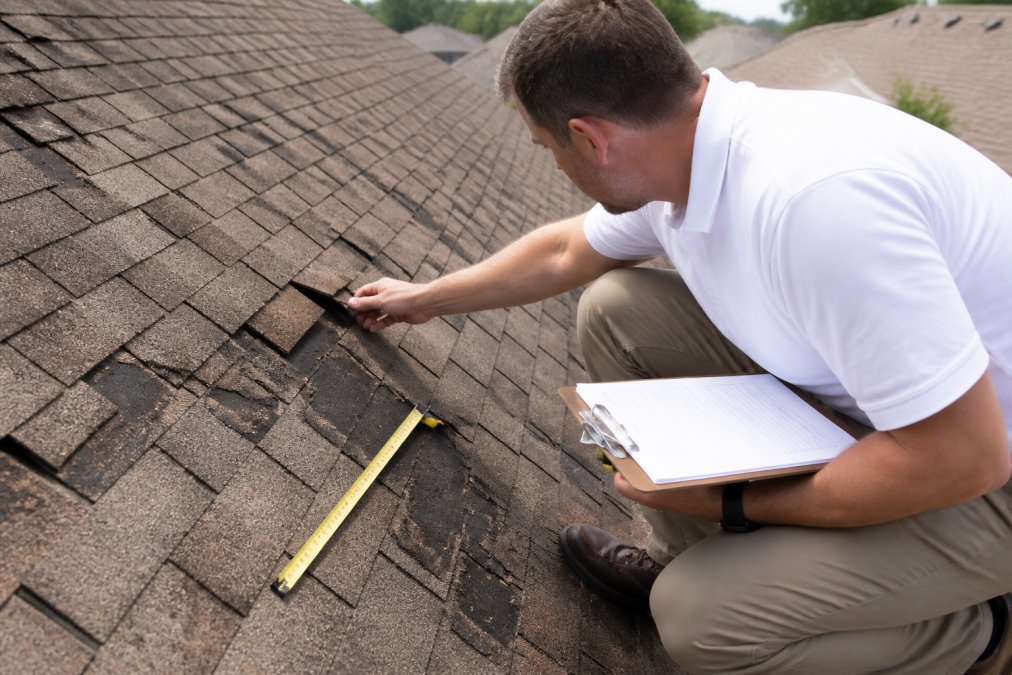
Most damage falls into categories: missing shingles, cracked or curled shingles, punctures from debris, hail damage, or water stains indicating underlying issues. Each type requires different measurement approaches. Missing shingles are straightforward to count and convert to square footage. Hail damage often appears as dimpling across large areas, requiring you to identify the affected zones rather than count individual impacts.
Here’s where many homeowners make mistakes: they underestimate damage extent by only counting obviously missing pieces. Hidden damage matters too. Water stains, mold growth, and compromised underlayment all factor into the total damage calculation. A professional inspector uses specialized tools and aerial photography to capture the full picture, which is why insurance companies typically send adjusters rather than relying on homeowner estimates.
The calculation becomes more complex on multi-level roofs with valleys, dormers, and varying slopes. Different sections may have different damage percentages. A roof might show 15% damage on the north side but 35% on the south side, which means the overall roof exceeds the 25% threshold despite some sections being relatively intact.
The 25% Rule and Texas Residential Roofing Building Codes
Texas residential roofing building codes don’t explicitly mandate the 25% rule, but the threshold aligns with industry standards and insurance practices that govern how properties are maintained. The International Building Code, which Texas adopts through its own amendments, requires that roofs maintain their structural integrity and weather resistance. Once damage reaches 25%, that integrity is compromised.
Insurance carriers operating in Texas follow this standard because it protects properties from repeated failures. When a roof crosses the 25% damage line, the structural system begins to fail progressively. Wind, rain, and temperature fluctuations stress the remaining intact sections, accelerating additional damage. This cascade effect is why insurers prefer replacement over repair at this threshold.
Local building departments in El Paso and surrounding areas expect contractors to follow this standard when recommending roof work. Permit applications for roof replacement often reference damage assessment reports that cite the 25% threshold. If you’re applying for permits or filing insurance claims, expect adjusters and inspectors to use this metric consistently.
The rule also protects future buyers and lenders. A roof documented as having exceeded 25% damage and then been repaired rather than replaced becomes a liability disclosure issue. Future property sales require disclosure of the damage history, which can affect property value and insurability.
El Paso Roof Repair vs Replacement: Applying the 25% Rule
In El Paso’s climate, the 25% rule takes on particular importance because of intense sun exposure, occasional hail storms, and dust storms that accelerate material degradation. A roof that’s already stressed by heat and UV damage loses its resilience faster, making partial repairs less effective once damage exceeds the threshold.
When damage stays below 25%, repair makes economic sense. Targeted shingle replacement, flashing repairs, or sealant work restores functionality at a fraction of replacement cost. These repairs typically last several years, buying time before the roof reaches end of life.
Crossing the 25% threshold changes the calculation entirely. A roof that’s 30% damaged might require replacement of nearly the entire system anyway through multiple repair cycles over the next few years. The cumulative cost of repeated repairs often exceeds the cost of one comprehensive replacement. Beyond the financial angle, a partially repaired roof creates inconsistent performance, newer sections function differently from older ones, creating stress points where different materials meet.
El Paso’s temperature extremes compound this issue. Summer heat expands roofing materials, winter cooling contracts them. A roof with mixed-age materials experiences uneven stress, leading to premature failure at seams and transitions. Replacement eliminates this problem by providing a uniform system designed to move and perform as one unit.
The timing question matters too. If your roof is already 15-20 years old and damage reaches 25%, replacement is almost certainly the right choice. If it’s only 5 years old, the decision depends on whether the damage is localized or systemic. Localized damage below 25% can be repaired. Systemic damage suggests material failure, which points toward replacement regardless of age.
Insurance and the 25% Rule
Insurance companies use the 25% rule as a standard threshold for coverage decisions. Most homeowners policies cover roof damage from covered perils like hail, wind, and falling debris. However, coverage depends on whether the damage qualifies for repair or requires replacement.
When damage stays below 25%, insurers typically approve repair claims. The adjuster calculates repair costs, applies your deductible, and processes payment. This approach is efficient for both insurer and policyholder. Claims move quickly, repairs happen promptly, and the property returns to protected status.
Crossing the 25% threshold triggers different handling. Insurers often require replacement rather than repair, which means higher claim values but also better long-term protection for the property. Some policies include replacement cost coverage, meaning the insurer pays for a new roof without depreciation deductions. Others apply actual cash value, reducing payment based on the roof’s age and condition.
The key to insurance success is documentation. When you report damage, get a professional assessment that calculates the damage percentage. This assessment becomes your evidence in claim disputes. Insurance adjusters may disagree with your estimate, so having a detailed, credible report strengthens your position.
Filing a claim after crossing the 25% threshold requires understanding your policy’s specific language. Some policies have separate limits for roof damage. Others include deductibles that apply per occurrence. A few policies exclude certain types of damage entirely. Reading your policy before damage occurs prevents surprises when you need coverage most.
Common Mistakes When Interpreting the 25% Rule
The first mistake is assuming the rule applies uniformly across all situations. The 25% threshold is a guideline, not a legal requirement. Some insurers use 30%, others use 20%. Some contractors recommend replacement at lower damage levels if they identify underlying structural issues. Always verify your specific insurance policy language rather than relying on the general rule.
Another frequent error is miscalculating damage percentage. Homeowners often count only visible damage, missing shingles or obvious holes, while missing less obvious problems like lifted shingles, compromised flashing, or water damage underneath. Professional assessments catch these hidden issues that dramatically change the damage calculation. An inspector might find that what looks like 15% surface damage actually involves 35% of the roof’s functional area.
Some property owners delay assessment hoping damage won’t exceed the threshold. This approach backfires. Unrepaired damage spreads. Water intrusion causes mold and structural rot. What started as 20% damage becomes 40% within months. Insurance companies document the timeline, and they may deny coverage for damage that worsened due to neglect after the initial incident.
Confusing the 25% rule with roof age is another common mistake. A 10-year-old roof with 25% damage should be replaced. A 3-year-old roof with 25% damage should also be replaced, even though it has many years of life remaining. The damage threshold is independent of age. Damage extent, not age alone, determines whether replacement is necessary.
Finally, some people assume they can avoid replacement by doing repairs themselves or hiring the cheapest contractor. DIY roof work on damaged roofs is dangerous and often voids insurance coverage. Cheap contractors may cut corners on assessment, underestimating damage extent and creating problems later. Professional evaluation costs money upfront but prevents far more expensive problems downstream.
Conclusion
The 25% rule for roofing exists because it reflects the point where roof systems stop functioning reliably as unified wholes. Once damage exceeds this threshold, replacement becomes more cost-effective and protective than repair, regardless of the roof’s age or remaining lifespan.
If you’re facing roof damage in the El Paso area, the first step is getting an accurate damage assessment from a qualified professional.
Frequently Asked Questions
Does the 25% roofing rule apply to all roof repairs in Texas?
The 25% rule is a general guideline used by insurance companies and contractors, but it is not a mandated law across all of Texas. Local building codes in different areas, including El Paso, may have their own requirements for when repairs versus replacement is necessary. Always check with your local building department and your insurance policy to understand what applies to your specific situation.
How do I calculate if my roof damage exceeds 25%?
Measure the total square footage of your roof, then determine the square footage of damaged areas. Divide damaged area by total area and multiply by 100 to get the percentage. For example, if your roof is 2,000 square feet and damage covers 600 square feet, that is 30% damage. Most homeowners should hire a professional inspector to ensure accurate assessment, as roofing calculations require climbing and safety precautions.
Will my insurance cover a full roof replacement under the 25% rule?
Insurance coverage depends on your policy terms and the cause of damage. If damage exceeds 25%, many insurers will approve replacement rather than repairs. However, your policy may have age limits, depreciation clauses, or exclusions for certain types of damage. Review your policy details or contact your insurance agent to confirm coverage before assuming replacement will be paid for.
What happens if my roof damage is below 25% but repairs keep failing?
Even if damage is below 25%, repeated repairs on an aging roof may indicate the roof is nearing the end of its life. In these cases, replacement can be more cost-effective than ongoing repairs. A professional roofing contractor can assess whether your roof’s overall condition warrants replacement despite the damage percentage being below the 25% threshold.