

- BY
- POSTED IN Uncategorized
- WITH 0 COMMENTS
- PERMALINK
- STANDARD POST TYPE
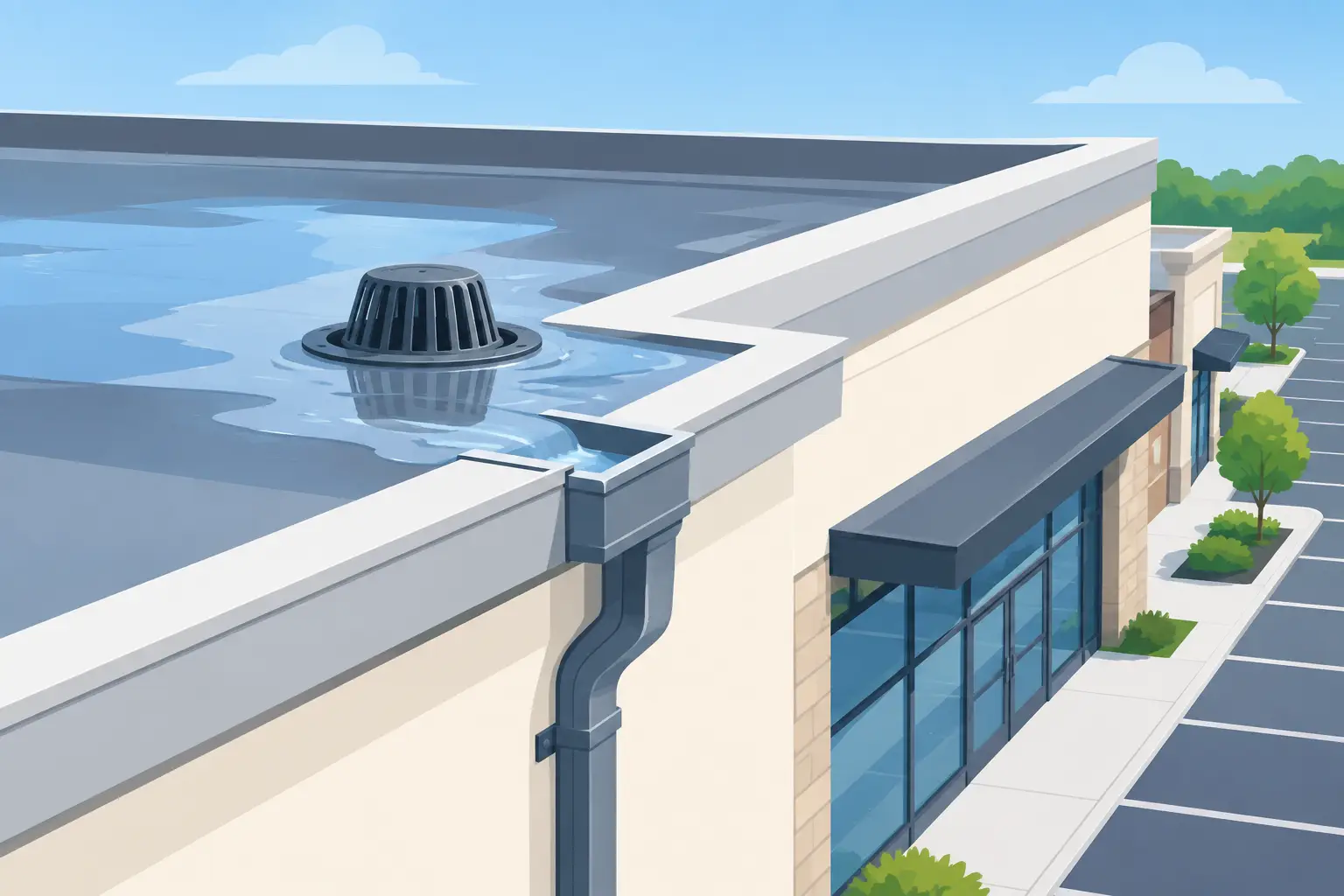
A retail roof can look perfectly fine from the parking lot while water is pooling behind a parapet wall, backing up at a drain, or pushing beneath flashing around rooftop equipment. By the time a ceiling tile stains or water reaches merchandise, the drainage issue has usually been building for longer than anyone realized.
Retail roof drainage is not a minor maintenance detail. It is a key part of protecting inventory, customer areas, electrical systems, tenant spaces, and daily operations. For store owners and facility managers, a roof drainage plan helps prevent avoidable disruptions that can cost far more than a scheduled inspection or repair.
Why Retail Roof Drainage Deserves Attention
Most commercial retail buildings have low-slope or flat roofing systems. Unlike steep residential roofs that shed water quickly, these systems rely on carefully planned slope, drains, scuppers, gutters, and downspouts to move water off the roof. When one component is blocked, undersized, damaged, or improperly installed, water can remain on the roof long after a storm passes.
Standing water adds weight to the roof structure and accelerates wear on roofing materials. It can find small weaknesses at seams, penetrations, drain bowls, and flashing details. In El Paso, sudden heavy rain can expose drainage problems fast, particularly after long dry periods allow dust, leaves, and debris to collect around drains and scuppers.
The risk is not limited to an active leak. Repeated ponding can shorten the service life of TPO, modified bitumen, coatings, and other low-slope roofing systems. It may also lead to mold concerns, damaged insulation, deteriorated decking, and repairs inside the building. A small drainage problem is easier to correct before it becomes a roof replacement or an interruption to business.
How a Retail Roof Drainage System Works
A properly designed drainage system directs water to intended collection points rather than allowing it to settle in low areas. On a retail property, this may include internal roof drains connected to piping, perimeter scuppers that discharge through parapet walls, gutters and downspouts, or a combination of these components.
The roof surface must have adequate slope toward the drains. That slope can be built into the deck, created with tapered insulation, or formed through the roofing system design. The right approach depends on the structure, roof layout, existing elevations, rooftop units, and how water currently moves during a storm.
Drain strainers and scupper openings keep larger debris from entering the system, but they need room to work. A drain surrounded by leaves, dirt, packaging debris, or loose gravel cannot move water at its intended rate. Even a system with correctly sized drains can fail when routine cleaning is ignored.
Primary and Secondary Drainage Matter
Commercial roofs should also have a secondary drainage path, often called emergency overflow drainage. This may be an overflow scupper or secondary drain located above the primary drainage level. If the main drain clogs during a major rain event, the overflow gives water another route out before it rises high enough to threaten the roof structure or enter the building.
Overflow drainage is not a substitute for maintenance. It is a safeguard. If water regularly comes through an overflow scupper, the primary system needs immediate attention.
Common Drainage Problems on Retail Roofs
Drainage failures do not always start with a dramatic storm. They often develop through routine wear, deferred maintenance, or changes made to the building over time. A professional roof inspection can identify concerns that are difficult to see from ground level.
Common issues include:
- Clogged drains, scuppers, gutters, or downspouts caused by debris and windblown dirt
- Ponding water caused by inadequate slope, compressed insulation, or deck settlement
- Deteriorated flashing around drains, scuppers, curbs, and rooftop penetrations
- Cracked drain bowls, separated seams, or loose strainers
- Improperly routed discharge that causes erosion, wall staining, or water near entrances
- Added rooftop equipment that changes water flow or creates new low areas
It is also common to find drainage issues after a roof coating or repair project that addressed the visible surface but did not correct the reason water was collecting. Coatings can extend the life of an appropriate roof system, but they will not solve a blocked drain, failed flashing, or structural low spot on their own.
Signs Your Store May Have a Drainage Issue
The clearest sign is water remaining on the roof more than 48 hours after normal weather conditions return. Some temporary ponding can occur on low-slope systems, but persistent standing water deserves an inspection. The question is not simply whether water is present. It is whether the roof is draining as designed and whether the standing water is affecting the membrane, seams, or structure.
Inside the building, watch for ceiling stains, peeling paint, damp insulation, musty odors, or water around light fixtures. Outside, look for streaking below scuppers, overflowing gutters, damaged downspouts, washout near the building, and water collecting near customer entrances.
Business owners should also pay attention to recurring repairs in the same area. If a leak keeps returning after patch work, the source may be drainage rather than a single damaged section of roofing. Correcting the underlying water path is more valuable than repeatedly treating the symptom.
A Practical Maintenance Plan for Retail Roof Drainage
Retail properties benefit from scheduled roof maintenance rather than waiting for a leak. At minimum, drains and drainage paths should be checked before the rainy season, after significant storms, and whenever wind has deposited debris on the roof. Properties with large trees nearby, multiple rooftop units, or older drainage systems may need more frequent service.
A thorough maintenance visit should include clearing drain strainers and scuppers, checking gutters and downspouts, inspecting drain flashing and membrane seams, and identifying areas where water ponds. The contractor should also inspect rooftop HVAC curbs, pipe penetrations, expansion joints, and parapet walls because water often enters at these transition points.
Documentation matters for commercial property owners and facility managers. Photos of roof conditions, identified concerns, completed repairs, and recommended next steps help support budgeting decisions and provide a clearer maintenance history. This is especially useful for multi-tenant retail spaces, properties being prepared for sale, and buildings with warranty requirements.
When Repair Is Enough and When Redesign Is Needed
Not every drainage issue requires a full roof replacement. A clogged scupper, damaged drain flashing, loose seam, or isolated low spot may be corrected with targeted repair work. If the roofing system is otherwise in good condition, a repair and maintenance plan can be the most cost-effective choice.
However, widespread ponding, aging materials, repeated leaks, saturated insulation, or poor original slope may call for a larger solution. During replacement, a contractor can address drainage with tapered insulation, improved drain placement, new scuppers, properly integrated flashing, and a roofing system selected for the building’s needs. This is the right time to evaluate how rooftop equipment, solar-related construction, and future maintenance access will affect water flow.
The best solution depends on the roof’s condition, the building’s structure, drainage capacity, and the cost of disruption if water enters the property again. A quick patch may make sense for a single isolated defect. A recurring problem needs a plan that protects the building for the long term.
Protect Operations Before the Next Storm
A retail roof does more than cover a building. It protects the people, products, equipment, and revenue inside it. MAK Roofing & Construction helps commercial property owners evaluate roof conditions, identify drainage concerns, and complete repairs or replacement work under one experienced team.
If water is ponding, drains are overflowing, or leaks keep returning, schedule an inspection before the next storm turns a manageable repair into a business interruption. A clear drainage path today can protect your property when the weather changes tomorrow.