

- BY
- POSTED IN Uncategorized
- WITH 0 COMMENTS
- PERMALINK
- STANDARD POST TYPE
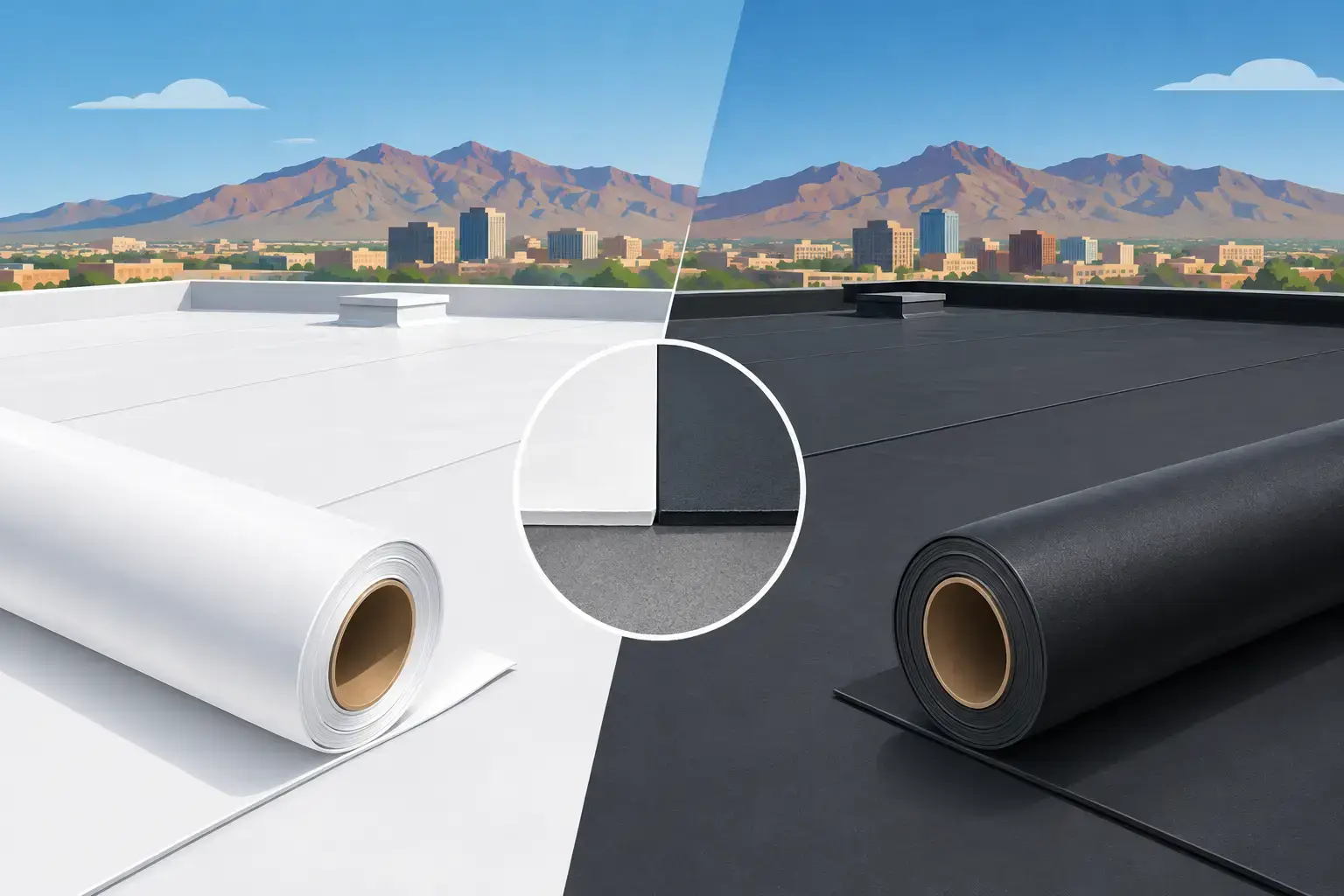
A flat roof in El Paso has to handle more than occasional rain. It faces intense sun, long stretches of dry heat, wind-driven debris, and sudden monsoon storms that quickly expose drainage or seam problems. When comparing TPO versus EPDM, the right choice comes down to your building, roof design, energy priorities, and the condition of the existing roof assembly.
Both materials are proven single-ply roofing systems. Both can protect commercial buildings, additions, garages, patio covers, and low-slope residential roofs when installed correctly. But they perform differently in the desert climate, especially when it comes to heat reflection, seam construction, and long-term maintenance.
TPO Versus EPDM: The Core Difference
TPO, short for thermoplastic polyolefin, is a single-ply membrane commonly installed in white or other light colors. Its seams are heat-welded, creating a continuous bond where membrane sheets meet. TPO is widely selected for commercial roofs because its reflective surface can reduce heat absorbed by the building.
EPDM, or ethylene propylene diene monomer, is a synthetic rubber roofing membrane. It has traditionally been available in black, although white EPDM is also an option. EPDM seams are generally joined with specialized tape or adhesive rather than welded with hot air.
That difference in seam construction matters. A properly welded TPO seam can be extremely strong and consistent. EPDM seam tape is also reliable when installed on a clean, prepared surface, but it requires careful workmanship and routine inspection as the roof ages. Neither system should be selected by material name alone. The installer, flashing details, drainage plan, and edge securement all affect the result.
Why El Paso Heat Changes the Conversation
El Paso property owners often look first at roof color, and for good reason. A standard white TPO roof reflects a significant amount of sunlight instead of absorbing it. That can help reduce roof-surface temperatures and lower the cooling load on conditioned spaces below, particularly on a large commercial building with limited shade.
Black EPDM absorbs more heat. In a colder climate, that can sometimes be useful. In El Paso, it can increase rooftop temperatures considerably during summer. That does not make EPDM a bad roof. It simply means the insulation below the membrane, the building’s HVAC demands, and the owner’s energy goals need closer consideration.
White EPDM may be worth discussing when an owner wants a reflective rubber membrane. Still, TPO is often the more natural fit for a sun-exposed El Paso low-slope roof because light-colored reflective membranes align well with the local climate.
Seams, Details, and Leak Resistance
Most flat-roof leaks do not begin in the middle of an open membrane field. They start at seams, penetrations, transitions, drains, parapet walls, rooftop equipment, or poorly handled repairs. This is where material behavior and crew experience become especially important.
TPO’s hot-air-welded seams are a major advantage on roofs with many field seams or broad open areas. Welding fuses the membrane together rather than relying solely on adhesives. When the temperature, speed, and pressure are properly controlled, the finished seam is designed to act as one continuous sheet.
EPDM relies on tape and adhesive systems at seams and details. Modern seam tapes have improved greatly and can perform well for many years. However, installers must properly clean and prime surfaces before making connections. Dust, moisture, poor surface preparation, or rushed application can compromise adhesion.
Both materials require well-built flashing around pipes, curbs, skylights, HVAC supports, and wall transitions. A quality roofing contractor will inspect these areas closely, not just quote membrane square footage. The details determine whether a roof stays dry after a hard summer storm.
Durability and Foot-Traffic Considerations
EPDM has a long track record as a flexible, durable rubber roofing material. It handles movement well and remains pliable in changing temperatures. On a roof with simple geometry and limited foot traffic, EPDM can be a practical, dependable system.
TPO is resistant to UV exposure and offers strong seam performance, but membrane thickness and installation quality matter. A thin membrane may cost less upfront but may not provide the same level of puncture resistance as a thicker option. Commercial roofs with frequent HVAC service, solar equipment, or regular maintenance access may need designated walk pads regardless of whether the roof is TPO or EPDM.
Neither membrane is meant to be treated like a walking surface. Tools, dropped equipment, sharp metal edges, and repeated foot traffic can damage any single-ply roof. If technicians need regular access to rooftop units, protective pathways should be part of the system design.
Cost: Look Beyond the Initial Quote
The installed cost of TPO versus EPDM can vary based on membrane thickness, insulation needs, tear-off requirements, roof access, drainage corrections, penetrations, and warranty coverage. One material is not always categorically cheaper than the other.
EPDM can sometimes offer a lower installed price on straightforward projects, especially where a dark membrane is acceptable and the roof layout is simple. TPO may cost more in some cases, but its reflective surface and welded seams can provide value that matters over the life of the roof.
The lowest bid can become expensive if it leaves out critical work. Wet insulation, deteriorated decking, ponding water, unsecured edge metal, and failing drains should not be covered up without a clear plan. A complete estimate should identify what is being removed, what is being repaired, which membrane thickness is proposed, how seams will be finished, and what warranty options apply.
Drainage Is Not Optional for Either System
TPO and EPDM are both used on roofs commonly called flat, but no roof should truly be flat. Water needs a path to drains, scuppers, gutters, or properly designed edges. Standing water adds weight, attracts debris, and can speed up deterioration around seams and flashing.
Before selecting a membrane, a professional inspection should identify low spots, blocked drainage points, and areas where water collects after a storm. Correcting slope with tapered insulation or addressing drainage components may be more important than choosing between two otherwise capable membranes.
This is especially true for roofs that have been coated or repaired repeatedly over the years. A roof can look acceptable from the ground while hiding saturated insulation or long-term ponding issues beneath the surface.
When TPO Is Often the Better Fit
TPO is often a strong choice for El Paso commercial properties, office buildings, retail spaces, warehouses, and low-slope residential sections that receive direct sun for most of the day. Its white reflective finish supports energy-conscious building design, while heat-welded seams provide a dependable approach for large roof areas.
It can also be a smart option when the owner wants a clean, bright roof surface and a system that works well with properly planned insulation upgrades. For buildings with rooftop HVAC equipment, solar-related construction, or multiple penetrations, the quality of the flashing work and maintenance access plan should guide the specification.
When EPDM Makes Sense
EPDM remains a worthwhile option for certain roof designs and budgets. Its flexibility can be beneficial on roofs with movement, and it has decades of proven use across the roofing industry. A property owner may choose EPDM when the roof is relatively simple, reflectivity is not the top priority, or a particular system specification calls for rubber membrane.
The key is not to assume that EPDM requires less attention. Its taped seams, flashing, and drainage still need periodic inspections. On black EPDM roofs in El Paso, the insulation package deserves special attention because the membrane will absorb substantial solar heat.
Make the Decision With a Full Roof Assessment
A reliable roofing recommendation starts with the roof you have, not a one-size-fits-all material preference. The age and condition of the existing roof, insulation levels, deck type, drainage, rooftop equipment, budget, energy goals, and warranty requirements all affect the best path forward.
For a repairable roof, targeted work or a roof coating may extend service life. For a roof with widespread membrane failure, wet insulation, or repeated leaks, replacement may be the better investment. MAK Roofing & Construction can evaluate the complete assembly and explain whether TPO, EPDM, another flat-roof system, or a repair plan best protects the property.
Before approving a flat-roof project, ask for a clear explanation of the membrane thickness, seam method, insulation plan, drainage corrections, flashing details, and warranty coverage. That conversation gives you a better roof decision than choosing by price or color alone.