

- BY adminMak
- POSTED IN Uncategorized
- WITH 0 COMMENTS
- PERMALINK
- STANDARD POST TYPE
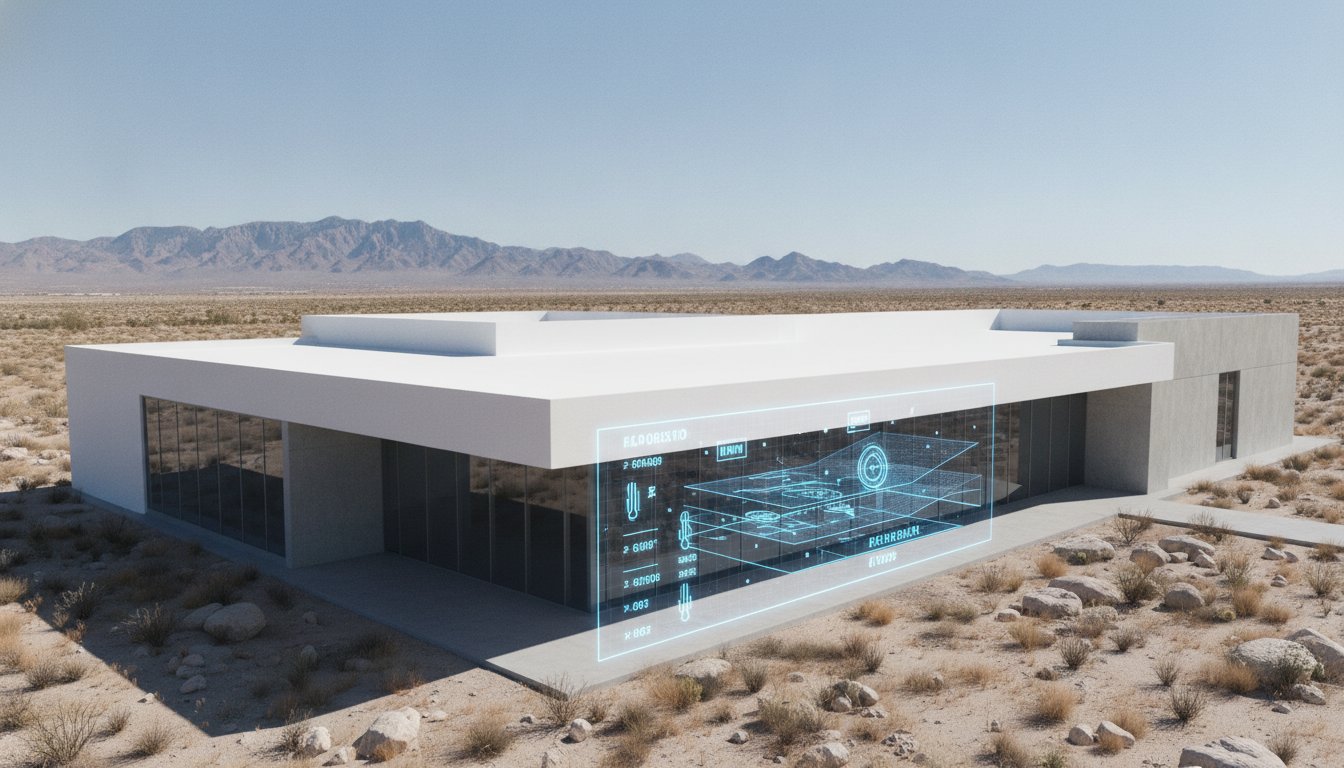
In the Chihuahuan Desert, your roof isn’t just a lid on your building; it’s a thermal engine that either saves or drains your bottom line. While many owners view a roof as a simple shield against rain, the reality of commercial flat roofing in El Paso is that the sun is a far more persistent enemy than the water. Between the intense UV degradation that cracks standard membranes and the heavy ponding that follows monsoon season, your investment faces a unique set of regional challenges that can lead to premature failure and soaring energy costs.
You likely understand that a standard approach won’t cut it when the thermometer stays in the triple digits for weeks. You need a system that acts as a high-performance thermal barrier while ensuring absolute structural integrity. This 2026 guide helps you navigate these complexities to achieve a leak-free, energy-efficient roof with a 20+ year lifespan. We’ll preview the most durable materials like TPO and spray foam, break down the latest local permit requirements, and explain how a comprehensive project steward manages the process to ensure minimal operational downtime. By the end of this article, you’ll have the confidence to choose a solution that protects your assets and slashes your overhead for decades.
Key Takeaways
- Identify why El Paso’s extreme diurnal temperature swings and UV radiation require specialized materials to prevent premature membrane failure.
- Compare the most reliable systems for commercial flat roofing El Paso facilities require, including high-reflectivity TPO and durable, multi-layer Modified Bitumen.
- Master a framework for evaluating your building’s current R-value and structural load capacity to ensure your new roof maximizes energy efficiency.
- Navigate the 2026 El Paso building code requirements and permit processes to keep your project compliant and avoid costly penalties.
- Learn how a comprehensive project steward manages logistics and installation to minimize noise and maintain business continuity during construction.
The Unique Challenges of Commercial Flat Roofing in El Paso
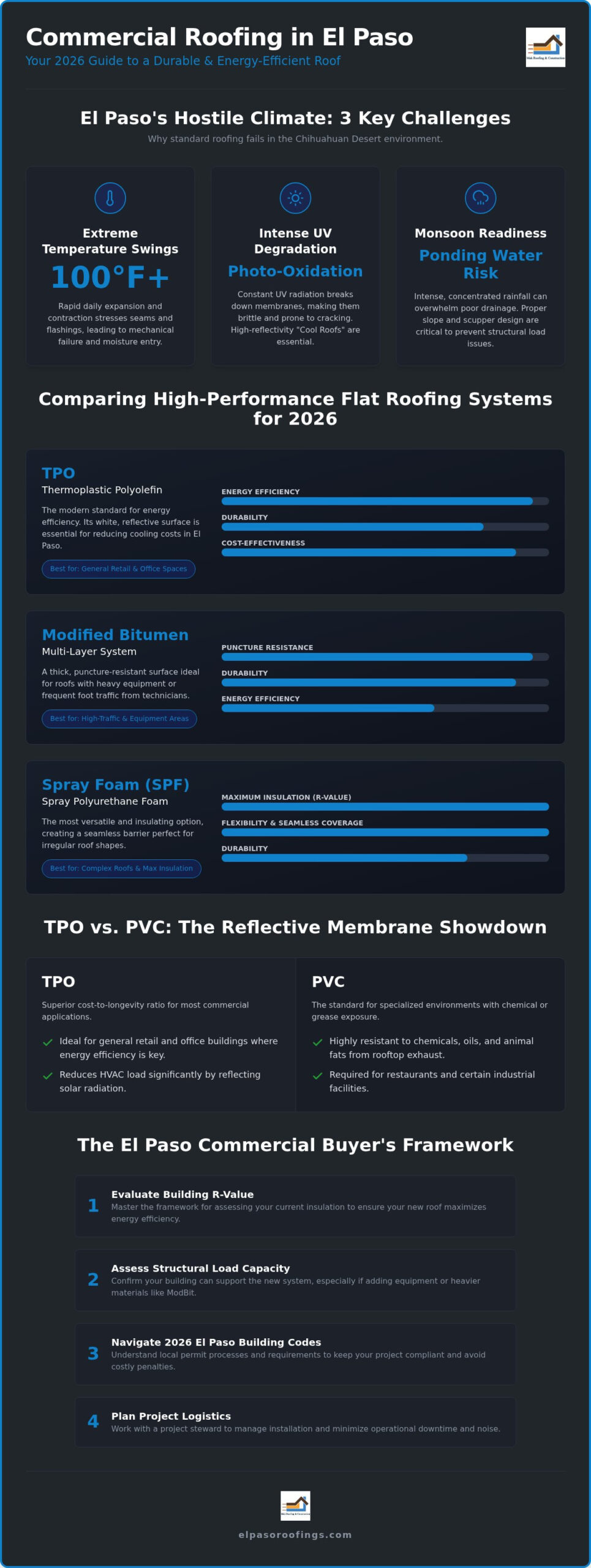
El Paso’s high-desert climate presents a hostile environment for standard construction materials. For commercial flat roofing El Paso business owners must account for the region’s intense diurnal temperature swings. During a typical spring day, the temperature of a dark roof surface can fluctuate by over 100 degrees between noon and midnight. This rapid expansion and contraction places immense stress on roof seams and flashings. If a system isn’t engineered to handle this mechanical movement, the seams will eventually pull apart, creating entry points for moisture.
Wind uplift is another critical factor, particularly for properties near the Franklin Mountains foothills. High-velocity gusts can create a vacuum effect, literally lifting poorly secured membranes off the roof deck. As a project steward with 16 years of local experience, we ensure every project accounts for these local pressure zones to maintain absolute structural integrity. We focus on precision fastening patterns and perimeter reinforcement to keep your asset secure during the windiest months of the year.
UV Degradation: The Silent Killer of Commercial Roofs
The West Texas sun delivers a constant barrage of ultraviolet radiation that triggers a process called photo-oxidation. This chemical breakdown leaches plasticizers out of roofing membranes, leaving them brittle and prone to cracking under the slightest pressure. Materials that aren’t specifically UV-rated will often fail years before their intended lifespan. To combat this, we prioritize “Cool Roof” systems with high reflectivity ratings. UV reflectivity is the percentage of solar energy a roof bounces back into the atmosphere. High-reflectivity systems don’t just last longer; they significantly reduce the heat load on your building, lowering cooling costs for local businesses.
Monsoon Readiness and Drainage Integrity
While our region is primarily arid, the monsoon season brings intense, concentrated rainfall that tests every inch of a drainage system. A “flat” roof is a misnomer; it must have a slight slope to move water toward exit points. We utilize tapered insulation to create this necessary pitch, effectively preventing the ponding water issues common in older industrial buildings in Socorro and Horizon City.
Common failure points often involve clogged or undersized scuppers and drains. If water sits on a roof for more than 48 hours, the weight can lead to structural load issues and accelerate membrane rot. Proper scupper placement and the installation of overflow drains are essential steps in preventing catastrophic failures during flash storms. We treat the roof as a critical part of your entire building asset, ensuring every component works to shield the interior from the desert’s extremes; to learn more about protecting your building envelope, you can explore Exterior Masonry and Facade Restoration as part of a comprehensive maintenance strategy.
Choosing the most effective material for your commercial flat roofing El Paso project depends entirely on your building’s specific use and thermal goals. In 2026, the industry has shifted toward systems that prioritize longevity and heat mitigation to combat rising utility costs. We focus on four primary systems that offer the best return on investment for our regional climate, similar to the high-performance flat roof installations provided by roofinginhackney.com.
- TPO (Thermoplastic Polyolefin): This single-ply membrane is the modern standard for energy efficiency. Its white surface reflects the majority of solar radiation, which is essential for keeping cooling costs manageable.
- Modified Bitumen: If your roof houses heavy equipment or requires frequent technician access, this multi-layer system is a superior choice. It uses a combination of asphalt and polymer modifiers to create a thick, puncture-resistant surface.
- Built-Up Roofing (BUR): For heavy-duty industrial applications, the traditional BUR system offers redundant layers of protection. It remains a dependable, “tried and true” method for facilities where structural durability is the primary concern.
- Spray Polyurethane Foam (SPF): This is the most versatile option for buildings with irregular shapes or those requiring maximum insulation.
TPO vs. PVC: Which Reflective Membrane Wins?
While both are white, heat-reflective membranes, they serve different operational needs. PVC is typically more resistant to chemicals, oils, and animal fats, which makes it the standard for restaurants with rooftop exhaust fans. However, TPO offers a superior cost-to-longevity ratio for general retail and office spaces. White membranes are the default choice for reducing HVAC load because they prevent the “heat island” effect on your roof deck. If you’re managing a local retail center, the weld strength of TPO provides a reliable, long-term seal against the high-velocity wind uplift common in our region.
The Spray Foam Advantage: Insulation Meets Roofing
We often integrate spray foam to solve the insulation problems that traditional board systems miss. Standard board insulation can leave small gaps at the seams, a phenomenon called thermal bridging that allows heat to bypass your roof’s protection. SPF roofing provides both an air seal and a high R-value in one application. Its seamless nature means there are no joints or seams to fail, which is where the majority of leaks occur. Because it’s a liquid-applied system, it conforms to every penetration and curb on your roof, creating a monolithic shield. If you want to maximize your facility’s efficiency, you should consult with a specialist about combining roofing and insulation into a single, high-performance project.
The El Paso Commercial Buyer’s Framework
Investing in a new roof is a major capital expenditure that requires a strategic assessment of your building’s long-term performance. For commercial flat roofing El Paso property managers, the decision-making process should begin with a thorough audit of the existing building envelope. We recommend a methodical approach that prioritizes your facility’s specific operational needs over the lowest initial bid.
Your framework should include these four critical evaluations:
- Energy Loss Audit: Evaluate your current R-value. If your facility was built more than 15 years ago, your insulation likely falls short of modern efficiency standards, causing your HVAC system to overwork.
- Structural Load Capacity: Determine if your deck can support the weight of a multi-layer gravel system or if a lightweight membrane is necessary. This is especially vital for older industrial warehouses.
- Rooftop Equipment Density: High concentrations of HVAC units, vent pipes, or solar panels create complex flashing requirements. A high density of penetrations often makes seamless systems more cost-effective.
- 20-Year Total Cost of Ownership (TCO): Analyze the combined cost of installation, projected energy savings, and required maintenance. A system with a higher upfront price often provides a lower TCO through reduced utility bills and fewer repairs.
Labor accounts for approximately 50-55% of the total project cost in our region. Because such a large portion of your investment goes toward the installation process, selecting a system that minimizes future labor-intensive repairs is the most effective way to protect your bottom line.
Calculating ROI Through Energy Efficiency
A “Cool Roof” system can significantly reduce summer cooling costs for El Paso businesses by reflecting solar heat rather than absorbing it. This thermal protection does more than just lower your monthly utility bill; it reduces the daily strain on your HVAC equipment. When your rooftop units don’t have to fight against a 150-degree roof surface, their operational lifespan increases. You should also investigate federal tax credits for energy-efficient commercial improvements, which can further offset the initial cost of high-performance insulation and reflective membranes; to see how solar power can further enhance these savings, read more.
It’s vital to distinguish between a manufacturer’s material warranty and a contractor’s labor warranty. A manufacturer’s paper warranty typically only covers defects in the membrane itself, which are rare. Most issues arise from installation errors at the seams or flashings. This is why a 16-year local track record is more valuable than a generic 20-year material guarantee. As a dedicated project steward, we emphasize preventative maintenance agreements that include annual drain cleanings and seam inspections. This proactive approach ensures your roof reaches its full 20+ year life expectancy without unexpected operational downtime.
Planning Your Project: Logistics and Local Regulations
Successful commercial flat roofing El Paso projects require more than technical skill; they require meticulous logistical planning. We manage the entire lifecycle of the project, from the initial permit application to the final inspection. As your project steward, we prioritize a streamlined workflow that respects both your timeline and your budget. This comprehensive approach ensures that technical details never compromise your operational goals.
The City of El Paso’s Planning & Inspections Department enforces strict permit requirements for all major commercial roofing alterations. For a project valued at $250,000, the base permit fee is approximately $915, excluding surcharges. We manage this entire administrative process to ensure full compliance. Failing to secure the proper documentation can result in penalties triple the permit fee, creating unnecessary financial strain. We also coordinate with authorities in Las Cruces and Horizon City to address their specific zoning and municipal requirements.
We understand that your operations cannot stop for a roof replacement. Our team coordinates staging areas and material deliveries to minimize noise and access disruptions for your tenants or employees. By scheduling high-decibel work during off-peak hours and maintaining a clean job site, we protect your business continuity. We treat your facility with the respect an essential asset deserves.
The Commercial Roof Assessment Process
A professional assessment is the first step in any successful project. We don’t rely on visual inspections alone. A core sample test allows us to see the actual composition of your roof layers. This process identifies hidden moisture trapped under the current membrane, which is critical for preventing structural rot. A detailed condition report serves as a foundation for your capital expenditure planning, allowing you to budget with precision rather than guesswork.
Compliance and Safety Standards
Safety is a non-negotiable aspect of our role on your property. We strictly adhere to OSHA fall protection standards to protect both our crew and your liability. In industrial zones, we ensure your system meets Class A fire ratings to satisfy local building codes. We also ensure your building envelope complies with the latest Texas energy codes, which often dictate specific R-value requirements for new installations. These standards aren’t just hurdles; they’re benchmarks for the long-term safety and efficiency of your building.
If you’re ready to begin your project, you can schedule a professional roof assessment to identify the best path forward for your facility.
Why MAK Roofing is El Paso’s Trusted Project Steward
MAK Roofing and Construction brings 16 years of local desert experience to every commercial project. We operate as a comprehensive project steward, which means we take full responsibility for the entire building envelope. Many contractors focus solely on the membrane, but we view your roof as a critical part of your entire building asset. This “More Than” philosophy ensures that we address the underlying structural health of your facility, not just the surface layer. Our established stability in the region serves as a guarantee that we’ll be here to support your investment for its entire lifespan.
The MAK Difference: A Holistic Building Approach
Our expertise extends beyond the standard commercial flat roofing El Paso business owners typically expect. Because we also specialize in interior remodeling, drywall, and stucco application, we have a deeper understanding of how moisture and heat affect a building’s interior. If your stucco is failing near the roofline, it can compromise your new roof’s seal. We manage the entire process, from the initial stucco inspection to the final high-performance roof coating. This versatility allows us to identify potential structural issues that a single-service roofer might overlook. Local businesses in Las Cruces and Socorro value this neighborly yet professional approach because it eliminates the need to manage multiple subcontractors. This commitment to full-service excellence is shared by other industry leaders like The Martinez Company, which emphasizes high-quality results across both residential and commercial contracting projects.
The first step in protecting your investment is a comprehensive flat roof evaluation. During your first meeting with our commercial project managers, we’ll discuss your facility’s specific challenges, such as high HVAC density or energy loss. We don’t use high-pressure sales tactics. Instead, we provide a logical, methodical breakdown of your options based on your building’s 20-year total cost of ownership. We’ll walk you through the material choices, from TPO to spray foam insulation, and explain our start-to-finish management style. This guided consultation ensures you have all the facts before making a capital expenditure decision.
Choosing a contractor with a 16-year history in the region means you’re partnering with a business that understands the unique stresses of the desert Southwest. We are committed to seeing every job through to completion with precision and craftsmanship. Secure your facility with El Paso’s flat roofing experts at MAK Roofing and ensure your building remains a high-performing asset for decades to come.
Securing Your Commercial Asset for the Decades Ahead
Protecting your investment in the desert Southwest requires a shift from viewing a roof as a simple shield to treating it as a high-performance thermal barrier. By prioritizing climate-engineered materials like TPO or spray foam, you ensure your building remains efficient and protected against the region’s extreme UV radiation and monsoon cycles. A successful project depends on a thorough understanding of local building codes and a commitment to long-term total cost of ownership over the lowest initial bid.
With 16 years of local experience, MAK Roofing and Construction serves as your dedicated project steward across El Paso, Las Cruces, and Horizon City. We specialize in high-performance flat roofs that stand up to the unique environmental stresses of our region. If you’re ready to protect your investment and reduce your facility’s energy overhead, the next step is a professional evaluation of your current system. Request a Commercial Roof Assessment from MAK Roofing today to gain a clear, methodical plan for your commercial flat roofing El Paso project. We’re here to help you build a more durable future for your business.
Frequently Asked Questions
What is the best flat roofing material for the El Paso climate?
TPO and Spray Polyurethane Foam are the most effective choices for our local climate. TPO offers high reflectivity to bounce back intense UV rays, while SPF provides a seamless, monolithic barrier that includes high R-value insulation. Both materials address the extreme heat and rapid temperature shifts common in West Texas. Choosing between them depends on your building’s structural load and the density of rooftop equipment like HVAC units.
How much does a commercial flat roof replacement cost in El Paso?
The total investment for a replacement depends on several variables, including the chosen material, the current condition of the roof deck, and the total square footage. Labor typically accounts for more than half of the project cost in our region. Other factors like the complexity of rooftop penetrations and local permit fees also influence the final budget. We recommend a professional assessment to determine a precise scope of work based on your facility’s specific needs.
How long does a commercial flat roof typically last in West Texas?
A well-installed system can last between 20 and 25 years if it’s properly maintained. However, the extreme UV exposure in our region can shorten this lifespan to 10 or 15 years if low-quality materials are used. Regular inspections and preventative maintenance are essential for maximizing durability. Systems like Modified Bitumen or high-mil TPO are specifically designed to withstand the thermal expansion and contraction cycles common in the desert.
Can I install a new flat roof over my existing one to save money?
You can often install a second layer over an existing roof, but local building codes typically prohibit a third layer. A core sample test is required to ensure the original layers don’t contain trapped moisture. If the underlying insulation is saturated, a full tear-off is necessary to prevent structural rot. While a “recover” project saves on labor and disposal, it shouldn’t be done if it compromises the building’s structural integrity.
What are the signs that my commercial flat roof needs immediate repair?
Look for ponding water that remains more than 48 hours after a storm, as this indicates drainage failure. Visible blisters or cracks in the membrane suggest UV degradation, while separating seams are a sign of thermal stress. Interior water stains or a sudden increase in energy bills also point to a compromised building envelope. Addressing these issues early prevents small leaks from becoming expensive structural failures during the monsoon season.
Does a white roof really lower cooling costs for El Paso businesses?
A white “Cool Roof” significantly reduces cooling costs by reflecting up to 80% of solar radiation. Darker roofs absorb heat, reaching temperatures of 150 degrees or more, which transfers directly into your facility. By keeping the roof surface cooler, you reduce the workload on your HVAC units, extending their operational lifespan. For commercial flat roofing El Paso businesses, this thermal protection is one of the most effective ways to lower monthly utility overhead.
Are there specific building codes for commercial roofs in El Paso or Las Cruces?
Yes, both cities enforce specific building and energy codes that dictate insulation R-values and fire ratings. In El Paso, the Planning & Inspections Department requires permits for all major roofing work, with fees based on the project’s valuation. These regulations ensure your system meets safety standards for wind uplift and structural load. As your project steward, we handle the entire permitting process to ensure your facility remains fully compliant with all local municipal requirements.
How often should I have my commercial flat roof inspected?
We recommend professional inspections at least twice a year, ideally in the spring and fall. Spring inspections prepare your system for the monsoon season, while fall check-ups identify any damage caused by summer UV exposure. Regular maintenance is the best way to ensure your commercial flat roofing El Paso investment reaches its full life expectancy. These proactive visits allow us to clear drains and reinforce seams before they lead to costly interior damage.