

- BY adminMak
- POSTED IN Uncategorized
- WITH 0 COMMENTS
- PERMALINK
- STANDARD POST TYPE
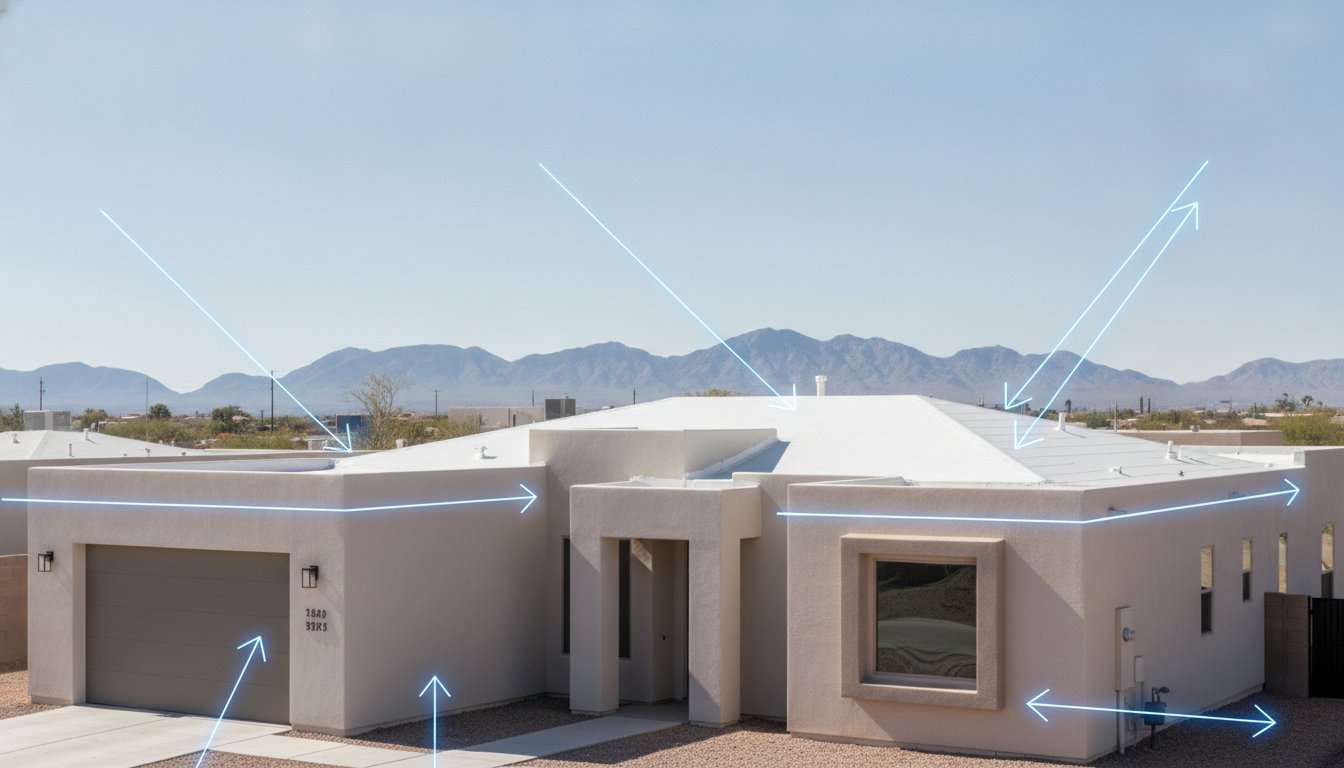
Is your roof working as a thermal shield for your home, or is it simply acting as a heat magnet that drives your cooling costs through the ceiling? In the high-altitude desert of the Southwest, a standard roof can absorb an incredible amount of solar radiation, forcing your air conditioner to work overtime just to maintain a comfortable temperature. You’ve likely felt the impact of these extreme summer temperatures on your monthly utility bills, and you aren’t alone in looking for a more sustainable solution.
If you’re tired of watching your roof degrade under intense UV exposure, it’s time to explore the best energy efficient roofing options El Paso provides in 2026. We’ve designed this guide to help you identify high-performance materials that reduce heat transfer and significantly lower your energy consumption. You’ll learn which systems qualify for the current El Paso Electric Cool Roof Rebate of up to $0.06 per square foot and how the right “green” upgrades can protect your property value for the next 30 years. We’ll examine the specific technologies that turn a basic roof into a comprehensive energy-saving envelope.
Key Takeaways
- Understand how high-performance materials use Solar Reflectance Index (SRI) and thermal emittance to keep your home cooler than traditional asphalt shingles.
- Compare the specific durability and cooling advantages of energy efficient roofing options El Paso residents use to combat intense desert heat, including tile and flat roof systems.
- Identify current financial incentives and local utility rebates available in 2026 that can help offset the initial cost of your green roofing project.
- Learn why a comprehensive approach combining advanced roofing materials with spray foam insulation creates a superior thermal barrier for your property.
The Impact of El Paso’s Climate on Roofing Efficiency
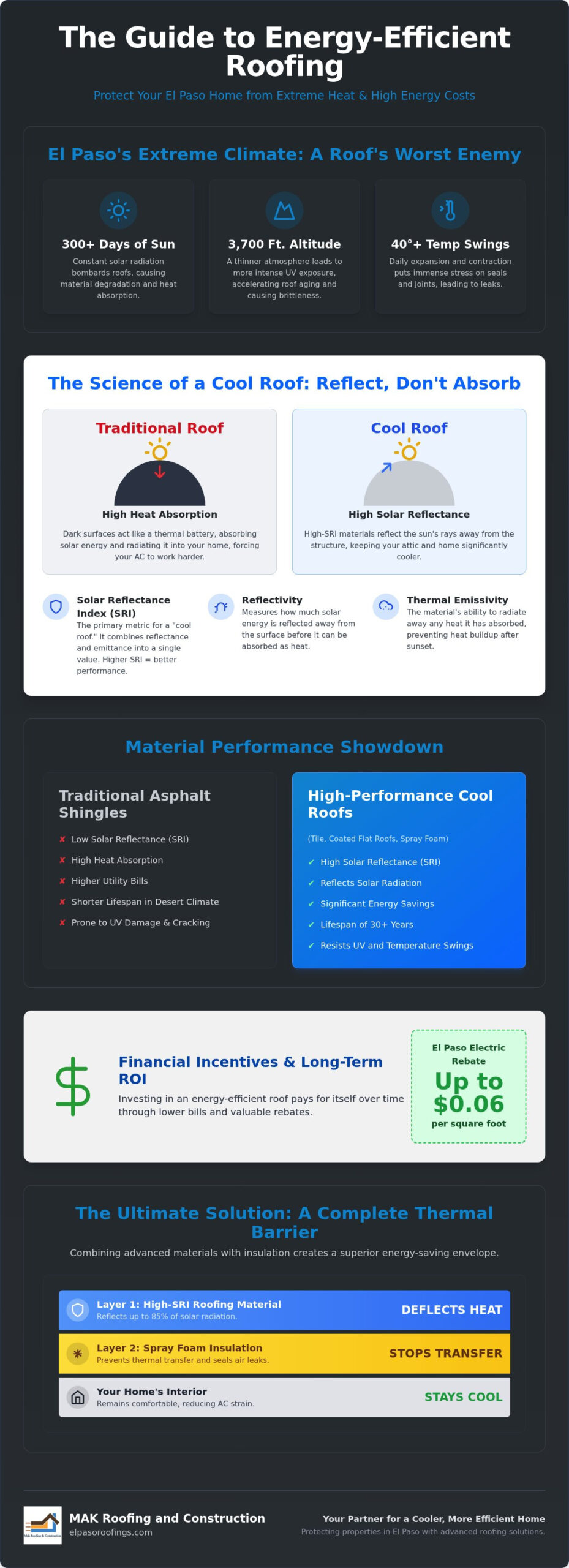
El Paso homeowners face a relentless environmental challenge. With over 300 days of annual sunshine and a high-altitude location, your roof is under constant bombardment from solar radiation. Traditional roofing materials, particularly dark asphalt shingles, act like a thermal battery. They absorb solar energy throughout the day and continue to radiate that heat into your home long after the sun has set. This thermal mass effect is a primary reason why many residents struggle with high utility bills even after upgrading their air conditioning units.
The local “Heat Island” effect further complicates this issue. In many El Paso neighborhoods, the concentration of heat-absorbing surfaces causes local temperatures to remain several degrees higher than surrounding rural areas. This increased ambient heat places a massive load on your cooling system. To counter this, many are turning to What is a Cool Roof? as a way to reflect solar energy before it enters the structure. Choosing the right energy efficient roofing options El Paso provides is no longer just a “green” choice; it’s a financial necessity for long-term comfort.
Our local monsoon season also plays a role. While we value the rain, the sudden, intense downpours can be devastating for aging flat roofs. When UV rays have already compromised the surface, these heavy rains exploit small cracks. This leads to moisture intrusion that destroys insulation and significantly reduces your home’s overall thermal efficiency.
UV Exposure and Material Lifespan
At nearly 3,700 feet above sea level, El Paso’s atmosphere is thinner, providing less protection from ultraviolet (UV) rays. This intense exposure accelerates the chemical breakdown of standard roofing materials. Asphalt shingles often lose their protective granules within a few years, leaving the underlying mat exposed to the sun. As the material becomes brittle, it loses its ability to seal effectively. This leads to thermal leakage, where cool air escapes and hot air enters. Because of these harsh conditions, standard shingles rarely reach their full manufacturer-rated lifespan in West Texas.
Diurnal Temperature Swings in the Desert
The desert is known for dramatic temperature shifts, often swinging 40 degrees or more within a single 24-hour period. This constant cycle of heating and cooling causes roofing materials to expand and contract repeatedly. This movement puts immense stress on joints, flashings, and seals. Over time, these components can pull apart, creating microscopic air leaks that compromise your home’s energy envelope. Nighttime cooling allows energy-efficient materials to release stored heat quickly, preventing the attic from becoming a permanent furnace.
Evaluating High-Performance Roofing Materials for 2026
Selecting the right materials requires looking beyond the price tag. You need to understand the technical metrics that determine how a surface interacts with the sun. The Solar Reflectance Index (SRI) is the primary measurement we use to evaluate energy efficient roofing options El Paso homeowners should consider. It combines two factors: how much solar energy is reflected away and how quickly the material releases any heat it does absorb.
While the initial investment for high-SRI materials is higher than standard shingles, the 30-year lifecycle savings on energy and maintenance often bridge the gap. Investing in these systems offers significant Financial Incentives and Long-Term ROI by lowering peak cooling demand and extending the life of your HVAC system. If you aren’t sure which rating fits your home’s architecture, you can consult with a local roofing specialist to review your specific needs.
The Science of Reflectivity vs. Emissivity
SRI is a composite score. High reflectivity means the sun’s rays bounce off the surface before they can heat the structure. Thermal emissivity is equally vital. It measures the material’s ability to radiate absorbed infrared energy. Without high emissivity, your attic becomes a heat trap that stays hot long after sunset. In 2026, the benchmark for a high-performance cool roof is a Solar Reflectance Index value that maintains its efficiency even after three years of desert exposure.
The 2026 ‘Cool Roof’ Standards
The Cool Roof Rating Council (CRRC) provides the data we use to verify performance. In 2026, residential standards have evolved. You no longer have to choose a bright white roof to get results. Modern “cool pigments” allow for traditional desert tones like terracotta or dark grey while maintaining high reflectance. We focus on “aged reflectance” values. These numbers represent how the material performs after years of dust and UV exposure; this is far more accurate for our local conditions than initial factory ratings.
To qualify for local utility programs like the EPESaver rebate, your chosen material must meet specific CRRC thresholds. These standards ensure that the product actually delivers the promised reduction in surface temperature. We prioritize systems that maintain their integrity under the Southwest’s unique UV and wind demands, ensuring your investment remains effective for decades.
Comparing Tile, Flat, and Spray Foam Systems
Every home in the Borderland has a unique structural profile, meaning the best energy efficient roofing options El Paso offers will vary depending on your architecture. A historic home in Sunset Heights requires a different thermal strategy than a modern commercial building in East El Paso. At MAK Roofing and Construction, we don’t view a roof as a standalone component. We treat it as the primary layer of a total thermal envelope. By selecting materials that complement your home’s structure and combining them with advanced insulation, we create a system that blocks heat at the source.
Tile Roofing: Durability Meets Natural Cooling
Concrete and clay tiles are the gold standard for desert climates. Their primary advantage is thermal mass; these dense materials absorb heat very slowly, preventing the sun’s energy from reaching your living space during the hottest parts of the day. The physical shape of the tile also provides a hidden benefit. Because tiles are curved or stepped, they create a natural air gap between the roofing material and the deck. This space allows for constant ventilation, which helps whisk away heat before it can penetrate your attic.
While tiles are incredibly durable and can last over 30 years, they are significantly heavier than asphalt shingles. If you are transitioning from shingles to tile, we must evaluate your home’s structural integrity. Some properties require reinforcement to safely support the added weight of a tile system. When installed correctly, tile remains one of the most resilient solutions against our local high winds and intense UV exposure.
Flat Roofs and the Spray Foam Revolution
Flat roofing systems face the most direct sun exposure in our region. For these structures, TPO (Thermoplastic Polyolefin) and PVC membranes are excellent choices due to their naturally high solar reflectance. However, the true revolution in El Paso energy efficiency is the integration of spray foam insulation. When applied to a flat roof, spray foam creates a completely seamless, monolithic barrier. This eliminates the need for thousands of mechanical fasteners that are common in traditional installations.
These metal fasteners often act as “thermal bridges,” which are small pathways that allow heat to bypass your insulation and enter your home. By using a seamless foam system, we eliminate these bridges entirely. Spray foam also offers a superior R-value per inch, providing both a watertight seal and an incredible thermal barrier. This combination is especially effective for existing flat roofs that need an efficiency boost without a complete structural overhaul. We focus on these high-performance integrations to ensure your roof provides maximum protection against the Southwest’s unique climate demands.
Financial Incentives and Long-Term ROI for El Paso Roofs
Investing in energy efficient roofing options El Paso homeowners select isn’t just about environmental stewardship. It’s a calculated financial decision. While the upfront cost of high-performance materials like tile or spray foam is higher than basic asphalt, the return on investment (ROI) manifests through lower monthly bills and reduced maintenance. In the 2026 market, the financial landscape has shifted, making it essential to understand which local programs can help offset your initial capital outlay.
The primary driver for immediate savings in our region is the El Paso Electric (EPE) Cool Roof Rebate. This program is currently available through December 31, 2026. It provides Texas residential customers with a rebate of up to $0.06 per square foot for installing a qualifying cool roof. To get a detailed assessment of potential savings and rebate eligibility for your property, request a professional roofing consultation.
Local Utility Rebates and Programs
Qualifying for the EPESaver rebate requires precision during the planning phase. Your roofing products must be rated by the Cool Roof Rating Council (CRRC) to meet specific solar reflectance and thermal emittance standards. It’s important to note that programs differ between El Paso, TX, and Las Cruces, NM. While Texas residents focus on the per-square-foot rebate, New Mexico customers should check with their specific local providers for available commercial or residential credits. You’ll need to provide the final invoice and the CRRC product ID number to ensure your application is successful. We manage this documentation process to ensure our clients don’t miss out on these available funds.
ROI: Beyond the Monthly Bill
The financial benefits of a cooler roof extend far beyond your electric statement. By reducing the ambient temperature in your attic, you significantly extend the lifespan of your HVAC system. When your air conditioner doesn’t have to run at peak capacity for 12 hours a day, you avoid premature mechanical failure and expensive repairs. Many insurance providers also offer premium reductions for homes that utilize impact-resistant, energy-efficient materials like concrete tile, as these are less likely to suffer damage during our high-wind spring seasons.
In the current El Paso and Las Cruces real estate markets, “green” upgrades carry significant weight. Homebuyers are increasingly savvy about local climate challenges. A roof that is engineered to last 30 years or more and comes with a proven track record of lower utility costs adds tangible value to your property’s resale price. While federal tax credits for these installations expired at the end of 2025, the combination of local rebates and long-term energy savings continues to make high-efficiency systems a smart financial move.
Choosing MAK Roofing for Your Energy-Efficient Upgrade
Selecting a contractor is as important as selecting your materials. With 16 years of local experience, MAK Roofing and Construction understands the specific environmental demands of the Borderland. We’ve seen how standard installations fail under our desert sun, and we’ve refined our methods to prevent those issues before they start. Our team consists of certified installers who specialize in high-performance tile and flat roofing systems, ensuring every project meets our rigorous standards for durability and excellence. We take pride in being a dependable partner for homeowners who value precision over quick fixes.
We operate under a “More Than” philosophy. This means we don’t view your roof as an isolated component of your home. Instead, we look at your roof and insulation as a single, integrated thermal system. By combining high-reflectance materials with advanced spray foam insulation, we create a comprehensive barrier that keeps heat out and comfort in. This approach is what separates a standard roof replacement from a true energy-saving upgrade. We focus on building energy-efficient envelopes that protect your entire property, not just the attic space.
Our start-to-finish project stewardship ensures that you aren’t left managing multiple subcontractors or confusing schedules. From the initial inspection to the final walkthrough, we handle every detail of the installation with professional confidence. This methodical process provides you with a sense of security, knowing that your investment is being managed by seasoned experts who are committed to the long-term value of your home.
A Local Expert’s Approach to Construction
Every neighborhood in our region presents different challenges. Whether you’re dealing with the high winds of Horizon City, the historic architectural requirements of central El Paso, or the specific climate conditions in Socorro and Las Cruces, we tailor our approach to fit the location. We prioritize structural integrity alongside energy efficiency. This is especially vital when considering energy efficient roofing options El Paso homeowners choose, such as heavy concrete tile. We ensure your home’s frame is prepared for the upgrade, maintaining the safety and longevity of the entire structure while we improve its thermal performance.
Ready for a Cooler Home?
The path to a more efficient home begins with a transparent assessment. Our consultation process is designed to be educational and low-friction, avoiding the high-pressure tactics common in the industry. We provide direct, declarative information about your roof’s current state and the specific upgrades that will offer the best return on investment for your specific circumstances. We stand behind our work with comprehensive warranties and long-term support, ensuring your energy-efficient system performs as promised for decades. If you’re ready to reduce your utility costs and protect your home from the desert heat, Contact MAK Roofing for an energy-efficiency audit today.
Securing Your Home’s Future in the Southwest
Protecting your home from the relentless desert sun requires more than a simple surface replacement. It demands a strategic approach that combines high-performance materials with advanced insulation to create a total thermal envelope. By understanding the science of SRI and emissivity, you can transform your roof from a heat-absorbing battery into a reflective shield. Leveraging the 2026 EPESaver rebate and other local incentives makes these energy efficient roofing options El Paso provides more accessible than ever, allowing you to prioritize long-term value over short-term fixes.
With 16+ years of local El Paso experience, MAK Roofing and Construction specializes in high-efficiency tile and flat roofing systems engineered for our unique environment. We are A+ rated for comprehensive project stewardship, managing every detail from the initial audit to the final installation. Our team looks at the big picture to ensure your property remains cool, durable, and valuable for decades to come. Get Your Free Energy-Efficient Roofing Estimate from MAK Roofing to begin your home’s transformation. You deserve a structure that offers both professional-grade protection and significant monthly savings.
Frequently Asked Questions
What is the most energy-efficient roofing material for El Paso’s heat?
Tile roofing and spray foam systems are the most effective choices for our extreme heat. Tile uses thermal mass to slow heat transfer, while spray foam provides a seamless, airtight barrier that eliminates thermal bridging. Both options significantly outperform traditional asphalt shingles in the high-altitude desert sun.
How much can I actually save on my energy bills with a cool roof?
Homeowners typically see a reduction in cooling energy costs after upgrading to a high-reflectance system. While exact savings vary based on your home’s insulation and HVAC efficiency, a cool roof reduces the temperature of your attic space. This allows your air conditioner to run less frequently during peak summer hours, leading to lower monthly utility bills.
Do I qualify for any rebates for installing a reflective roof in El Paso?
You may qualify for the El Paso Electric Cool Roof Rebate, which offers up to $0.06 per square foot for residential Texas customers through December 2026. This program requires the installation of products rated by the Cool Roof Rating Council. We help our clients navigate the documentation process to ensure they receive these available funds before program budgets are exhausted.
Is spray foam roofing better than traditional flat roofing for the desert?
Spray foam insulation offers distinct advantages over traditional flat roofing by creating a monolithic, leak-proof barrier without mechanical fasteners. It provides a higher R-value per inch, which is crucial for blocking the intense heat of the Southwest. This makes it one of the premier energy efficient roofing options El Paso property owners use to maximize their thermal envelope.
How long does a tile roof last in the Southwest climate?
A properly installed tile roof can easily last 30 years or more in our local climate. Unlike asphalt shingles that become brittle under UV exposure, concrete and clay tiles are engineered to withstand decades of intense sun and high winds. This longevity makes tile a highly dependable choice for homeowners looking for long-term value and stability.
Will an energy-efficient roof increase my home’s resale value?
Modern buyers in the El Paso and Las Cruces markets actively look for energy-efficient upgrades that lower their future utility costs. A certified cool roof or a high-durability tile system increases your property’s appeal by demonstrating long-term maintenance savings and superior climate protection. It positions your home as a premium, move-in-ready asset.
Can MAK Roofing install energy-efficient options on both residential and commercial properties?
We provide comprehensive energy-efficient solutions for both residential homes and large-scale commercial buildings. Our team is equally capable of handling a personal home remodeling project or a complex industrial flat roof installation. We apply the same start-to-finish management style to every job, ensuring professional results regardless of the project’s size.
What is the Solar Reflectance Index (SRI) and why does it matter?
SRI is a value that measures a roof’s ability to reject solar heat, combining both reflectance and emittance into a single score. It’s the most accurate way to compare different energy efficient roofing options El Paso has available. A higher SRI means the surface stays cooler under the sun, which directly translates to a more comfortable interior and lower energy consumption.