

- BY adminMak
- POSTED IN Uncategorized
- WITH 0 COMMENTS
- PERMALINK
- STANDARD POST TYPE
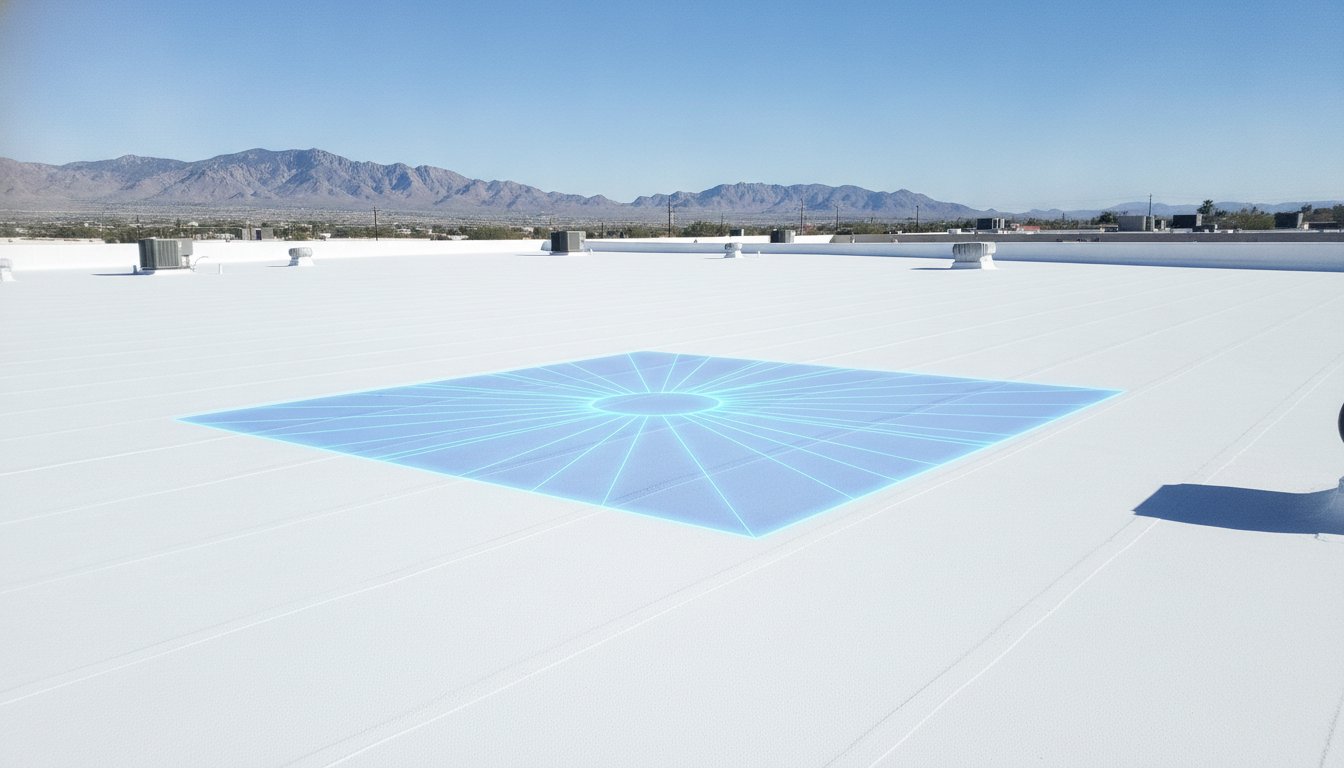
What if the recurring leak on your ceiling isn’t a sign of a bad patch, but a symptom of a roof that’s literally baking to death? In the Chihuahuan Desert, the extreme thermal cycling of our 100-degree summers causes standard roofing materials to expand and contract until they eventually split. If you’ve noticed ponding water after a sudden monsoon or felt your cooling costs spike, you aren’t alone. Many property owners find that a standard flat roof repair in El Paso often fails because it doesn’t account for the unique UV degradation and intense seasonal rains we experience every year.
It’s frustrating to invest in a fix only to have the same issues return during the next storm. We understand that you want a leak-free property and a roof that contributes to a lower energy bill rather than draining your wallet. This guide will show you how to identify specific desert failures and implement durable solutions that stand up to the heat. We’ll walk through the technical differences between various repair methods, the ROI of modern reflective coatings, and how to determine if a targeted repair or a full replacement is the most cost-effective move for your long-term property value.
Key Takeaways
- Understand how El Paso’s 30-degree daily temperature swings cause thermal shock, leading to seam fatigue and recurring leaks.
- Learn to identify critical warning signs like ponding water and surface blistering before they compromise your property’s structural integrity.
- Compare high-performance coatings and spray foam insulation to find the most effective flat roof repair El Paso properties need for long-term durability.
- Establish a simple bi-annual maintenance routine to clear debris and prevent minor issues from turning into expensive failures.
- Discover how to select a specialized contractor who understands local building codes and the relationship between roof health and stucco protection.
The Unique Challenges of Flat Roofs in the El Paso Climate
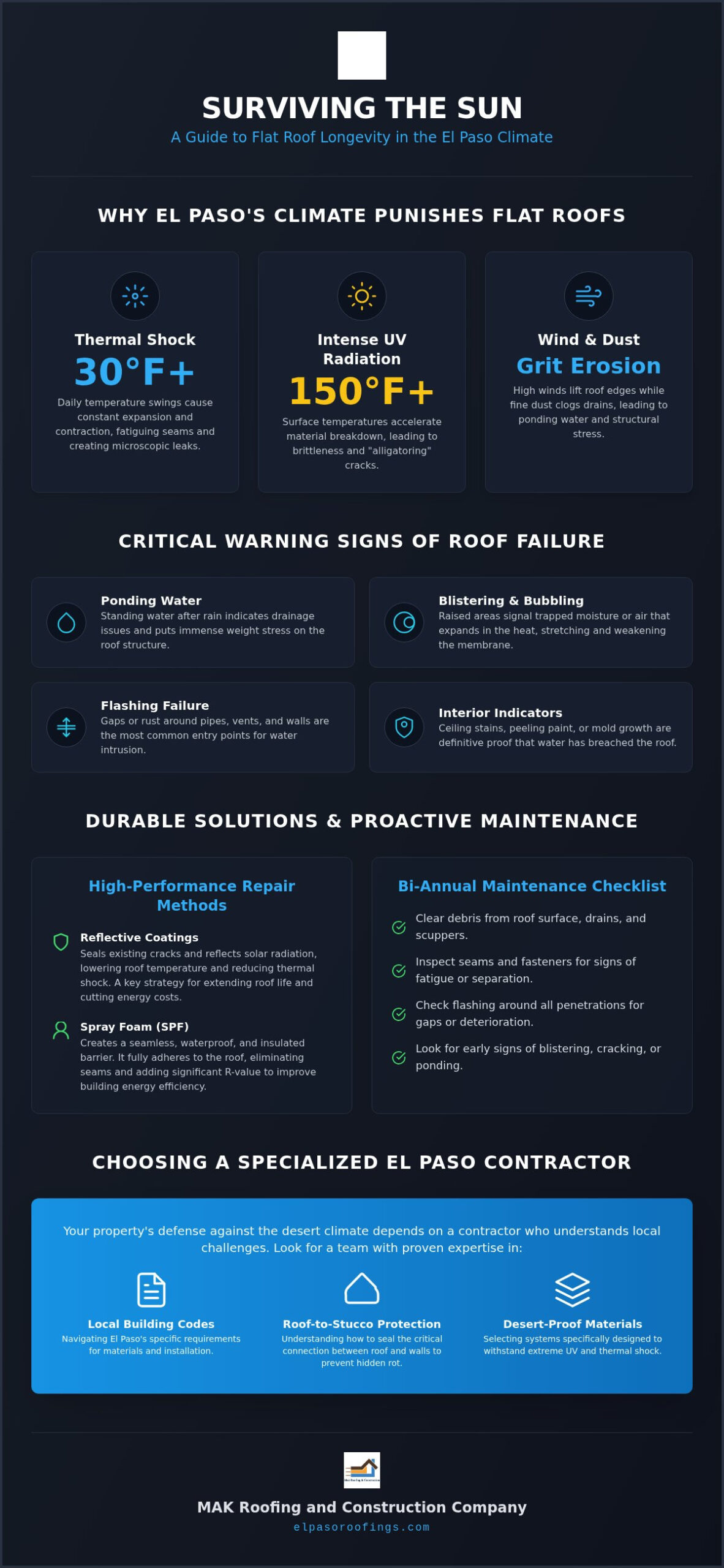
El Paso’s environment is uniquely punishing for low-slope structures. While most roofing systems are designed to shed water, flat roofs in our region must also withstand extreme thermal shock. This phenomenon occurs when roofing membranes undergo rapid expansion and contraction due to drastic temperature changes. In El Paso, it’s common to see diurnal temperature swings of 30 degrees or more within a single 24-hour period. This constant movement fatigues the seams and fasteners, creating tiny fissures that go unnoticed until the first heavy rain.
When the seasonal monsoons arrive, they act as a diagnostic tool for your property’s health. Water finds the path of least resistance, often entering through these microscopic cracks caused by months of heat exposure. If you’ve delayed a flat roof repair El Paso summer heat can make those minor weaknesses significantly worse before the clouds even form. Understanding Common flat roof materials like TPO or bitumen helps property owners realize why these systems eventually lose their elasticity in the desert climate.
Why Desert Heat is the Number One Enemy
In the peak of July, surface temperatures on a dark flat roof can easily exceed 150°F. This intense heat accelerates chemical breakdowns in asphalt-based systems, leading to a condition known as “alligatoring.” This is when the surface develops deep, interconnected cracks that resemble the skin of a reptile. These cracks allow moisture to seep into the core of the roof assembly, often damaging the underlying insulation or even the interior drywall. UV degradation is the primary cause of membrane brittleness and the eventual loss of waterproof properties.
Traditional TPO and bitumen membranes are particularly susceptible to El Paso’s high UV index. Over time, the sun bleaches the plasticizers out of the material, leaving it stiff and prone to shattering under foot traffic or during hail events. This loss of flexibility means the roof can no longer “breathe” with the temperature changes, leading to catastrophic seam failure.
The Impact of Wind and Dust on Roof Integrity
Our spring wind storms present another layer of risk. High-velocity gusts can get underneath poorly adhered edges or loose flashing, creating a “peeling” effect that compromises the entire perimeter. When wind-blown grit erodes the roof edge, it often exposes the top of the wall’s stucco, allowing moisture to travel behind the exterior finish and cause hidden rot. Additionally, the desert dust that characterizes our region isn’t just a nuisance; it’s a threat to your drainage.
Fine silt and sand settle in scuppers and gutters, forming a heavy sludge that blocks water flow. This leads to ponding, where standing water puts immense pressure on the structure and accelerates the breakdown of the membrane. Grit erosion from blowing sand also acts like sandpaper, slowly wearing down the protective granules on many traditional roofing surfaces. Addressing these environmental factors early through a professional flat roof repair El Paso service can save you from the high costs of structural water damage and interior remodeling.
Common Signs Your Property Needs Flat Roof Repair
Recognizing the early warning signs of failure can mean the difference between a simple patch and a full structural overhaul. While flat roofs are designed to be durable, they require vigilant monitoring in our desert climate. If you suspect your system is failing, a professional assessment for flat roof repair El Paso can identify hidden moisture before it compromises your interior. Addressing these issues often involves implementing cool roofing strategies to mitigate the intense solar gain that accelerates material fatigue.
Property owners should watch for these specific indicators of distress:
- Flashing Failure: Look for gaps or rusted metal around vent pipes, chimneys, and parapet walls. These transition points are the most common entry spots for water.
- Blistering and Bubbling: These raised areas indicate that moisture or air is trapped between the layers of the roof assembly. As the sun heats the roof, the trapped pocket expands, stretching the membrane.
- Interior Indicators: Ceiling stains, mold growth, or peeling paint near the roofline are clear signs that water has already bypassed the external barrier.
Identifying Ponding Water and Drainage Issues
Water is heavy. A single inch of ponding water weighs approximately five pounds per square foot. If water stands on your roof for more than 48 hours after a rain, it’s considered ponding. This standing water creates a structural threat by putting constant pressure on seams and laps. It also acts as a magnifying glass, concentrating UV rays on the membrane and accelerating its breakdown. Check your scuppers and drains for seasonal blockages like bird nests or wind-blown silt. Many older properties have “dead level” roofs that lack the subtle slope required to move water toward drainage points, necessitating more frequent maintenance.
Visible Membrane Damage: Cracks, Tears, and Blisters
Distinguishing between surface-level wear and deep structural tears requires a keen eye. You might notice “alligatoring,” which looks like a network of deep cracks in the top layer of an asphalt system. This is a signal of imminent failure, as the bitumen has lost its waterproofing oils. It’s also vital to check the laps, or the places where membrane sheets overlap. If these seams are lifting or delaminating, wind and water can easily get underneath. If you’ve noticed these signs, it’s wise to consult specialized flat roof repair El Paso experts to determine the most cost-effective path forward before the next monsoon season arrives.
Comparing Flat Roof Repair Methods: Coatings vs. Spray Foam
Choosing the right strategy for flat roof repair El Paso involves more than just plugging a hole. It’s about selecting a material that can withstand the desert’s aggressive UV cycle while improving your property’s thermal performance. Two primary restoration methods dominate the local market: elastomeric coatings and Spray Polyurethane Foam (SPF). Each offers distinct advantages depending on whether your goal is simple UV protection or a comprehensive structural upgrade.
Reflective Coatings: Fighting UV Rays
Roof coatings are liquid-applied membranes that create a protective layer over your existing roof. In our region, white silicone coatings are the gold standard for “cool roof” performance. According to industry data, modern reflective acrylic or silicone coatings can reduce heat absorption by reflecting up to 85% of solar radiation. This directly reduces the strain on your HVAC system and helps prevent the thermal shock that leads to seam failure.
- Silicone vs. Acrylic: While acrylic coatings are cost-effective, they tend to break down if water ponds for long periods. Silicone is inorganic and won’t degrade under standing water, making it a superior choice for El Paso’s flat surfaces.
- When to Coat: A coating is a viable repair if your roof’s underlying structure is dry and intact. If there is trapped moisture in the insulation, applying a coating will only trap the problem, leading to further damage.
- Maintenance: Coated roofs require annual inspections to ensure the reflective surface stays clean and free of debris that could trap heat or moisture.
Spray Foam Roofing: The Ultimate Desert Solution
For property owners seeking a more robust flat roof repair El Paso solution, Spray Polyurethane Foam (SPF) is often the most logical choice. Unlike traditional materials that come in sheets, SPF is sprayed as a liquid that expands into a solid, closed-cell structure. This creates a completely seamless barrier that eliminates the lap joints and seams where most leaks begin.
One of the most significant benefits of SPF is its high R-value, which provides superior insulation compared to almost any other roofing material. This insulation value stays consistent over time, helping to stabilize indoor temperatures during 100-degree days. Additionally, a skilled installer can use the foam to add a slight taper to a “dead level” roof. This subtle slope directs water toward scuppers and drains, effectively eliminating the ponding water issues we identified as a major structural threat. When the top protective layer eventually wears down after decades of use, the system can simply be re-coated, extending the life of the roof indefinitely without a costly tear-off.
Maintenance Strategies to Prevent Costly Flat Roof Failures
Prevention is the most cost-effective form of flat roof repair El Paso property owners can invest in. Waiting for a ceiling stain to appear before taking action often results in expensive structural damage that could have been avoided. Establishing a bi-annual inspection schedule, ideally in the late spring and early fall, ensures your property is prepared for the upcoming extreme temperatures and heavy rains. This proactive approach allows you to address minor wear before it escalates into a full-scale failure.
During these inspections, it’s vital to look beyond the membrane itself. Pay close attention to the parapet walls and the surrounding stucco. Cracks in the stucco along these edges often serve as a hidden conduit for water, allowing moisture to travel behind the roofing system and into your building envelope. Additionally, keep a detailed log of every inspection and repair. Documenting the roof’s condition with photos and dates provides essential evidence for insurance adjusters or for supporting manufacturer warranty claims if a material defect arises later.
Pre-Monsoon Inspection Checklist
Before the first storm clouds gather, follow these three essential steps to safeguard your drainage and perimeter:
- Step 1: Clear scuppers and downspouts. Desert sand, silt, and wind-blown debris accumulate quickly in El Paso. If these drainage paths are blocked, water will pond and put immense pressure on your seams.
- Step 2: Inspect all penetrations. Check the sealant around HVAC units, vent pipes, and skylights. The intense sun often causes these sealants to dry out and crack, creating easy entry points for rain.
- Step 3: Examine perimeter flashing. Look for loose or detached metal flashing along the roof edge. High winds can lift these components, exposing the most vulnerable parts of the roof assembly to the elements.
Extending Lifespan with Professional Inspections
While a visual DIY check is a good starting point, it can’t replace the precision of a professional assessment. Experts use specialized moisture detection tools, such as infrared scanners, to identify trapped water beneath the surface that is invisible to the naked eye. Catching a small “soft spot” early allows for a targeted patch or a moisture-mitigation fix, preventing the rot from spreading across the entire deck. Implementing a consistent maintenance program can double a flat roof’s life by stopping minor issues from becoming total structural failures. With 16 years of local experience, our team understands exactly where desert roofs are likely to fail first. To protect your investment, schedule a professional flat roof repair El Paso consultation to ensure your property remains secure year-round.
Choosing a Specialized Flat Roof Repair Contractor in El Paso
Getting Your Flat Roof Repair Quote
A professional roof assessment should be methodical and logical. During an inspection by MAK Roofing and Construction Company, we evaluate the condition of the membrane, the integrity of the seams, and the functionality of your drainage systems. We provide a transparent estimate that identifies the specific needs of your property without high-pressure sales tactics. We believe in providing the information you need to make an informed decision about the ROI of flat roof repair El Paso versus a full replacement. If you’re ready for a solution that prioritizes long-term value and craftsmanship, Schedule your professional flat roof inspection today.
Protect Your Investment with Climate-Resilient Roofing
Managing a low-slope structure in our region requires a strategy that looks beyond simple leak patching. By understanding the impact of thermal shock and prioritizing seamless solutions like spray foam, you can turn a vulnerable structure into a durable, energy-efficient asset. Proactive maintenance and professional inspections remain the most effective ways to avoid the high costs of structural water damage and interior rot. If your property is showing signs of fatigue, addressing the issue early is the key to maintaining long-term property value.
When you partner with MAK Roofing and Construction Company, you benefit from 16 years of local experience and a comprehensive management style that handles everything from the exterior membrane to the interior drywall. We specialize in energy-efficient spray foam solutions specifically engineered for the Chihuahuan Desert. Our team ensures your flat roof repair El Paso project is managed with precision from start to finish. Don’t wait for the next monsoon season to expose hidden weaknesses in your property. Request Your Free Flat Roof Assessment from MAK Roofing and Construction Company and gain the peace of mind that comes with expert craftsmanship. Your roof is your first line of defense; we’re here to ensure it stays strong.
Frequently Asked Questions
How long does a flat roof repair typically last in El Paso?
A professional repair can last anywhere from 5 to 10 years depending on the material and exposure. In our climate, UV degradation is the primary factor in longevity. While a quick patch might only survive a single monsoon season, a comprehensive repair using high quality silicone or spray foam can significantly extend the life of the system. Regular maintenance is required to ensure these repairs don’t fail prematurely due to thermal movement.
Can I walk on my flat roof to inspect it myself?
You should avoid walking on your flat roof unless it is absolutely necessary. Most residential flat roofs aren’t designed for regular foot traffic; doing so can puncture the membrane or create weak spots in the insulation. If you must inspect it, wear soft soled shoes and stay on designated walkways or reinforced areas. A professional inspection is always safer, as experts know how to navigate the surface without causing new damage.
Is spray foam better than traditional flat roof materials for desert heat?
Spray Polyurethane Foam (SPF) is widely considered a superior choice for the El Paso climate. Unlike traditional materials that have seams prone to expanding and contracting, SPF is a seamless, monolithic layer. It provides an airtight seal and high R-value insulation that keeps buildings cooler during 100 degree days. Because it is applied as a liquid, it can also be used to correct drainage issues that traditional sheet materials cannot address.
How much does it cost to repair a flat roof leak in El Paso?
The cost of a flat roof repair El Paso property owners encounter depends on the extent of the damage and the materials required. Minor leak repairs involving flashing or small punctures are generally affordable. However, if the moisture has reached the underlying insulation or wood deck, the scope of work increases. A professional assessment is the only way to get an accurate quote based on your specific structural needs and material type.
What is ponding water, and why is it dangerous for flat roofs?
Ponding water is standing water that remains on the roof surface for more than 48 hours after a rain. It is dangerous because it adds significant weight to the structure and acts as a magnifying glass for UV rays, which accelerates membrane breakdown. Over time, this constant pressure and heat exposure will cause the seams to delaminate. If left unaddressed, ponding water will eventually find a way through the membrane and into your interior.
Do I need a permit for flat roof repair in El Paso, TX?
You typically don’t need a permit for minor repairs, but one is required if you are replacing 25% or more of the roof’s surface. The El Paso Development Services Department oversees these regulations to ensure all work meets local safety and structural codes. If you are unsure if your project requires a permit, it’s best to consult with a licensed contractor or contact the city’s planning department at (915) 212-0104.
How often should I have my flat roof inspected in the Southwest?
You should have your flat roof inspected at least twice a year, specifically in the spring and fall. These bi-annual checks allow you to prepare for the intense summer heat and the subsequent monsoon season. In the Southwest, wind blown debris and silt can quickly clog drainage scuppers. Catching these minor blockages or small cracks early through a professional flat roof repair El Paso service prevents them from turning into major structural failures.
Can a reflective coating really lower my energy bills?
Yes, modern reflective coatings can reflect up to 85% of solar radiation away from your property. By reducing the amount of heat absorbed through the roof, your HVAC system doesn’t have to work as hard to maintain a comfortable indoor temperature. This reduction in energy consumption often leads to noticeably lower monthly cooling costs. These systems are particularly effective in El Paso, where the sun remains intense for most of the year.