

- BY adminMak
- POSTED IN Uncategorized
- WITH 0 COMMENTS
- PERMALINK
- STANDARD POST TYPE
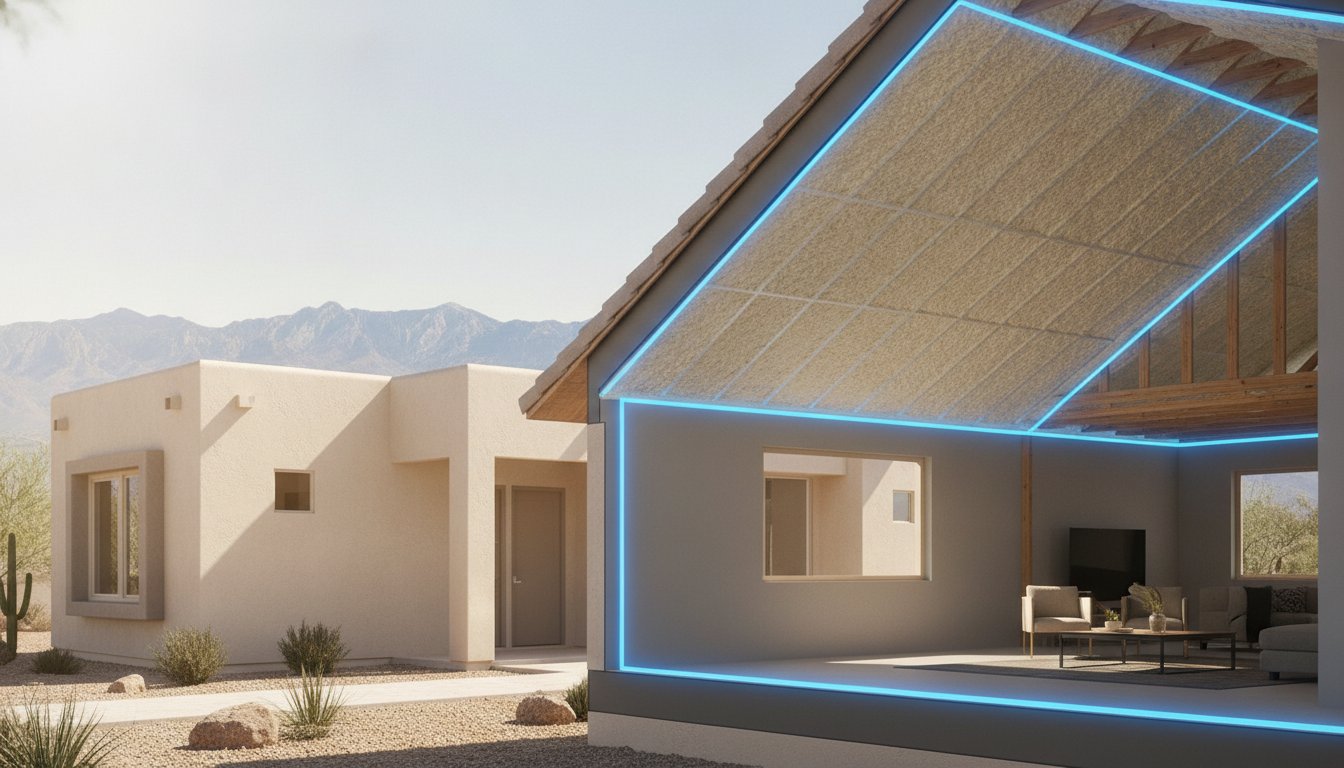
Why does your air conditioner struggle to maintain the thermostat setting even when it’s running at full capacity all day? In the intense heat of El Paso, traditional insulation often falls short because it only addresses heat transfer, not air leakage. Understanding the benefits of spray foam insulation in hot climates is the first step toward reclaiming your home from the desert sun.
If you’re tired of skyrocketing electric bills and dust filtering in through your attic vents, you aren’t alone. Most homeowners in Climate Zone 3B face a constant battle against thermal shock that wears down HVAC equipment and compromises indoor air quality. We believe your home should be a sanctuary, not an oven.
This article will show you how high-performance spray foam creates a superior thermal envelope that slashes cooling costs and blocks outdoor pollutants. We’ll explore the technical advantages of closed-cell foam, how it meets the latest 2024 IECC energy standards, and why a professional, start-to-finish installation is vital for long-term durability. You’ll discover how to achieve a more comfortable, energy-efficient environment that protects your property for decades.
Key Takeaways
- Learn why traditional insulation materials struggle with the “oven effect” and how air sealing provides a more effective thermal barrier for your property.
- Discover how the benefits of spray foam insulation in hot climates include significant reductions in monthly cooling costs and reduced strain on your HVAC equipment.
- Compare open-cell and closed-cell foam to determine which material is best suited for the extreme temperatures and dry conditions of the Southwest.
- Explore how integrating insulation with your roofing and stucco systems provides a comprehensive, start-to-finish solution for thermal management.
- Understand the importance of hiring a local expert who can navigate regional building codes and ensure your installation meets the latest energy standards.
Why Traditional Insulation Fails in Extreme Hot Climates
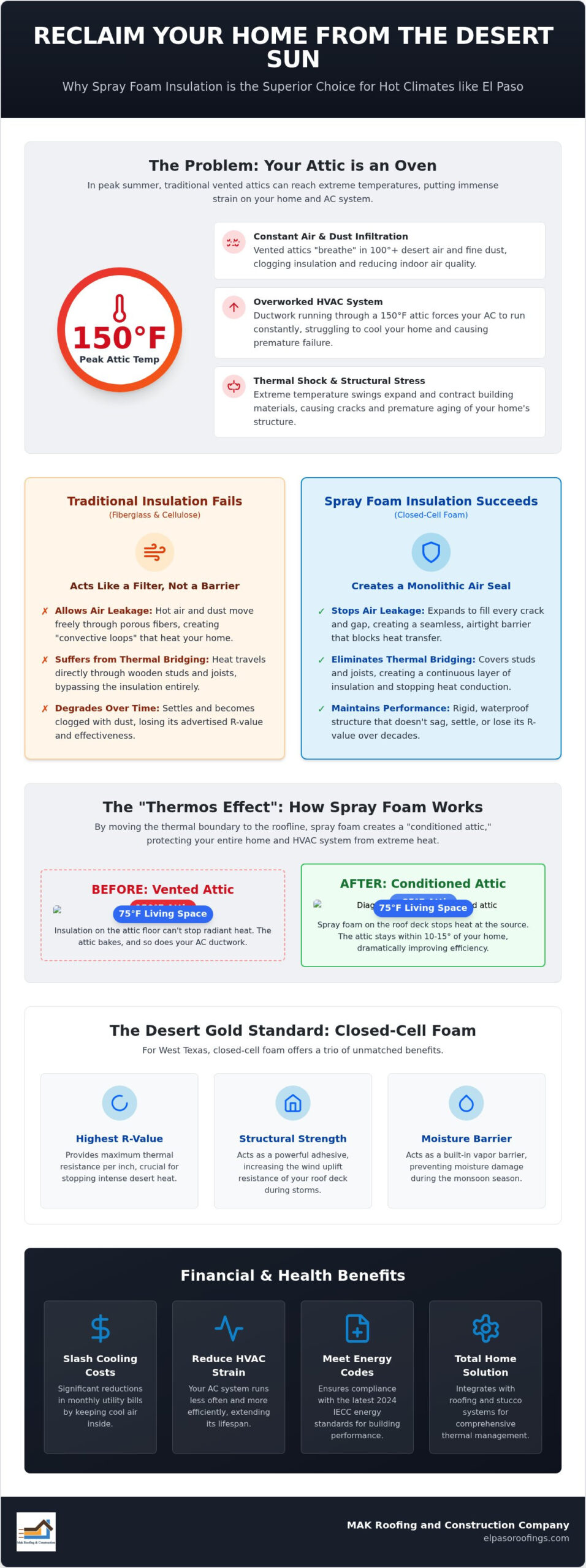
In the Southwest, a vented attic isn’t just a storage space; it’s a pressurized heat chamber. During peak summer months in El Paso, these spaces often reach temperatures exceeding 150 degrees. While fiberglass batts or blown-in cellulose are standard in many older builds, they frequently fail to provide the primary benefits of spray foam insulation in hot climates. These traditional materials rely solely on R-value, which measures thermal resistance in a controlled lab but ignores the reality of air movement in a desert environment.
Traditional insulation acts like a filter rather than a seal. Hot air moves through the porous fibers, creating convective loops that pull heat directly into your living space. You can learn more about how material composition dictates this performance by exploring The Science of Spray Foam. Beyond air movement, traditional systems suffer from thermal bridging. Wooden studs and ceiling joists act as bridges, conducting heat from the scorching roof deck directly into your home. Even if your insulation is thick, the wood itself bypasses the barrier, allowing heat to seep through the “skeleton” of your house.
The Problem with Vented Attics in Desert Regions
Traditional building codes often suggest attic vents to help a house breathe. In the desert, this means your home is effectively inhaling 100-degree air filled with fine dust. This ventilation introduces silt that settles on fiberglass batts, clogging the fibers and further reducing their R-value over time. Perhaps most importantly, your AC ductwork is usually located in this 150-degree attic. Your cooling system has to fight a losing battle, trying to keep air cold while the ducts are sitting in an oven. This results in your HVAC running constantly without ever reaching the temperature you’ve set on the thermostat.
Understanding Thermal Shock and Building Longevity
Extreme temperature swings between the blistering afternoon sun and cooler desert nights cause building materials to expand and contract rapidly. This process, known as thermal shock, puts immense stress on your home’s structural integrity. It often leads to cracks in drywall and the premature aging of roofing components. One of the major benefits of spray foam insulation in hot climates is that it moves the thermal boundary to the roof deck itself. This creates a conditioned, stable environment for your home’s structure. By eliminating the “leaky” nature of breathable insulation, you protect the building’s skeleton from the harsh desert cycle and extend the lifespan of your property.
The Science of Spray Foam: Beating the Triple-Digit Heat
Spray foam does not just resist heat; it physically blocks the air that carries it. This creates what professionals call a “Thermos Effect” where the temperature you pay to regulate stays trapped inside your property. One of the primary benefits of spray foam insulation in hot climates is its ability to expand up to 30 to 100 times its liquid volume within seconds of application. This rapid expansion ensures that every tiny crack, electrical penetration, and difficult “knee wall” is completely sealed. By blocking these air leaks, you eliminate the convective loops that allow radiant heat to bypass traditional fiberglass or cellulose barriers.
Closed-Cell Spray Foam: The Desert Gold Standard
For the intense environment of West Texas, closed-cell foam is the superior choice. It offers a significantly higher R-value per inch compared to open-cell alternatives, which is critical when space in wall cavities or roof rafters is limited. Beyond thermal performance, closed-cell foam acts as a structural adhesive. It can increase the wind uplift resistance of a roof deck, providing a layer of security during El Paso’s notorious spring windstorms. It also serves as a built-in vapor barrier. This protection is essential during the monsoon season, as it prevents humid air from condensing against cool interior surfaces and causing moisture damage within your walls.
Eliminating the Attic Temperature Spike
Traditional insulation sits on the floor of the attic, leaving the space above it to bake in the sun. Spray foam changes this dynamic by moving the thermal envelope from the attic floor directly to the roofline. This process creates what is known as a conditioned attic. A conditioned attic is defined as a space that stays within 10 degrees of the living area’s temperature regardless of the weather outside. When your attic is conditioned, your HVAC system and ductwork operate in a cool, stable environment. They no longer have to work twice as hard to overcome the ambient heat of the roof deck. If you want to optimize your home’s thermal performance, consulting with a local roofing and insulation specialist is the best way to ensure your envelope is integrated correctly with your structure.
By sealing the building envelope at the roofline, you also reduce the “stack effect” that pulls hot, dusty air in through the bottom of your home. In Climate Zone 3B, where El Paso is located, the 2021 IECC standards require a minimum of R-30 for roof and ceiling insulation. Achieving this with traditional materials often requires a massive amount of space. Closed-cell spray foam reaches these benchmarks with a much thinner profile, allowing you to maximize your square footage while maintaining peak energy efficiency.
Financial and Health Benefits: Energy Savings and ROI
Investing in modern insulation is a strategic financial decision for any property owner in West Texas. While the initial installation requires a higher upfront cost than traditional materials, the long-term return on investment is substantial. Understanding the long-term benefits of spray foam insulation in hot climates helps homeowners move beyond the initial sticker shock to see the true value of their investment. One of the most immediate impacts is the drastic reduction in monthly utility expenses. Many homeowners in the El Paso region report cooling cost savings ranging from 30% to 50% after completing a whole-home seal. These savings occur because the air conditioner no longer needs to run at maximum capacity to combat the desert heat.
Beyond monthly savings, a high-performance envelope increases the overall value of your property. In the competitive Texas real estate market, energy efficiency is a major selling point. A home with documented spray foam insulation is seen as a premium, low-maintenance asset. This upgrade also protects your most expensive appliance: the HVAC system. When your home is sealed, the unit cycles on and off less frequently. This reduction in mechanical stress significantly extends the lifespan of your equipment, saving you from the multi-thousand dollar cost of premature replacement.
Reducing the Load on Your Cooling System
A sealed building envelope allows your cooling system to reach its set point quickly and maintain it for longer periods. This reduction in cycle times is the key to efficiency. When the AC turns off, the air stays cool because there’s no hot air infiltration to displace it. Many homes also lose significant energy through ductwork located in unconditioned spaces. By bringing these ducts into a conditioned environment, you eliminate the energy loss that occurs before the cold air even reaches your vents. This efficiency may eventually allow you to downsize to a smaller, more affordable HVAC unit in the future.
Improving Indoor Air Quality in Arid Zones
Living in the Chihuahuan Desert means dealing with persistent sand and seasonal allergens. Traditional insulation acts as a sieve, allowing fine dust to penetrate your living spaces through gaps in the attic and walls. Spray foam provides a physical barrier that blocks these outdoor pollutants, creating a “dust-free” indoor environment. This is especially beneficial for families with respiratory sensitivities or allergies. Providing a healthier living space is one of the most significant, yet overlooked, benefits of spray foam insulation in hot climates. Along with blocking dust, you also manage indoor humidity levels more effectively during the monsoon months, creating a healthier and more comfortable home for everyone.
Integrating Spray Foam with Your Roofing System
In the Southwest, the relationship between your roof and your insulation is symbiotic. A roof deck that isn’t properly insulated doesn’t just allow heat into the home; it suffers structural damage itself. One of the key benefits of spray foam insulation in hot climates is its ability to protect the roof deck from “cooking” from the inside out. When heat is trapped in a traditional vented attic, it bakes the underside of the roofing material, accelerating the degradation of shingles or flat roof membranes. By applying spray foam directly to the underside of the deck, you stabilize the temperature of the material, significantly extending the life of your roofing system.
This comprehensive approach works best when combined with other exterior elements like high-quality stucco application. When you address both the walls and the roofline, you create a total thermal seal that effectively manages radiant heat gain across the entire property. Managing moisture and drainage is also simplified in a sealed environment because closed-cell foam acts as a secondary water barrier. This provides an extra layer of protection for your interior even if the primary roofing membrane is compromised during a heavy storm.
Spray Foam and Flat Roofing Systems
Flat roofs are particularly susceptible to “hot spots” where the sun’s energy is most intense. These areas expand at different rates than the rest of the structure, leading to cracks and leaks over time. Applying foam to the underside of flat roof decks provides uniform thermal resistance that prevents these localized temperature spikes. This integration is why many commercial and residential owners in El Paso choose a “more than” approach, ensuring their insulation and roofing work together as a single, high-performance unit.
The Role of Professional Installation
Achieving a proper chemical bond requires precision that DIY kits simply cannot provide. In the extreme heat of hot climates, the foam must be applied in specific “passes” to reach the correct thickness without overheating during the curing process. Professional installers ensure that the material adheres perfectly to the substrate, creating a permanent seal that won’t sag or pull away over time. This bond is essential for maintaining the structural benefits and air-sealing properties of the foam.
Safety and compliance are also critical factors. A professional team understands the local building codes in Climate Zone 3B, ensuring that fire barriers and thermal ignition barriers are installed correctly. If you’re ready to upgrade your property’s thermal envelope, contact our expert roofing and insulation team to discuss a comprehensive solution for your home or business. We prioritize precision from start to finish, ensuring your investment provides reliable protection for decades.
Choosing a Local Expert for Your El Paso Insulation Project
Selecting a partner for your building envelope requires more than just looking at a price sheet. It requires deep-rooted local expertise. MAK Roofing and Construction Company brings 16 years of experience specifically to the El Paso region. We understand how the desert climate affects construction materials differently than in other parts of the country. A roofing contractor is often the best choice for these projects because we already manage the primary barrier against the sun. We understand how the roof deck, ventilation, and insulation must work together as a single unit. This integrated perspective is essential to provide the full benefits of spray foam insulation in hot climates.
Our “More Than” philosophy is based on being a comprehensive project steward. We don’t just apply foam and leave; we manage the entire thermal transition from the exterior roof membrane to the interior attic space. This start-to-finish management ensures that no gaps are left in your home’s protection. If your roof needs a minor repair before the insulation is applied, we handle it as part of our total solution. This prevents the common issue where different contractors blame one another for performance failures. The benefits of spray foam insulation in hot climates are only fully realized when the installation is precise and integrated with the rest of the structure.
Local Knowledge Matters in the Southwest
Building requirements in El Paso, Las Cruces, Horizon City, and Socorro can vary significantly. Our team is deeply rooted in these communities and stays current on all regional codes, including the latest IECC standards for Climate Zone 3B. We tailor the insulation depth based on your property’s specific orientation to the desert sun. A south-facing roof deck requires a different strategy than a shaded warehouse. This level of precision defines our commitment to craftsmanship and ensures your property remains stable during extreme temperature swings.
Take the Next Step Toward a Cooler Home
During a professional consultation, we perform a thorough evaluation of your current insulation and overall roofing health. We look for signs of thermal shock, moisture intrusion, and air leakage that might be compromising your comfort. We then provide a clear, methodical plan to transform your property into a high-performance environment. Our goal is to instill a sense of security, knowing your project is handled by seasoned experts who care about the local community. You can Contact MAK Roofing and Construction Company for a free spray foam estimate today! to begin the process of reclaiming your home from the desert heat. We are ready to help you realize the long-term value and energy savings that professional insulation provides.
Reclaiming Home Comfort in the Desert Heat
Protecting your property from extreme Southwest temperatures requires more than just high-performance materials. It demands a comprehensive strategy that addresses the entire building envelope as a single, integrated unit. By transitioning from traditional, porous insulation to a sealed system, you eliminate the convective air movement that forces your HVAC to overwork. These long-term benefits of spray foam insulation in hot climates extend beyond simple energy savings; they provide a durable thermal barrier that protects your structural integrity for decades.
As a licensed and insured local contractor with over 16 years of experience in El Paso, MAK Roofing and Construction Company specializes in the seamless integration of roofing and insulation. Our “More Than” approach ensures that your project is managed with precision from the initial assessment to the final application. If you’re ready to transform your home’s efficiency and comfort, our team is here to provide the dependable expertise your property deserves.
Request a Professional Spray Foam Consultation today to secure your home against the intense desert sun. We look forward to helping you create a more resilient and comfortable living space.
Frequently Asked Questions
Is spray foam insulation worth the cost in a hot climate like El Paso?
Spray foam is a high-value investment for local properties because it directly addresses the problem of thermal shock. While the initial setup requires more capital than fiberglass batts, the reduction in cooling loads provides a rapid return on investment. You’ll see lower utility bills immediately during the triple-digit summer months. This makes it a strategic choice for long-term property management.
Does spray foam insulation cause a smell or off-gassing in the heat?
When installed by professionals using precise chemical ratios, spray foam cures quickly and becomes inert. It does not off-gas or produce odors after the initial application and ventilation period. Problems typically only arise from DIY kits or improper mixing techniques. We prioritize safety and ensure the chemical bond is perfect before you re-occupy the space.
Can I install spray foam insulation on a flat roof?
Spray foam is an excellent solution for the flat roofing systems common in the Southwest. We apply it to the underside of the roof deck to create a seamless thermal barrier. This prevents the localized hot spots that typically cause flat roof membranes to crack or fail prematurely. It effectively stabilizes the temperature of the entire roofing structure from the inside.
How much can I save on my electric bill with spray foam insulation?
Many property owners in our region experience a 30% to 50% reduction in monthly cooling costs. These results depend on your home’s current efficiency and the completeness of the building envelope seal. By creating a conditioned attic, you remove your HVAC ductwork from the extreme heat. This allows the entire system to reach its set point much faster.
What is the difference between open-cell and closed-cell foam for hot weather?
Closed-cell foam is the preferred choice for the benefits of spray foam insulation in hot climates like ours. It offers a higher R-value per inch and acts as a structural adhesive for your roof deck. Open-cell foam is softer and less dense; while it is good for soundproofing, it lacks the moisture resistance and structural strength required for desert conditions.
Will spray foam insulation make my house too airtight?
A high-performance seal is exactly what is needed to combat desert heat and fine sand infiltration. While the home becomes very airtight, this is a positive development for energy efficiency and air quality. If your home requires additional fresh air, it is better to manage it through your HVAC system’s ventilation rather than relying on random, dusty leaks in your attic rafters.
How long does spray foam insulation last in desert conditions?
Spray foam is a permanent solution that does not sag, settle, or degrade over time like traditional fiberglass batts. It is engineered to withstand the extreme temperature cycles of the Southwest for decades. Once it is applied and cured, the material maintains its R-value and air-sealing properties for the entire lifespan of the structure without requiring maintenance.
Does spray foam insulation attract pests or insects in the Southwest?
Spray foam is not a food source for termites, rodents, or other desert pests. In fact, it serves as a deterrent by physically sealing the small gaps and crevices that insects use to enter your home. By closing off these entry points, you create a more secure and pest-resistant environment. This is one of the many practical benefits of spray foam insulation in hot climates.