

- BY adminMak
- POSTED IN Uncategorized
- WITH 0 COMMENTS
- PERMALINK
- STANDARD POST TYPE
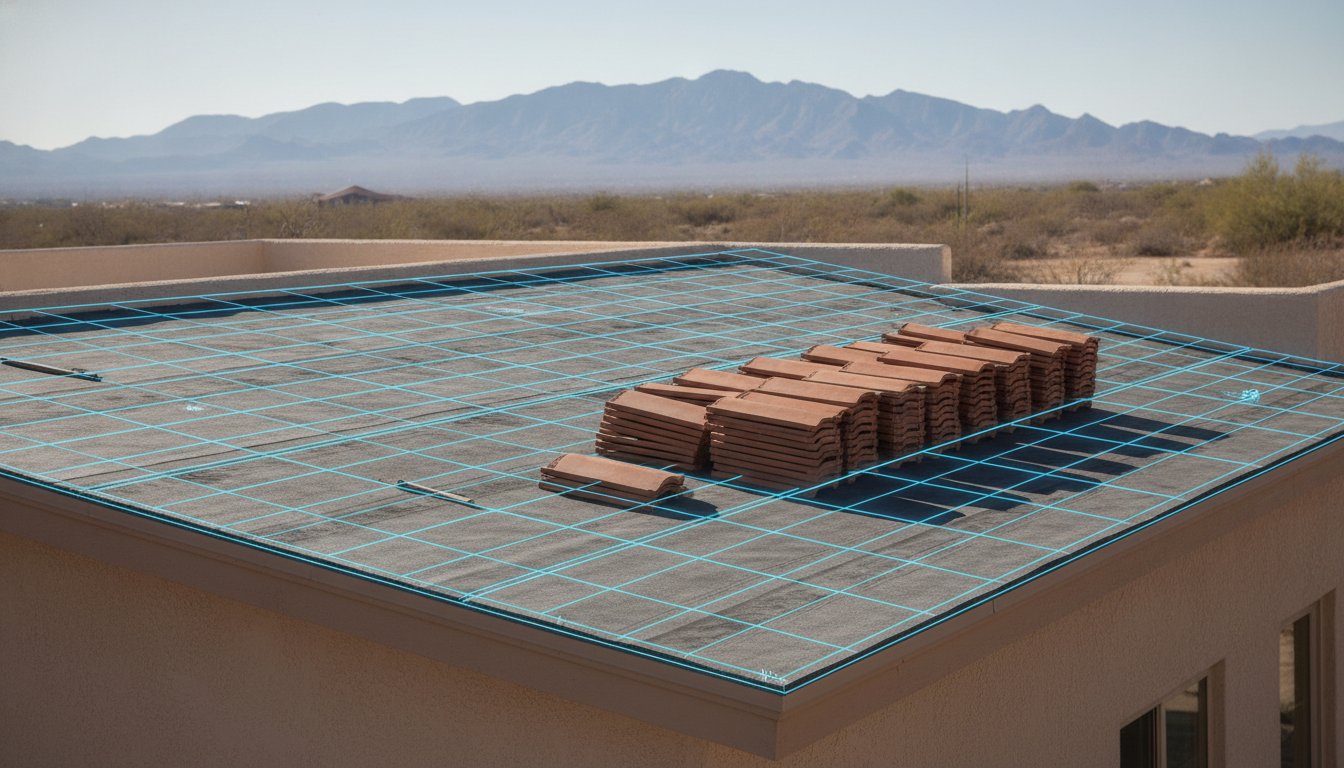
Your tile roof is designed to last a century, but the intense West Texas sun often has other plans for the materials hidden beneath the surface. If you’ve noticed a damp spot on your ceiling or a slipped tile after a seasonal storm, you’re likely worried about interior water damage and the possibility of being pressured into a full replacement you don’t actually need. It’s a common frustration for homeowners who value their property’s aesthetic but feel uncertain about finding a contractor who truly understands the technical differences between clay and concrete systems.
You deserve a clear, honest path to a leak-free home that withstands our unique climate without unnecessary expenses. This guide provides the expert insight required for successful tile roof repair El Paso residents can rely on for long-term protection. We will explain how to identify hidden vulnerabilities, the critical role of underlayment, and why the professional “lift and reset” method is often the most effective way to restore your roof’s integrity while preserving its classic desert character.
Key Takeaways
- Understand why your tiles are merely a watershedding layer and how El Paso’s UV radiation targets the critical waterproofing underlayment beneath them.
- Learn to identify the warning signs of “invisible” leaks, such as brittle felt underlayment, before they result in costly interior water damage.
- Discover why tile roof repair El Paso homeowners often choose the “lift and reset” method to restore structural integrity without the expense of a total replacement.
- Explore the step-by-step professional restoration process, from diagnostic inspections to the careful staging and salvaging of clay and concrete tiles.
- Gain clarity on how to maintain your roof’s architectural aesthetic while ensuring it is structurally prepared for extreme desert heat and seasonal storms.
Why Tile Roofs in El Paso Require Specialized Repair
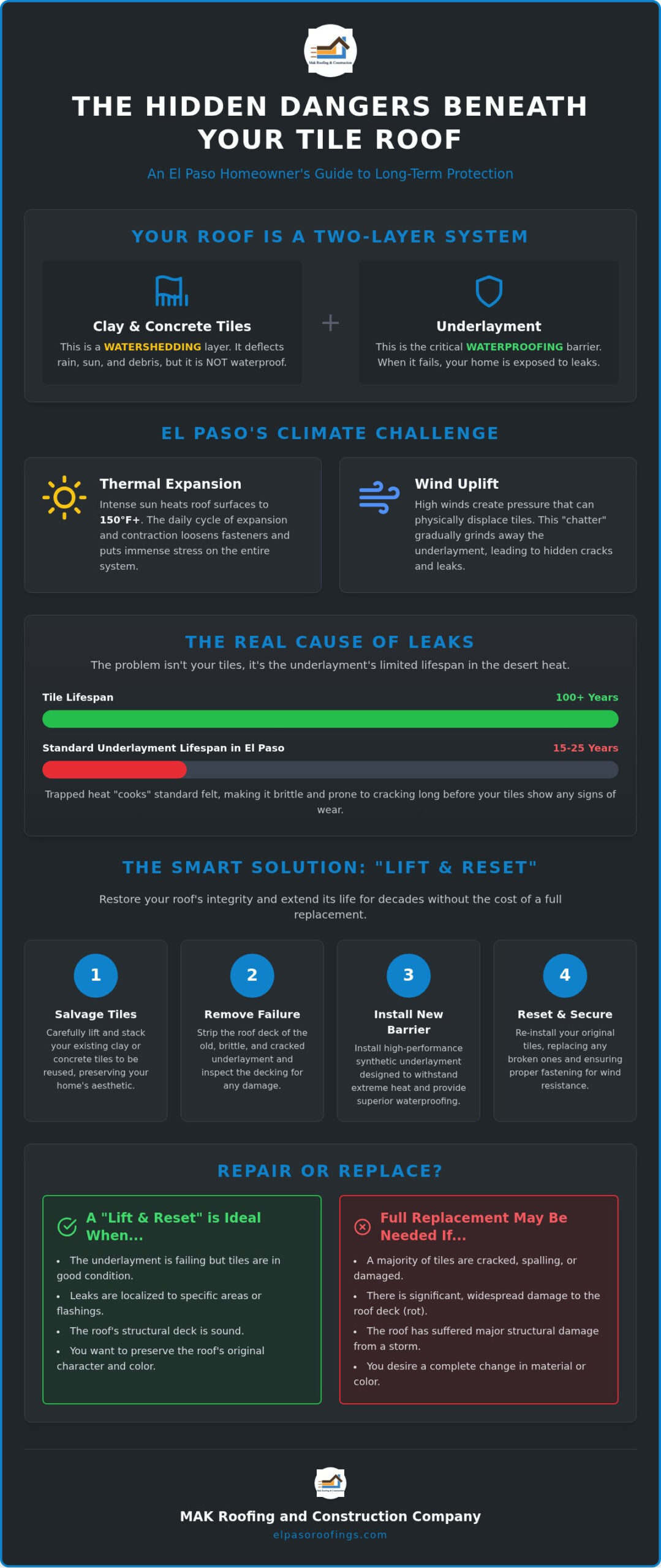
Many homeowners assume their clay or concrete tiles are the only thing keeping them dry. In reality, tile roofing is a watershedding system, not a waterproofing one. The tiles act as a durable shield that deflects the bulk of rain and debris, but the secondary layer beneath them, the underlayment, provides the actual moisture protection. Effective tile roof repair El Paso requires a deep understanding of how these layers interact under the stress of a high-desert environment. When tiles shift or the underlayment fails, your home loses its primary defense against seasonal storms.
The Role of Thermal Expansion in Desert Roofing
El Paso’s climate is particularly harsh on roofing materials due to extreme temperature swings. During a typical summer afternoon, roof surface temperatures can exceed 150 degrees, causing tiles to expand. As the sun sets and temperatures drop, these materials contract. This constant movement puts immense pressure on the fasteners and metal flashings that hold the system together. Over time, this cycle can loosen nails or cause tiles to pull away from their original positions. Thermal expansion is the primary cause of fastener fatigue in El Paso.
Wind Uplift and Tile Displacement
The geography of our region creates unique structural challenges. High winds rolling off the Franklin Mountains create significant “lift” on the perimeter of your roof. This wind doesn’t just blow over the house; it creates pressure differentials that can physically displace tiles. When tiles are loose, they begin to “chatter,” which is a subtle vibration that gradually abrades the underlayment underneath. If this isn’t addressed, the protective felt or synthetic layer eventually thins and cracks, leading to hidden leaks. Ensuring your roof meets local wind codes often requires specialized “mudding” or updated mechanical fastening techniques to keep every tile secure.
Professional tile roof repair El Paso is a precision process of managing the layers beneath the surface. By focusing on the structural integrity of the fasteners and the condition of the underlayment, we ensure your roof remains a comprehensive barrier against the desert’s most aggressive elements. Understanding the history and materials of roof tiles helps clarify why these systems are so durable, yet they still require local expertise to maintain their performance in our specific climate.
Identifying the Source: Common Causes of Tile Roof Leaks
When a homeowner notices a leak, the first instinct is to look for a missing or broken tile. While these are obvious issues, they are often secondary symptoms of a deeper structural failure. In the Southwest, the primary cause of moisture intrusion isn’t always the tile itself. Instead, it’s the gradual breakdown of the components that live in the shadows of the roof deck. Properly identifying these leaks is the first step in a successful tile roof repair El Paso project.
Underlayment Degradation: The Silent Killer
In El Paso, standard organic felt underlayment typically has a functional lifespan of 15 to 25 years. This duration is significantly shorter than the clay or concrete tiles it supports. The space between the roof deck and the tile creates a pocket of trapped heat. This environment essentially “cooks” the underlayment, causing the asphalt-saturated felt to become brittle and lose its waterproofing oils. Once the felt loses its flexibility, it cracks under the minor movements of the house. You might have a roof where every tile appears perfectly aligned, yet the system is failing underneath. This is why a professional assessment is vital; we look past the surface to evaluate the actual barrier protecting your home.
Flashings and Valley Failures
Roof valleys are designed to channel large volumes of water toward the gutters. However, in our high-desert environment, these channels often collect windblown sand, silt, and leaf debris. This accumulation creates a “damming” effect. During a sudden monsoon downpour, the water cannot flow freely and instead backs up, pushing under the tiles where the underlayment is most vulnerable.
Additionally, the galvanized steel used for flashings around chimneys, HVAC units, and skylights eventually succumbs to the abrasive El Paso dust and occasional moisture. Corrosion starts at the edges and spreads, creating small entry points for water. If you notice staining on the drywall near a ceiling vent or skylight, it’s a clear sign that the metal seals have reached their limit. Addressing these issues early prevents minor drips from turning into major interior repairs. If you suspect your roof is reaching the end of its underlayment lifespan, scheduling a professional diagnostic inspection can help you identify these “invisible” culprits before they damage your home’s interior.
Repair vs. Replacement: When Can You Save Your Tile Roof?
Deciding between a targeted repair and a total roof replacement is often the most stressful part of property ownership. In El Paso, the decision usually hinges on a simple technical reality: the tiles themselves are likely still in excellent condition, even if the waterproofing layer has failed. Because clay and concrete tiles are engineered to last between 50 and 100 years, discarding them simply because the 20-year underlayment is brittle is an unnecessary expense. A professional tile roof repair El Paso specialist focuses on salvaging your existing materials to restore protection at a fraction of the cost of a full replacement.
The “Lift and Reset” Strategy
When the structural tiles are sound but the underlayment has reached its 15 to 25-year limit, we recommend the “lift and reset” method. This process involves carefully removing your existing tiles and staging them on the roof or ground. Once the deck is exposed, we replace the degraded felt with high-performance waterproofing and then reinstall your original tiles. This strategy is particularly valuable for historic El Paso homes where the original tile profile is no longer manufactured. It preserves the home’s architectural integrity while providing a brand-new internal seal. This commitment to heritage restoration is a standard shared by elite specialists like Progressive Contracting NY Corp, who provide expert masonry and brownstone facade renovation. The ROI of a professional tile roof repair El Paso homeowners receive via this method is significantly higher than a premature total replacement.
Not every crack requires a new roof. We differentiate between surface crazing, which is a network of fine aesthetic lines common in older concrete tiles, and structural cracks that compromise the watershedding shell. Concrete tiles are the most common in our region and are highly durable, but they can become heavy and brittle over decades. Clay tiles offer superior UV resistance and color longevity. Finding matching tiles for older systems is a specialized skill we’ve refined over 16 years in the local market. If your roof has high-quality clay tiles, the value of a precision repair far exceeds the cost of switching to asphalt shingles.
We also conduct a thorough assessment of the wood deck for rot or structural soft spots. If the underlayment was ignored for too long, moisture might have reached the plywood or rafters. The City of El Paso mandates a building permit for any work involving 25% or more of the roof’s surface. We handle these administrative requirements as part of our comprehensive project management, ensuring your restoration meets all local safety standards and codes.
The Precision Process of Professional Tile Roof Restoration
A successful restoration isn’t just about replacing a few cracked pieces of clay. It requires a methodical, five-step approach to ensure the entire system functions as a cohesive unit. When we perform tile roof repair El Paso homeowners can expect a process that prioritizes both technical precision and long-term durability. We follow a specific sequence to ensure no detail is overlooked:
- Step 1: Comprehensive Diagnostic Inspection. We utilize drone technology or thermal imaging to identify moisture trapped behind the tiles or within the stucco transitions.
- Step 2: Careful Removal and Staging. Our team removes the existing tiles and stages them safely to prevent breakage, ensuring as much original material is salvaged as possible.
- Step 3: Underlayment Replacement. The old, brittle felt is stripped away to reveal the wood deck, which we inspect for structural integrity before applying a high-temperature synthetic underlayment.
- Step 4: Re-installation and Flashing Updates. We reinstall the original tiles and replace all critical flashings around chimneys and vents with new, non-corrosive metal seals.
- Step 5: Final Debris Clearing and Testing. After the system is secure, we clear all valley channels and water-test the roof to verify that every seal is watertight.
Upgrading Your Underlayment
In our high-desert climate, traditional organic felt underlayment often fails long before the tiles do. We recommend upgrading to modern synthetic underlayments that are specifically engineered for extreme heat. These materials don’t dry out or crack when surface temperatures climb. Synthetic underlayment provides a secondary waterproof barrier that remains flexible for decades. For homes in high-wind zones, we often utilize self-adhering membranes. These “peel and stick” products create a superior bond to the roof deck, preventing water from traveling underneath the tiles even during intense wind-driven rain.
Ensuring Proper Tile Fastening
The longevity of your repair depends on the quality of the fasteners used. We prioritize stainless steel or copper nails because they resist the oxidation that eventually destroys standard galvanized fasteners. In modern tile roof repair El Paso projects, we also incorporate foam adhesives. These specialized foams provide a high-strength bond that reduces tile “chatter” during storms. This is especially critical for perimeter tile securement in communities like Horizon City and Socorro, where wind gusts rolling off the open desert require mechanical fastening that exceeds standard building codes. To ensure your home is protected by these advanced methods, you can schedule a technical roof assessment with our team today.
Why Professional Stewardship Matters for Your El Paso Tile Roof
MAK Roofing and Construction operates with 16 years of direct experience in the El Paso region. We’ve spent nearly two decades observing how our unique environment, from the Franklin Mountain wind patterns to intense UV exposure, affects different roofing systems. This local history allows us to approach every tile roof repair El Paso project with a level of foresight that outside contractors often lack. We understand that a roof isn’t just a collection of tiles; it’s a vital structural component that requires a seasoned eye to maintain and restore correctly. Our commitment to craftsmanship ensures that your home remains protected against the most aggressive desert elements.
A Comprehensive Approach to Home Protection
Our “More Than” philosophy sets us apart from standard roofing companies. Because our expertise extends into total home construction and remodeling, we view your roof as the first line of defense for your entire interior investment. When a roof leak occurs, it rarely stops at the attic. Moisture often compromises drywall, ruins insulation, and damages interior paint. To ensure your home’s thermal barrier is fully restored, specialized providers like Insulation Magic! can help optimize your energy efficiency after repairs are complete. While many contractors only address the exterior tiles, we act as comprehensive project stewards. We’re equipped to manage the entire restoration process, ensuring that any secondary damage to your drywall or interior finishes is resolved with the same precision as the roof repair itself. This integrated approach saves you the hassle of coordinating multiple vendors and ensures a seamless return to a secure home.
We believe in a methodical, consultation-based process rather than high-pressure sales tactics. When you contact us for an estimate, you receive a logical breakdown of your roof’s current condition and a clear path toward restoration. Whether you’re located in the heart of El Paso, Las Cruces, or Horizon City, you deserve an expert who understands the specific architectural styles and climate demands of your neighborhood. We prioritize reliability and long-term value in every recommendation we make. Our commitment to the community means we treat every home with the respect it deserves, preserving the classic Southwest aesthetic that makes our region unique. To begin your restoration journey, Schedule your expert tile roof inspection with MAK Roofing and secure your home against the elements.
Securing Your Home’s Structural Future
Your tile roof is a sophisticated structural system built to withstand the rigors of our high-desert environment. Understanding that the underlayment is the true barrier against moisture allows you to make informed decisions about restoration. By choosing the “lift and reset” method, you preserve your home’s unique character while ensuring complete protection from seasonal storms and intense UV radiation. This proactive approach saves you from the unnecessary expense of a full replacement while maintaining your property’s long-term value.
Reliable tile roof repair El Paso requires a partner who understands the specific challenges posed by our regional climate. MAK Roofing and Construction provides 16 years of local El Paso expertise. As specialists in tile and flat roofing systems, we maintain an A+ rating for craftsmanship and reliability. We act as comprehensive project stewards, ensuring your roof restoration protects your interior investment from start to finish. Request Your Free Tile Roof Inspection from MAK Roofing today to secure your property for the decades to come. Your home deserves the dependable protection of a seasoned local expert.
Frequently Asked Questions
How much does it typically cost to repair a tile roof in El Paso?
The total investment for your project depends on the severity of the leaks and the specific type of tile system installed on your home. Repairing a tile roof is a technical process that involves carefully removing materials to access the failed underlayment. Factors such as the height of the building, the pitch of the roof, and the availability of matching tiles will determine the scope of work for your tile roof repair El Paso project.
Can I walk on my tile roof to check for damage?
You should avoid walking on your tile roof because both clay and concrete tiles are brittle and prone to cracking under concentrated weight. Professional inspectors use specialized techniques, such as walking on the “laps” where tiles overlap, to distribute weight safely. If you attempt to check for damage yourself, you risk snapping tiles that were previously intact. It is much safer to use a drone or binoculars for a preliminary visual assessment.
How long do the underlayment layers last on an El Paso tile roof?
In our high-desert climate, underlayment layers typically require replacement every 15 to 25 years. While the tiles themselves are exceptionally durable, the intense UV radiation and extreme temperature swings in El Paso cause the waterproofing felt to become brittle and crack over time. If your home was built or last roofed over two decades ago, the secondary moisture barrier has likely reached the end of its functional life, regardless of how the tiles appear.
Is hail damage common on clay and concrete tile roofs?
Hail damage is less common on tile roofs compared to asphalt shingles, but it can still occur during severe West Texas storms. Concrete and clay tiles are highly impact-resistant, yet large hailstones can cause star-shaped fractures or “spalling” on the surface. These small cracks might not cause immediate leaks but can allow moisture to reach the underlayment. After a significant hail event, a professional inspection is necessary to verify the structural integrity of each tile.
Can you match the color of my existing roof tiles during a repair?
Yes, we can typically match the color and profile of your existing tiles by sourcing from local architectural salvage yards or specialized manufacturers. Because tile colors can fade slightly over decades of sun exposure, we often “harvest” original tiles from less visible areas of your roof to use for repairs in prominent spots. This technique ensures a seamless aesthetic finish. We maintain relationships with suppliers who specialize in the concrete and clay profiles common to Southwest home designs.
What happens if I ignore a small leak in a tile roof?
Ignoring a small leak in a tile roof often leads to extensive structural damage and costly interior repairs. Because tile systems are designed to shed water, a visible leak inside your home usually means the underlayment has already failed significantly. Water can travel along rafters and saturate insulation, leading to mold growth and wood rot. Addressing a minor moisture issue early through tile roof repair El Paso services prevents these “silent” problems from compromising your home’s safety.
Is it better to repair or replace my tile roof after 20 years?
If your tiles are structurally sound, a “lift and reset” repair is often a superior choice to a full replacement. Since high-quality tiles are designed to last 50 years or more, you only need to replace the underlying waterproofing layer that has reached its 20-year limit. We can reinstall your original tiles over new, high-performance synthetic underlayment. This preserves the roof’s beauty while providing a fresh 30-year seal for your home at a lower cost.
Do I need a permit for tile roof repairs in El Paso city limits?
The City of El Paso requires a building permit for any roof work that involves 25% or more of the roof’s surface area. We handle the entire application process to ensure your project complies with the 2009 International Building Code and local amendments. This includes verifying that attachment methods meet specific wind speed requirements for our region. Proper permitting protects your liability and ensures the work is documented for future home inspections or insurance claims.