

- BY
- POSTED IN Blog
- WITH 0 COMMENTS
- PERMALINK
- STANDARD POST TYPE
Table of Contents
- Why Exterior Paint Selection Matters in Desert Climates
- Step 1: Assess Your Current Surface and Climate Exposure
- Step 2: Elastomeric Paint vs Acrylic for Desert Homes
- Step 3: How to Prepare Stucco for Exterior Painting
- Step 4: Select Paint with High UV and Heat Resistance
- Step 5: Understanding Cost of Exterior House Painting in El Paso
- Common Mistakes to Avoid When Painting in Desert Conditions
- Frequently Asked Questions
Last Updated: September 26, 2026
Why Exterior Paint Selection Matters in Desert Climates
Choosing the right exterior paint desert climate conditions is one of the most critical decisions you’ll make for your home. The intense sun, extreme heat, and low humidity of the desert, especially in El Paso, create unique challenges that standard paint simply cannot handle.
Desert climates are brutal on exterior surfaces. UV rays are relentless. Temperatures swing dramatically between day and night. The dry air pulls moisture from everything, including paint coatings. Without the right paint, you’ll see peeling, fading, and cracking within just a few years.
The good news: selecting paint designed for these conditions will protect your investment for decades. At MAK Roofing & Construction, we’ve worked with hundreds of homeowners in El Paso who learned this lesson the hard way. The homes that held up best were the ones that started with proper paint selection.
This guide walks you through exactly how to choose exterior paint for desert climate conditions. We’ll cover the paint types that work, how to prepare your surfaces, and the specific features to look for when shopping.
The single biggest mistake homeowners make is buying cheap paint without checking UV resistance ratings. Desert paint fails fast when it can’t handle intense sun exposure. Always verify the product’s UV protection specifications before purchasing.
Step 1: Assess Your Current Surface and Climate Exposure
Before selecting any paint, you need to understand what you’re working with. Different surfaces require different approaches. Your home’s current condition and sun exposure will shape your paint choice.
Start by examining your exterior walls. Are they stucco, concrete, wood, or brick? In El Paso, stucco is the most common choice for desert homes because it handles heat well. But stucco has specific paint requirements.
Next, map your home’s sun exposure. Which walls face south and west? Those sides get the most intense afternoon heat and UV damage. North-facing walls experience less stress. This matters because high-exposure areas need premium paint with maximum UV protection.
Check your current paint condition. Is it chalking (leaving white powder on your hands)? Cracking? Peeling? These are signs the existing paint has failed. You’ll need to prepare the surface properly before applying new paint.
Also assess moisture issues. Does water pool near your foundation? Is there any visible mold or mildew? Desert air is dry, but water damage still happens. Good paint won’t fix water problems, you need to address drainage first.
| Assessment Step | What to Check | Why It Matters |
|---|---|---|
| Surface type | Stucco, concrete, wood, or brick | Different surfaces need different paint formulas |
| Sun exposure | South and west-facing walls | High-exposure areas need premium UV protection |
| Current condition | Chalking, cracking, peeling | Indicates surface prep needs |
| Moisture issues | Water pooling, mold, mildew | Must be fixed before painting |
Step 2: Elastomeric Paint vs Acrylic for Desert Homes
The two main paint types for desert exteriors are elastomeric and acrylic. Both work in desert climates, but they handle the environment differently.
Elastomeric paint is thicker and more flexible. It stretches as surfaces expand and contract from heat. This flexibility prevents cracking when temperatures swing 40 degrees between day and night. Elastomeric paint also bridges small cracks in stucco, which is valuable in desert conditions where thermal stress creates movement.
The trade-off: elastomeric paint costs more and requires careful application. It needs proper surface prep and the right weather conditions to cure. If applied incorrectly, it can trap moisture underneath and cause bigger problems.
Acrylic latex paint is thinner and easier to apply. It dries faster and works in a wider range of temperatures. Acrylic paint is also more forgiving during application. Many DIY homeowners choose acrylic because it’s simpler to work with.
Acrylic paint works well for desert climates when it’s a high-quality exterior grade. The key is finding acrylic formulated with maximum UV protection and heat resistance. Budget acrylic will fail quickly in the desert sun.
For most El Paso homeowners, the choice depends on your surface condition. If your stucco has existing cracks, elastomeric paint is the better choice because it can flex and bridge those gaps. If your surface is in good condition, quality acrylic will save you money and still last many years.
Elastomeric paint is the premium choice for desert stucco because it flexes with thermal movement. Acrylic latex works well if your surface is in good condition and you choose a high-UV formula. Either way, buy exterior-grade paint designed for desert climates, not generic all-purpose paint.
Step 3: How to Prepare Stucco for Exterior Painting
Surface preparation is where most desert paint jobs succeed or fail. Rushing this step guarantees poor results. Proper stucco preparation takes time, but it’s the foundation for paint that lasts.
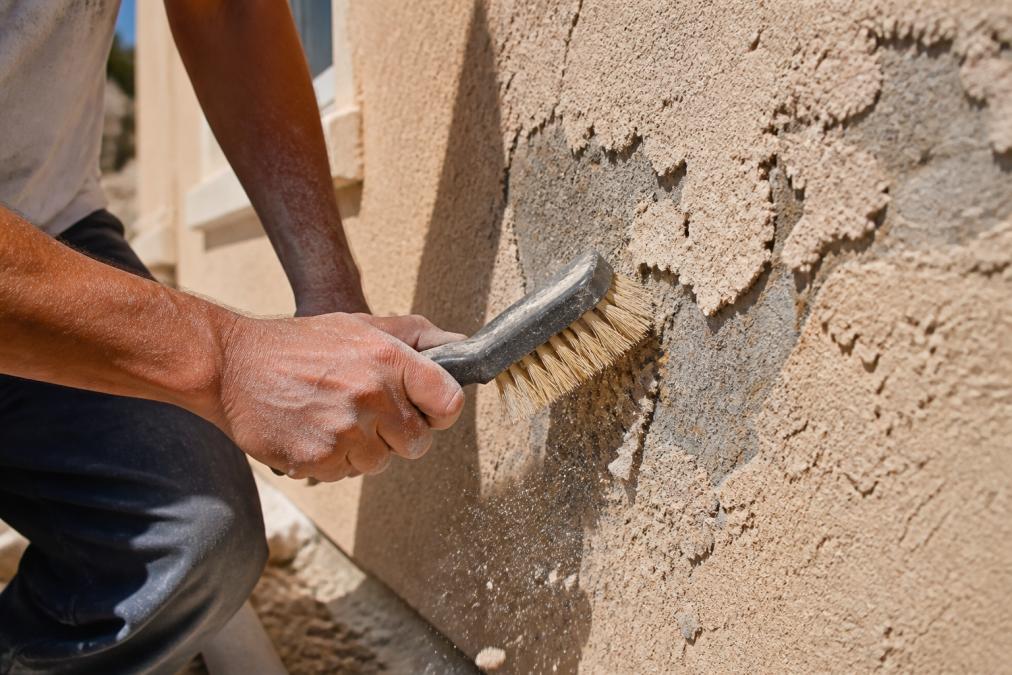
Start by cleaning the entire surface. Use a stiff brush to remove loose paint, dirt, dust, and any chalky residue. Desert dust accumulates heavily, and paint won’t adhere to a dirty surface. For stubborn buildup, a pressure washer works, but keep the pressure below 2000 PSI to avoid damaging stucco.
Next, repair any cracks or damage. Small cracks under a quarter-inch can be caulked with elastomeric caulk. Larger cracks need stucco patch compound. Fill, let it cure, and sand smooth. This step is critical because cracks will telegraph through new paint if left unfilled.
Check for and remove any mold or mildew. Desert air is dry, but shaded areas and areas near water still develop growth. Clean with a mildew-killing solution and let dry completely before painting. Paint won’t stop mold, it only masks the problem.
Finally, prime any bare stucco. If you’ve repaired large areas or if the original paint is completely worn away, primer seals the surface and helps new paint adhere. Use a primer formulated for stucco, not generic primer.
The entire prep process typically takes several days. Don’t rush it. The time you invest here directly impacts how long your paint lasts in the desert sun.
Step 4: Select Paint with High UV and Heat Resistance
When shopping for exterior paint desert climate conditions, focus on three specific features: UV protection, heat resistance, and adhesion strength.
UV protection is non-negotiable. Look for paint that explicitly states UV protection ratings or lists UV blockers in the formula. The paint should resist fading and chalk development. Check the product label for terms like “maximum UV protection” or “advanced UV technology.” These formulations use pigments and resins designed to withstand intense desert sun.
Heat resistance matters because paint expands and contracts with temperature swings. Quality desert paint is formulated to flex without cracking. Look for paint that handles temperature ranges of at least 120°F to -10°F. Most desert-specific paints meet this standard.
Adhesion strength determines how well paint sticks to stucco. Poor adhesion leads to peeling. Look for paint formulated specifically for stucco or masonry. These products have resins that bond strongly to porous surfaces. Avoid paint labeled for wood or metal only, it won’t grip stucco properly.
Also check the paint’s breathability. Stucco needs to allow moisture vapor to escape. If paint traps moisture inside, it will peel and blister. Quality stucco paint allows the surface to breathe while still providing protection.
Read reviews from other El Paso homeowners when possible. Local experience matters. Paint that works great in Florida’s humidity might fail in the desert. Look for products with proven track records in arid climates.
Avoid cheap “all-purpose” exterior paint. It typically lacks the UV protection and heat resistance needed for desert conditions. Buying budget paint saves a few dollars upfront but costs far more when you need to repaint in three years instead of seven.
Step 5: Understanding Cost of Exterior House Painting in El Paso
Paint costs vary based on quality, surface area, and labor. Understanding the factors will help you budget appropriately.
Quality exterior paint for desert climates typically costs more than standard paint. Premium formulas with advanced UV protection run higher per gallon.
- Square footage of walls, Larger homes need more paint
- Surface condition, Extensive prep work increases labor time
- Paint quality, Premium desert-specific paint costs more than budget options
- Labor rates, Professional application costs vary by contractor
- Number of coats, Most jobs require two coats for proper coverage
Common Mistakes to Avoid When Painting in Desert Conditions
Learning from others’ mistakes helps you avoid expensive problems. Here are the most common errors homeowners make when painting in the desert.
Frequently Asked Questions
What type of paint is best for exterior stucco in a desert climate?
Elastomeric or acrylic latex paints specifically formulated for high-UV exposure perform best on stucco in desert climates. Elastomeric paint offers superior flexibility and crack resistance, making it ideal for stucco that expands and contracts with temperature swings. Look for paints labeled as UV-resistant and rated for extreme heat. In El Paso’s intense sun, premium exterior paints with ceramic microspheres or reflective additives help reduce heat absorption and fading.
Does paint color affect heat absorption in desert climates?
Yes, significantly. Lighter colors reflect sunlight and reduce surface temperature, which helps your home stay cooler and protects the paint from premature fading. Dark colors absorb more heat, causing the paint to degrade faster and increasing interior cooling costs. In desert environments, light earth tones, whites, and pale pastels are more practical choices than dark shades. The color’s reflectivity (measured as light reflectance value) directly impacts both durability and energy efficiency.
How often should you repaint a house in a desert climate?
In desert conditions with intense UV exposure and temperature extremes, most homes need repainting every 5-7 years, compared to 7-10 years in milder climates. High-quality elastomeric or premium acrylic paints may extend this to 8-10 years. Factors like sun exposure direction, surface material, and paint finish affect this timeline. Regular inspections for fading, cracking, or peeling help you catch problems early and plan maintenance accordingly.
How do I prepare exterior surfaces for painting in dry, hot weather?
Prepare surfaces in early morning or late afternoon when temperatures are cooler. Clean all dirt, dust, and loose paint thoroughly; stucco requires special attention to remove efflorescence and chalk. Allow surfaces to dry completely, which happens quickly in desert heat. Prime bare spots before painting. Avoid painting when temperatures exceed 85°F or are expected to drop below 50°F overnight, as paint won’t cure properly. Work in shaded sections when possible to prevent premature drying.