

- BY
- POSTED IN Blog
- WITH 0 COMMENTS
- PERMALINK
- STANDARD POST TYPE
Table of Contents
- Emergency Storm Damage Roof Repair in El Paso: First Steps
- How to Use a Temporary Roof Tarp After a Storm
- Roof Inspection After Hail or Wind Damage
- Filing a Texas Homeowners Insurance Roof Claim
- Storm Damage Roof Repair Cost: What Affects the Price
- How to Choose an Emergency Roof Repair Contractor in El Paso
- Frequently Asked Questions
Last Updated: October 15, 2026
Emergency Storm Damage Roof Repair in El Paso: First Steps
When a monsoon downpour or a hail cell rolls off the Franklin Mountains, the first hour after your roof is breached decides how much of your home you save. Emergency storm damage roof repair in El Paso starts with three moves: get everyone away from sagging ceilings and standing water, document the damage with photos before anything gets moved, and call a licensed local roofer while the storm is still fresh in everyone’s mind. At MAK Roofing & Construction, we’ve handled storm calls across El Paso and the surrounding region for more than 16 years, and the homeowners who stay calm and follow a sequence almost always come out ahead.
Here’s the part most guides get wrong: they tell you to grab a tarp first. In practice, your safety check comes first, because a saturated ceiling can collapse without warning.
Your first 60 minutes, in order:
- Move people and pets away from rooms with sagging drywall or dripping light fixtures
- Kill power to affected rooms at the breaker if water is near wiring
- Photograph everything: ceilings, walls, the roof line from the ground, and any debris
- Move furniture and electronics out from under active leaks; use buckets for what you can’t move
- Call a licensed roofing contractor and your insurance company, in that order
Never climb onto a storm-damaged roof to inspect it yourself. Wet shingles and hail-slicked decking cause falls every storm season in the El Paso area. A roofer with fall protection and the right ladders can safely do what you cannot.
If you need emergency help this week, ask the contractor one direct question: can a crew be at my address today or tomorrow? If the answer is vague, keep calling. The Texas Department of Insurance homeowner resources also explains what your policy expects from you after a loss, which is worth reading before you sign anything.
How to Use a Temporary Roof Tarp After a Storm
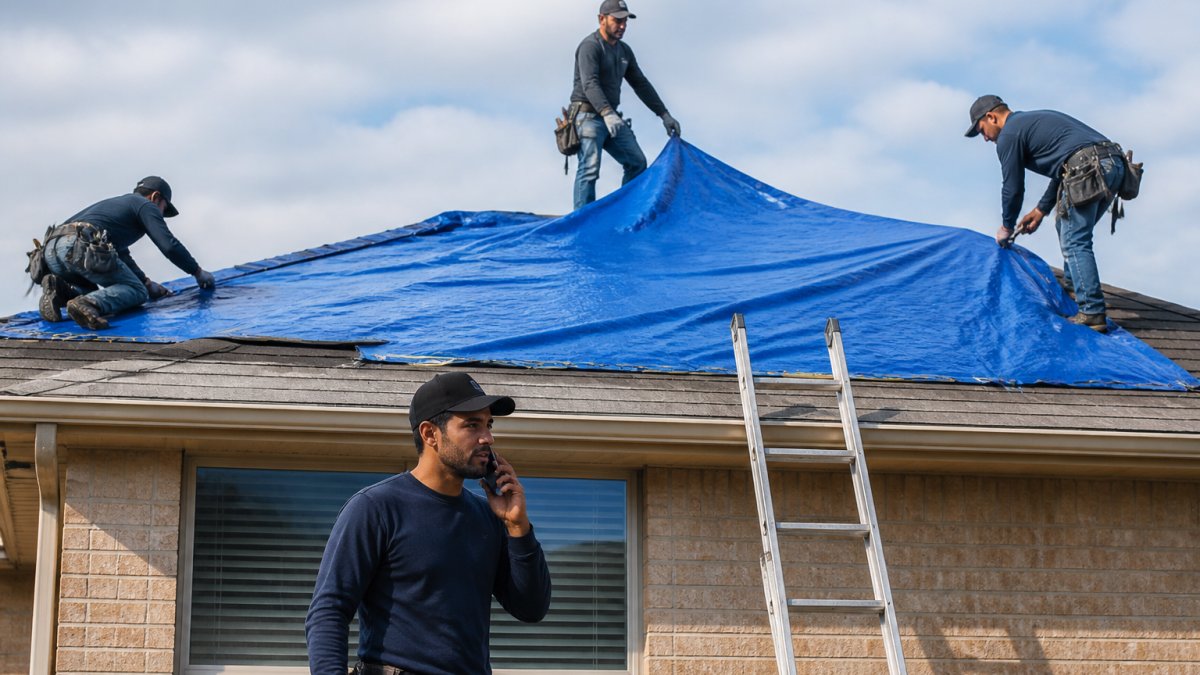
A temporary roof tarp is a heavy polyethylene cover, usually 6 mil or thicker, that a roofing crew fastens over a damaged section of roof to stop water intrusion until permanent repairs are scheduled. It is not a repair. It buys you time, and in El Paso’s late-summer storm season, time is what keeps a small leak from becoming a full ceiling replacement.
How the process actually works:
- Clear the area. Crews remove loose shingles, branches, and debris so the tarp sits flat.
- Overlap generously. The tarp should extend several feet past the damaged area on every side and run down over the ridge line when possible.
- Fasten without new damage. Wood battens or cap nails secure the tarp; screws driven straight through shingles can create new leak points.
- Check the edges. Wind gets under a loose tarp edge and shreds it within a day. Every edge needs anchoring.
What most guides miss is that a tarp is temporary in the truest sense. Plan on permanent repairs within a few weeks, not months. Sun and West Texas wind degrade the plastic, and a tarp left up too long can trap moisture against the decking.
Ask your contractor to photograph the tarp installation from the roof before they come down. Those photos become part of your insurance documentation and prove the emergency mitigation was done properly.
Roof Inspection After Hail or Wind Damage
A roof inspection after hail or wind damage is a systematic check of shingles, flashing, vents, and decking for impact marks, lifted edges, and granule loss. It should happen within days of a storm, not weeks, because some damage worsens with every rain event.
What a thorough inspection covers:
- Shingle surface: bruised or cracked shingles, missing tabs, and areas where granules have washed away
- Flashing and seals: the metal around chimneys, vents, and valleys, where most leaks begin
- Gutters and downspouts: granule buildup is a strong sign of hail impact on the roof above
- Attic and ceilings: water stains, damp insulation, and daylight showing through the decking
- Skylights and vents: cracked domes and loosened seals
Homeowners often ask whether they can inspect the roof from the ground with binoculars. You can spot missing shingles that way, but hail bruising and lifted flashing are nearly invisible from below. That is why we recommend a professional inspection after any storm with quarter-size hail or sustained high winds.
Filing a Texas Homeowners Insurance Roof Claim
A Texas homeowners insurance roof claim is a formal request to your insurer to cover storm-related roof damage, and it follows a defined sequence: report the loss, document everything, meet the adjuster, then review the settlement before you authorize repairs. Texas policies vary widely on how they handle storm damage, so read your own declarations page rather than relying on a neighbor’s experience.
The claim sequence that works:
- Report promptly. Most policies require prompt notice of a loss. Call your insurer’s claims line and get a claim number.
- Keep your documentation. Your pre-repair photos, the tarp photos, and any contractor notes all support the claim.
- Be present for the adjuster visit. Walk the roof line with them if the contractor is there too.
- Get the scope in writing. Ask for the adjuster’s damage assessment before you agree to anything.
- Compare the scope to your contractor’s findings. Gaps between the two are common, and they’re easier to resolve before work starts.
Your insurance company pays to return the roof to its prior condition, not to upgrade it. If your roof was already near the end of its service life, expect the settlement to reflect that, and plan for the difference out of pocket.
The Texas Department of Insurance publishes consumer guidance on the claims process, including what to do if you disagree with a settlement. If your claim is denied or underpaid, you have options, including requesting a re-inspection.
Storm Damage Roof Repair Cost: What Affects the Price
Storm damage roof repair cost depends on four things: how much of the roof is damaged, what materials match your existing roof, how steep and accessible the roof is, and whether emergency mitigation like tarping is needed first. Because every roof and every storm is different, any contractor who quotes you a firm number over the phone without seeing the roof is guessing.
| Cost Factor | What Drives It Up | What Keeps It Down |
|---|---|---|
| Damage extent | Multiple slopes or full replacement | One isolated section |
| Materials | Tile, metal, or specialty systems | Standard asphalt shingles |
| Roof pitch and access | Steep slopes, multi-story, tight lots | Walkable single-story roofs |
| Emergency mitigation | After-hours tarping, water extraction | Damage caught early |
In practice, the biggest variable is whether the storm damaged one slope or compromised the whole system. A single repair is a straightforward job. Widespread hail bruising across every slope usually points to replacement, and that changes the project entirely.
We don’t publish flat repair prices because they would be misleading. What we do offer is a video estimate, so you can see exactly what we found on your roof and what the work involves before you commit. Ask any contractor you call for the same transparency: a written scope, not a verbal ballpark.
How to Choose an Emergency Roof Repair Contractor in El Paso
Choosing an emergency roof repair contractor in El Paso comes down to four checks: a verifiable local address, proof of insurance, a written scope of work, and a clear answer about how fast a crew can arrive. Storm season attracts out-of-town crews who knock on doors after every big hail event, collect deposits, and disappear. Local accountability matters.
Questions to ask before you sign:
- Do you have a physical office in the El Paso area, and how long have you operated here?
- Can you show me proof of liability insurance and workers’ compensation?
- Will you provide a written scope and timeline before work begins?
- How do you handle payment, and are financing options available?
- Who is my point of contact from start to finish?
The Better Business Bureau and the Federal Trade Commission’s guidance on home repair scams both warn about post-storm contractors who demand large upfront cash payments. A legitimate contractor will put everything in writing and won’t pressure you to sign on the spot.
One more thing nobody tells you: ask whether the company handles the whole project or subcontracts the roofing out. A full-service contractor manages the job from inspection through final cleanup, which means one point of contact and one company accountable for the result.
Homeowners in El Paso and surrounding areas who need a crew that can respond during storm season and stay through the permanent repair, not just the tarp.
If you’re searching for emergency roof repair near me in the El Paso area, start with a contractor who has been here through multiple storm seasons. Sixteen years of local work means we’ve seen how El Paso heat, dust, and monsoon wind treat every roofing system sold in this market, and we build our recommendations around that.
Storm damage never waits for a convenient moment, and the gap between a small leak and a ruined ceiling closes fast. MAK Roofing & Construction has spent over 16 years helping El Paso homeowners move from emergency tarp to finished repair with one team handling the entire project, from custom roofing systems built for this climate to full residential and commercial work. We offer video estimates so you see exactly what we see, and bank financing options are available if the timing is tight. Get started with MAK Roofing & Construction and get your roof storm-ready before the next system rolls in.
Frequently Asked Questions
What should I do immediately after storm damage to my roof in El Paso?
First, make sure everyone is safe and stay off the roof. From the ground, look for missing shingles, sagging areas, or debris. If water is entering, place buckets and move valuables. Call a licensed emergency storm damage roof repair company like MAK Roofing & Construction to schedule a professional inspection. Document everything with photos and contact your insurance agent as soon as possible.
Will homeowners insurance cover storm damage to my roof in Texas?
Most Texas homeowners insurance policies cover sudden damage from hail, wind, or fallen trees. However, coverage depends on your policy and deductible. Texas law requires insurers to acknowledge your claim within 15 days of notice. Keep detailed records and photos. A roofing contractor can provide documentation to support your claim and help you understand what is covered.
How quickly should I call a roofer after storm damage?
Call within 24 to 48 hours. Delaying can lead to further damage from rain or mold, which may not be covered by insurance. Emergency roof repair services in El Paso, like MAK Roofing & Construction, prioritize storm-damaged homes and can often tarp your roof the same day to prevent additional water intrusion.
Should I contact my insurance company or a roofing contractor first?
Contact your insurance company to open a claim, but also call a licensed roofing contractor for an inspection. The contractor can document the damage and provide a professional assessment that supports your claim. Many roofing companies, including MAK Roofing & Construction, work directly with insurers and can guide you through the process.