

- BY adminMak
- POSTED IN Blog
- WITH 0 COMMENTS
- PERMALINK
- STANDARD POST TYPE
Last Updated: November 1, 2026
Quick Summary
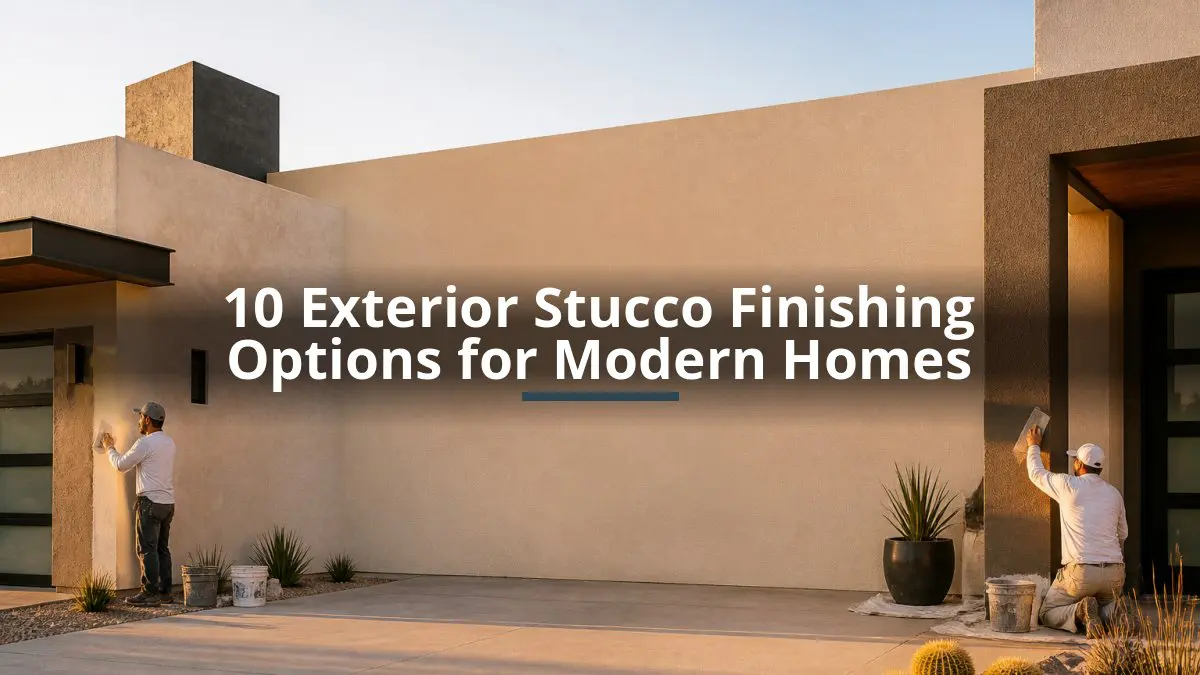
The 10 exterior stucco finishing options for modern homes range from glass-smooth troweled walls to deep, hand-dragged textures, and each one changes how a house reads from the street. Most finishes fall into two families: smooth finishes that are troweled flat and textured finishes that add grit, drag lines, or raised patterns.
- Smooth stucco hides nothing, so every trowel mark and minor crack shows in raking light.
- Sand float and lace finishes hide hairline cracks better than smooth stucco.
- Dash, Spanish, and Catalina textures are heavy, hand-applied finishes that suit Spanish colonial and rustic designs.
- Traditional three-coat stucco builds the wall in layers: scratch, brown, then finish.
- Check stucco walls after monsoon season and address cracks early.
Table of Contents
- Why Stucco Finishes Define a Modern Home’s Exterior
- The Main Types of Stucco Finishes and What They Look Like
- 1. Smooth Stucco Finish: The Cleanest Modern Look
- 2. Sand Float and Lace Finishes for Subtle Texture
- 3. Dash, Spanish, and Catalina Textures for Old-World Character
- 4. Santa Barbara, Mission, and Contemporary Finishes
- What Drives Stucco Installation Cost on a Modern Home
- Stucco Maintenance and Repair: Keeping the Finish Sharp
- Frequently Asked Questions
Why Stucco Finishes Define a Modern Home’s Exterior
The finish you choose for your walls does more than cover the structure. It sets the whole character of the house. Here in El Paso, TX, stucco is the standard for a reason: it handles intense sun, dry air, and sudden monsoon rain better than almost any other cladding. The 10 exterior stucco finishing options for modern homes below range from glass-smooth troweled walls to deep, hand-dragged textures. Each one changes how a house reads from the street.
The finish is often the last decision homeowners make. It should be the first.
A stucco finish is the final textured layer applied over the scratch and brown coats of a stucco wall. It controls the look, the sheen, and how well the wall sheds water. Get it right and the house looks sharp for decades. Get it wrong and you will fight cracks and staining.
Portland Cement Association guidance on stucco finishes notes that finish selection affects both appearance and weather resistance. That trade-off drives every choice below.
Want broader ideas for the whole facade? See our guide to 10 modern exterior renovation ideas before you commit to a finish.
The Main Types of Stucco Finishes and What They Look Like
Most finishes fall into two families: smooth and textured. Smooth finishes are troweled flat. Textured finishes add grit, drag lines, or raised patterns. The texture you pick decides how the wall catches light and how forgiving it is over time.
Here is the quick version before the detailed list:
| Finish Family | Look | Best For | Upkeep |
|---|---|---|---|
| Smooth | Flat, clean, modern | Contemporary homes, sharp lines | Shows flaws, needs skill |
| Sand float | Fine grain, soft sheen | Most homes, hides small flaws | Low |
| Lace | Light dragged texture | Traditional and transitional | Low |
| Dash and Spanish | Heavy, hand-thrown texture | Old-world character | Moderate |
| Santa Barbara / Mission | Soft, mottled, aged | Spanish colonial styles | Moderate |
Traditional Three-Coat Stucco vs. One-Coat Systems
Traditional three-coat stucco builds the wall in layers: scratch, brown, then finish. It is durable and proven. One-coat systems combine the base and mesh into a single applied layer, then add the finish coat. One-coat goes up faster and suits tight schedules. Three-coat gives more depth and holds up longer in harsh sun.
Weighing a new finish against paint? Our breakdown of whether exterior painting is worth the investment helps you compare the two paths.
1. Smooth Stucco Finish: The Cleanest Modern Look
A smooth stucco finish is troweled flat until the wall reads almost like poured concrete. No grit, no drag lines, just clean planes and sharp shadows. It is the go-to choice for modern and contemporary homes.
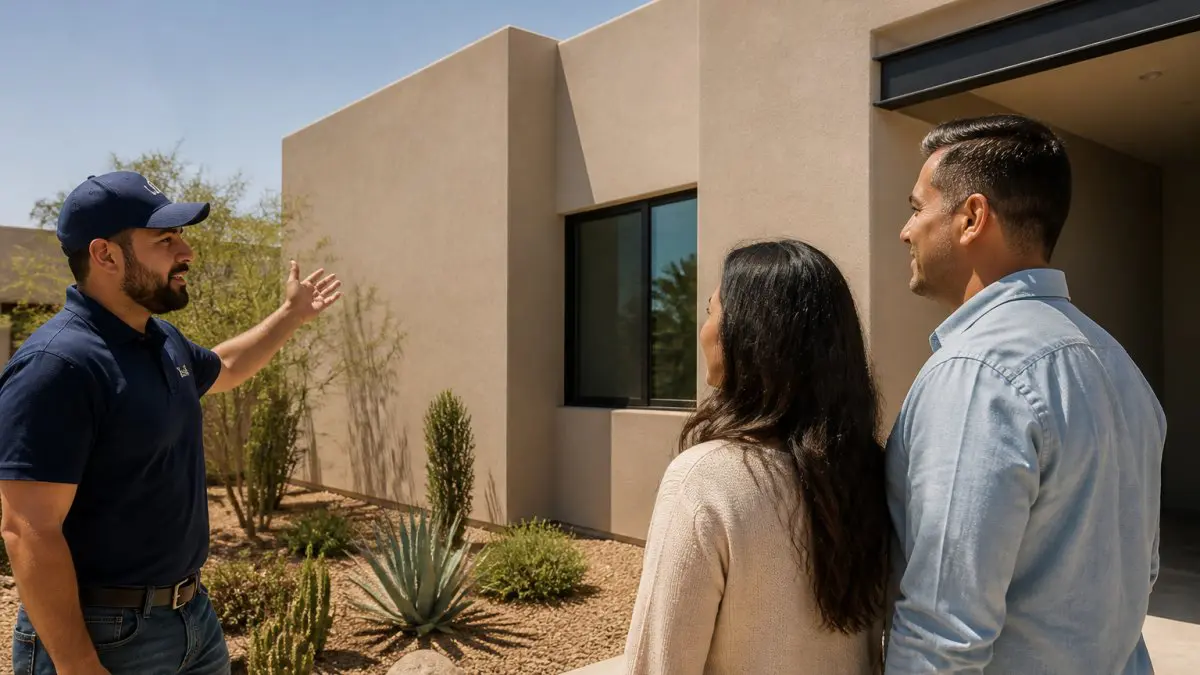
The catch: smooth walls hide nothing. Every trowel mark and every minor crack shows in raking light. This finish demands a skilled hand.
Where Smooth Stucco Works Best in Desert Heat
Smooth stucco suits shaded entries, parapet walls, and homes with strong geometric lines.
2. Sand Float and Lace Finishes for Subtle Texture
Sand float uses a fine sand grain that gives the wall a soft sheen. Lace adds light drag lines for a bit more character.
- Sand float: fine grain, even tone, suits most home styles
- Lace: light texture, subtle movement, good for transitional designs
- Why they work here: both hide hairline cracks better than smooth
If you want texture without drama, start here.
3. Dash, Spanish, and Catalina Textures for Old-World Character
These finishes are heavy and hand-applied. Dash throws material onto the wall for a rough, speckled surface. Spanish and Catalina build deeper, mottled texture with real shadow. They suit Spanish colonial and rustic designs.
4. Santa Barbara, Mission, and Contemporary Finishes
Santa Barbara and Mission finishes mimic aged, hand-troweled plaster with soft color variation. Contemporary finishes stay flatter with crisp edges and modern tones. One gives warmth and history. The other gives clean lines.
- Santa Barbara / Mission: soft mottling, aged look, classic styles
- Contemporary: flat planes, sharp corners, modern homes
- Best for: matching the finish to the home’s architecture, not fighting it
What Drives Stucco Installation Cost on a Modern Home
Pricing depends on quantity, dates, and delivery. For a closer look at local pricing, see our stucco repair cost El Paso guide. For current prices or a quote, contact MAK Roofing & Construction directly.
Stucco Maintenance and Repair: Keeping the Finish Sharp
Stucco requires periodic inspection. Check walls after monsoon season and address cracks early.
Finding help near you matters. Our guide to stucco repair near me walks through how to search and what to ask. And before you hire anyone, read what to look for in a trustworthy stucco contractor.
Frequently Asked Questions
What are the different types of exterior stucco finishes?
Exterior stucco finishes fall into a few families: smooth troweled finishes, sand float and lace textures, dash and Spanish textures, and Santa Barbara, Mission, or contemporary looks. Each one changes how light hits the wall and how much dirt the surface traps. Smooth finishes read clean and modern, while heavier textures hide imperfections and suit traditional styles. The finish you pick also affects how often the wall needs cleaning and repair.
Is smooth stucco a good choice for homes in El Paso?
Smooth stucco gives modern homes a sharp, flat look. Because the surface is tight, small settlement cracks stand out more than on textured walls.
How much does it cost to stucco a house in El Paso?
Stucco installation cost depends on the square footage, the number of coats, the finish texture, and whether old material has to be removed first. Smooth finishes usually take more labor than textured ones because flaws cannot be hidden. Pricing also shifts with material availability and access to upper walls. For current prices or a quote, contact MAK Roofing & Construction directly.
Which stucco finish is easiest to maintain?
Medium textures like sand float are often easier to live with than smooth stucco for hiding minor cracks and dust. Check walls after monsoon season and address cracks early.
Choosing the right finish is only half the job. The other half is finding a crew that preps the wall correctly and stands behind the work. MAK Roofing & Construction brings over 16 years of experience, full-service residential and commercial capability, and bank financing options to every project. We manage the job from start to finish, so your stucco looks right and holds up through El Paso’s heat and storms. Get started with MAK Roofing & Construction and finish your exterior with confidence.
