

- BY adminMak
- POSTED IN Blog
- WITH 0 COMMENTS
- PERMALINK
- STANDARD POST TYPE

Table of Contents
- Why Stucco Needs Gentle Cleaning
- Soft Washing Stucco vs Pressure Washing
- Inspecting Your Stucco Before You Clean
- Step-by-Step Process to Clean Stucco Walls
- How to Clean Stucco Mold and Mildew Safely
- Using a Pressure Washer on Stucco Without Damage
- Frequently Asked Questions
Last Updated: November 14, 2026
Why Stucco Needs Gentle Cleaning
Stucco exteriors can be damaged by cleaning done the wrong way.
Stucco is porous, which means it soaks up water and whatever is in it, so knowing how to clean stucco exterior walls safely matters before any water touches the surface.
Dust and sun exposure can leave walls dull and streaked. Cleaning the walls with a soft, controlled method is a gentler approach.
Soft Washing Stucco vs Pressure Washing
Soft washing uses low-pressure water and a gentle cleaning solution to lift dirt, mold, and mildew. Pressure washing relies on high-pressure water to blast dirt away.
- Soft washing: Low pressure, cleaning solution, dwell time, gentle rinse
- Pressure washing: High pressure, little or no cleaning solution, fast results
- Risk with pressure washing: Chipped finish, etched surface, water pushed behind the wall
A common mistake is assuming more pressure means a cleaner wall. On stucco, excess pressure often causes more damage than the dirt it removes. Soft washing takes a little longer, but it protects the surface.
Inspecting Your Stucco Before You Clean
Before you clean, look closely at the wall. Cleaning can hide or spread problems, so check for damage first.
Identifying stucco type, finish and existing damage
Stucco comes in several textures, such as smooth, sand-finish, and dash or lace. For a closer look at telling damage apart, see how to identify stucco crack damage.
Look for these signs of damage:
- Hairline cracks or larger separations
- Chips, holes, or soft spots
- Bulging or hollow-sounding areas when tapped
If you find cracks or holes, consider repairing them before cleaning. You can learn how to patch stucco holes durably before water gets in. Water and cleaner can seep into damaged areas and cause more harm.
Protecting windows, vents and cracks from water intrusion
Cover windows, vents, outlets, and light fixtures with plastic sheeting or painter’s tape. Water can get behind frames and trim, so seal these openings before you start.
Cracks are the most common entry point for water. If you need a nearby option, browse stucco repair near me. To match the right fix to your damage, see which stucco repair method suits your home.
Reading the wall before you touch it
A visual pass in daylight, followed by a hands-on pass, is a useful way to read the wall.
Identify the finish before choosing a method. Traditional cement stucco, synthetic or acrylic stucco, and painted stucco each behave differently.
Look at the grade line and the roof edge.
Watch out: never clean over active efflorescence, bubbling paint, or a crack you have not sealed, because water and cleaner will drive the problem deeper into the wall.
Deciding whether to clean or call a professional
Some walls should not be washed by a homeowner at all. If you find widespread hollow areas, large sections of separated stucco, or staining that returns within weeks of a cleaning, the underlying issue is moisture or substrate failure, and a qualified stucco or roofing professional should assess it before any water touches the wall. The same applies to walls with existing mold growth that covers more than a small patch, or any wall where you cannot identify the finish.
Step-by-Step Process to Clean Stucco Walls
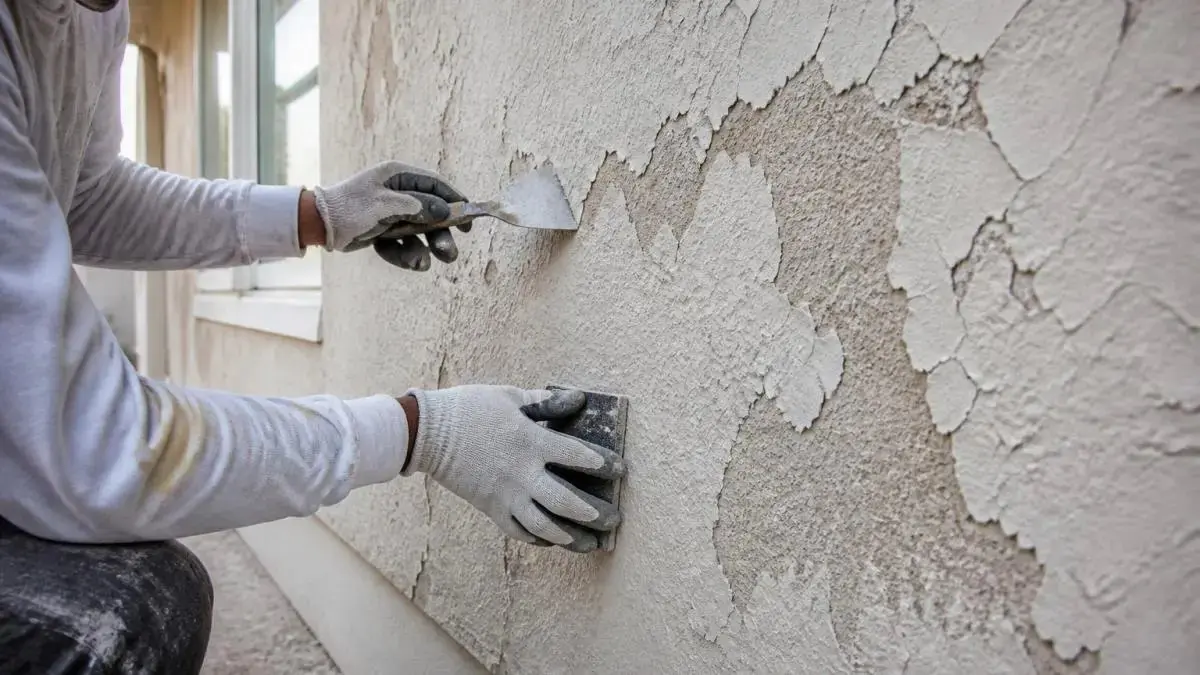
Follow these steps for a safe, even clean. Work on a cool, cloudy day when possible, and never clean stucco in direct, hot sun.
- Wet the wall with plain water from a garden hose at low pressure.
- Mix your cleaning solution according to the label directions.
- Apply the solution from the bottom of the wall upward.
- Let the solution sit for the recommended dwell time.
- Scrub lightly with a soft-bristled brush.
- Rinse from the top down with low-pressure water.
- Check the wall for any missed areas and repeat as needed.
Choosing the best exterior stucco cleaner and testing dilution
Use a cleaner made for masonry or stucco, or a mild detergent diluted as directed. Harsh chemicals such as strong bleach solutions can discolor the finish and harm nearby plants.
Always run a test patch first. Choose a small, hidden area, apply the diluted cleaner, let it dwell, and rinse. Check the result after the surface dries. If the color lightens, the finish is damaged, or the texture changes, dilute the cleaner further or switch products.
Applying cleaner, dwell time and low-pressure rinsing
Apply the cleaner evenly and avoid letting it dry on the wall. Most solutions need a short dwell time, often five to ten minutes, before scrubbing.
Rinse with a garden hose on a gentle setting, working from top to bottom.
The article lays out seven steps for a safe clean, with the timing and cues to follow at each stage.
| Step | What to do | Time or frequency |
|---|---|---|
| 1. Wet the wall | Rinse with a garden hose at low pressure | Before cleaning |
| 2. Mix solution | Dilute cleaner as the label directs | Per label |
| 3. Apply cleaner | Work from the bottom of the wall upward | Evenly, no drying |
| 4. Dwell | Let solution sit | Five to ten minutes, per product |
| 5. Scrub | Light scrubbing with a soft-bristled brush | Lightly |
| 6. Rinse | Low-pressure water, top down | Gentle setting |
| 7. Check | Look for missed areas and repeat | As needed |
How to Clean Stucco Mold and Mildew Safely
Mold and mildew often appear on shaded or damp stucco. Treat them carefully, since stronger products can damage the finish and expose you to fumes.
- Wear gloves, eye protection, and a mask.
- Use a mold-cleaning product labeled for masonry, or a diluted solution.
- Apply it, let it sit, and scrub gently with a soft brush.
Watch out: never mix bleach with ammonia or other cleaners. The fumes can cause serious harm.
If mold keeps returning, the cause is usually moisture. Check gutters, downspouts, and areas where water collects against the wall.
Telling mold apart from efflorescence, rust, and hard-water stains
Not every white or colored mark on stucco is mold, and treating the wrong stain wastes cleaner and can damage the finish. Before you scrub, identify what you are looking at.
- Mold and mildew: Usually green, black, or gray, often in shaded areas, and it smears when you rub it with a damp cloth.
- Efflorescence: A white, powdery, or crusty deposit that comes from salts migrating out of the masonry. It dissolves or brushes away dry and often returns after rain.
- Rust: Orange or brown streaks, typically below metal fixtures, window frames, or lawn sprinklers.
Each stain needs a different approach. Mold responds to a mold-specific cleaner and dwell time. Efflorescence should be brushed off dry first and rinsed lightly; scrubbing it wet can push salts back into the surface.
Dilution, dwell time, and test patches
Mix cleaners at the label dilution and no stronger. A common pattern is that a weaker solution with a longer dwell time cleans as well as a strong mix with a short dwell, and it is far less likely to discolor the finish.
Watch out: letting any cleaner dry on the wall concentrates the product and can leave streaks or etch marks, so work in sections and keep the surface wet until you rinse.
When the growth keeps coming back
If mold or staining returns within a few weeks, cleaning is not the fix. Persistent growth points to a moisture source such as a leaking roof edge, a clogged downspout, or irrigation that hits the wall. Dust that settles on damp stucco can also feed repeat growth, so timing cleanings for dry, mild weather and keeping sprinklers off the wall matters as much as the cleaner you choose.
Using a Pressure Washer on Stucco Without Damage
Some homeowners want to use a pressure washer for speed. If you do, keep the pressure low, use a wide spray tip, and stay well back from the wall.
For large jobs, or walls with significant damage, a qualified professional can assess and address the surface. You can compare options for professional stucco application in El Paso.
Keeping stucco clean takes patience, but it protects your investment for years.
Frequently Asked Questions
What is the best cleaner for exterior stucco?
For most stucco walls, a mild, non-acidic cleaner diluted according to the label works best. Many homeowners use a small amount of dish soap or a stucco-safe exterior cleaner mixed with water, then rinse with low-pressure water. Always test the cleaner on a hidden patch first and let it dwell briefly before rinsing. Avoid strong acids, harsh bleach solutions and abrasive scrubbing, which can etch the finish and expose the base coat. Pricing for commercial cleaners varies by brand, size and retailer, so check current prices at your local hardware store.
Can you clean stucco with Dawn dish soap?
Yes, a small amount of Dawn dish soap mixed with water is a common, gentle option for light dirt and surface grime on stucco. Use a soft-bristled brush and rinse thoroughly with low-pressure water so no soap residue dries on the wall. Dish soap will not remove heavy mold, deep stains or efflorescence, and it can leave a film if too much is used. Mix a test batch, clean a small hidden area, and check for changes in color or texture before cleaning the full wall. If stains remain, a stucco-specific cleaner or professional help is the safer next step.
How do you remove mold and mildew from stucco safely?
Start by wearing gloves, eye protection and a mask, and keep children and pets away from the work area. Pre-wet the wall with low-pressure water, apply a diluted, mild cleaner designed for mold, let it dwell for the time listed on the label, then scrub gently with a soft brush and rinse from the top down. Never mix bleach with other cleaners or ammonia. Because mold can signal moisture behind the stucco, check windows, vents and cracks for leaks. If growth covers a large area or returns quickly, contact a qualified professional.
How often should you clean stucco exterior walls?
Most El Paso homes benefit from a gentle cleaning once or twice a year, with extra attention after dust storms or in shaded areas where mold and algae grow. Inspect the walls each season for new cracks, stains or soft spots. Cleaning more often than needed can wear the finish, so match the schedule to what you see. Regular cleaning also makes it easier to spot water intrusion early.
