

- BY
- POSTED IN Uncategorized
- WITH 0 COMMENTS
- PERMALINK
- STANDARD POST TYPE
A commercial roof rarely fails all at once. More often, it sends expensive warnings: another ceiling stain after rain, insulation that stays wet, repairs that keep returning, or cooling bills that climb through an El Paso summer. Knowing when to replace a commercial roof helps owners and facility managers protect the building before small roofing problems become operational disruptions.
The right answer is not based on age alone. A roof that has been maintained well may have useful years left, while a newer roof with poor drainage, storm damage, or failed installation details may need major work sooner. A professional inspection looks at the entire system – the membrane or surface, seams, flashings, drainage, insulation, and deck – to determine whether repair, restoration, or full replacement makes the most financial sense.
When to Replace a Commercial Roof
Commercial roofing decisions should start with the roof’s actual condition and the cost of keeping it in service. Replacement becomes the stronger option when damage is widespread, moisture has moved below the roof surface, or repairs are no longer delivering reliable protection.
1. Leaks keep returning after repairs
One isolated leak near a vent pipe or flashing detail can often be repaired. But when leaks show up in new locations after every storm, the issue may be more than a single puncture or open seam. Water can travel beneath roofing materials, making the visible ceiling stain far from the actual entry point.
Repeated leak calls also interrupt tenants, employees, customers, and daily operations. If your maintenance team is continually placing buckets, replacing stained ceiling tiles, or calling for emergency repairs, it is time to assess whether the roof system has reached the point where replacement is more dependable than another patch.
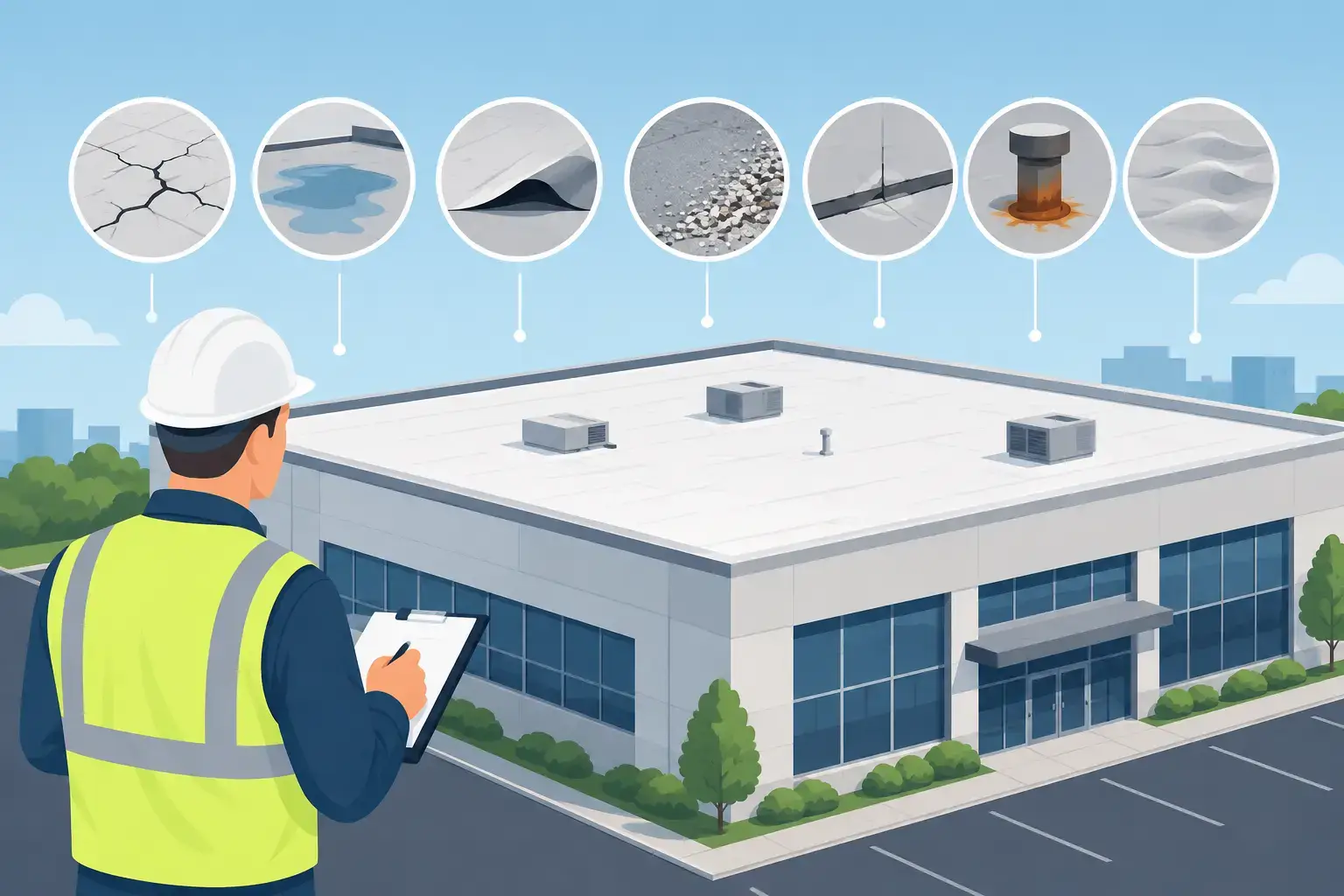
2. Blisters, cracks, splits, or open seams are widespread
Flat and low-slope commercial roofs rely on a continuous surface to keep water out. On TPO, modified bitumen, built-up roofing, and coated systems, open seams or cracks can create a direct path for moisture. Blisters and bubbles may indicate trapped moisture or poor adhesion below the surface.
A few limited defects may be repairable. When these conditions appear across broad sections of the roof, however, spot repairs can become a short-term answer to a system-wide problem. The same is true for deteriorated flashing around walls, HVAC curbs, drains, skylights, and penetrations.
3. The roof holds water too long
Ponding water is common on low-slope roofs, but standing water that remains for more than 48 hours after normal weather should be evaluated. It adds weight to the structure, speeds material deterioration, and exposes weak seams and flashing details.
Poor drainage may come from clogged drains, damaged scuppers, settled insulation, or roof deck movement. In some cases, drainage corrections and a restoration system can extend roof life. If ponding has already contributed to widespread membrane damage or saturated insulation, replacement may be the more responsible investment.
4. Insulation or the roof deck has moisture damage
The roof surface is only one part of the assembly. Once water enters the insulation, it can reduce energy performance and remain trapped long after the top layer looks dry. Wet insulation can add weight, support mold growth, and allow damage to spread below the roofing membrane.
A qualified contractor can use inspection methods to identify likely moisture areas and determine how much of the assembly is affected. Sometimes targeted removal and repair are enough. If moisture is broad or the deck shows deterioration, a full replacement may be needed to restore structural integrity and avoid hidden damage.
5. Energy costs are rising without another clear cause
El Paso heat puts constant pressure on commercial roofing systems. A roof with compromised insulation, dark aging surfaces, or deteriorated seams can force HVAC equipment to work harder. Rising cooling costs do not automatically mean the roof needs replacement, but they are a reason to inspect the roof as part of a larger building-performance review.
A new commercial roof can provide the opportunity to improve insulation values, address air leaks, and select a reflective surface appropriate for the building. TPO, roof coatings, spray foam, and other systems can support energy goals when they are designed around the roof’s condition, drainage, use, and existing construction.
6. Repairs are consuming the maintenance budget
Every roof needs maintenance. The concern is not one repair after a severe storm or an occasional flashing adjustment. The concern is a repair history that keeps growing while confidence in the roof keeps shrinking.
Review repair invoices from the last several years. If the same areas repeatedly fail, if emergency repairs are becoming normal, or if the next necessary repair is large and uncertain, compare that spending against the cost and expected service life of a replacement. Continuing to repair a failing roof can appear less expensive month to month while costing more over the next few years.
7. The roof is near the end of its expected service life
Commercial roof life varies by system, installation quality, maintenance history, building movement, weather exposure, and foot traffic. A properly maintained roof may last longer than its general life expectancy, but age still matters because materials eventually lose flexibility, protective granules, seam strength, or adhesion.
Instead of waiting for a complete failure, plan an inspection and budget discussion as the roof approaches its expected lifespan. This gives you time to compare system options, coordinate work around business operations, and avoid making a rushed decision after major water damage occurs.
Repair, Roof Coating, or Full Replacement?
The best solution depends on what is happening beneath the visible roof surface. Repairs make sense when damage is isolated and the remaining roof is in good condition. They are often the right choice for punctures, localized seam failures, minor flashing issues, and small areas of storm damage.
A roof coating or restoration system may be a practical middle ground when the existing roof is dry, structurally sound, and still well-adhered. Coatings can renew a weathered surface, improve reflectivity, and help reduce exposure to intense sun. They are not a fix for saturated insulation, unstable materials, major drainage problems, or a roof with widespread failure. Applying a coating over a failing roof can hide the problem temporarily while water damage continues below.
Full replacement is usually the right path when the assembly has extensive moisture damage, recurring leaks, broad membrane deterioration, or an aging system with little reliable service life left. Replacement also allows the contractor to correct deficiencies that a surface repair cannot address, such as damaged insulation, weak flashing transitions, or unsuitable drainage design.
What to Expect From a Commercial Roof Evaluation
A dependable inspection should be more than a quick walk across the roof. The contractor should review the roof’s age, material type, visible condition, leak history, drainage paths, penetrations, perimeter edges, and areas where repairs have been completed before. Interior signs of water damage and the condition of rooftop equipment can also provide important context.
Ask for clear recommendations that separate urgent repairs from longer-term options. You should understand what can reasonably be repaired, whether a coating is appropriate, what a replacement would involve, and why one path offers better value for your property. For occupied buildings, the project plan should also address access, safety, debris control, noise, and how the work will be coordinated around tenants or operations.
Choosing the Right System for El Paso Conditions
There is no single best commercial roof for every property. A restaurant with numerous rooftop penetrations has different needs than a warehouse, office building, retail center, or multifamily property. Roof slope, drainage, foot traffic, existing insulation, budget, and future plans for HVAC or solar equipment all influence the right system.
El Paso property owners also need roofing designed for strong sun, heat swings, wind, and heavy rain events. Reflective TPO can be a strong option for many low-slope buildings. Spray foam may help create a continuous insulated surface on the right structure. Modified bitumen and coating systems can also perform well when specified and installed for the building’s conditions. The key is not choosing a material by name alone. It is choosing a complete roof assembly that addresses the building’s actual risks.
MAK Roofing & Construction helps commercial property owners evaluate roofing problems from the surface down, then manage repairs, coatings, or replacement under one experienced team. That matters when roofing work connects to insulation, exterior repairs, drainage concerns, or other property improvements that should be coordinated correctly.
Do not wait for a major interior leak to decide what comes next. Schedule a professional roof inspection while you still have options, a clear budget, and time to plan work around your building.