

- BY adminMak
- POSTED IN Blog
- WITH 0 COMMENTS
- PERMALINK
- STANDARD POST TYPE
Last Updated: November 20, 2026
Quick Summary
Choosing stucco alternatives for exterior walls starts with climate, budget, and maintenance tolerance. EIFS adds insulation and a flexible acrylic finish that resists cracking, while stone veneer delivers real masonry appearance at a fraction of full stone weight. Traditional stucco offers a seamless textured look but cracks when the substrate moves.
- Fiber cement siding wins on impact resistance and paintability, while stucco wins on seamless texture and a classic Southwestern look.
- EIFS is a layered wall assembly of insulation board, a base coat with reinforcing mesh, and a flexible acrylic finish coat.
- Stone veneer gives masonry texture and strong weather resistance without solid stone’s full weight.
- A proper wall assembly includes a weather-resistive barrier and drainage plane so water behind the finish can escape.
- Skipping proper drainage behind either fiber cement or stucco traps moisture and leads to rot or delamination.
Table of Contents
- Stucco Alternatives for Exterior Walls Cost and Comparison
- Fiber Cement Siding vs Stucco: Weighing Durability and Appearance
- EIFS vs Traditional Stucco and Stone Veneer Exterior Siding Options
- Frequently Asked Questions
Stucco Alternatives for Exterior Walls Cost and Comparison
Choosing stucco alternatives for exterior walls starts with climate, budget, and maintenance tolerance. El Paso’s sun, dust, and monsoon swings punish finishes that trap water or crack under thermal movement.
Traditional stucco offers a seamless textured look but cracks when the substrate moves. EIFS adds insulation and a flexible acrylic finish that resists cracking, while stone veneer delivers real masonry appearance at a fraction of full stone weight.
| Option | Appearance | Weight | Cracking Risk | Maintenance Level |
|---|---|---|---|---|
| Traditional stucco | Seamless textured finish | Heavy | Moderate to high | Moderate |
| EIFS | Smooth or textured acrylic | Lightweight | Low | Low |
| Stone veneer | Natural masonry texture | Moderate | Low | Low |
Costs vary by wall assembly, square footage, substrate condition, and labor, so we quote each project after an on-site look. See our guide on estimating stucco installation costs and siding materials that hold up in El Paso weather.
Fiber Cement Siding vs Stucco: Weighing Durability and Appearance
Fiber cement siding wins on impact resistance and paintability; stucco wins on seamless texture and a classic Southwestern look. Fiber cement is a cement, sand, and cellulose composite that holds paint well.
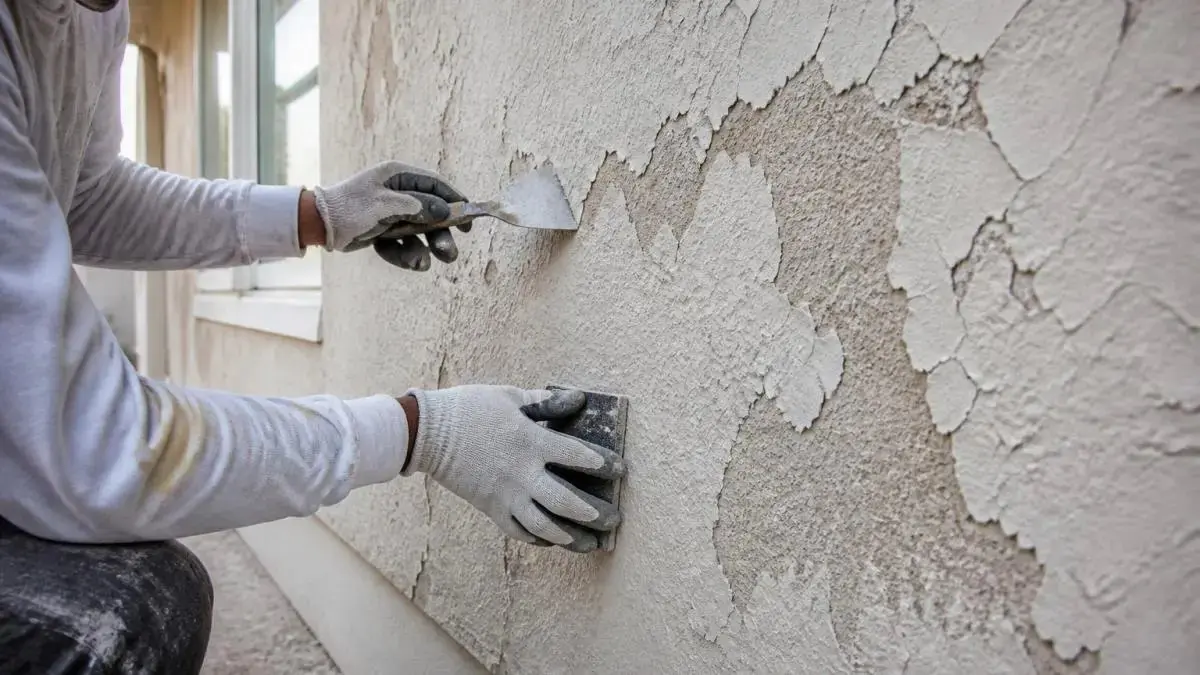
The trade-off is cracking: rigid stucco can open hairline cracks, while fiber cement shows seams and needs repainting. For texture and color options, see our rundown of exterior stucco finishing options.
Watch out: skipping proper drainage behind either material traps moisture and leads to rot or delamination.
EIFS vs Traditional Stucco and Stone Veneer Exterior Siding Options
EIFS is a layered wall assembly: insulation board over the substrate, a base coat with reinforcing mesh, and a flexible acrylic finish coat.
Stone veneer is manufactured or natural stone applied as cladding over a substrate, giving masonry texture and strong weather resistance without solid stone’s full weight. For a direct comparison, our stucco vs brick pros and cons covers the trade-offs.
Moisture management separates good and bad installs of every option. A proper wall assembly includes a weather-resistive barrier and drainage plane so water behind the finish can escape.
Once you’ve settled on a stucco-based system, the installer matters as much as the material. Our guide on what to look for in a trustworthy stucco contractor walks through the questions to ask before you sign.
The material you choose only performs as well as the crew that installs it, and in El Paso’s climate, moisture detailing and substrate prep decide whether a finish lasts or fails. MAK Roofing & Construction brings over 16 years of experience, full-service residential and commercial capability, and bank financing options to every project, with comprehensive management from start to finish. Get started with MAK Roofing & Construction and choose an exterior wall system built for El Paso weather.
Frequently Asked Questions
What is the difference between EIFS and traditional stucco?
Traditional stucco is a cement-based mixture applied over a metal lath and sheathing, creating a hard, heavy wall finish. EIFS, or exterior insulation and finish system, uses a foam insulation board covered with a base coat, mesh, and textured acrylic finish. EIFS is lighter and adds insulation value, while traditional stucco offers a thicker, more impact-resistant surface. Both are common stucco alternatives for exterior walls depending on your priorities for weight, energy efficiency, and crack resistance.
Is fiber cement siding a good alternative to stucco?
Fiber cement siding is a strong stucco alternative for homeowners who want a textured finish with less cracking risk. It holds paint well and can mimic a stucco look with sanded paint or textured panels. Fiber cement requires careful sealing at joints.
What is cheaper than stucco for exterior walls?
Costs vary by wall assembly, labor, and finish, so get a local quote before deciding. Pricing for each option depends on the specific project, so contact the MAK Roofing & Construction website for current pricing. Ask your contractor for a side-by-side estimate that includes material, labor, and long-term maintenance.
