

- BY
- POSTED IN Blog
- WITH 0 COMMENTS
- PERMALINK
- STANDARD POST TYPE
Table of Contents
- Energy Efficient Roof Insulation Pricing 2026: What Drives the Cost
- Roof Insulation Cost Per Square Foot: How Contractors Build an Estimate
- Attic Insulation Cost in El Paso, TX: Local Factors That Move the Number
- The Best Attic Insulation for Hot Climates: Materials That Hold Up in Desert Heat
- Cool Roof Rebates in Texas 2026: Programs That Can Offset Your Project
- Attic Insulation vs. Cool Roof: Which Upgrade Pays Back First
- How to Compare Roof Insulation Quotes Without Getting Burned
- Conclusion: Getting Accurate Pricing for Your El Paso Home
- Frequently Asked Questions
Last Updated: October 12, 2026
Energy Efficient Roof Insulation Pricing 2026: What Drives the Cost
Energy efficient roof insulation pricing in 2026 comes down to four variables: material type, R-value target, attic square footage, and labor conditions specific to your home. At MAK Roofing & Construction, we have spent over 16 years measuring attics across El Paso, and the same pattern holds: two houses on the same block can receive quotes that differ by thousands of dollars. The gap is rarely about the insulation itself. It is about what the contractor found up there.
Most homeowners assume insulation is priced like paint, one rate applied to every wall. It is not. Pricing depends on how much material is needed, how hard it is to reach, and how much prep work the attic requires before a single batt goes down.
That is why we build every estimate from the attic outward, not from a flat rate. Below, we break down what actually moves the number, what local factors apply in El Paso, and how to read a quote so you know exactly what you are paying for.
Roof Insulation Cost Per Square Foot: How Contractors Build an Estimate
Roof insulation cost per square foot is the starting point, but it is only one line in a longer calculation. A contractor who quotes you a single per-square-foot rate without inspecting the attic is guessing, and you will pay for that guess later.
Here is how a real estimate gets assembled:
- Measured area: The actual square footage of attic floor or roof deck to be covered, not the footprint of your house.
- Target R-value: The insulation level you want, which determines material depth and quantity.
- Material choice: Blown-in, batt, spray foam, or rigid board, each with different costs per square foot.
- Prep and access: Removing old material, sealing air gaps, working around ducts and wiring.
- Labor and disposal: Crew time, hauling, and any permits required by local code.
The per-square-foot figure you see advertised is almost always the material cost alone. Ask any contractor to separate material from labor in writing. If they cannot, that is your answer about how the rest of the project will go.
A quote that lists only a total price with no line-item breakdown is a red flag. If the scope changes mid-project, you have no basis to dispute the added charges. Insist on material, labor, prep, and disposal listed separately.
Attic Insulation Cost in El Paso, TX: Local Factors That Move the Number
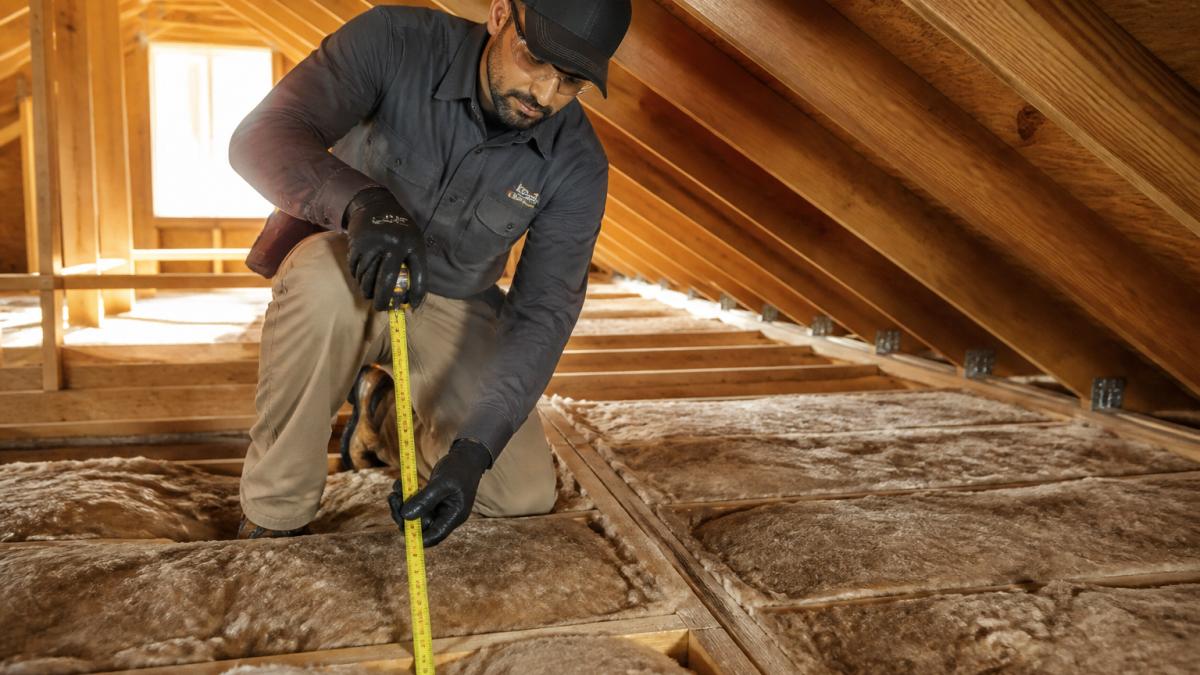
Attic insulation cost in El Paso, TX depends on conditions you will not find in a national pricing guide. Desert homes deal with extreme heat, blowing dust, and temperature swings that stress both insulation and the roof above it.
Three local factors consistently change the number:
- Attic access and layout: Older El Paso homes often have narrow scuttle access, which slows the crew and adds labor hours.
- Existing insulation condition: Compacted or contaminated material has to come out before new insulation goes in, and removal is billed separately.
- Ductwork and penetrations: Sealing around ducts and recessed lights takes time, but skipping it wastes the insulation you just paid for.
Homes built before modern energy codes often have the thinnest insulation and the most air leaks. That combination means more prep work, and prep work is where quotes diverge most.
The Best Attic Insulation for Hot Climates: Materials That Hold Up in Desert Heat
The best attic insulation for hot climates balances R-value per inch against how well the material survives heat cycling and dust. Not every product marketed nationally performs the same way in a desert attic that regularly exceeds 140°F at the roof deck.
| Material | R-Value Per Inch | Best For | Watch Out For |
|---|---|---|---|
| Blown-in fiberglass | ~2.5 | Budget projects, open attics | Settles over time, dusty install |
| Blown-in cellulose | ~3.5 | Retrofit over existing insulation | Needs dry conditions, can compact |
| Spray foam | ~6.5 | Sealing leaks and ducts together | Highest cost, needs cured off-gassing |
| Rigid foam board | ~5 | Roof deck applications | Must be cut precisely to fit |
Spray foam delivers the highest R-value per inch, which matters when attic space is tight. Blown-in cellulose is the practical middle ground for most retrofits. Fiberglass remains the cheapest option, but in a hot climate its lower R-value per inch means you need more depth to hit the same target.
The right answer depends on your attic, not on a general ranking. A contractor should measure, then recommend.
Ask whether the quote includes air sealing before insulation. In desert attics, sealing gaps around ducts, wires, and top plates often improves comfort more than adding extra inches of material, and it costs far less.
Cool Roof Rebates in Texas 2026: Programs That Can Offset Your Project
Cool roof rebates in Texas in 2026 vary by utility provider and program cycle, so the exact amount depends on where you live and who supplies your power. We tell every customer the same thing: check your utility’s current rebate page before you sign a contract, because program funding changes and can run out.
Two categories are worth checking:
- Utility rebate programs: Many Texas utilities offer incentives for reflective roofing and verified insulation upgrades.
- Federal tax credits: The ENERGY STAR guidance on home energy improvements outlines which efficiency upgrades may qualify for federal incentives, and the U.S. Department of Energy homeowner resources explains how insulation performance is measured.
Rebates rarely cover the full project, but they can meaningfully reduce your out-of-pocket cost. The catch is paperwork: most programs require documentation from a licensed contractor, including product specifications and installation details. A contractor who has filed these before will know what your utility needs.
Rebates are applied after installation and approval, not deducted from your quote. Budget the full project cost up front, then treat the rebate as a reimbursement that arrives weeks later.
Attic Insulation vs. Cool Roof: Which Upgrade Pays Back First
Attic insulation usually pays back faster than a cool roof, because it costs less and directly reduces the heat entering your living space. A cool roof changes how much heat the roof surface absorbs, but if your attic floor is under-insulated, that heat still finds its way down.
Here is how we think about the decision:
- Start with insulation if your attic is thin, leaky, or has never been upgraded.
- Consider a cool roof if your roofing material is due for replacement anyway, so you are not paying twice for labor.
- Do both when you are already replacing the roof, since combining the work avoids a second mobilization.
The order matters. Insulating first captures the immediate comfort gain. Adding a reflective roof surface on top of that compounds the benefit, especially during El Paso summers when roof deck temperatures climb well above air temperature.
If your roof is near the end of its life, replacing it with a reflective system and upgrading insulation in the same project is the most cost-effective path. If your roof is young, insulation alone is the smarter first move.
How to Compare Roof Insulation Quotes Without Getting Burned
Comparing roof insulation pricing quotes is where most homeowners lose money, because the lowest number rarely reflects the smallest scope. Two quotes for the same attic can differ because one contractor measured and one estimated.
Run every quote through these checks:
- Is the R-value target stated? A quote without a target R-value is not a complete quote.
- Is removal included? If old insulation comes out, it should be a separate line item.
- Is air sealing listed? If it is missing, ask whether it is included or excluded.
- Are rebate documents handled? Ask who prepares the paperwork.
- Is the warranty in writing? Material and labor warranties are often different lengths.
Ask each contractor the same questions in the same order. The answers will separate the contractors who inspected your attic from the ones who priced it from a satellite image.
Homeowners in El Paso whose attic has never been upgraded and who want the fastest comfort improvement per dollar. Insulation first, cool roof later, is the sequence that usually makes the most financial sense.
Conclusion: Getting Accurate Pricing for Your El Paso Home
Accurate pricing starts with an attic inspection, not a phone estimate. Every number in a quote should trace back to something the contractor measured: square footage, existing insulation depth, air leaks, and access conditions. When those details are missing, the price is a placeholder, and placeholders change.
MAK Roofing & Construction has handled residential and commercial roofing and remodeling across the El Paso area for over 16 years. We build custom roofing systems for this climate, manage every project from start to finish, and offer bank financing options so the work does not have to wait. If you want a real number instead of a guess, request a video estimate and we will walk your attic with you.
Frequently Asked Questions
How much does roof or attic insulation cost in El Paso in 2026?
Pricing depends on the insulation material, the square footage of your attic, existing insulation levels, and whether any air sealing or ventilation work is needed. Because every home is different, MAK Roofing & Construction provides a free video estimate that accounts for your specific attic conditions. Request a quote through their website for current pricing rather than relying on generic online averages, which rarely reflect El Paso’s specific climate and building codes.
What type of roof insulation works best for hot, dry climates like El Paso?
In desert climates, spray foam and blown-in cellulose tend to perform well because they seal gaps that let hot air infiltrate. Spray foam offers the highest R-value per inch and blocks radiant heat transfer, while cellulose is a lower-cost option that still fills irregular spaces effectively. Reflective foil barriers can supplement either material by reducing radiant heat gain from the roof deck. A contractor can assess your attic’s ventilation and existing insulation before recommending a material.
Are there insulation rebates or tax credits available in Texas in 2026?
Federal tax credits for energy-efficient home improvements have historically been available through programs like the Energy Efficient Home Improvement Credit, though amounts and eligibility rules change. Local utility providers in the El Paso area may also offer rebates for insulation upgrades or cool roof installations. Because programs vary by utility and year, check with your provider and a qualified contractor before assuming a rebate applies. MAK Roofing & Construction can help identify which programs your project may qualify for.
How do contractors estimate the cost of roof insulation?
Contractors typically measure your attic’s square footage, assess current insulation depth and R-value, check for air leaks, and evaluate ventilation. They then calculate the material needed to reach the recommended R-value for your climate zone. Labor, disposal of old insulation, and any required air sealing or baffle installation are factored in. Ask for a line-item breakdown so you can see exactly what you’re paying for. A video estimate lets the contractor show you conditions in your attic before quoting.
Getting a price you can trust means working with a contractor who inspects before quoting. MAK Roofing & Construction brings over 16 years of local experience, full-service project management, and financing options to every job. Get started with MAK Roofing & Construction and get a video estimate built from your actual attic, not a national average.