

- BY
- POSTED IN Uncategorized
- WITH 0 COMMENTS
- PERMALINK
- STANDARD POST TYPE
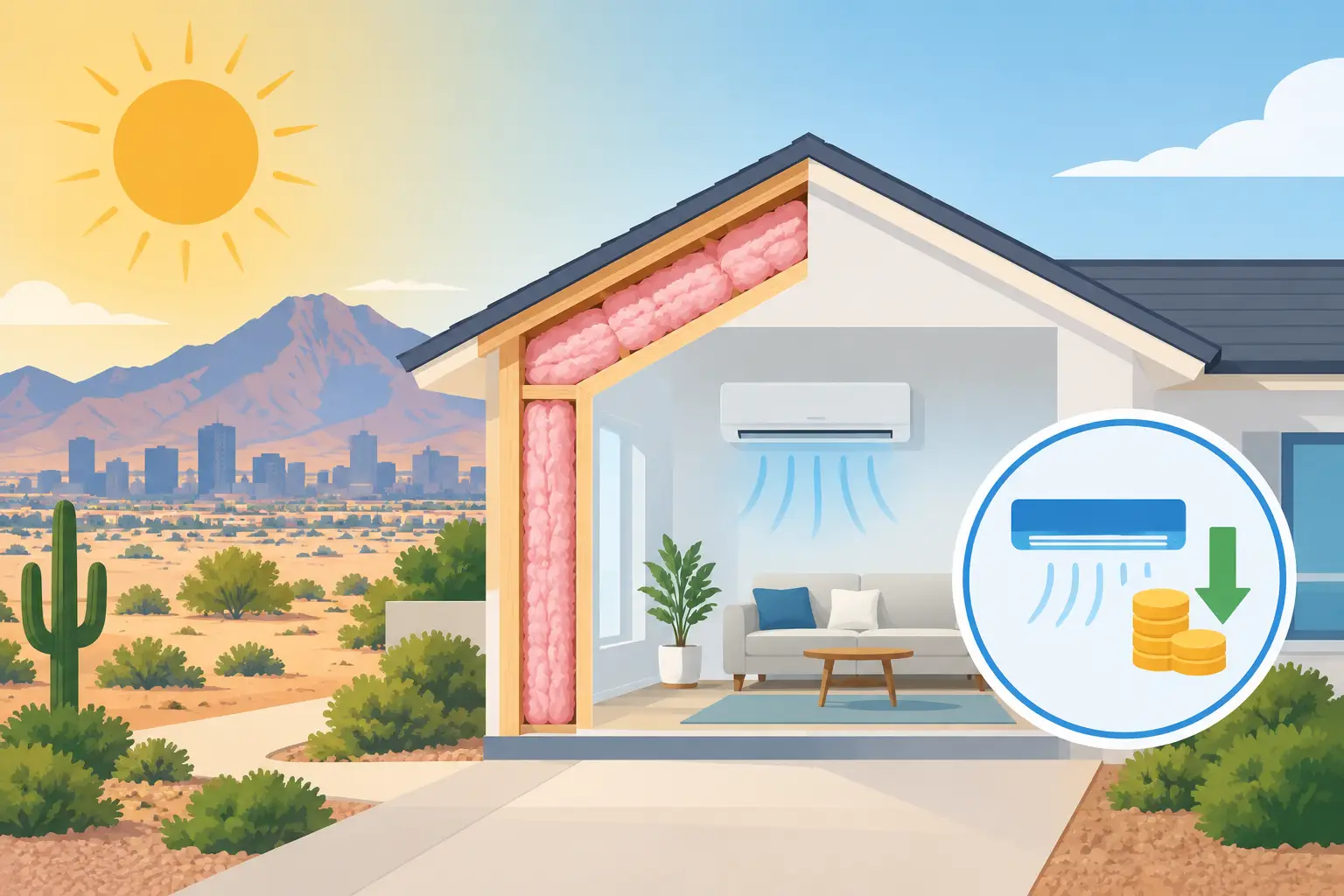
By midafternoon in El Paso, a roof, attic, exterior wall, or garage ceiling can hold onto a serious amount of heat. If that heat has an easy path into the building, the air conditioner has to keep running to catch up. That is how insulation lowers cooling bills: it slows unwanted heat gain before it reaches your conditioned living or work space.
Insulation is not a replacement for a properly sized, well-maintained HVAC system. It is what helps that system do its job without working overtime through long stretches of desert heat. For homeowners and commercial property owners, the result can be steadier indoor temperatures, fewer hot rooms, and less strain on cooling equipment.
How Insulation Lowers Cooling Bills in Hot Weather
Heat naturally moves from hotter areas to cooler ones. During an El Paso summer, the outdoors is often far hotter than the air inside your home, office, or commercial building. The roof absorbs solar heat, hot attic air builds up, and exterior surfaces transfer that energy inward.
Insulation creates resistance to that transfer. Its effectiveness is measured by R-value, which describes how well a material resists heat flow. A higher R-value generally means more resistance, but the right solution depends on where the insulation is installed, the type of structure, existing conditions, and available space.
When an attic has too little insulation, for example, ceiling surfaces below it become warmer. The thermostat senses the indoor temperature rising and calls for more cooling. Proper insulation reduces the amount of heat reaching those ceilings, so the AC can cycle more normally instead of constantly fighting heat entering from above.
The savings vary. A newer, tightly built home with adequate attic insulation may see a smaller change than an older property with thin, settled, damaged, or missing material. Buildings with ductwork in a hot attic can benefit even more because insulation helps limit heat around the ducts while air sealing helps prevent conditioned air from leaking out.
The Attic Is Usually the First Place to Look
For many El Paso properties, the attic is the most important area to evaluate. Heat rises, but the bigger concern in summer is solar heat pressing down through the roof deck and collecting in the attic. On a clear afternoon, attic temperatures can climb well above outdoor air temperatures.
If the insulation on the attic floor is uneven, compressed, contaminated, or lower than recommended, that stored heat can move through the ceiling into the rooms below. Bedrooms under the roofline, upstairs spaces, and rooms with vaulted ceilings often show the problem first. They may feel stuffy even when the thermostat is set low.
Adding or upgrading attic insulation can help maintain a more consistent thermal barrier. The work should account for soffit and roof ventilation where applicable, electrical fixtures, access paths, and the condition of the roof and ceiling. Simply covering every opening without a plan can create moisture or ventilation problems. Good energy performance comes from treating the attic as a system, not just adding material wherever there is room.
Air leaks can undermine good insulation
Insulation slows heat movement, but it does not reliably stop air movement on its own. Gaps around plumbing penetrations, recessed lights, attic hatches, duct chases, wall openings, and wiring can allow hot air to enter conditioned areas. In some cases, those leaks also let cooled air escape into the attic.
Air sealing before or alongside insulation work can make the upgrade more effective. This is particularly valuable in older homes and buildings that have been remodeled in stages. A professional evaluation can identify the obvious gaps as well as the less visible areas where air loss is affecting comfort.
Not Every Insulation Material Solves the Same Problem
Several insulation options can work well, but they serve different building conditions. The best choice is based on the assembly, desired R-value, moisture considerations, access, and budget.
Fiberglass batts are common and cost-effective when installed carefully without gaps or compression. Blown-in fiberglass or cellulose can be a practical option for improving coverage across an open attic floor, especially where existing insulation is low or uneven. Rigid foam can provide useful thermal resistance in certain walls, roof assemblies, and remodeling applications.
Spray foam insulation is often considered when air sealing and insulation need to work together. It can be applied in wall cavities, rooflines, and hard-to-reach areas, depending on the design. Closed-cell foam has a higher R-value per inch and can add rigidity, while open-cell foam expands to fill irregular spaces. Neither is automatically the best answer for every building. Spray foam typically costs more, and using it at the roof deck changes how the attic performs, so the roof system, ventilation approach, and HVAC equipment need to be considered together.
A qualified contractor should explain what material fits the property instead of pushing a one-size-fits-all product. For some owners, a targeted attic upgrade and air sealing will provide the best value. For others, a larger renovation, roof replacement, or addition creates the right opportunity to improve insulation in walls and roof assemblies at the same time.
Roofing and Insulation Work Better as a Team
A roof is the building’s first line of defense against sun, wind, rain, and temperature extremes. Insulation is the layer that helps control how much of that outdoor heat affects the interior. When both are in good condition, the building is better positioned to stay comfortable and use less energy.
This is especially relevant when a roof is being repaired or replaced. A commercial flat roof may benefit from insulation improvements beneath a new roofing system. A residential roof replacement can reveal ventilation concerns, damaged decking, or attic conditions that should be corrected before the new roof is completed. Reflective roof coatings and energy-conscious roofing materials can reduce heat absorbed at the surface, while insulation limits the heat that still moves inward.
The trade-off is that no roofing color, coating, or insulation product can overcome major air leaks, failed ductwork, or an aging air conditioner by itself. Energy improvements work best when the full building envelope is evaluated. That includes the roof, attic, insulation, windows, exterior penetrations, and areas where conditioned air may be escaping.
Signs Your Property May Need an Insulation Evaluation
High cooling bills are one clue, but they are not the only one. Pay attention to patterns inside the property. A home that is comfortable in the morning but difficult to cool after lunch may be gaining too much heat through the attic or roofline. A business with warm perimeter offices, uncomfortable conference rooms, or uneven temperatures between floors may have insulation or air-sealing gaps.
Other warning signs include insulation that looks thin or patchy, rooms that stay warmer than the rest of the building, excessive AC runtime, and visible gaps around an attic hatch. Water stains, roof leaks, pest activity, or a recent ceiling repair also deserve attention because wet or disturbed insulation often loses performance and may need replacement.
Before investing in an upgrade, have the property assessed. The goal is to identify the source of the problem, not guess based on a utility bill alone. An experienced contractor can review accessible insulation, roof and attic conditions, likely air leaks, and whether related work such as drywall repair, roofing, ventilation, or window replacement should be coordinated.
Plan the Upgrade Around Your Property
For an owner planning a renovation or roof replacement, insulation is often one of the smartest items to address while other areas are already open. It can be difficult and disruptive to revisit an attic, wall, or roof assembly later. Coordinating the work under one accountable team also helps prevent gaps between trades.
MAK Roofing & Construction helps El Paso property owners look at insulation in the context of the whole project, from roof condition and exterior protection to interior repairs. The right scope should be clear, climate-appropriate, and built around the condition of your property rather than a generic package.
If your cooling system runs hard every summer, start with a professional look at the spaces that separate your indoor air from the El Paso heat. A well-planned insulation upgrade can make the next hot afternoon feel less like a battle with your thermostat. Schedule your appointment today and get practical recommendations for your home or commercial property.