

- BY
- POSTED IN Blog
- WITH 0 COMMENTS
- PERMALINK
- STANDARD POST TYPE
Quick Summary
A recurring roof leak in El Paso usually returns because heat, sun and dust repeatedly open small gaps around flashing, vents and seams. To fix it permanently, find the real entry point, stop water with temporary repairs, then replace failing materials with heat-resistant roofing and inspect twice a year.
- Heat expansion and contraction opens tiny gaps around flashing, vents and seams over time.
- Water often travels along the roof deck, so the visible stain may sit several feet from the entry point.
- Work from the highest point downward and mark suspected spots with chalk or tape before repairing.
- Choose reflective single-ply membranes for flat roofs and heat-rated shingles for pitched roofs.
- Inspect the roof twice a year, ideally before summer and after the monsoon season.
Table of Contents
- Why a Recurring Roof Leak Keeps Coming Back in El Paso Heat
- Common Causes of Recurring Roof Leaks
- Step 1: Find the Real Source of the Leak
- Step 2: Make Immediate Repairs to Stop Water Entry
- Step 3: Replace Failing Materials With Heat-Resistant Roofing
- Preventative Measures for Hot, Dusty Climates
- Booking Your Roof Inspection With MAK Roofing & Construction
- Frequently Asked Questions
How to Fix a Recurring Roof Leak in El Paso’s Extreme Heat
Last Updated: October 27, 2026
Why a Recurring Roof Leak Keeps Coming Back in El Paso Heat
A recurring roof leak in El Paso is rarely a random problem. Most of the time, the same weak spot keeps failing because the roof was never built to handle the sun, heat and dust this city delivers. Fixing it starts with understanding why the leak returns.
Here is the core issue. Roofing materials expand in the heat and shrink when the temperature drops. Over time, that cycle opens tiny gaps around flashing, vents and seams. When heavy rain finally arrives, water finds those gaps and gets inside again.
Department of Energy guidance on roof materials and cooling explains how hot roof surfaces accelerate material wear, which helps explain why patch jobs often fail after one season.
The leak comes back because the first repair treated the symptom, not the cause. Dust, sun exposure and temperature swings keep working on the roof every day. Without a plan for those conditions, the same problem returns.
Common Causes of Recurring Roof Leaks
Most repeat leaks come from a short list of causes. Knowing them helps you spot the real problem faster.
- Cracked or lifted flashing around chimneys, vents and skylights
- Failed sealant where materials meet, especially around pipes
- Blistered or cracked shingles caused by constant sun exposure
- Clogged roof drains that let water pool and push under the surface
- Damaged underlayment that no longer blocks water after years of heat
Heat is the common thread. It softens sealants, dries out roofing membranes and speeds up cracking. Dust makes it worse. Fine grit collects in drains and seams, then holds moisture against the surface.
A common mistake is sealing the visible crack and calling the job done. Water often travels along the roof deck before it shows up as a stain on the ceiling. The spot you see may be several feet from where the water actually enters.
Step 1: Find the Real Source of the Leak
Start by checking the roof on a dry day, then again during or right after rain if possible. Look for these signs:
- Dark or damp stains on ceilings, often near walls, and this guide to ceiling leak causes and what to check first helps you trace them to their origin.
- Peeling paint or bubbling drywall
- Shingles that look curled, cracked or missing granules
- Debris or standing water in flat-roof drains
- Gaps around vents, pipes and flashing
Work from the highest point downward, since water moves downhill and can enter far from where it started.
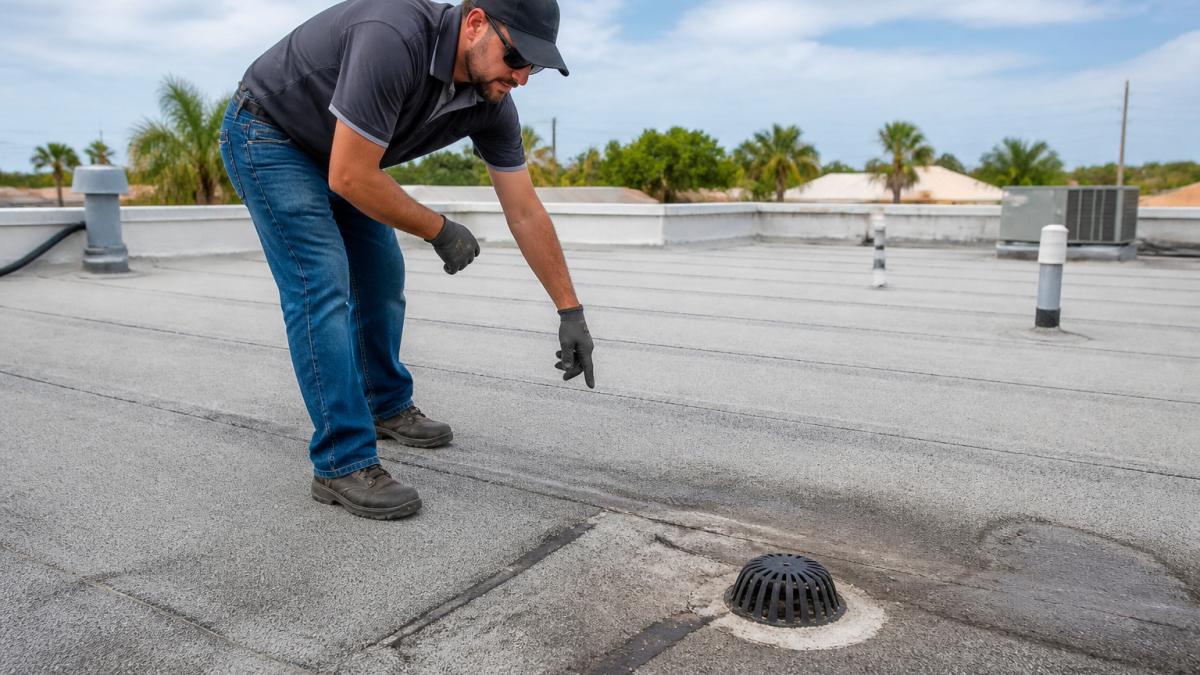
Mark each suspected spot with chalk or tape before you start repairs. This keeps you from fixing the wrong area.
Step 2: Make Immediate Repairs to Stop Water Entry
Once you find the entry point, stop the water first. Temporary fixes protect the home until a full repair is possible.
- Clear debris from drains, gutters and valleys.
- Clean the area around the leak so sealant can stick.
- Apply roofing sealant or a patch to cracks and gaps.
- Cover larger openings with a tarp secured well past the damage.
- Check the interior ceiling after the next rain to confirm the fix worked.
Watch out: Do not walk on brittle or heat-damaged shingles. They can crack under your weight and cause new damage or injury.
These steps are only temporary. Heat keeps working on the materials, so plan a permanent repair soon after.
Step 3: Replace Failing Materials With Heat-Resistant Roofing
Permanent repairs often mean replacing the materials that are breaking down. In El Paso, choose options designed to handle intense sun and heat. Light-colored, reflective surfaces and high-quality membranes tend to hold up better than standard materials in this climate.
| Material Option | Best For | Heat Resistance |
|---|---|---|
| Reflective single-ply membrane | Flat roofs | High |
| Heat-rated asphalt shingles | Pitched roofs | Moderate to high |
| Modified bitumen with cap sheet | Flat roofs with foot traffic | High |
| Standard asphalt shingles | Mild climates | Lower |
For current pricing on your specific roof, contact MAK Roofing & Construction for a quote.
Good materials only work when they are installed correctly. Proper flashing, sealing and drainage matter just as much as the surface you choose.
Preventative Measures for Hot, Dusty Climates
Prevention is cheaper than repeated repairs. A few routine steps can stop small problems from becoming leaks.
- Inspect the roof twice a year, ideally before summer and after the monsoon season
- Clean drains and gutters after dust storms and heavy wind
- Trim nearby branches that rub against the roof surface
- Recoat flat roofs on a regular schedule to restore reflectivity
- Check sealant around vents, pipes and skylights each year
Attic ventilation also plays a role. Trapped heat speeds up roof wear from below. Proper venting helps keep temperatures more even across the roof deck.
Many homeowners find that a simple inspection schedule catches leaks early. Early repairs usually cost far less than water damage to ceilings, insulation and framing.
Booking Your Roof Inspection With MAK Roofing & Construction
MAK Roofing & Construction has over 16 years of experience and provides residential and commercial building solutions.
We also offer a Video Estimate. If you need financing, bank financing options are available to help spread the cost.
Reach out to MAK Roofing & Construction and request a Video Estimate.
Frequently Asked Questions
Why does my roof keep leaking in the same spot?
A recurring leak can have more than one cause. A roof inspection can help assess the problem.
Can extreme heat cause roof leaks?
Heat can be a factor in roof wear. The materials and conditions on a particular roof should be assessed individually.
Can I use roof sealant as a permanent fix?
Whether sealant is appropriate depends on the roof and the source of the leak. A recurring leak may need a professional assessment.
When should I call a roofing contractor for a recurring leak?
Consider contacting a roofing professional if a leak returns after a repair or you notice signs of water damage. A professional assessment can help determine what needs attention.
