

- BY
- POSTED IN Uncategorized
- WITH 0 COMMENTS
- PERMALINK
- STANDARD POST TYPE
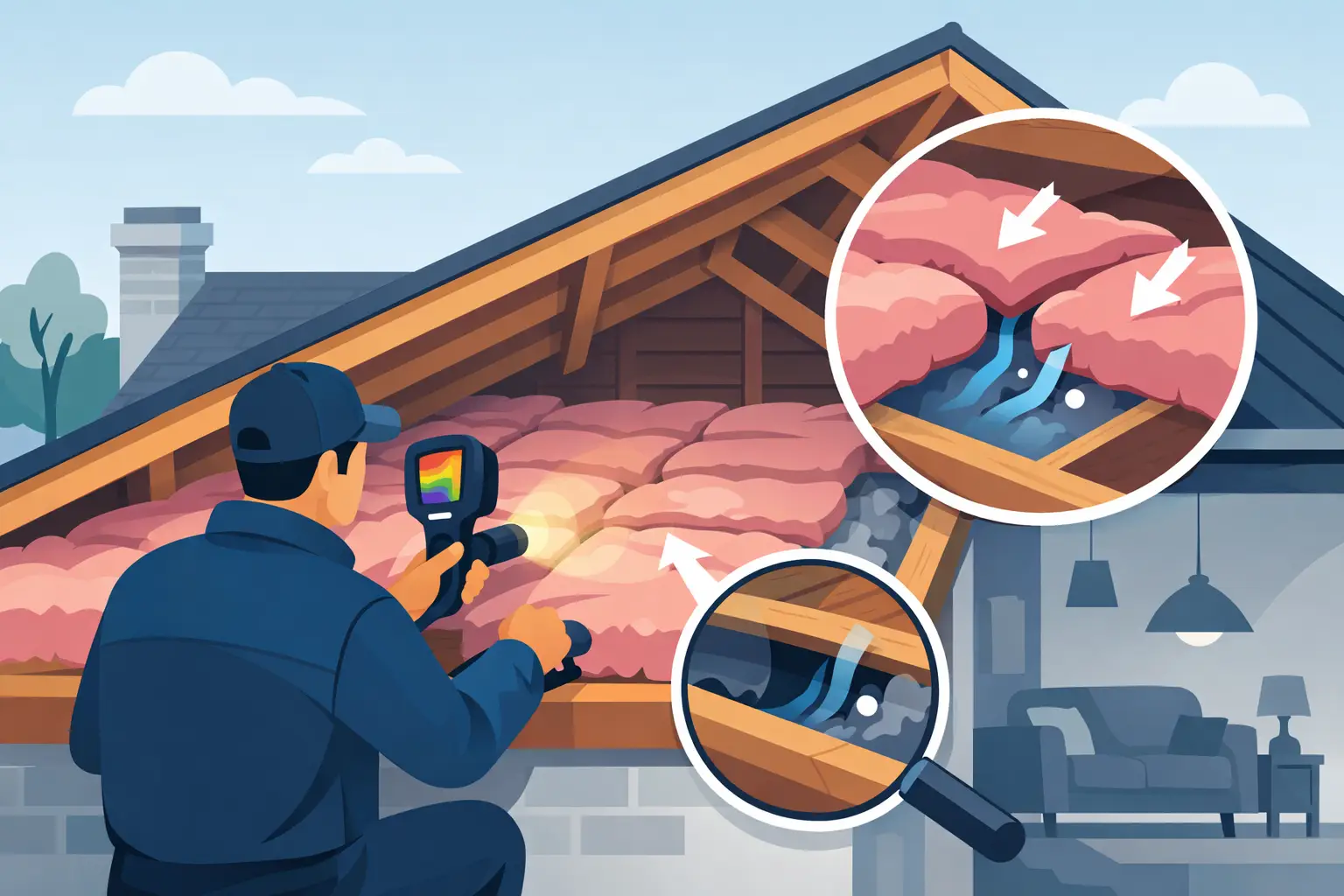
A bedroom that stays hot long after the air conditioner starts, dust collecting around ceiling vents, or an unexpectedly high summer bill can all point upward. When you identify attic insulation gaps early, you can address a major source of heat gain before it affects comfort, energy use, or moisture control inside the home.
In El Paso, the attic is exposed to intense sun and dramatic temperature swings. Insulation is not just a layer of material placed between ceiling joists. It is part of a system that works with air sealing, attic ventilation, drywall, roof components, and HVAC equipment to keep conditioned air where it belongs. A few thin or open areas can reduce the performance of the entire system.
Why attic insulation gaps cause bigger problems
Heat does not move through an attic evenly. It follows the easiest path. If insulation is thin, shifted, compressed, or missing around a ceiling penetration, hot attic air can transfer into the living space much faster than it does through properly insulated areas.
That often creates rooms with uneven temperatures, especially those below the attic or on the west side of the home. Your HVAC system may run longer to compensate, which raises utility costs and adds wear to the equipment. In winter, even in a generally warm climate, gaps can allow indoor heat to escape and make ceilings feel cold.
Insulation gaps and air leaks are related but not identical. Insulation slows heat transfer. Air sealing stops conditioned air from moving through openings around wiring, pipes, recessed lights, duct chases, and framing joints. Adding insulation over an unsealed opening can help, but it does not fully solve the problem. The right repair usually addresses both conditions in the proper order.
How to identify attic insulation gaps safely
A visual attic inspection can reveal a lot, but it should be done carefully. Attics can have low clearance, weak walking surfaces, exposed nails, electrical hazards, and extreme heat. Plan to inspect in the early morning, use a bright work light, wear a dust mask, gloves, long sleeves, and eye protection, and step only on ceiling joists or installed walk boards.
If the attic is unusually hot, cramped, has damaged framing, or contains suspected mold, pest activity, or old vermiculite insulation, do not disturb it. A professional inspection is the safer choice.
Start at the attic access
The attic hatch or pull-down stair is one of the most commonly missed insulation areas. Look for insulation attached to the back of the hatch and weatherstripping around its perimeter. If the cover is bare, warped, or has visible daylight around the edges, it can leak a surprising amount of conditioned air.
Check the immediate area around the opening as well. Insulation is often pushed away to make access easier and never replaced. The opening needs clear access, but the surrounding ceiling area should be fully insulated.
Look for uneven depth and exposed ceiling drywall
From a safe position, scan across the attic floor. Insulation should have consistent depth and coverage, not peaks in one area and nearly bare drywall in another. With loose-fill insulation, you may see valleys where material has settled or been displaced by previous electrical, HVAC, or roofing work. With batt insulation, look for gaps between pieces, narrow strips left uncovered, folded sections, and batts that are too short for the cavity.
Exposed top plates, ceiling drywall, or ceiling joists do not automatically mean the insulation has failed, but they deserve attention. A small amount of framing may remain visible depending on the insulation type and target depth. Wide, repeated areas of visible framing are a clearer sign that coverage is inadequate.
Do not judge performance by appearance alone. Dirty or matted insulation may still have some insulating value, while clean-looking insulation can be too thin for the home. Depth, coverage, air leaks, and moisture condition all matter.
Inspect common trouble spots
The edges and interruptions in an attic are where insulation gaps are most likely to appear. Pay close attention to the perimeter where the roof meets exterior walls, behind knee walls, around chimneys, above garage ceilings, and near changes in ceiling height. These areas are harder to reach during installation and easier to overlook during later repairs.
Also inspect around recessed fixtures, exhaust fans, plumbing stacks, electrical boxes, duct runs, and HVAC chases. Air movement can carry fine dust into insulation, leaving dark staining around a leak. That staining is a useful clue, but it is not proof by itself. It can also come from ordinary attic dust.
Keep insulation clear of heat-producing fixtures unless they are rated for direct insulation contact. Chimneys, flues, and certain lighting components require specific clearance and fire-safe materials. This is one reason attic upgrades should not be treated as a simple fill-every-open-space project.
Check soffit ventilation without blocking it
At the roof edge, insulation can drift into soffit vents and block the air path from the eaves into the attic. Baffles or vent chutes are used to maintain that channel while holding insulation back. If you see insulation packed tightly against the underside of the roof sheathing at the eaves, the attic may have both a coverage issue and a ventilation issue.
More ventilation is not always the answer. The attic must be designed as a complete system, especially when the roof type, insulation type, and HVAC layout vary. A roofing or insulation professional can determine whether the problem is insufficient insulation, poor air sealing, restricted airflow, roof heat gain, or a combination of those factors.
Signs from inside the house
You do not need to enter the attic to notice possible insulation gaps. Walk through the home during the hottest part of the day and compare rooms. A single upper-level room that is consistently warmer than nearby spaces may be above a thin or open section of insulation. Warm ceilings, drafts around ceiling fixtures, and frequent HVAC cycling are also worth investigating.
Utility bills can provide another clue. Compare the current season with similar months from prior years, allowing for changes in occupancy and electricity rates. A sudden jump does not automatically mean insulation is the cause. An aging air conditioner, leaky ducts, solar exposure, window issues, and roof damage can produce similar symptoms.
Watch for stains on ceilings, peeling paint, damp insulation, musty odors, or soft drywall. Those signs may indicate a roof leak, plumbing leak, or condensation problem rather than an insulation gap alone. Wet insulation loses effectiveness and should not simply be covered with new material. The moisture source needs to be located and repaired first.
What proper repairs usually involve
The best repair depends on what is in the attic now and why it is underperforming. In some homes, an insulation contractor can air-seal penetrations and add loose-fill material to bring the attic to a more consistent depth. In others, damaged batts need to be reset or replaced, ductwork needs attention, or contaminated insulation should be removed before new material is installed.
Spray foam insulation can be an effective option in the right attic design because it provides insulation and air sealing. However, it changes how the attic manages heat and moisture, and it should be selected with the roof assembly, ventilation approach, and local climate in mind. It is not automatically the right choice for every property.
A complete evaluation should also consider the roof. Missing shingles, aging underlayment, damaged flashing, failed roof coatings, and penetrations around vents can allow water into the attic and create insulation problems that keep returning. Treating the visible gap without correcting roof-related moisture can waste time and money.
When to schedule a professional inspection
Call for professional help when you find wet or moldy insulation, signs of pests, burned wiring, significant settling, repeated hot rooms, or visible roof deck staining. It also makes sense to schedule an inspection before a roof replacement, major remodel, HVAC upgrade, or solar-related construction. Coordinating these projects can prevent newly installed insulation from being disturbed later.
MAK Roofing & Construction can evaluate the condition of the attic along with the roofing, exterior, and insulation work that may be affecting the building. One accountable team can help determine whether the practical next step is air sealing, insulation repair, roof repair, or a coordinated improvement plan.
A well-insulated attic should not be an afterthought hidden above the ceiling. Give it the same attention you give your roof, windows, and HVAC system, and your home will be better prepared for the next long El Paso summer.