

- BY
- POSTED IN Blog
- WITH 0 COMMENTS
- PERMALINK
- STANDARD POST TYPE
Table of Contents
- Reflective Roof Coating vs Shingles: Overview
- How Reflective Roof Coatings Work
- Cool Roof Shingles Explained
- Reflective Roof Coating Lifespan and Durability
- Roof Coating vs Roof Replacement: When to Choose Each
- Energy Efficiency and Cost Comparison
- Which Option Works Best for El Paso’s Climate
- Frequently Asked Questions
Last Updated: October 10, 2026
Reflective Roof Coating vs Shingles: Overview
When homeowners in El Paso face aging roofs or want to improve energy efficiency, they often encounter the same decision: should they apply a reflective roof coating or replace with cool roof shingles? Understanding the reflective roof coating vs shingles difference is essential for making the right choice for your property.
Both options address the same core problem: reducing heat absorption and lowering cooling costs in our intense desert climate. But they work differently, last different amounts of time, and suit different roof types. The choice depends on your roof’s current condition, your budget timeline, and whether you’re looking for a repair solution or a long-term replacement.
At MAK Roofing & Construction, we’ve spent over 16 years helping El Paso homeowners navigate this decision. We know the local climate challenges that make this comparison so important here.
| Aspect | Reflective Roof Coating | Cool Roof Shingles |
|---|---|---|
| Best For | Metal and low-slope roofs in good condition | Steep-slope asphalt roofs needing replacement |
| Application | Liquid coating applied to existing roof | New shingles installed during replacement |
| Hail Resistance | Lower | Higher |
| Initial Cost | Generally lower upfront | Higher upfront investment |
| Lifespan | 5-10 years typically | 20-30 years typically |
| Ideal Roof Type | Metal, flat, low-slope | Pitched asphalt roofs |
How Reflective Roof Coatings Work
A reflective roof coating is a liquid membrane applied directly to your existing roof surface. The coating reflects sunlight rather than absorbing it, which keeps your building cooler and reduces air conditioning demand. These coatings work by creating a protective barrier that bounces solar radiation away from the structure.
According to American WeatherStar’s analysis of roof coating performance, silicone roof coatings offer strong UV protection and resist ponding water, both critical advantages in El Paso’s intense sun and occasional monsoon rains. The coating erodes more slowly than other types, extending its protective lifespan.
Reflective coatings suit metal roofs and low-slope commercial roofs best. They’re ideal when your roof structure is sound but the surface has weathered or lost its reflective properties. The application process is faster than a full roof replacement, and you avoid the disruption of tearing off old materials.
If your roof has minor leaks or surface deterioration but the structure underneath is solid, a reflective coating can extend its useful life by several years without the expense of full replacement. This is especially valuable for commercial properties where downtime costs money.
Cool Roof Shingles Explained
Cool roof shingles are manufactured with reflective granules that bounce sunlight away from your home. Unlike a coating applied to an existing roof, shingles are installed as part of a complete roof replacement. They’re designed from the ground up to reflect heat rather than absorb it.
According to Jamar Roofing’s comparison of cool roof coatings with reflective shingles, reflective shingles offer better hail resistance than coatings and are the stronger option for steep-slope asphalt roofs. The shingles themselves are engineered to withstand impact and weathering over decades.
Cool roof shingles work best when you’re already planning a roof replacement. They provide the same energy benefits as coatings but with greater durability and impact protection. For El Paso homes with traditional pitched roofs, shingles are often the more practical choice because they’re designed for that application from the start.
The reflective roof coating vs shingles comparison shifts when hail enters the picture. Shingles’ layered construction and impact-resistant design make them more suitable for areas prone to severe weather. El Paso’s monsoon season can bring hail, making this durability advantage significant.
Reflective Roof Coating Lifespan and Durability
A reflective roof coating typically lasts 5 to 10 years before it needs reapplication or replacement. The lifespan depends on your climate, the coating type, and how well it’s maintained. In El Paso’s intense UV environment, coatings degrade faster than in milder climates.
Silicone coatings perform better in our desert conditions because they resist UV degradation more effectively than acrylic or polyurethane alternatives. However, even silicone coatings require periodic inspection and maintenance. Dust accumulation and mineral deposits from our hard water can reduce reflectivity over time.
The advantage of a shorter lifespan is flexibility. If your roof needs work in 7 years, you can recoat it rather than replace it. This makes coatings a good intermediate solution when you’re not ready for the expense of new shingles but want immediate energy savings.
Applying a reflective coating over existing asphalt shingles can cause problems. The coating may degrade the shingles themselves and interfere with roof ventilation and airflow, potentially trapping moisture. This is why coatings work best on metal or low-slope roofs, not pitched asphalt roofs.
Roof Coating vs Roof Replacement: When to Choose Each
The reflective roof coating vs shingles decision comes down to three factors: your roof’s current condition, your timeline, and your budget.
Choose a reflective roof coating if:
- Your roof structure is sound with no major leaks
- You have a metal or low-slope commercial roof
- You need immediate energy savings without major expense
- You want to extend your current roof’s life by 5-10 years
- You’re not ready for the cost of full replacement
Choose cool roof shingles if:
- Your roof is aging and approaching end-of-life anyway
- You have a pitched asphalt roof prone to hail damage
- You want a solution that lasts 20-30 years
- You’re willing to invest more upfront for long-term durability
- Energy efficiency is a priority for the next two decades
The decision also depends on whether your roof can handle a coating. As GAF’s guidance on roof coatings versus commercial replacement cautions, applying a coating over asphalt shingles can create ventilation problems and shorten shingle life. This makes shingles the better choice for traditional pitched roofs in El Paso.
Energy Efficiency and Cost Comparison
Both reflective coatings and cool shingles reduce cooling costs by reflecting solar heat. The energy savings depend on your current roof color, your air conditioning usage, and how much of your roof is exposed to direct sun.
In El Paso’s climate, the energy efficiency gains from either option are meaningful. Our intense summer heat means your air conditioning runs hard for months. Any reduction in solar heat gain translates to lower electricity bills.
A reflective coating offers faster payback because the upfront cost is lower. Cool shingles cost more initially, but they deliver energy savings over a much longer period, potentially 20-30 years if the shingles last that long.
The real comparison is cost per year of service. A coating might cost less upfront but requires reapplication every 5-10 years. Shingles cost more initially but don’t need replacement for two decades. Over 30 years, the total cost of multiple coating reapplications can approach or exceed the cost of one quality shingle replacement.
Which Option Works Best for El Paso’s Climate
El Paso’s desert climate creates specific demands that favor one option over the other in most situations. Our intense UV exposure, low humidity, occasional hail, and extreme temperature swings all affect how coatings and shingles perform.
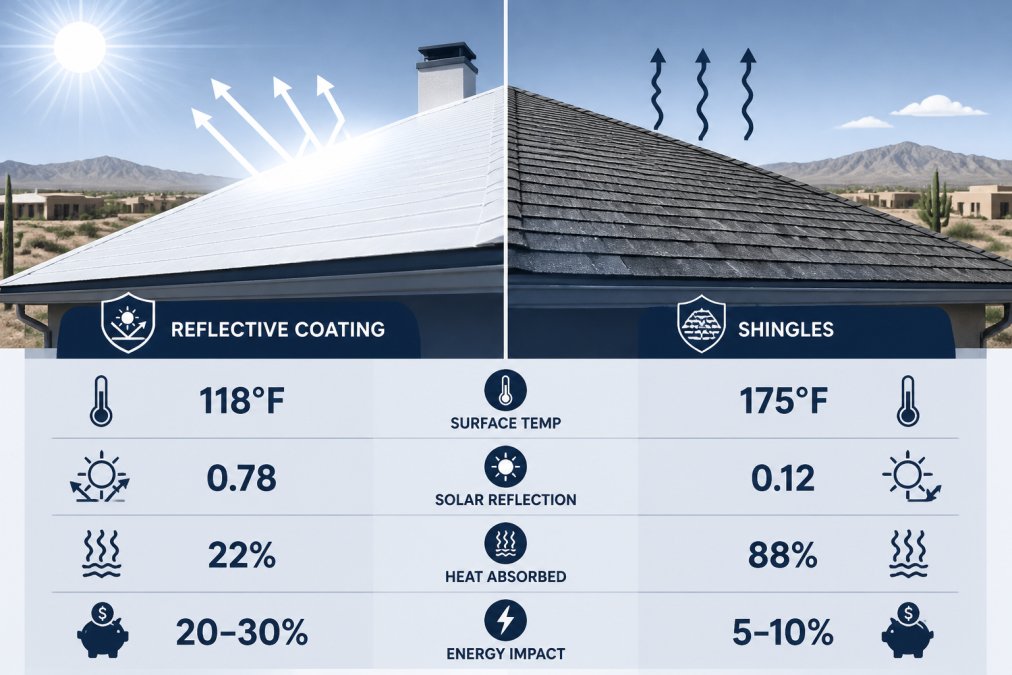
Reflective coatings excel in our dry climate because they don’t degrade from moisture the way they might in humid regions. UV exposure is harsh, but silicone coatings resist UV better than alternatives. The main challenge is dust accumulation, our desert winds deposit fine particles that can reduce reflectivity if not cleaned periodically.
Cool roof shingles are ideal for El Paso homes because they’re designed to handle hail impact and extreme temperature swings. Our monsoon season brings sudden, violent storms with hail that can damage coatings. Shingles’ layered construction provides better protection. Additionally, shingles perform consistently regardless of dust or dirt, their reflective properties don’t degrade the way a coating’s do when covered with dust.
For most El Paso homeowners with pitched residential roofs, cool roof shingles are the better long-term choice. The hail resistance alone justifies the investment. For commercial properties with flat or low-slope roofs, a reflective coating makes sense as an intermediate solution.
MAK Roofing & Construction recommends assessing your roof’s current condition first. If your roof has 10+ years of life remaining, a reflective coating extends that life cost-effectively. If your roof is aging or has structural issues, shingles are the right investment.
The choice between reflective roof coating vs shingles depends on your roof type, current condition, and how long you plan to stay in your home. For most El Paso homeowners, the decision comes down to whether you’re buying time or buying durability. MAK Roofing & Construction can assess your specific roof to recommend the best solution. Our team designs custom roofing systems that work with El Paso’s desert climate, offering improved energy efficiency, enhanced durability, and lower energy bills. Get a video estimate today and let us show you which option makes sense for your property.
Frequently Asked Questions
What is the difference between a reflective roof coating and reflective shingles?
Reflective roof coatings are liquid membranes applied directly to an existing roof surface, while reflective shingles are physical roofing materials installed during new construction or replacement. Coatings work on flat or low-slope metal and concrete roofs; reflective shingles suit steep-slope asphalt roofs. Coatings reflect heat across the entire surface, whereas shingles have reflective granules embedded in the material. The choice depends on your roof type and whether you’re replacing or preserving your current structure.
Can you apply a reflective coating over asphalt shingles?
Applying reflective coatings directly over asphalt shingles is not recommended. The coating can degrade the shingle material and interfere with roof ventilation and airflow, potentially trapping moisture underneath and causing structural damage. If your asphalt roof is still sound, replacement with reflective shingles is a better approach. For metal or low-slope roofs, coatings are a suitable option for extending roof life without full replacement.
How long does a reflective roof coating last compared with shingles?
Reflective roof coating lifespan typically ranges from 5 to 10 years, depending on the coating type and climate exposure. Silicone coatings, for example, resist UV damage and ponding water, extending durability in harsh conditions. Reflective shingles generally last 20 to 30 years or longer. In El Paso’s intense heat and dust, both options require regular maintenance. Coatings may need reapplication sooner, while shingles offer longer-term protection with less frequent intervention.
Is roof coating vs roof replacement the better choice for my home?
Roof coating vs roof replacement depends on your roof’s current condition and structure. If your roof is structurally sound but aging, a reflective coating extends its life at lower upfront cost, especially for metal or flat roofs. If your roof has significant damage, leaks, or is nearing the end of its lifespan, replacement with reflective shingles is a more durable long-term investment. Coatings are best for preservation; replacement is best for failing roofs. A professional inspection determines which is right for your property.
Do reflective shingles reduce cooling costs in El Paso?
Yes, reflective shingles reduce cooling costs by reflecting solar heat away from your home, lowering the demand on air conditioning systems. In El Paso’s desert climate with intense summer heat, this energy savings can be significant. Cool roof shingles are designed with reflective granules that bounce sunlight rather than absorbing it. Combined with proper attic ventilation, reflective shingles help maintain lower indoor temperatures and reduce monthly energy bills, making them a smart investment for homeowners seeking energy efficiency.