

- BY
- POSTED IN Uncategorized
- WITH 0 COMMENTS
- PERMALINK
- STANDARD POST TYPE
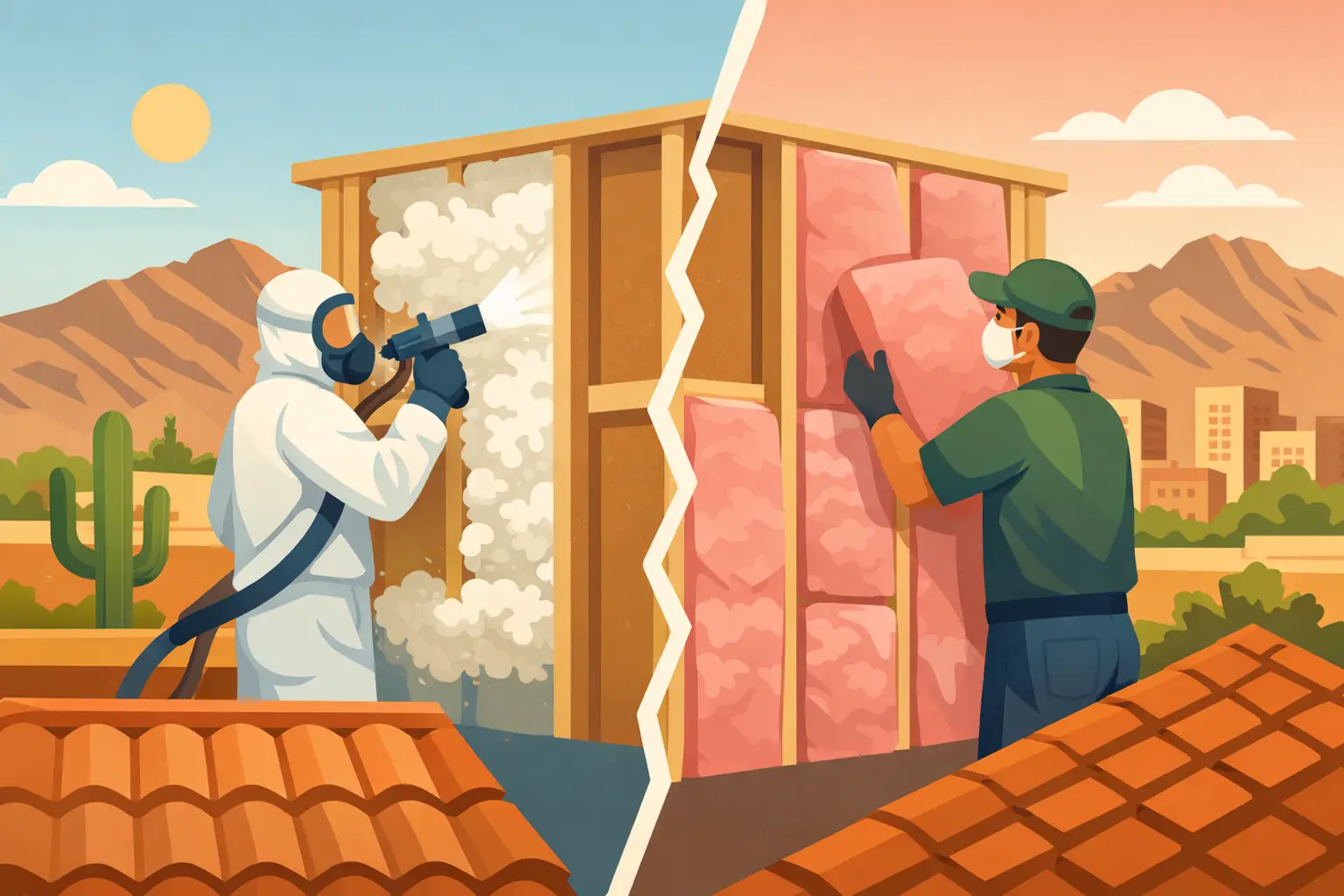
An El Paso attic can reach punishing temperatures long before the afternoon is over. That makes spray foam versus fiberglass insulation more than a material choice – it affects indoor comfort, HVAC workload, moisture management, and long-term energy costs. The right answer depends on where the insulation will be installed, how the building is constructed, and what problems you need it to solve.
Spray Foam Versus Fiberglass Insulation: The Main Difference
Fiberglass insulation slows heat transfer with layers of glass fibers that trap air. It is commonly installed as batts between wall studs or ceiling joists, or as loose-fill insulation across an attic floor. It has been a standard insulation choice for decades because it is widely available, affordable, and effective when installed correctly.
Spray foam is applied as a liquid that expands and hardens in place. Along with insulating, it can seal small gaps around framing, wiring, plumbing penetrations, and other openings where conditioned air can escape. That air-sealing ability is the feature that often makes spray foam appealing for homes and commercial buildings in a hot, dry climate.
Neither material is automatically better for every property. Fiberglass is a practical choice for many open attic floors and interior walls. Spray foam can be the stronger option when air leakage, limited space, complex framing, or a sealed attic design are part of the project.
How Each Insulation Performs in El Paso Heat
Summer heat places steady pressure on a building’s roof and attic. Insulation helps slow that heat before it reaches living areas, but gaps in the building envelope can still allow hot air to enter. A home may have plenty of insulation on paper and still feel unevenly cooled if air is moving through penetrations, duct openings, recessed fixtures, and poorly sealed access points.
Fiberglass offers reliable thermal resistance, measured as R-value, when it is installed at the proper depth and remains dry and undisturbed. In an attic, loose-fill fiberglass can provide broad, consistent coverage over a large area. The problem is that fiberglass does not stop air movement on its own. Air sealing should be completed before fiberglass is installed or added.
Spray foam provides insulation and air sealing in one application. When installed along the underside of a roof deck, it can bring the attic into the conditioned envelope of the home. This can be especially useful when HVAC equipment or ductwork runs through the attic, where extreme heat can force the cooling system to work harder.
That does not mean every attic should be converted to an unvented, foam-insulated attic. Roof design, existing ventilation, mechanical equipment, local code requirements, and the condition of the roof all need to be evaluated first. A professional assessment helps prevent a costly insulation decision from creating a ventilation or moisture issue later.
Open-Cell and Closed-Cell Spray Foam
Spray foam is not one single product. Open-cell foam is lighter and expands significantly, making it useful for filling irregular cavities and reducing air leakage. It generally provides a lower R-value per inch than closed-cell foam, but it can be a cost-effective choice where deeper framing cavities are available.
Closed-cell foam is denser and provides a higher R-value per inch. It also resists moisture more effectively and can add rigidity to certain assemblies. Because it uses less thickness to achieve a higher R-value, it may be considered where space is limited or where a more moisture-resistant insulation layer is needed.
The better choice between open-cell and closed-cell foam depends on the application. Exterior walls, roof decks, crawl spaces, metal buildings, and areas with moisture exposure can have different requirements. The product should be selected as part of the complete building assembly, not simply because one foam type has a higher R-value.
Cost: Upfront Price Versus Long-Term Value
Fiberglass usually has the lower upfront installation cost. For a homeowner adding insulation to an accessible attic floor, it can be an efficient way to improve thermal performance without taking on a major renovation. It is also easy to add to later if the property needs more insulation depth.
Spray foam costs more because the installation requires specialized equipment, trained crews, surface preparation, and careful application. It is not a material to treat as a do-it-yourself shortcut. Proper mixing, thickness, coverage, and curing conditions all matter to the result.
The value calculation should go beyond the initial quote. If a building has major air leaks, hot upstairs rooms, attic duct losses, or comfort problems that conventional insulation has not fixed, spray foam may provide benefits that fiberglass alone cannot address. On the other hand, if the main issue is insufficient insulation depth in a vented attic that is otherwise properly air sealed, fiberglass may be the more sensible investment.
A good estimate should identify the existing insulation level, areas of air leakage, access challenges, and the recommended R-value for the location. It should also explain whether old insulation needs to be removed, whether attic ventilation will change, and how the work will affect electrical fixtures, ducts, and attic access points.
Moisture, Air Quality, and Building Condition
El Paso’s climate is generally dry, but moisture still matters. Roof leaks, plumbing leaks, condensation around improperly insulated HVAC components, and wind-driven rain can all damage insulation and surrounding materials. No insulation product can compensate for an active roof leak or deteriorated roof deck.
Fiberglass can lose performance when compressed, displaced, or wet. If water reaches fiberglass insulation, the source of the moisture must be corrected and the material evaluated for replacement. Simply covering damaged insulation with more material can trap a problem where it is harder to see.
Closed-cell spray foam has stronger moisture resistance, but it should not be viewed as a repair for a leaking roof. The roof system, flashing, penetrations, and drainage must be in good condition before insulation work begins. This is particularly important when foam will be installed against the underside of the roof deck, where future leak detection may require a closer inspection.
Both insulation options should be installed with attention to indoor air quality and safe access. Fiberglass requires proper handling because loose fibers can irritate the skin, eyes, and respiratory system during installation. Spray foam installation requires trained applicators, controlled work conditions, and appropriate curing time before the area is reoccupied.
When Fiberglass Is the Better Fit
Fiberglass is often the right choice for an attic floor with good access, adequate ventilation, and no significant air-sealing failures. It also works well in standard wall cavities during remodeling or new construction, especially when combined with proper exterior weather barriers and interior air-sealing details.
It is a practical option for property owners who want to improve energy efficiency on a controlled budget. In many homes, sealing obvious attic penetrations, weatherstripping the attic hatch, and bringing fiberglass insulation up to the recommended level can make a noticeable difference in comfort.
Fiberglass can also be a useful sound-control material in interior walls between bedrooms, bathrooms, offices, and living spaces. In that application, air sealing may be less critical than reducing sound transmission between rooms.
When Spray Foam Is Worth Considering
Spray foam is worth a closer look when the property has irregular framing, hard-to-reach cavities, visible gaps around roof penetrations, or an attic full of HVAC ducts. It can be especially valuable in additions, remodels, and roofline applications where improving the building envelope is part of a larger project.
Commercial properties may also benefit from spray foam in specific applications, including metal structures, complex rooflines, and areas where condensation control is a concern. The approach should be based on the building’s use, occupancy needs, roof assembly, and mechanical systems.
Do not confuse spray foam insulation with a spray foam roofing system. Both use foam-based materials, but they serve different purposes. Spray foam insulation is installed within the building envelope to control heat transfer and air movement. Spray foam roofing is a roof system applied on the exterior roof surface and protected with a coating designed for weather exposure.
Installation Quality Matters as Much as the Material
A poorly installed insulation system can waste money regardless of the product selected. Fiberglass batts that are compressed, cut too short, or pushed around pipes and wiring lose effectiveness. Loose-fill insulation needs even coverage and the correct depth. Spray foam must be applied consistently at the specified thickness without leaving gaps or creating installation defects.
Before work begins, the contractor should inspect the attic or wall assembly, identify roof or moisture concerns, review ventilation, and discuss the goals for comfort and energy use. If roofing repairs, drywall work, window replacement, or an addition are also planned, coordinating those projects under one experienced team can prevent insulation from being disturbed or installed out of sequence.
The best insulation decision is the one that fits your building, budget, and long-term plans. For an El Paso property, start by finding out where heat is entering, where conditioned air is escaping, and whether the roof and attic assembly are ready for the upgrade. MAK Roofing & Construction can help property owners evaluate the full project so the insulation work supports lasting comfort, protection, and performance. Schedule your appointment today.