

- BY
- POSTED IN Blog
- WITH 0 COMMENTS
- PERMALINK
- STANDARD POST TYPE
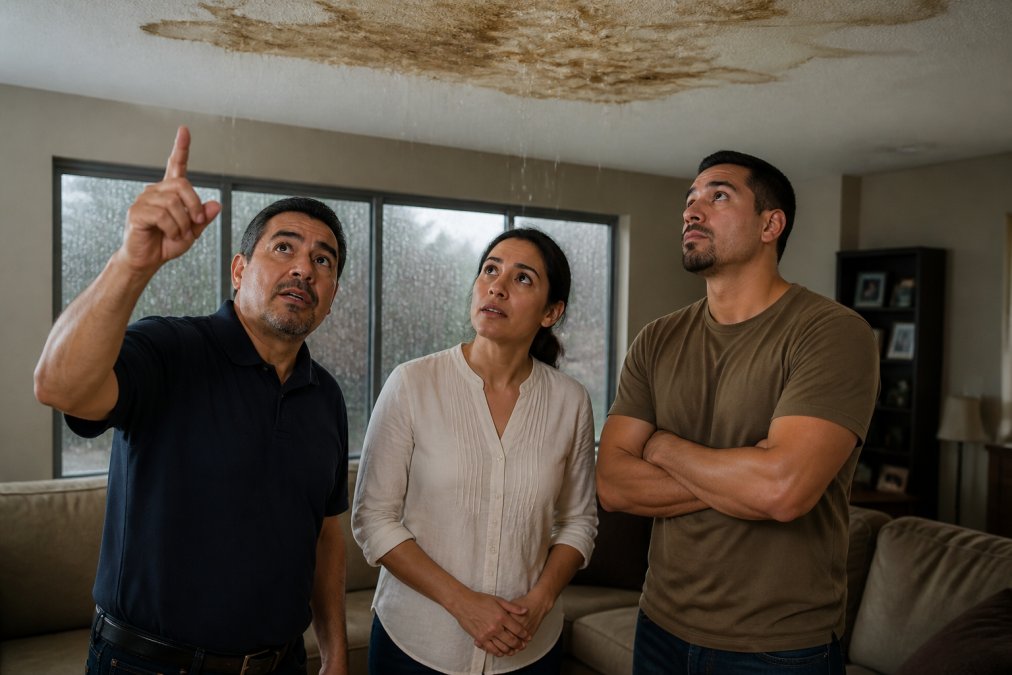
Table of Contents
- Why Heavy Rain Exposes Roof Leaks You Never Noticed
- How to Find a Roof Leak Source Before It Spreads
- When to Call for Emergency Roof Repair in El Paso
- Hiring a Roofing Contractor in El Paso: What to Verify
- Common Mistakes Homeowners Make After a Roof Leak
- How El Paso’s Climate Affects Roof Leak Risk
- Conclusion
- Frequently Asked Questions
Last Updated: September 16, 2026
Why Heavy Rain Exposes Roof Leaks You Never Noticed
A roof leak after heavy rain rarely starts during the storm. It starts months earlier, with a small breach that stayed hidden until water found it. At MAK Roofing & Construction, we’ve inspected enough El Paso homes to know the pattern: a lifted shingle, a cracked pipe boot, or failed flashing that held up fine in light drizzle and failed the moment water arrived sideways in volume.
When someone asks why does my roof leak after heavy rain, the honest answer is that heavy rain doesn’t create the leak. It reveals one. Water is patient. It works through tiny gaps, saturates underlayment, and travels along rafters before it ever shows up as a ceiling stain. By the time you notice it, the damage has usually been spreading for weeks.
Below, we’ll walk through how to trace a roof leak to its source, when to call for emergency roof repair in El Paso, and what to verify before you hire anyone. The homeowner who understands this process saves thousands in avoidable interior damage.
Heavy rain is a stress test, not a cause. If your roof leaks only in storms, the defect was already there, and the storm simply pushed enough water through it to show up inside.
How to Find a Roof Leak Source Before It Spreads
Finding a roof leak source means following water uphill from where it appears indoors, not searching directly above the stain. Water runs along framing, so the entry point is often several feet away from the visible damage. Start indoors, work toward the attic, then finish on the roof surface.
The process has three stages, and skipping one costs you time:
- Interior check: Note the stain’s position and shape, then look for the nearest penetration above it
- Attic inspection: Trace the water trail along rafters and decking back to its highest wet point
- Roof surface check: Inspect the area you identified for failed flashing, sealant, or shingles
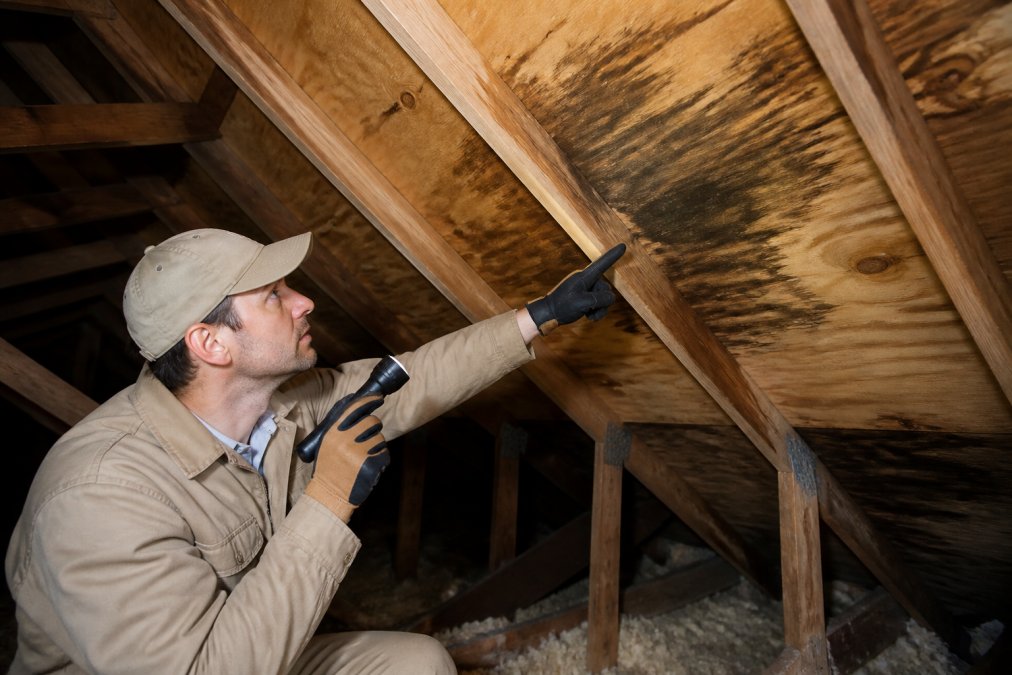
Attic Inspection: Tracing the Water Trail
The attic is where the mystery usually gets solved. Bring a bright flashlight, and go up during or right after rain if it’s safe to do so.
Look for dark streaks on rafters, sagging or discolored decking, rusted nail heads, and damp insulation. Water leaves a trail. Follow it upward until the trail stops. That stopping point, or just above it, is your likely entry zone. A common mistake is stopping at the first wet spot instead of continuing to the highest point of moisture.
Roof Surface Check: Flashing, Valleys, and Penetrations
Most leaks trace back to one of four places, and none of them are the middle of a shingle field:
- Flashing around chimneys, walls, and skylights, where metal meets roofing material
- Valleys, where two roof planes meet and channel the most water
- Penetrations like vent pipes, whose rubber boots crack with sun exposure
- Fasteners and seams, where sealant has dried out and pulled away
Check these after the attic has narrowed your search. In practice, this turns a whole-roof guessing game into a five-minute inspection of two or three spots.
When to Call for Emergency Roof Repair in El Paso
Call for emergency roof repair in El Paso when water is actively entering the home, when a ceiling is bulging or sagging, or when the leak sits near electrical wiring, outlets, or a breaker panel. Those situations carry real safety risk and shouldn’t wait for a scheduled appointment.
A slow drip into a bucket can usually wait for daylight and a normal service call. An active flow, a compromised ceiling, or water anywhere near electrical components cannot.
While you wait for a crew, limit the damage:
- Move furniture and electronics out of the affected area
- Place buckets and towels, and puncture a sagging ceiling bulge from below with a small hole to release trapped water in a controlled way
- Photograph everything for your insurance claim
- Don’t climb onto a wet roof yourself
That last point matters more than people think. Wet roofing material is slick, and a fall causes far more harm than the leak itself. If you need a crew out fast, look for a local contractor who handles storm damage and ask directly about emergency availability.
Hiring a Roofing Contractor in El Paso: What to Verify
Hiring a roofing contractor in El Paso comes down to three checks: licensing, insurance, and a written estimate. Get all three before anyone touches your roof. Contractors who resist any of these are telling you something important.
The questions worth asking don’t change much from job to job. Ask how long the company has operated locally, whether it handles both residential and commercial roofs, and who will actually be on site. A crew that shows up, finishes on schedule, and communicates clearly is worth more than the lowest bid.
Licensing, Insurance, and Written Estimates
Ask for proof of insurance before work begins, and confirm the policy covers both liability and workers on your property. An uninsured crew on your roof can leave you exposed if someone gets hurt.
The written estimate should spell out materials, scope, timeline, and payment terms. Vague verbal quotes are how homeowners end up with surprise charges. If you need financing rather than paying upfront, ask about it early, because many contractors offer payment options and it’s easier to arrange before work starts than after.
Never pay the full amount upfront. A large deposit before materials arrive is one of the most common ways homeowners get burned, and a contractor who demands it is a red flag.
Common Mistakes Homeowners Make After a Roof Leak
The costliest mistakes happen after the leak starts, not before. Homeowners often seal over the visible symptom, delay the repair to save money, or accept the first quote without comparing scope. Each one turns a modest repair into a larger project.
The most frequent errors:
- Caulking the ceiling stain instead of the roof entry point, which hides the evidence while water keeps spreading
- Waiting for “a better time”, letting a small flashing repair grow into rotted decking and insulation replacement
- Skipping the attic inspection, so the real source is never found and the leak returns next storm
- Hiring on price alone, ending up with a patch that fails within a season
What most guides miss is that a roof leak is a diagnostic problem before it’s a repair problem. Find the source first, then fix it once.
| Mistake | Why It Happens | The Fix |
|---|---|---|
| Sealing the interior stain | Stain looks like the problem | Repair the roof entry point, not the ceiling |
| Delaying the repair | Waiting for better weather | Schedule as soon as the source is found |
| Skipping the attic check | Roof is easier to reach | Trace the water trail before climbing up |
| Choosing lowest bid | Price feels like the priority | Compare scope, insurance, and timeline |
How El Paso’s Climate Affects Roof Leak Risk
El Paso’s climate stresses roofs in ways that wetter regions don’t. Intense sun and ultraviolet exposure break down sealants, rubber pipe boots, and asphalt shingles faster than in cooler areas. Then the summer monsoon season arrives and delivers heavy, wind-driven rain in short bursts, pushing water into every weakened point at once.
That combination is why local roofs fail in a predictable way. The heat does the damage over years, and the storm delivers the verdict in an afternoon. Dust and grit blowing across the roof surface add another layer of wear, working into seams and accelerating the breakdown of exposed materials.
For property owners, the takeaway is maintenance timing. Inspect your roof before monsoon season, not after the first leak. A pre-season check on flashing and penetrations catches the failures that heavy rain would otherwise expose.
FEMA guidance on protecting your home from storm and flood damage
Conclusion
A roof leak after heavy rain is a warning, not a random event. The defect was there before the storm, and the faster you trace it to its source, the less damage you pay for. If you’re dealing with active water intrusion, a sagging ceiling, or a leak near wiring, don’t wait it out.
MAK Roofing & Construction has spent over 16 years handling roof repairs, custom roofing systems, and full residential and commercial projects across the El Paso area.
Frequently Asked Questions
Why does my roof only leak when it rains hard?
Light rain often doesn’t produce enough water volume to expose small gaps. Heavy rain forces water sideways and upward into flashing seams, worn pipe boots, and cracked sealant. Wind-driven rain during a storm pushes water past shingles that normally shed it fine. If your roof only leaks during heavy downpours, the entry point is likely a flashing failure or deteriorated sealant rather than a missing shingle.
Does homeowners insurance cover roof leaks in Texas?
Texas homeowners insurance typically covers sudden storm damage, such as hail or wind tearing off shingles, but not gradual deterioration or lack of maintenance. If your roof leak stems from an aged roof or deferred repairs, the claim will likely be denied. Document the damage with photos and contact your insurer promptly. A licensed roofing contractor in El Paso can provide a damage assessment to support your claim.
How do I find where my roof leak is coming from?
Start in the attic during or right after rain. Follow the water trail on rafters and decking back to the highest point of entry. Check around chimneys, vents, skylights, and valleys first, since these are the most common failure points. On the roof surface, look for cracked flashing, missing shingles, or exposed nail heads. If you can’t safely access the roof, call a professional to trace the source.
Can a small roof leak cause major damage to my home?
Yes. Even a slow drip can rot roof decking, saturate insulation, and lead to mold growth inside walls within weeks. In El Paso’s heat, trapped moisture creates ideal conditions for mold and structural decay. Water can also damage drywall, electrical wiring, and personal belongings. Addressing a small leak early with emergency roof repair El Paso services costs far less than replacing structural framing later.