

- BY adminMak
- POSTED IN Blog
- WITH 0 COMMENTS
- PERMALINK
- STANDARD POST TYPE
Last Updated: November 9, 2026
Quick Summary
The six signs your commercial roof needs replacement are water leaks and interior stains, ponding water and membrane damage, flashing and sealant failure, rising energy bills and granule loss, recurring repairs, and wet insulation confirmed by core cuts. If you spot two or more signs, request a professional assessment.
- Standing water that lingers more than 48 hours after rain is a red flag.
- Moisture in insulation or deck cannot be dried out in place on a low-slope assembly.
- Two or more repairs per year for two straight years points to planning a replacement.
- Replacement cost in El Paso is driven by size, membrane type, insulation, deck condition, and access.
- Use the quarterly inspection checklist and call a pro after any active leak.
Table of Contents
- 1. Water Leaks and Interior Stains: The Clearest Sign Your Commercial Roof Is Failing
- 2. Ponding Water, Blistering, and Membrane Damage on Flat Roofs
- 3. Flashing Deterioration, Sealant Failure, and Storm Damage
- 4. Rising Energy Bills and Granule Loss: When Your Roof Stops Protecting Your Building Envelope
- 5. Flat Roof Repair vs Replacement: How to Decide
- 6. What Drives Commercial Roof Replacement Cost in El Paso
- Your Commercial Roof Inspection Checklist
- Schedule a Commercial Roof Assessment Before the Next Monsoon
- Frequently Asked Questions
1. Water Leaks and Interior Stains: The Clearest Sign Your Commercial Roof Is Failing
Water stains on a ceiling tile are the most reliable early warning that a commercial roof is failing. A stain is never just a stain, it marks a path where water has already traveled through the membrane, insulation, and deck.
Where to Look for Water Infiltration Inside Your Building
Check these spots after every storm:
- Brown rings or bubbling paint on ceiling tiles
- Damp drywall near roof penetrations and HVAC curbs
- Rust streaks on metal decking or purlins
A single stain after one storm may point to a flashing gap. Stains that return every rainy season usually mean the membrane itself has failed.
Why El Paso Monsoon Season Exposes Weak Roof Membranes
El Paso’s summer monsoon dumps heavy rain in short bursts, and flat roofs that shed water slowly can back up fast. Add 100-degree heat before the storm, and the membrane expands, then cools quickly when rain hits, thermal shock that can widen seams and cracks.
2. Ponding Water, Blistering, and Membrane Damage on Flat Roofs
Standing water that lingers more than 48 hours after rain is a red flag. Ponding water is the second clearest sign a commercial roof is near the end of its service life.
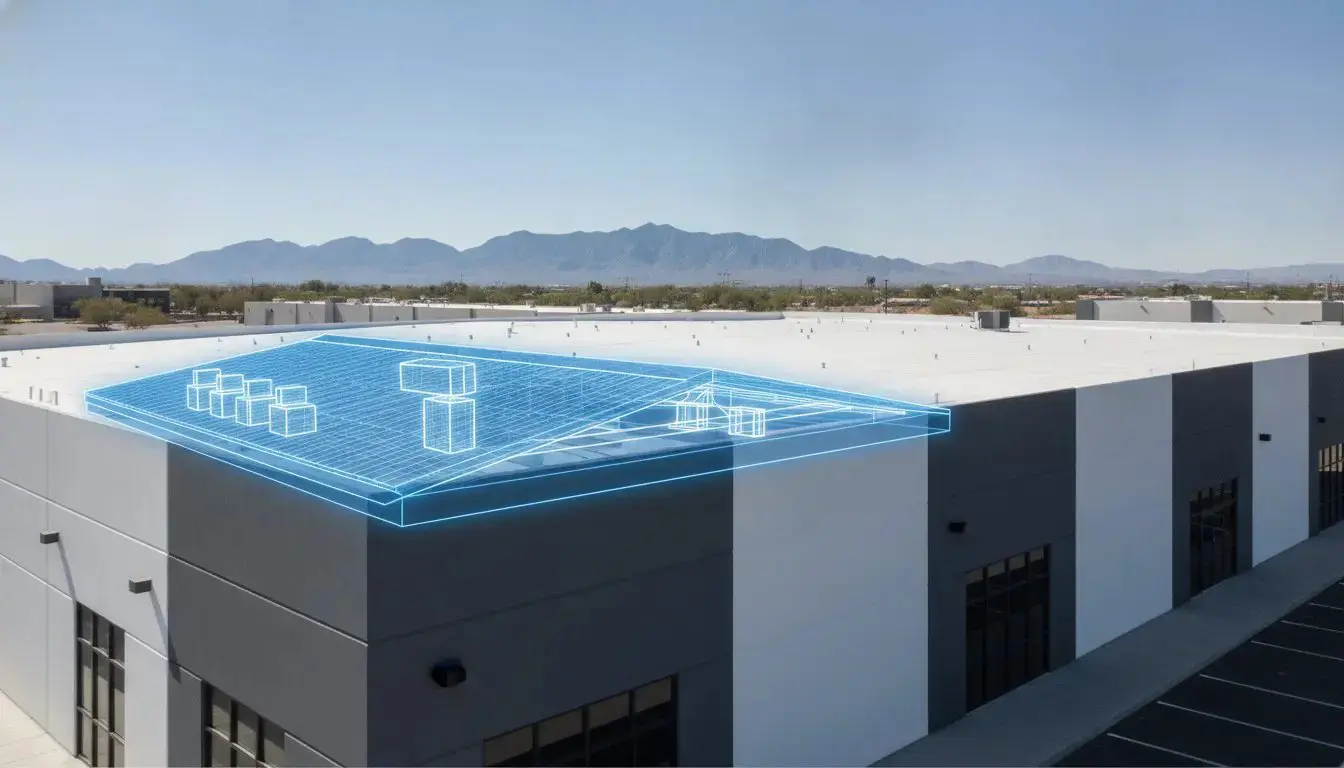
(/flat-roof-repair-in-el-paso-a-guide-to-durable-desert-solutions/). For a closer look, read our guide to [roof blister causes](/roof-blister-causes/).
3. Flashing Deterioration, Sealant Failure, and Storm Damage
Flashing is the metal or membrane strip that seals roof edges, walls, curbs, and penetrations, the most common leak point on any commercial roofing system. Sealant around flashing dries out under UV light and desert heat; when it cracks, water finds the gap on the next storm.
Signs to check:
- Pulled-back or lifted flashing at walls and edges
- Cracked, chalky sealant beads
- Open seams along parapet walls
Small flashing repairs are cheap; ignored flashing failures are not. They rot decking and wall assemblies, turning a quick fix into a full replacement.
4. Rising Energy Bills and Granule Loss: When Your Roof Stops Protecting Your Building Envelope
Energy bills that climb without a rate change often trace back to the roof. Wet insulation loses its R-value, heat pours through the building envelope in summer, and your HVAC system runs longer to hold setpoint, every month.
Granule loss tells a similar story on shingled and coated roofs: bald patches, curling shingles, and buckling mean the surface is worn out and UV degradation has set in.
5. Flat Roof Repair vs Replacement: How to Decide
Repair wins when the damage is isolated and the membrane still has service life left. Replacement wins when the failure is systemic, when water is inside the assembly, not just on top of it. The hard part is the middle ground, where a facility manager has to justify a capital expense to an owner or CFO.
The Four Questions That Settle Most Repair-vs-Replace Calls
**1.
2. Is the moisture in the insulation or on top of it? This is the single biggest fork in the decision. A surface defect, a split seam, a failed sealant bead, a punctured membrane, can be repaired.
**3.
4. What is the roof doing to your energy bill? Wet insulation loses R-value, and on an El Paso roof that shows up as cooling cost first.
A Simple Decision Framework
| Situation | Better Choice | Why |
|---|---|---|
| One or two small leaks, roof under 15 years old, dry core samples | Repair | Cost stays low, roof has life left |
| Widespread ponding and blisters across multiple sections | Replacement | Damage is systemic, patches won’t hold |
| Wet insulation confirmed by core cuts across large sections | Replacement | Trapped moisture keeps spreading |
| Sound, dry membrane with worn surface or faded coating | Coating or repair | Surface refresh extends service life |
| Storm damage limited to one area, rest of roof sound | Repair | Targeted fix restores the roof |
| Two or more repairs per year for two straight years | Replacement (plan it) | Repair spend is already annualizing toward replacement |
The ROI Math, Without the Sales Pitch
The return on a replacement comes from three places. First, avoided repair spend: if you average two or more repairs a year, that recurring cost goes away for the life of the new roof. Second, energy: added insulation and a reflective membrane reduce cooling load, largest on older roofs with wet or compressed insulation. Third, avoided interior damage: a failing roof puts ceiling tiles, insulation, electrical fixtures, and tenant spaces at risk, and those costs land on the interior budget, not the roofing budget. Our repair vs replacement cost analysis walks through the math in more detail.
Watch out: replacement recommendations should be supported by core cuts, moisture readings, or a written scope, and patching a roof with wet insulation only repeats the same repair. Ask for the moisture data either way.
When Repair Is the Right Answer
On a roof with life left, a targeted repair can protect the asset and extend its life. The key is matching the repair to the cause: a flashing leak gets flashing work, a drain problem gets drainage work, a punctured membrane gets a patch. What repair cannot do is dry out a wet assembly or restore a membrane that has lost its seal across large areas.
6. What Drives Commercial Roof Replacement Cost in El Paso
Commercial roof replacement cost in El Paso is driven by five factors: roof size, membrane type, insulation needs, deck condition, and access. Understanding how each moves the number lets you sanity-check a bid before you sign it. Pricing depends on the scope of the project, so we recommend requesting a quote for current pricing.
1. Roof Size and Roof Complexity
Size sets the baseline, but complexity sets the multiplier. A simple, open flat roof with few penetrations is generally less complex to replace, since labor and waste can be lower. Add HVAC curbs, skylights, parapet walls, and multiple roof levels, and the same square footage takes longer, needs more flashing detail, and generates more waste.
2. Membrane Type
Material choice is the second biggest lever. TPO, EPDM, PVC, modified bitumen, and built-up roofing all price and perform differently in desert conditions. In El Paso, reflective membranes matter more than in milder climates: a white TPO or PVC membrane reflects solar heat instead of absorbing it, which can lower roof surface temperature and reduce cooling load.
3. Insulation Needs
Insulation is often where a “replace the membrane” project and a “replace the roof system” project diverge. If the existing insulation is dry and code-compliant, a recover or overlay may be possible. If core cuts show wet insulation, it has to come out, and wet insulation is often spread across more area than the visible leaks suggest.
4. Deck Condition
A sound metal or structural deck means the replacement stays a roofing project. A rotted deck means carpentry, structural repair, and sometimes engineering, and that is the line item most likely to turn a bid into a change order. This is why a proper assessment includes deck inspection, not just a surface walk.
5. Access and Tear-Off
Access drives labor. A roof you can reach with a boom or conveyor prices differently than a downtown El Paso building with limited staging, street parking restrictions, and a long carry. Tear-off versus recover is the other access-related variable: tear-off adds disposal cost and labor but lets the contractor inspect the deck and start fresh; a recover saves on disposal but adds weight and depends on the existing assembly being sound.
How to Read a Commercial Roofing Bid
A bid you can compare should itemize, at minimum: square footage and membrane type, insulation R-value and thickness, whether it is tear-off or recover, deck repair allowances, flashing and penetration detail, and warranty terms.
Watch out: the lowest bid is frequently the one with the thinnest insulation, the shortest warranty, or the most exclusions. For a fuller breakdown of local pricing factors, see our El Paso roof replacement cost guide.
Your Commercial Roof Inspection Checklist
Use this checklist every quarter and after any major storm. It takes about 20 minutes and catches most problems early.
Exterior walk-through:
- Look for ponding water 48 hours after rain
- Check drains, scuppers, and gutters for debris
- Inspect flashing at walls, edges, and penetrations
Interior check:
- Scan ceilings for stains, rings, and bubbling paint
- Look for rust on decking and purlins
- Smell for musty odors in storage areas
When to call a pro:
- Active leak during or right after a storm
- Ponding that does not clear in two days
- Blisters or cracks spreading across the membrane
Schedule a Commercial Roof Assessment Before the Next Monsoon
Monsoon season does not wait, and neither should your roof. If you are weighing whether an inspection is worth the cost, our article on professional roof inspection value explains what a proper assessment covers.
At MAK Roofing & Construction, we have over 16 years of experience. We offer full-service commercial and residential work, custom roofing systems, and bank financing options.
If you spot two or more signs in this guide, request a video estimate. Contact us for details on your roof.
Your roof has a limited number of monsoons left in it.
Frequently Asked Questions
How often should a commercial roof be replaced in the El Paso climate?
El Paso’s UV exposure, dust, and monsoon cycles can shorten roof membrane life. Intense summer sun breaks down membrane surfaces faster than in milder climates, and monsoon rains stress drainage and flashing. Regular professional inspections are advisable as a roof ages. If repairs pile up or ponding recurs each rainy season, replacement may cost less over time than repeated fixes.
What is the 25% rule in commercial roofing, and does it apply in Texas?
Some insurers and contractors use informal thresholds, such as damage covering about a quarter of the roof, when weighing repair against replacement. These are not universal rules, so confirm requirements with your insurer or local authorities. Have a roofing contractor document the damage so you can compare repair quotes against replacement and make the decision with real numbers.
Will a new commercial roof lower my insurance premiums?
A new roof may affect insurance pricing, since insurers often consider roof age and condition. Ask your insurer what documentation they require. Ask your insurer what documentation they need, such as the warranty and installation specs. Pair the new roof with a cool roof coating or reflective membrane, and you may also see lower HVAC costs during El Paso summers.
Can a flat roof be repaired instead of replaced?
Yes, if the damage is isolated. A single seam separation, a failed flashing detail, or a small blister can often be repaired and the roof’s service life extended. Replacement makes more sense when ponding water recurs, the membrane is cracked across large areas, or moisture is trapped in the roof substrate. A professional inspection with a moisture survey tells you which situation you are in before you spend money.
