

- BY
- POSTED IN Uncategorized
- WITH 0 COMMENTS
- PERMALINK
- STANDARD POST TYPE
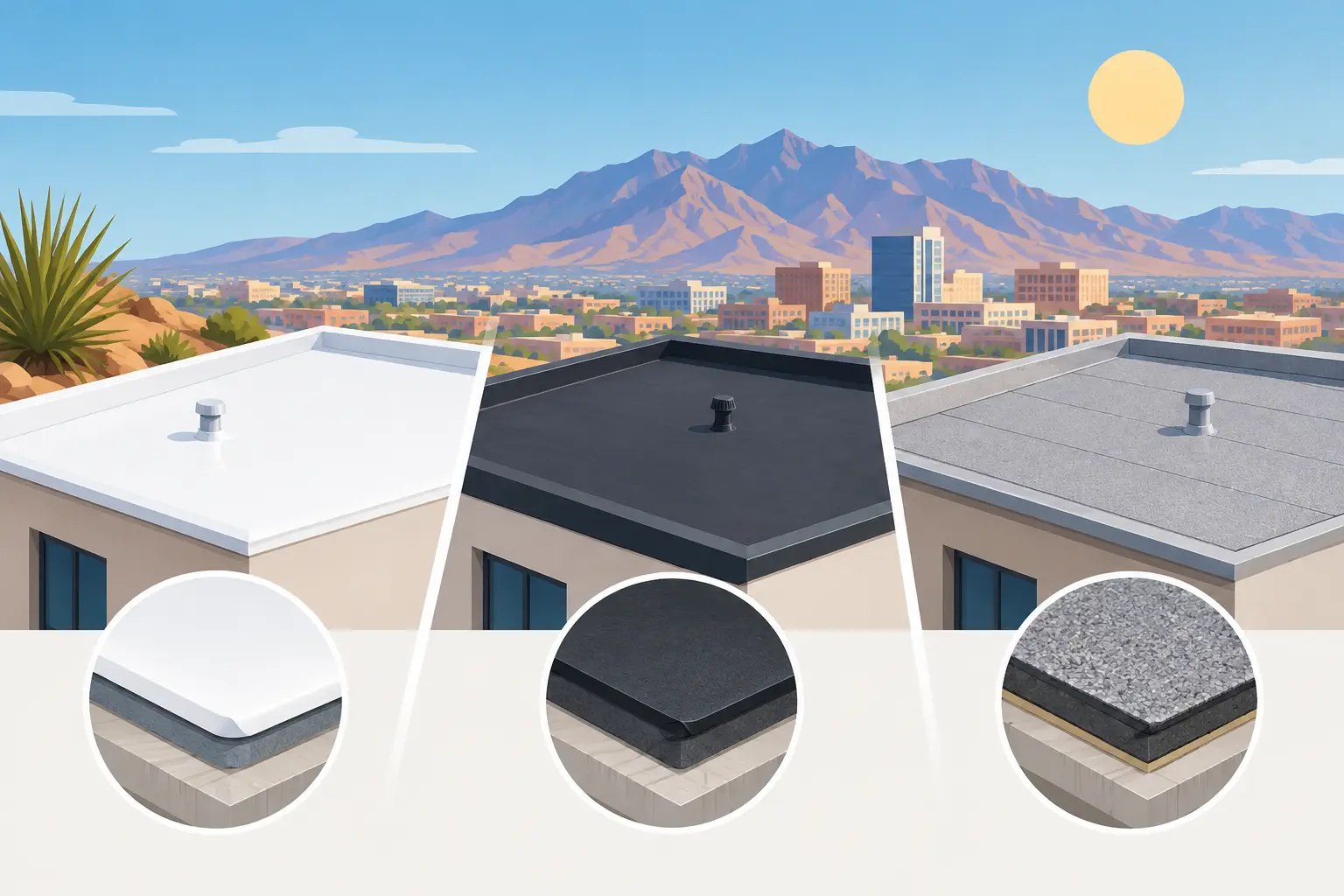
A flat roof that looks simple from the ground can be one of the most demanding parts of an El Paso property. It must stand up to intense sun, wide temperature swings, wind, dust, and sudden monsoon rain without allowing water to find a weak seam, drain, or penetration. This flat roof system comparison explains how leading options perform so you can choose a roof based on your building, budget, and long-term plans rather than price alone.
The right answer is rarely the same for every home or commercial building. A retail roof with numerous HVAC units has different needs than a low-slope residential addition. Existing insulation, drainage, deck condition, foot traffic, and whether the roof can be removed or needs to stay in service all affect the best system.
Start With the Roof You Have
Before selecting a material, a contractor should inspect the complete roof assembly. That includes the roof deck, slope, drainage points, flashings, parapet walls, penetrations, insulation, and the condition of the existing membrane. A new surface will not solve trapped moisture, deteriorated decking, or standing water caused by poor drainage.
El Paso roofs also need a system built for heat. Dark, weathered materials can add heat to the building, while ultraviolet exposure can shorten the life of a poorly chosen or poorly maintained membrane. A reflective surface and properly designed insulation can improve indoor comfort and help reduce the strain on cooling equipment.
Flat Roof System Comparison: Four Common Choices
TPO Roofing
TPO, or thermoplastic polyolefin, is a single-ply membrane commonly used on commercial low-slope roofs. It is typically white or light-colored, which makes it a strong choice for reflecting sunlight. Seams are heat-welded rather than glued, creating a continuous water-resistant surface when installed correctly.
TPO works especially well on larger, open commercial roofs where energy efficiency and clean detailing around drains, curbs, and equipment matter. It can be installed over an appropriate insulation package, giving property owners an opportunity to address thermal performance during replacement.
Its performance depends heavily on installation quality. Seams, edge metal, penetrations, and transitions must be handled carefully. TPO can also be punctured by careless rooftop traffic, so buildings with frequent HVAC service benefit from designated walk pads and a maintenance plan. For many commercial properties, it offers a practical balance of cost, reflectivity, and service life.
Spray Foam Roofing
Spray polyurethane foam, often called SPF or spray foam roofing, is applied as a liquid that expands into a seamless insulated layer. A protective coating is then applied over the foam to shield it from sunlight and weather. Because the foam conforms to the roof, it can be an excellent solution for roofs with unusual shapes, multiple penetrations, or areas where water tends to collect.
The largest advantage is that spray foam combines roofing and insulation in one system. It can help reduce heat transfer through the roof while eliminating many of the seams found in sheet materials. Its ability to add slope in localized low areas can also help improve drainage without a complete tear-off in some situations.
Spray foam is not a set-it-and-forget-it roof. The coating must be inspected and renewed as it wears, particularly under El Paso sun. The application also requires dry conditions and an experienced crew that can control thickness, drainage details, and overspray. When maintained properly, spray foam can be repaired and recoated over time, extending its useful life without automatically requiring full replacement.
Modified Bitumen Roofing
Modified bitumen is an asphalt-based roofing system reinforced for improved flexibility and strength. It is installed in sheets and may be applied with self-adhering materials, cold-applied adhesives, or heat-applied methods depending on the selected system and project conditions. It is a familiar, proven choice for many low-slope roofs.
This system is valued for its durability and layered construction. It can handle regular service traffic better than some single-ply materials, which matters on roofs with equipment that requires routine access. Modified bitumen is also a good fit for smaller roofs, residential flat sections, and buildings where a thicker, more traditional roofing assembly makes sense.
The trade-off is weight and heat absorption. Some modified bitumen systems use reflective cap sheets or coatings to improve solar performance, but the exact assembly matters. Proper lap installation and flashing work are essential because seams are part of the system. It is a dependable choice when the deck can support it and the roof is designed with sound drainage.
Roof Coatings and Restoration Systems
A roof coating is not automatically a replacement roof. It is a restoration option for a roof that is still structurally sound, dry beneath the surface, and suitable for coating adhesion. Coatings can be applied over certain existing roofs to create a reflective, protective layer and address minor wear, seams, and localized weaknesses.
For property owners trying to extend the life of an existing low-slope roof, a coating system can reduce disruption and avoid a full tear-off. Reflective coatings are particularly useful in El Paso because they can reduce surface temperature and protect the underlying material from ultraviolet exposure.
However, coatings cannot correct every problem. If the existing roof has widespread saturation, failing insulation, severe membrane damage, poor attachment, or major drainage issues, coating over it can postpone a necessary repair while concealing the underlying condition. A thorough inspection should determine whether restoration is appropriate. HydroStop-style coating systems can be a strong solution when the roof qualifies and details are properly reinforced.
What About Drainage and Ponding Water?
A flat roof is not truly flat. It should have enough slope to direct water toward drains, scuppers, or gutters. Even a high-quality membrane will have a harder life if water remains in the same areas after every storm.
Ponding water may point to clogged drainage, settled insulation, deck movement, or an original design issue. The fix can range from clearing drains and repairing localized low spots to installing tapered insulation or redesigning drainage. The right roofing material matters, but water management is what protects every material over time.
Cost Should Include the Whole System
Comparing only the cost per square foot can lead to the wrong decision. A lower initial bid may exclude tear-off, insulation upgrades, flashing replacement, drain repairs, edge metal, walk pads, or warranty requirements. Those details are not extras. They are often where low-slope roofs succeed or fail.
A useful proposal should identify the existing roof condition, recommended system, insulation approach, drainage work, flashing details, expected maintenance, and warranty coverage. It should also make clear whether the work is a repair, restoration, recover, or full replacement. These are very different scopes with different life expectancies.
For a building you plan to own for many years, a system with a higher upfront cost may provide better value through energy savings, fewer repairs, and a longer replacement cycle. For a property being prepared for sale or a roof with limited remaining service life, a targeted repair or qualified coating restoration may be the sensible investment.
Choosing the Best System for Your Property
TPO is often a strong fit for commercial roofs that need a reflective membrane and reliable welded seams. Spray foam can be especially effective where insulation, complex roof shapes, and seamless coverage are priorities. Modified bitumen offers a durable, time-tested assembly for roofs that need a tougher layered surface. Coatings work best as a restoration strategy when the existing roof is still dry and fundamentally sound.
No material can make up for poor installation, neglected drainage, or skipped maintenance. That is why the evaluation should begin with the building rather than a product name. MAK Roofing & Construction can inspect the roof, explain the condition in plain language, and provide a recommendation built around the property’s actual needs.
A well-chosen roof should make the next summer storm and the next stretch of triple-digit heat feel less urgent. Schedule an inspection before a small leak, worn seam, or drainage problem turns into interior damage and an unplanned replacement.