

- BY adminMak
- POSTED IN Blog
- WITH 0 COMMENTS
- PERMALINK
- STANDARD POST TYPE
Last Updated: November 18, 2026
Quick Summary
Commercial roof leaks happen because of membrane aging and UV damage, flashing failures, ponding water, seam failure, mechanical damage from HVAC units and foot traffic, and skipped maintenance. Most building owners only call after ceiling stains appear, when moisture has already reached the roof substrate.
- Water on a flat roof rarely drips straight down, so the wet ceiling tile is usually nowhere near the breach.
- El Paso UV and day-to-night temperature swings open seams and shrink sealant before the membrane looks worn.
- A leak that starts in June may not show a ceiling stain until fall.
- Walk the membrane, check flashing, clear drains, and inspect HVAC curbs on a schedule, not once a year.
- Patching a leak without confirming the deck and insulation are dry traps moisture and fails within a season.
Table of Contents
- The Real Reasons Commercial Roof Leaks Happen
- How Commercial Roof Leak Detection Pinpoints the Source
- A Commercial Roof Inspection Checklist for El Paso Properties
- What Commercial Roof Leak Repair Involves
- Frequently Asked Questions
The Real Reasons Commercial Roof Leaks Happen
Commercial roof leaks are rarely random. They typically start with small failures that go unnoticed for months. At MAK Roofing & Construction, we work on these issues across El Paso, TX.
Here’s what actually causes commercial roof leaks:
- Membrane aging and UV damage. El Paso sun breaks down roofing material year after year.
- Flashing failures. Loose or cracked flashing at edges and penetrations lets water slip under the surface.
- Ponding water. Poor drainage keeps water sitting on the flat roof, and it finds every seam.
- Seam failure. Heat and temperature swings pull seams apart.
- Mechanical damage. HVAC units and foot traffic puncture and crush the membrane.
- Skipped maintenance. Small cracks become open leaks when nobody checks the roof.
Most building owners only call after ceiling stains appear, when moisture has already reached the roof substrate. To spot trouble before it gets that far, use our signs of a leaking flat roof checklist.
Watch out: ignoring one small ponding spot can turn a minor fix into a full membrane replacement.
Here are the common causes behind most commercial roof leaks.
| Problem | Cause |
|---|---|
| Membrane aging | UV damage breaks down roofing material year after year |
| Flashing failures | Loose or cracked flashing lets water slip under the surface |
| Ponding water | Poor drainage keeps water sitting on the flat roof |
| Seam failure | Heat and temperature swings pull seams apart |
| Mechanical damage | HVAC units and foot traffic puncture and crush the membrane |
| Skipped maintenance | Small cracks become open leaks when nobody checks the roof |
How Commercial Roof Leak Detection Pinpoints the Source
Commercial roof leak detection traces water back to its entry point, not the ceiling stain. On a flat roof, water rarely drips straight down, it enters at a seam, flashing joint, or penetration, then travels laterally along the deck, insulation, or membrane underside. That’s why the wet ceiling tile is usually nowhere near the breach.
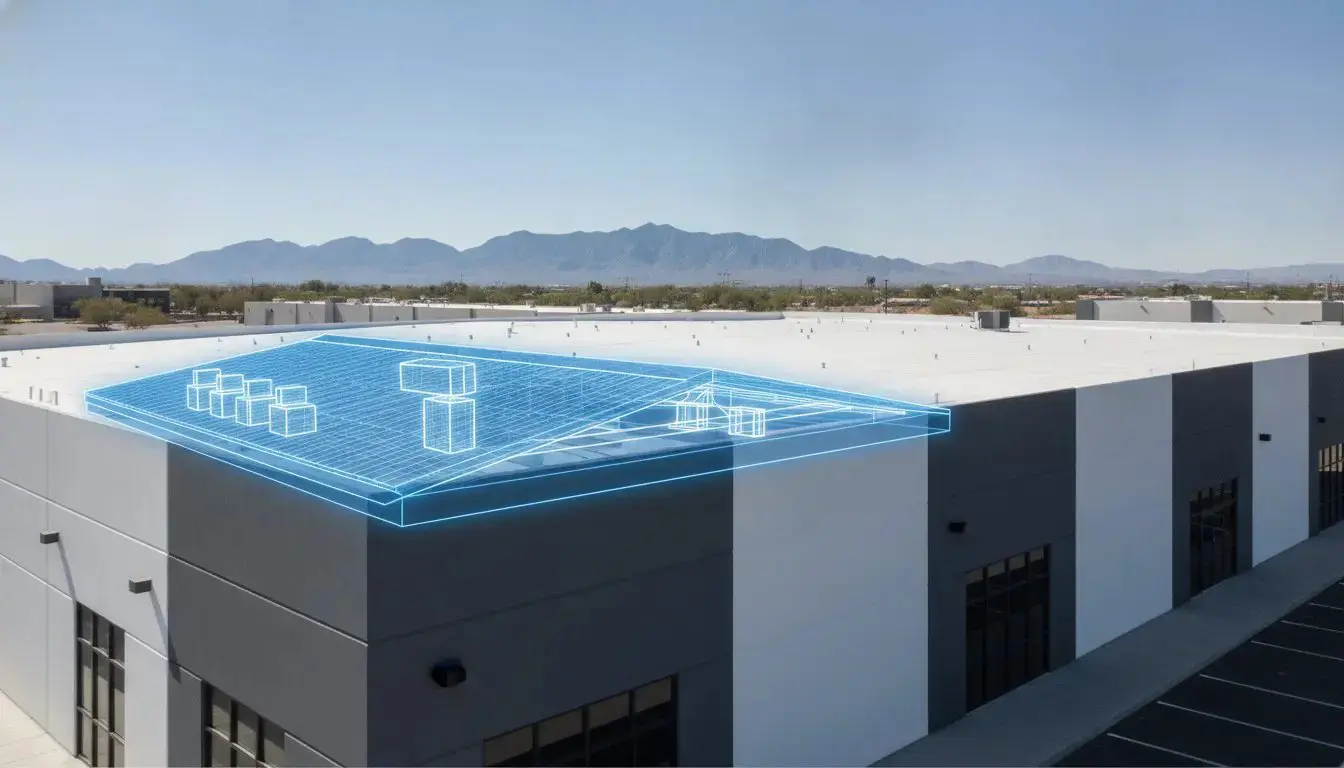
Patching the ceiling stain fixes nothing and hides the real entry point while water keeps working into the substrate. Proper detection checks the roof surface, flashing, drains, and HVAC curbs in one pass.
How the source is traced. Leak detection generally works from the inside out and the top down at the same time:
- Interior mapping. Note every stain, drip, and rusted fastener on the ceiling grid and deck. Water follows the deck’s low point, so a mid-bay stain often points uphill to a parapet or curb.
Why El Paso roofs hide leaks differently. Intense UV and day-to-night temperature swings open seams and shrink sealant at flashing long before the membrane looks worn. Summer monsoon rain then drives water sideways under lifted flashing, and dust in seams turns to mud that holds moisture against the deck. A leak that starts in June may not show a ceiling stain until fall, which is why a single annual inspection misses it.
Roof inspection standards from the National Roofing Contractors Association focus on these exact checkpoints. For more on how flashing failures start, see our guide to roof flashing questions El Paso owners ask.
Document it for your insurer while you are up there. Before any repair, keep photographs and dated inspection records, and check your policy for notice and proof-of-loss requirements.
A Commercial Roof Inspection Checklist for El Paso Properties
A commercial roof inspection checklist is a set of checks you run on a schedule, not once a year after a storm.
Use this checklist:
- Walk the membrane and mark cracks, blisters, or punctures
- Check flashing at parapet walls and roof edges
- Clear drains and confirm water flows off the roof
- Inspect HVAC curbs and penetrations for gaps
- Look for ponding water more than a day after rain
- Check interior ceilings for new stains
Preventative maintenance beats emergency repairs every time. Our roof maintenance service for El Paso properties keeps these checks on a schedule.
What Commercial Roof Leak Repair Involves
Commercial roof leak repair starts with fixing the source, then restoring the roof surface. The steps depend on the roof system type, but the order rarely changes.
First, the crew finds and seals the entry point. Next, it repairs the membrane, flashing, or coating around it. Then it confirms drainage works, skipping that check is how a repaired leak returns after the next monsoon.
The repair changes with the roof system. Repair approaches generally differ by roof type:
The energy cost angle most owners miss. A leaking roof is also a thermal breach. Wet insulation loses R-value, and gaps at curbs and flashing let desert heat into the building. The U.S. Department of Energy’s roof and insulation guidance explains how a sound roof and insulation affect energy efficiency. In an El Paso summer, that shows up as higher HVAC load and bills long before the ceiling stain appears, so a repair that restores insulation and coating pays back twice.
Cost and insurance. Repair costs depend on roof size, damage, and system. For current pricing or a quote, contact MAK Roofing & Construction. Keep the detection photos, repair invoice, and before-and-after documentation together, commercial insurers commonly ask for proof of loss and repair. Our guide to commercial roofing budget planning covers scheduling work before a failure disrupts your business. If you have a spray foam system, read about spray foam roof repair in El Paso.
Watch out: patching a leak without confirming the deck and insulation are dry traps moisture under the new membrane, and the repair fails within a season.
A leaking commercial roof won’t fix itself, and every monsoon season in El Paso tests it again. MAK Roofing & Construction brings over 16 years of experience to both commercial and residential roofs, with custom systems built for our desert climate and bank financing options to spread the cost. Get started with MAK Roofing & Construction and stop chasing leaks after every storm.
Frequently Asked Questions
What is the most common cause of commercial roof leaks?
Flashing failures and seam problems top the list on flat commercial roofs. Flashing seals the joints where the roof meets walls, parapets, and HVAC curbs, and it takes the brunt of thermal movement. As sealant dries and cracks, water finds a path in. Membrane aging and ponding water follow close behind, especially on roofs past the midpoint of their service life.
Can clogged roof drains cause a commercial roof leak?
Yes. When drains clog with debris, water pools on the roof instead of running off. Standing water works at seams and penetrations and adds weight the structure wasn’t designed to carry. Regular drain clearing is one of the cheapest preventive steps a property owner can take, and it directly reduces the odds of a commercial roof leak during heavy rain.
How often should a commercial roof be inspected?
Twice a year is the standard recommendation, plus a check after any major storm. A commercial roof inspection checklist should cover membrane condition, flashing, drains, HVAC curbs, and parapet walls. Catching a small seam failure early keeps commercial roof leak repair limited to a patch instead of a full section replacement.
