

- BY
- POSTED IN Uncategorized
- WITH 0 COMMENTS
- PERMALINK
- STANDARD POST TYPE
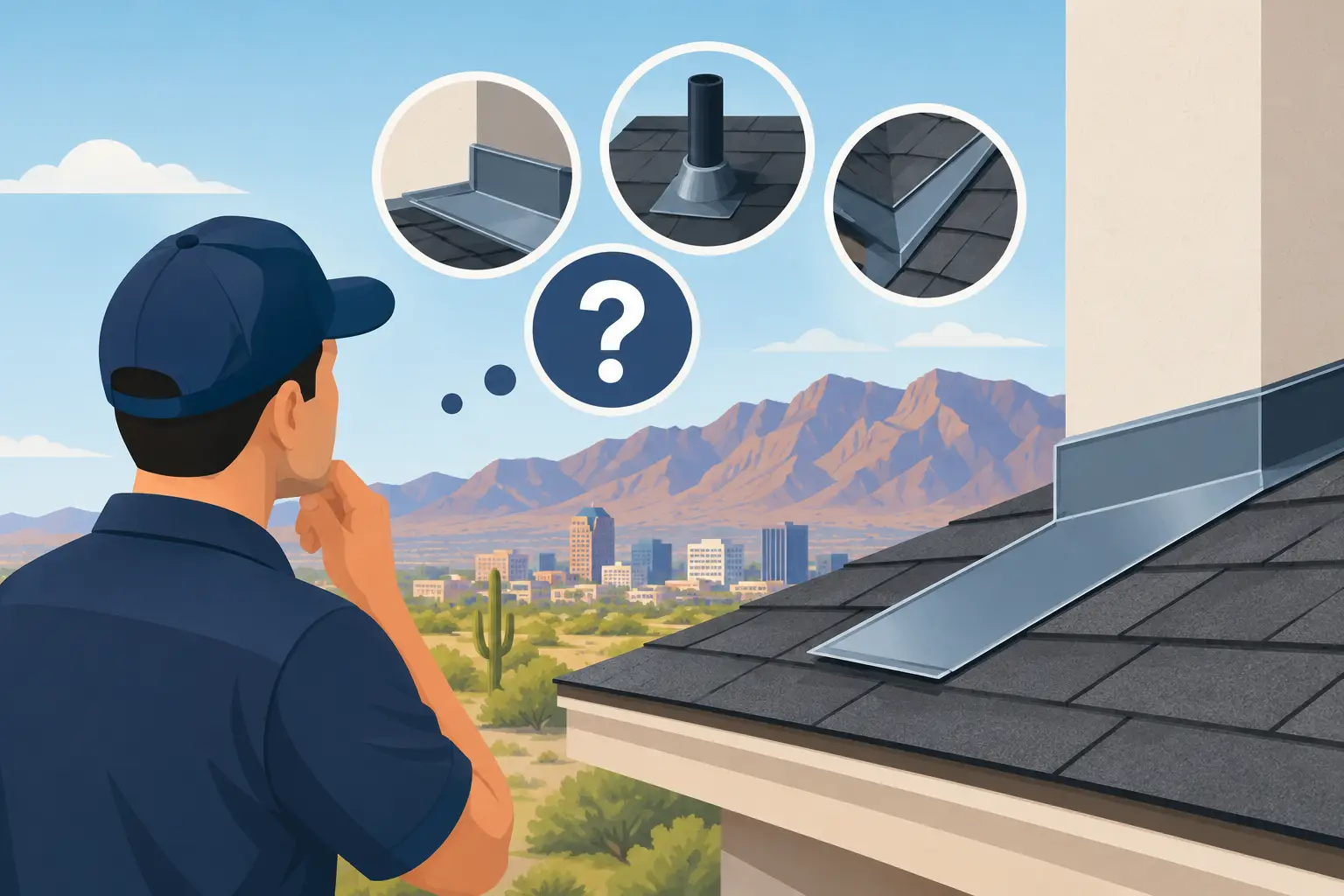
A roof can have quality shingles, tile, metal panels, or a well-maintained flat-roof membrane and still leak at one small transition. That is why roof flashing questions matter. Flashing is the material installed where the roof meets a wall, chimney, skylight, vent, valley, or change in roof slope. It directs water away from these vulnerable areas before it can reach the roof deck, insulation, drywall, or interior finishes.
In El Paso, intense sun, high winds, wind-driven rain, and wide temperature swings can expose weak flashing quickly. A loose piece of metal or a failed seal may look minor from the ground, but it can allow moisture to travel into places that are difficult to see and expensive to repair.
What Is Roof Flashing and Why Does It Fail?
Roof flashing is usually made from galvanized steel, aluminum, copper, or another corrosion-resistant metal. Depending on the roofing system, a contractor may also use compatible membrane flashing, modified bitumen details, or specialized sealants. The material is only one part of the system. Proper overlap, fastener placement, underlayment, drainage design, and integration with the roofing material all determine whether flashing will perform as intended.
Flashing often fails because it was installed incorrectly, not because the metal itself wore out. A detail may have been nailed in the wrong location, left too short, sealed with the wrong product, or placed over damaged decking. On older roofs, sealant can dry out and crack. Fasteners can back out, metal can shift under thermal movement, and wind can lift exposed edges.
Roof movement also matters. A roof expands in heat and contracts as temperatures drop. When flashing is locked too tightly into place or bridged across incompatible materials, that movement can break seals over time. This is one reason a quick patch is not always the right long-term repair.
Roof Flashing Questions About Common Leak Areas
Does flashing go around every roof penetration?
Most penetrations need a water-management detail, but the exact solution depends on what passes through the roof. Plumbing vents commonly use pipe boots or flashing collars. Furnace vents, exhaust vents, skylights, chimneys, and solar-related penetrations require their own compatible flashing systems.
The key question is not whether there is metal visible around the penetration. It is whether the flashing is properly tied into the surrounding roof system so water sheds over it rather than behind it. On a shingle roof, that means layers must be woven correctly with the shingles. On a flat or low-slope roof, the membrane and flashing must be welded, adhered, or coated according to the system requirements.
Why does a leak appear near a wall or chimney?
A roof-to-wall connection requires step flashing, counterflashing, or another designed transition. Water running down the wall can enter behind poorly installed flashing, while water on the roof can work under a detail that is too flat, too short, or improperly sealed.
Chimneys need special attention because they interrupt the roof plane and collect water on the uphill side. A properly built chimney detail generally includes base flashing, step flashing along the sides, counterflashing integrated into the masonry, and a cricket behind larger chimneys to split and redirect water. If the masonry is cracking or the stucco around the chimney is failing, the source may be above the roofline rather than in the roof flashing itself.
Are valleys considered flashing?
A valley is where two roof slopes meet, concentrating a large amount of runoff in one area. Some valleys use metal flashing, while others are built with shingle layers, underlayment, or membrane materials. Regardless of the method, the valley must remain open, correctly layered, and free of debris.
A valley leak can be caused by cracked materials, exposed fasteners, poor shingle alignment, or debris that forces water sideways under the roofing. Wind-driven rain makes weak valley details especially noticeable in the El Paso area.
Can Roof Flashing Be Repaired, or Does It Need Replacement?
It depends on the age of the roof, the extent of the damage, and the condition of the surrounding materials. A localized repair may be appropriate when flashing has a single loose edge, a small puncture, an isolated failed seal, or limited storm damage. The repair should correct the actual detail, not simply cover it with more caulk.
Replacement is often the better value when flashing has widespread corrosion, repeated leaks, incorrect original installation, or damage beneath the roofing material. If shingles, tile, underlayment, or membrane around the flashing have failed, the contractor may need to remove and reinstall part of the roof system to create a dependable transition.
Sealant has a role, but it is not a substitute for properly layered flashing. Roofing cement and caulk can temporarily reduce water entry in an emergency. Used as the main repair for every crack, edge, and fastener, they tend to create a cycle of recurring maintenance. A professional inspection can determine whether a repair is truly isolated or whether moisture has already affected the deck or insulation.
How Flashing Changes by Roof Type
Flashing is not one-size-fits-all. The same leak location can need a different approach on a tile roof than it would on a TPO, metal, shingle, or modified bitumen roof.
On shingle roofs, flashing must work with the shingle courses and underlayment to shed water naturally. On tile roofs, installers must protect the underlayment and use details that fit the tile profile without creating gaps or cracking tiles. Tile can last for decades, but its flashing and underlayment may require attention sooner.
Flat and low-slope systems demand especially careful flashing because water moves more slowly and may pond around penetrations or parapet walls. TPO, modified bitumen, spray foam, and roof coating systems each require compatible products and trained installation methods. A coating can help protect a properly prepared roof surface, but it will not correct loose base flashing, deteriorated substrate, or a drainage problem underneath.
Metal roofs also need system-specific details. Flashing must allow panels to expand and contract without opening gaps. Fastener locations, closure strips, sealants, and panel geometry all affect performance.
Warning Signs You Should Not Ignore
A flashing problem is not always obvious as a ceiling drip. Water can travel along framing before it appears indoors. Watch for staining on ceilings or walls, peeling paint near roof-to-wall connections, wet insulation, musty odors, rusted flashing, cracked sealant, lifted shingles, loose tiles, or dark areas on roof decking seen from the attic.
After a high-wind event, inspect the property from the ground for displaced materials, bent metal edges, or debris around valleys and roof drains. Do not climb onto a roof to investigate a suspected leak. Damaged materials can be unstable, and walking in the wrong place can cause more damage, particularly on tile and low-slope roofs.
Commercial property owners should also look for interior leaks around rooftop equipment, curbs, drains, parapet walls, and expansion joints. A small opening in flashing can affect tenant spaces, electrical systems, inventory, or daily operations long before it becomes a visible roofing emergency.
What to Expect During a Professional Flashing Inspection
A thorough inspection should look beyond the stain inside the building. The goal is to trace the water path and evaluate the full roofing detail. A roofing professional may inspect penetrations, wall intersections, valleys, skylights, drainage areas, roofing materials, attic conditions, and signs of trapped moisture.
The recommended solution should match the roof type and the condition of the surrounding system. Sometimes that means replacing a pipe boot or resetting a short section of flashing. Other times, the right recommendation is a larger repair, a maintenance plan, or roof replacement because the materials around the leak have reached the end of their useful life.
Ask whether the repair will use materials compatible with your existing roof and whether the work addresses underlayment, decking, or wall damage if those areas are affected. Clear answers help prevent a cosmetic repair from becoming a repeat service call.
Protect the Details That Protect Your Property
Flashing may not be the most visible part of a roof, but it is one of the hardest-working. A well-built flashing detail protects the points where water is most likely to enter, helping preserve the roof structure, interior comfort, and appearance of your property.
If you have noticed a stain, loose flashing, cracked sealant, or a leak after wind and rain, schedule a professional roof inspection before the next weather event turns a manageable repair into interior damage. MAK Roofing & Construction can evaluate the roof system, explain the condition clearly, and complete the repair work needed to protect your El Paso property.