

- BY
- POSTED IN Blog
- WITH 0 COMMENTS
- PERMALINK
- STANDARD POST TYPE

Table of Contents
- Why a Licensed and Insured Contractor Protects Your Biggest Investment
- Risks of Hiring Unlicensed Contractors
- How to Verify a Contractor License in Texas
- Contractor Liability Insurance Requirements in Texas
- The Practical Benefits of Hiring a Licensed and Insured Contractor
- Red Flags to Watch For When Hiring a Contractor
- Frequently Asked Questions
Last Updated: October 6, 2026
Why a Licensed and Insured Contractor Protects Your Biggest Investment
Hiring a licensed and insured contractor is the single most effective way to protect your home, your finances, and your legal standing during a renovation or repair. In El Paso, where monsoon flooding, high winds, and intense heat put constant stress on roofs and exteriors, that protection matters even more. This guide from MAK Roofing & Construction explains what licensing and insurance actually cover, how to verify both, and which red flags should stop you from signing anything. Below, we break down the real risks of skipping that verification, because most homeowners only learn them after something goes wrong.
A licensed and insured contractor is a building professional who holds a valid state or local license for the work being performed and carries liability and workers’ compensation insurance that covers damage or injury on your property. Those two credentials work together: the license confirms the contractor met minimum competency and code requirements, and the insurance confirms there is a financial backstop if something fails.
That distinction matters because a license alone does not pay for a torn-off roof or a worker’s hospital bill. Insurance does.
A license proves competence. Insurance proves the contractor can pay for mistakes. You need both, and you need to verify both before work begins, not after.
Risks of Hiring Unlicensed Contractors
The biggest risk of hiring an unlicensed contractor is that you, the homeowner, absorb nearly every cost the contractor should have covered. Unlicensed work often fails inspection, voids manufacturer warranties, and leaves you legally exposed if a worker is injured on your property.
Financial and Legal Exposure
When an unlicensed contractor damages your home or disappears mid-project, your only real recourse is civil court, and collecting a judgment from someone with no license, no bond, and no insurance is often impossible. Many homeowners find their homeowner’s insurance policy will not cover defective work performed by an unlicensed party, which means the repair bill lands entirely on them.
There is a second, quieter cost. If a worker is injured on your property and the contractor carries no workers’ compensation coverage, the injured worker may pursue a claim against you as the property owner.
Safety and Quality Risks
Unlicensed contractors frequently skip permits, and skipped permits mean skipped inspections. Structural, electrical, and roofing work that never gets inspected can hide problems for years, from inadequate flashing that leaks during the next monsoon season to load-bearing modifications that compromise the roof structure.
Poor workmanship also tends to surface at the worst possible time. A roof installed without proper underlayment or correct fastening may look fine for a season and then fail during the first serious storm.
Paying a large deposit in cash to an unlicensed contractor is the most common way homeowners lose money. Once the crew stops showing up, there is no license board, no bond, and no insurance carrier to file against.
How to Verify a Contractor License in Texas
Verifying a contractor license in Texas takes about ten minutes and requires nothing more than the contractor’s legal business name and license number. The state does not issue a single universal “contractor license,” so the key is knowing which credential applies to your specific project.
Here is how to check credentials before you sign:
- Ask for the contractor’s legal business name and license or registration number in writing.
- Confirm which state or local agency regulates that trade, since requirements differ by trade and jurisdiction.
- Look up the license or registration status directly through the issuing agency’s official records.
- Cross-check the business name and address against the license record to catch mismatches.
- Request a certificate of insurance and confirm it is current, not expired.
For roofing and general construction work in El Paso, the relevant registrations are typically handled at the state or municipal level, and requirements can change. The safest approach is to confirm the current requirement with the Texas Department of Licensing and Regulation and your local permitting office before you rely on any single credential.
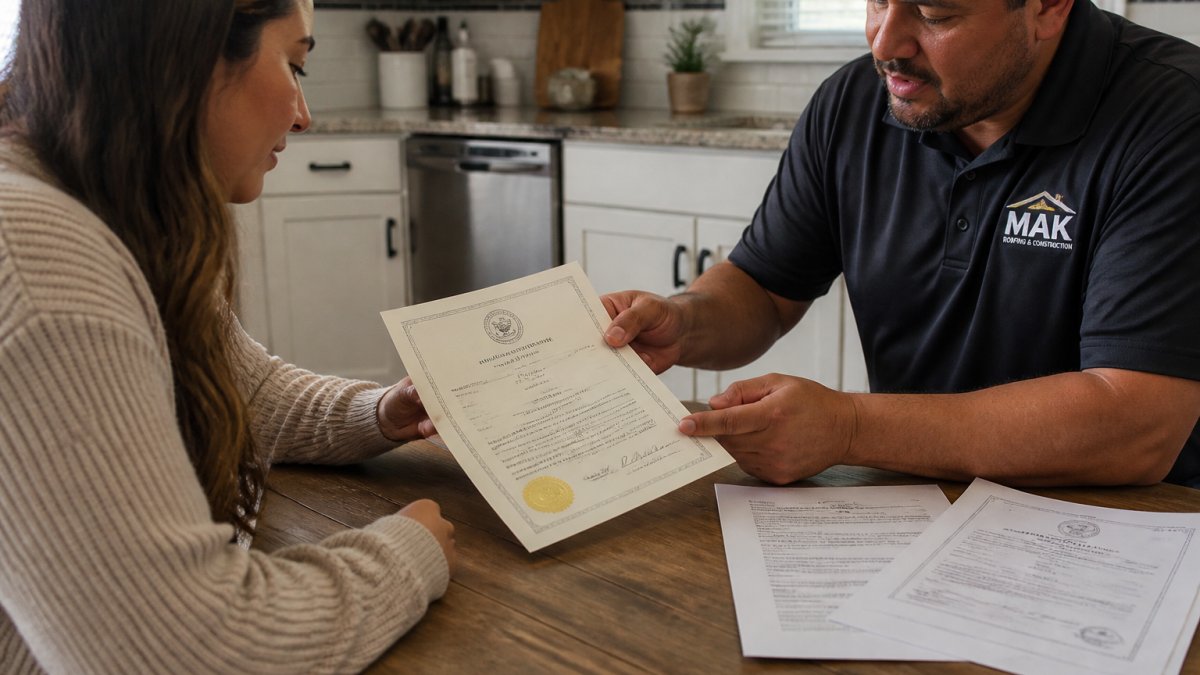
A common mistake is accepting a photocopied license with no expiration date visible. Always check the expiration, and always verify the number yourself rather than trusting the document in front of you.
Contractor Liability Insurance Requirements in Texas
Texas does not mandate a single statewide liability insurance minimum for all contractors, so coverage requirements vary by license type, municipality, and project. That variability is exactly why you should never assume a contractor is insured just because they say so. You have to see the certificate.
Two coverage types matter most to a homeowner:
- General liability insurance covers property damage and bodily injury the contractor causes during the job, such as a ladder through a window or damage to your siding.
- Workers’ compensation insurance covers medical costs and lost wages if an employee is injured on your property, which protects you from being pulled into a claim.
Ask for a certificate of insurance and then call the insurer listed on it to confirm the policy is active. Certificates can be forged or expired, and a two-minute phone call closes that gap. For guidance on what coverage a legitimate contractor should carry, the Texas Department of Insurance publishes consumer resources on verifying coverage.
Ask the contractor to have their insurance agent email the certificate directly to you. A certificate that comes straight from the agent is far harder to fake than a PDF the contractor forwards themselves.
The Practical Benefits of Hiring a Licensed and Insured Contractor
The practical payoff of hiring a licensed and insured contractor shows up in three places: your warranty, your insurance claim, and your resale value. Each one is easy to underestimate until you need it.
Manufacturer warranties on roofing materials and systems typically require installation by a qualified, licensed professional. Hire an unlicensed crew and you may void that warranty entirely, meaning a future leak is your problem to fund. When storm damage triggers an insurance claim, adjusters frequently ask for proof that the work was permitted and performed by a licensed contractor, and unpermitted work can complicate or reduce a payout.
Resale is the third pressure point. A home inspection that reveals unpermitted or non-compliant work can stall a sale or force a price reduction, and buyers increasingly ask for documentation of who performed major repairs.
| Benefit | What It Protects | Why It Matters |
|---|---|---|
| Valid license | Code compliance and competency | Work passes inspection |
| Liability insurance | Your property and bystanders | Damage gets paid for |
| Workers’ comp | You, as property owner | Injury claims stay off you |
| Permits and inspections | Structural and safety integrity | No hidden defects |
| Documented work history | Resale and warranty claims | Clean paper trail |
At MAK Roofing & Construction, we have handled residential and commercial projects across the El Paso region for over 16 years, and we build the documentation into every job from the start. That includes comprehensive project management from start to finish, so permits, inspections, and warranty paperwork are tracked rather than left to chance.
Red Flags to Watch For When Hiring a Contractor
Certain warning signs should end the conversation immediately, regardless of how good the price looks. The pattern is consistent: pressure, vagueness, and a refusal to put anything in writing.
Watch for these:
- A demand for full payment or a large cash deposit upfront
- No physical business address, only a phone number
- Pressure to sign “today” because the price expires
- Reluctance to provide a license number or insurance certificate
- No written contract, or a contract with vague scope and no timeline
- Door-to-door solicitation after a storm with no local track record
A legitimate contractor will hand over credentials without hesitation and will put the scope, timeline, and payment schedule in writing. If any of that feels evasive, walk away. There is always another contractor.
If you are searching for a licensed roofing contractor near me in El Paso, start by verifying credentials before you compare quotes. The lowest bid from an unverifiable contractor is rarely the cheapest option once repairs, legal exposure, and lost warranties are factored in.
Storm season in El Paso does not wait, and neither should your verification process. Whether you need emergency roof repair, a full kitchen remodel, or commercial building upgrades, working with a credentialed team removes the financial and legal risk that unlicensed work creates. MAK Roofing & Construction brings over 16 years of experience, full-service residential and commercial capability, custom roofing systems built for the local climate, and bank financing options to every project. Get started with MAK Roofing & Construction and request your video estimate today.
Frequently Asked Questions
What is the difference between licensed, bonded, and insured contractors?
A licensed contractor has met state or local requirements for their trade. Bonded means they carry a surety bond that can compensate you if they fail to complete the work or violate terms. Insured means they have liability and workers’ compensation coverage. In Texas, licensing varies by trade, so always ask for proof of all three.
How do I verify a contractor’s license in El Paso, TX?
Start by asking the contractor for their license number. Then check it with the Texas Department of Licensing and Regulation (TDLR) online database or call the El Paso licensing office. For roofing specifically, Texas does not require a state license, but many local jurisdictions do. Always confirm the license is active and in the contractor’s legal name.
Can I be held liable if an uninsured contractor gets hurt on my property in Texas?
Yes. Under Texas law, if an uninsured contractor or their worker is injured on your property, you could be held responsible for medical bills and lost wages. Homeowners’ insurance may not cover this. Hiring an insured contractor with workers’ compensation protects you from that financial risk.
Why is insurance coverage critical for roofing and remodeling projects?
Roofing and remodeling involve heights, heavy materials, and power tools. If a worker is injured or your property is damaged, insurance covers the cost. Without it, you could pay out of pocket. Always request a certificate of insurance and verify it directly with the insurer before work begins.