

- BY
- POSTED IN Uncategorized
- WITH 0 COMMENTS
- PERMALINK
- STANDARD POST TYPE
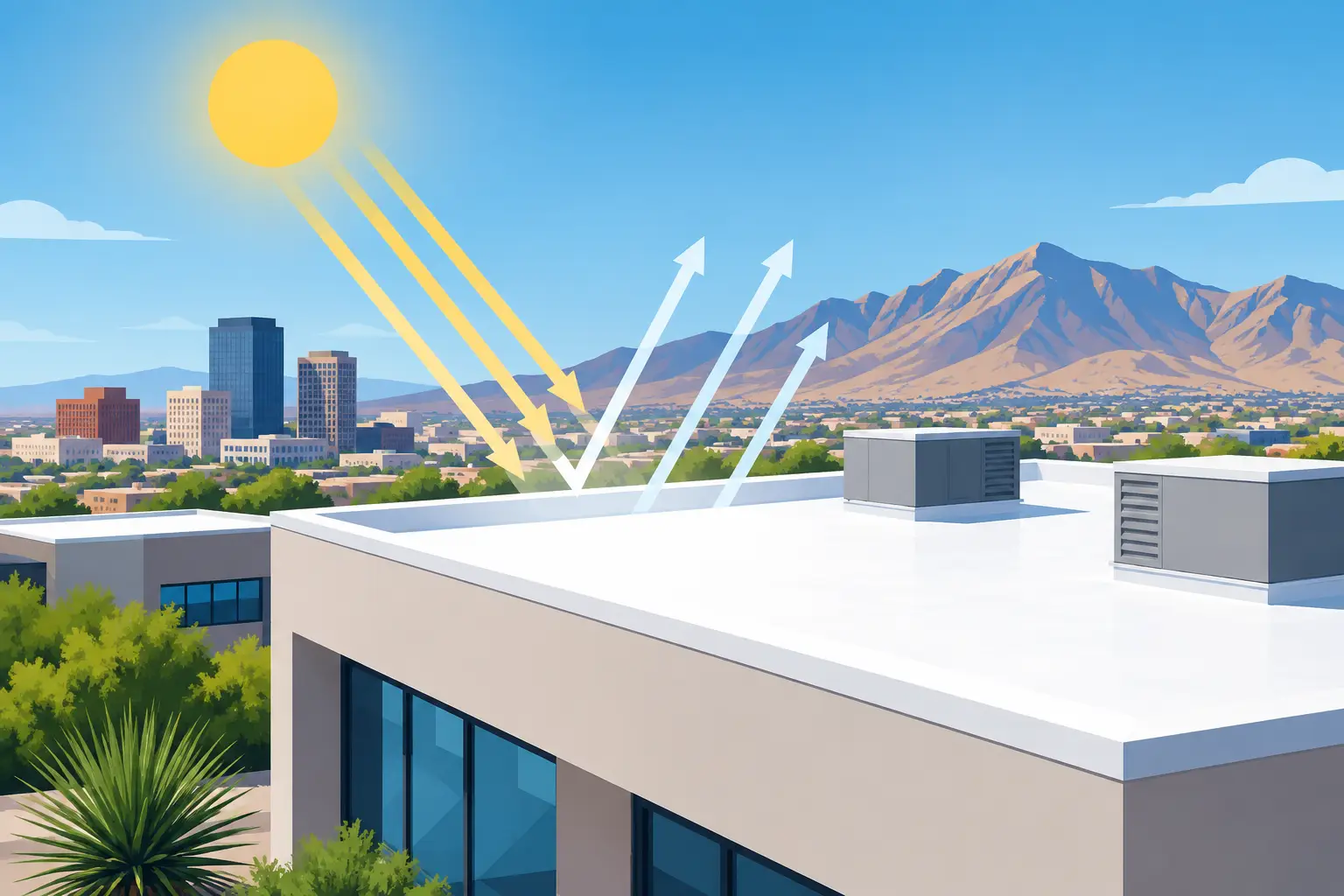
On an El Paso afternoon, a roof can absorb intense sun for hours before that heat reaches the rooms below. That is why cool roof trends are more than a design preference in our area. They are practical decisions about indoor comfort, energy use, roof longevity, and how well a building stands up to a demanding desert climate.
For homeowners, business owners, and facility managers, the goal is not simply to choose the lightest-looking roof. A true cool-roof strategy combines the right surface, insulation, drainage, installation details, and maintenance plan for the building. The best system depends on whether the roof is flat or sloped, how it is currently constructed, and whether replacement, restoration, or repair makes the most sense.
Cool Roof Trends Moving Beyond White Paint
The familiar bright-white roof remains a strong option, especially on low-slope commercial buildings. White and light-colored membranes, coatings, and spray-applied systems reflect more sunlight than dark roof surfaces. That can help reduce the amount of heat a roof transfers into the building.
But current cool roofing decisions are more specific than simply choosing white. Property owners are looking at solar reflectance, surface durability, ponding-water resistance, warranty requirements, and the condition of the existing roof before choosing a material. A coating can be an excellent solution for a roof that is fundamentally sound. It is not a substitute for correcting saturated insulation, failing seams, deteriorated decking, or drainage problems.
Another shift is the growing use of cool-roof technology across more than one roofing category. Flat-roof owners may choose TPO, roof coatings, spray foam, or modified bitumen systems with reflective cap sheets. Owners of sloped homes are finding more reflective metal finishes, lighter tile colors, and shingles designed to reflect a portion of the sun’s infrared energy while still offering a more traditional appearance.
Reflective Coatings for Existing Flat Roofs
Restoration is one of the most practical cool roof trends for El Paso commercial properties. When a flat roof has aging surface material but remains dry and structurally stable, a professionally installed coating may extend its useful life without requiring a full tear-off.
Coatings create a reflective protective layer over an existing roof system. Depending on the roof and coating selected, they can help protect against ultraviolet exposure, reduce surface temperatures, and seal minor weathered areas. They are often considered for metal roofs, modified bitumen, built-up roofs, and certain single-ply systems.
Preparation determines whether a coating performs as intended. The roof must be cleaned, inspected, repaired, and properly detailed around drains, penetrations, curbs, seams, and flashing. Areas with standing water need special attention. Applying a coating over unresolved leaks may hide the problem temporarily while moisture continues damaging the roof assembly below.
For many business owners, the appeal is clear: restoration can limit disruption while improving reflectivity. Still, it is not always the lowest-cost option over the long term. If the roof has widespread damage or inadequate drainage, replacement may protect the property better than repeated repairs and coatings.
TPO Remains a Leading Cool-Roof Choice
TPO roofing continues to be a common choice for commercial and low-slope properties because its light-colored membrane provides a reflective surface and its welded seams are designed for strong water resistance. It is frequently installed on retail buildings, offices, warehouses, multifamily properties, and additions with low-slope roof sections.
A TPO system is not just a membrane rolled across a roof. Proper insulation layout, edge metal, flashing, penetrations, fastening patterns, and drainage all affect performance. In El Paso, wind exposure and rapid temperature changes make quality installation especially important. A professionally designed TPO roof can provide a clean, durable cool-roof surface, but material thickness and installation details should match the building’s needs rather than a one-size-fits-all specification.
Spray Foam Combines Insulation and Protection
Spray polyurethane foam roofing remains relevant for property owners who need to improve both thermal performance and waterproofing on a low-slope roof. Foam is applied as a continuous layer, then protected with a coating that shields it from ultraviolet exposure.
The major advantage is that spray foam can add insulation value while creating a monolithic surface around many roof shapes and penetrations. It can be especially useful where a roof has uneven areas, complicated equipment curbs, or numerous seams that need attention. Because it is lightweight, it may also be considered where adding a heavy new roof system is not ideal.
The trade-off is maintenance. The protective coating must be monitored and renewed as needed to keep the foam protected. Installation conditions and crew experience matter as well. A spray foam roof should be evaluated as a complete system, including its coating, drainage, and future maintenance requirements.
Cool Roof Trends for Sloped Residential Roofs
Cool roofing is not only for flat commercial buildings. El Paso homeowners are increasingly considering materials that manage heat without changing the character of the home.
Metal roofing is a leading option because it can be finished in reflective colors and offers long-term durability when installed correctly. A standing-seam metal roof can provide a modern look, while metal panels and shingles are available in styles that fit more traditional homes. Metal may cost more upfront than standard shingles, but its lifespan, weather resistance, and low maintenance needs can make it a strong long-term investment.
Tile roofing also fits the Southwest climate well. Light-colored tile can reflect more sunlight, and the air space beneath tile may help moderate heat transfer. Tile is durable and attractive, though the structure must be able to support its weight. Underlayment is equally important because it provides critical protection beneath the visible tile.
Reflective shingles are another option for homeowners who want the familiar appearance and lower initial cost of asphalt shingles. They may not reflect heat as aggressively as a bright white membrane, but they can offer a meaningful improvement over darker conventional shingles. Color selection still matters. Lighter tones generally perform differently from very dark brown, charcoal, or black roofs under direct desert sun.
Insulation Is Part of the Roof Decision
A highly reflective roof cannot correct poor attic insulation, air leaks, or inadequate ventilation on its own. One of the strongest trends is treating the roof and insulation as connected parts of the same comfort system.
For a home with a vented attic, insulation helps slow heat movement from the hot roof deck into living spaces. Attic ventilation can help manage moisture and heat, but it must be designed appropriately for the roof assembly. For low-slope commercial roofs, insulation above the deck is often a major part of the roofing system and affects both energy performance and drainage slope.
This is where a roof inspection provides more value than a color recommendation. A contractor should look at the existing roof materials, insulation condition, drainage, flashing, signs of leaks, and the building’s use. A restaurant, warehouse, office, rental property, and family home may all need different solutions even if they sit under the same El Paso sun.
Solar Panels Are Changing Roof Planning
More property owners are planning roof work around current or future solar panels. Cool-roof systems and solar can work well together, but the roof should be ready before panels are installed. Replacing an aging roof after a solar installation often requires removing and reinstalling the panels, adding time and cost to the project.
For a property considering solar, it makes sense to assess roof age, structural condition, drainage, and remaining service life first. The roofing material should also be compatible with the mounting approach. A coordinated plan can protect the roof warranty, simplify future maintenance, and help avoid unnecessary disruption.
What to Ask Before Choosing a Cool Roof
The right question is not, “What is the coolest roof available?” It is, “What roof system will protect this property and make sense over its full service life?” Before making a decision, ask whether the existing roof is a candidate for restoration, whether insulation should be upgraded, how water drains from the roof, and what maintenance the chosen system will require.
Also consider appearance, budget, expected ownership period, and warranty coverage. A roof that delivers the best value for a long-term commercial owner may differ from the practical choice for a homeowner preparing to sell in several years. Financing can also help property owners move forward with a better long-term system instead of delaying necessary work.
MAK Roofing & Construction helps El Paso property owners evaluate these details from start to finish, whether the job calls for a repair, a coating, insulation improvements, or a full replacement. The most effective cool roof is the one designed for the building you have, installed with care, and maintained before small issues become expensive ones. Schedule an inspection when your roof is still giving you time to make the right choice.