

- BY adminMak
- POSTED IN Blog
- WITH 0 COMMENTS
- PERMALINK
- STANDARD POST TYPE
Last Updated: November 6, 2026
Quick Summary
For many flat commercial roofs in sound condition, commercial roof coating is worth the cost because it extends roof service life and delays a full tear-off at a fraction of replacement spending. Coating typically runs $3 to $6 per square foot versus $8 to $15 or more for replacement. The answer flips when the deck, insulation, or membrane is already failing.
- Coating wins when the roof is structurally sound, insulation is dry, and membrane issues are minor.
- Replacement is the honest call with saturated insulation, widespread ponding, active moisture intrusion, or an aged roof.
- Silicone typically sits at the higher end per square foot while acrylic sits lower.
- Coating is not a one-time spend; plan a recoat every several years plus periodic cleaning.
- A professional inspection must confirm dry insulation, working drainage, and a compatible substrate before coating.
Table of Contents
- The Real Answer to Whether Commercial Roof Coating Is Worth the Cost
- Commercial Roof Coating vs. Replacement: What Each One Actually Buys You
- Commercial Roof Coating Cost: What Drives the Number Up or Down
- Commercial Roof Coating Lifespan and What Shortens It
- Silicone Roof Coating Pros and Cons for Desert Buildings
- How El Paso Heat and Dust Change the Coating Math
- A Roof Inspection Checklist for Coating Eligibility
- Scheduling a Commercial Roof Evaluation with MAK Roofing & Construction
- Frequently Asked Questions
The Real Answer to Whether Commercial Roof Coating Is Worth the Cost
Is commercial roof coating worth the cost? For many flat commercial roofs in sound condition, yes: a coating system can extend roof service life and delay a full tear-off at a fraction of replacement spending. But that answer flips fast when the roof deck, insulation, or membrane is already failing.
The honest answer depends on the roof under your feet, not on a marketing brochure. Below, we break down coating versus replacement, what drives commercial roof coating cost, and how to tell whether your building qualifies.
Commercial Roof Coating vs. Replacement: What Each One Actually Buys You
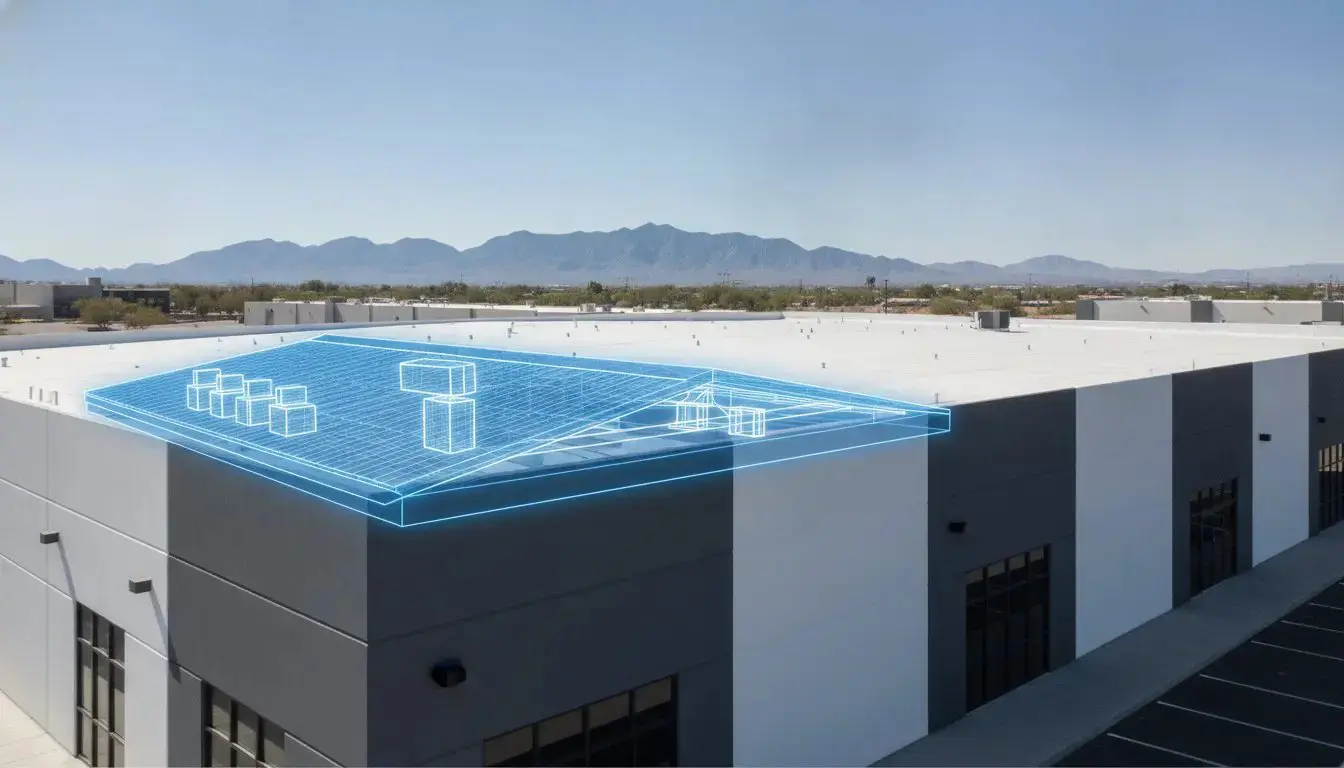
A commercial roof coating is a fluid-applied membrane sprayed or rolled over an existing roof substrate to create a seamless, reflective, waterproof surface. Replacement removes the old roof system down to the deck and installs new insulation and membrane.
What each option buys is different. Coating buys time and reflectivity. Replacement buys a clean slate.
When Coating Wins
Coating wins when the existing roof is structurally sound, the insulation is dry, and the membrane has minor issues like seam wear or surface aging. On a metal roof, single-ply membrane, or built-up roofing system with good drainage, coating can add years of service life without landfill waste or business disruption.
When Replacement Is the Only Honest Option
Replacement is the honest call when there is saturated insulation, widespread ponding water, active moisture intrusion, or a roof already at the end of its lifespan. Coating over a wet roof traps moisture and fails early. If you are weighing repair against a full tear-off, our breakdown of roof repair versus replacement costs covers the trade-offs, and our roof replacement cost guide for El Paso gives you real local pricing to compare against a coating quote.
Commercial Roof Coating Cost: What Drives the Number Up or Down
Commercial roof coating cost depends on roof size, substrate type, surface preparation, coating material, and labor access. A 2026 cost guide from Spray Foam Tight’s commercial coating cost analysis reports most coating systems in the range of $3 to $6 per square foot, compared with $8 to $15 or more per square foot for replacement. Those are national guide estimates, not El Paso quotes, and the spread between the low and high end is where most owners get surprised.
Several factors move the number on a commercial building:
- Surface preparation: power washing, seam repair, and primer add labor, especially on dusty, sun-aged membranes.
- Coating type: silicone, acrylic, and elastomeric systems price differently, and silicone typically sits at the higher end per square foot while acrylic sits lower.
- Roof access: height, parapet configuration, equipment staging, and OSHA fall-protection requirements all add labor. A low warehouse roof is cheaper per square foot than a multi-story retail center.
- Roof condition: more prep means more cost. A roof with active leaks, blisters, or saturated insulation is not a coating candidate at any price until repairs are made.
- Square footage and geometry: penetrations, HVAC curbs, skylights, and drains add detail work that is priced by the linear foot, not the square foot.
A Like-for-Like Lifecycle Comparison
To compare coating against replacement honestly, state your assumptions. A common pattern on a commercial roof in sound condition looks like this:
- Coating now: apply a reflective silicone or acrylic system at the guide range above, then plan a recoat every several years to maintain reflectivity and waterproofing.
- Replacement now: tear off to the deck, install new insulation and membrane at the higher per-square-foot range, and reset the service-life clock.
- Coating then replacement later: coat now to buy years of service life, then replace when the deck or insulation finally fails.
Coating now and replacing later can defer the largest capital outlay when the roof passes inspection, while capturing energy savings in the meantime. The math flips when the roof fails inspection, because coating a wet roof is money spent on a system that will fail early.
Be cautious with any quote that seems unusually low, as it may reflect skipped surface preparation or thin application, both of which can shorten coating lifespan.
Payback Period and Total Cost of Ownership
Payback depends on the specific building and its energy use. Coating generally costs less up front than a tear-off, and reflective performance can help reduce cooling costs over time. Total cost of ownership also factors in recoating every several years, plus periodic cleaning to remove the dust that dulls reflectivity. Coating is not a one-time spend, but it usually beats financing a full replacement early, provided the roof underneath is dry and structurally sound. Ask any contractor to show you the recoat schedule and the assumptions behind their payback estimate in writing.
Here is how the two options compare on the numbers the article cites.
| Item | Value | Note |
|---|---|---|
| Coating system cost | $3 to $6 per square foot | National guide estimates, not El Paso quotes |
| Replacement cost | $8 to $15 or more per square foot | National guide estimates, not El Paso quotes |
| Surface preparation | Power washing, seam repair, primer | Adds labor on dusty, sun-aged membranes |
| Coating type | Silicone higher, acrylic lower | Silicone sits at the higher end per square foot |
| Roof access | Height, parapets, staging, fall protection | All add labor |
| Roof condition | More prep means more cost | Wet insulation is not a coating candidate |
| Geometry | Penetrations, curbs, skylights, drains | Priced by the linear foot |
Commercial Roof Coating Lifespan and What Shortens It
A commercial roof coating’s lifespan depends on the system and the roof beneath it. Silicone and acrylic systems age differently, and desert conditions test both.
What shortens lifespan:
- Ponding water that never drains
- Poor surface preparation before application
- Coating applied over wet insulation
- Missing recoating when the surface starts to chalk or wear
Proper installation and a maintenance schedule do more for lifespan than any single product choice.
Silicone Roof Coating Pros and Cons for Desert Buildings
Silicone roof coating pros and cons matter most on flat roofs in hot, dry climates. Silicone is generally regarded as resistant to UV exposure and ponding water.
The cons: silicone can be slippery when wet, it is not paintable, and it will not fix a roof with structural or moisture problems underneath. Acrylic coatings cost less and reflect well but are less forgiving of standing water. For desert buildings, silicone is often the stronger pick on roofs that pond.
How El Paso Heat and Dust Change the Coating Math
El Paso heat and dust change the coating math in ways that national cost guides do not capture. El Paso’s desert climate brings intense sun, high summer temperatures, and dust that settles on flat roofs.
UV and thermal cycling. Desert UV breaks down organic components in acrylic and elastomeric coatings faster than in milder climates, and the day-night temperature swing works the membrane through repeated expansion and contraction.
Dust and reflectivity. Blowing dust settles on roof surfaces and reduces solar reflectance until the roof is cleaned.
Ponding and monsoon rain. El Paso’s summer monsoon pattern delivers short, intense rain that finds every low spot on a flat roof.
Building stock. Coating compatibility depends on the substrate, and the right system depends on the specific roof assembly.
That means maintenance matters more here than in milder climates. A coated roof that is cleaned and inspected periodically keeps its reflectivity working. You can see how coatings hold up locally on our roof coating performance in El Paso heat page.
Dust can reduce a reflective coating’s effectiveness, so periodic cleaning helps maintain its performance.
A Roof Inspection Checklist for Coating Eligibility
Before anyone quotes a coating, the roof has to pass inspection. A professional roof inspection checks roof condition, moisture intrusion, drainage, and substrate suitability. Here is the checklist we walk through:
- Roof deck and structure are sound
- Insulation is dry, with no trapped moisture
- Drainage works and ponding water clears
- Membrane has no widespread tears or blisters
- Seams and flashings are repairable
- Substrate is compatible with the chosen coating system
If you are unsure whether paying for an inspection is worthwhile, our guide on whether a professional roof inspection is worth the cost explains what inspectors check and what drives the price.
Scheduling a Commercial Roof Evaluation with MAK Roofing & Construction
The only way to know if coating is worth the cost on your building is a real evaluation. As a full-service contractor, we handle both commercial and residential roofing, offer custom-designed roofing systems for El Paso’s climate, and provide bank financing options. For facility managers planning ahead, our commercial roofing budget planning resource helps you schedule repairs and protect the roof asset before a failure disrupts operations.
Coating is worth the cost when the roof qualifies, and a wasted expense when it does not. If you want a straight answer on your building, MAK Roofing & Construction can inspect the roof, explain your options, and manage the project from start to finish. Get started with MAK Roofing & Construction and get a video estimate for your commercial roof.
Frequently Asked Questions
How much does commercial roof coating cost per square foot?
Costs depend on the specific building, so a site inspection is needed for an accurate figure. Your actual commercial roof coating cost depends on square footage, roof condition, surface preparation, coating type, and how many seams or penetrations need detailing. A site inspection is the only way to get a real number.
Can a roof coating stop leaks on a commercial roof?
A coating can seal small leaks and hairline cracks when the existing membrane is still sound and the source of moisture is found first. It will not fix trapped water, saturated insulation, or structural ponding. If water is already inside the roof assembly, coating over it traps the moisture and the problem returns. A proper inspection should confirm the roof is dry and identify every breach before any coating is applied.
What are the disadvantages of silicone roof coatings?
Silicone handles ponding water and UV exposure well, but it has real drawbacks. It is slippery when wet, so roof traffic and drainage paths need attention. Dirt pickup can dull reflectivity over time, which matters in a dusty climate. Most silicone coatings cannot be recoated with acrylic later, so you commit to the same chemistry at the next cycle. It also tends to cost more per gallon than acrylic, and it needs a clean, dry surface to bond properly.
How do you know if a commercial roof is a good candidate for coating?
A roof is usually a good candidate when the existing membrane is intact and free of widespread blisters or open seams. Drains and scuppers must work, and the deck must be structurally sound. Roofs with active leaks into the building, wet insulation, or a membrane at the end of its life are better served by replacement. An inspection that checks moisture, adhesion, and drainage settles the question.
How long does a commercial roof coating last?
Commercial roof coating lifespan varies by chemistry and exposure. Acrylic coatings generally need recoating sooner than silicone, which holds up longer under standing water and intense sun. Real-world life also depends on surface preparation, coating thickness, drainage, and foot traffic. Plan for periodic recoating rather than a one-time application, particularly in high-UV, dusty conditions. Ask the contractor what recoat interval the warranty assumes.
