

- BY
- POSTED IN Uncategorized
- WITH 0 COMMENTS
- PERMALINK
- STANDARD POST TYPE
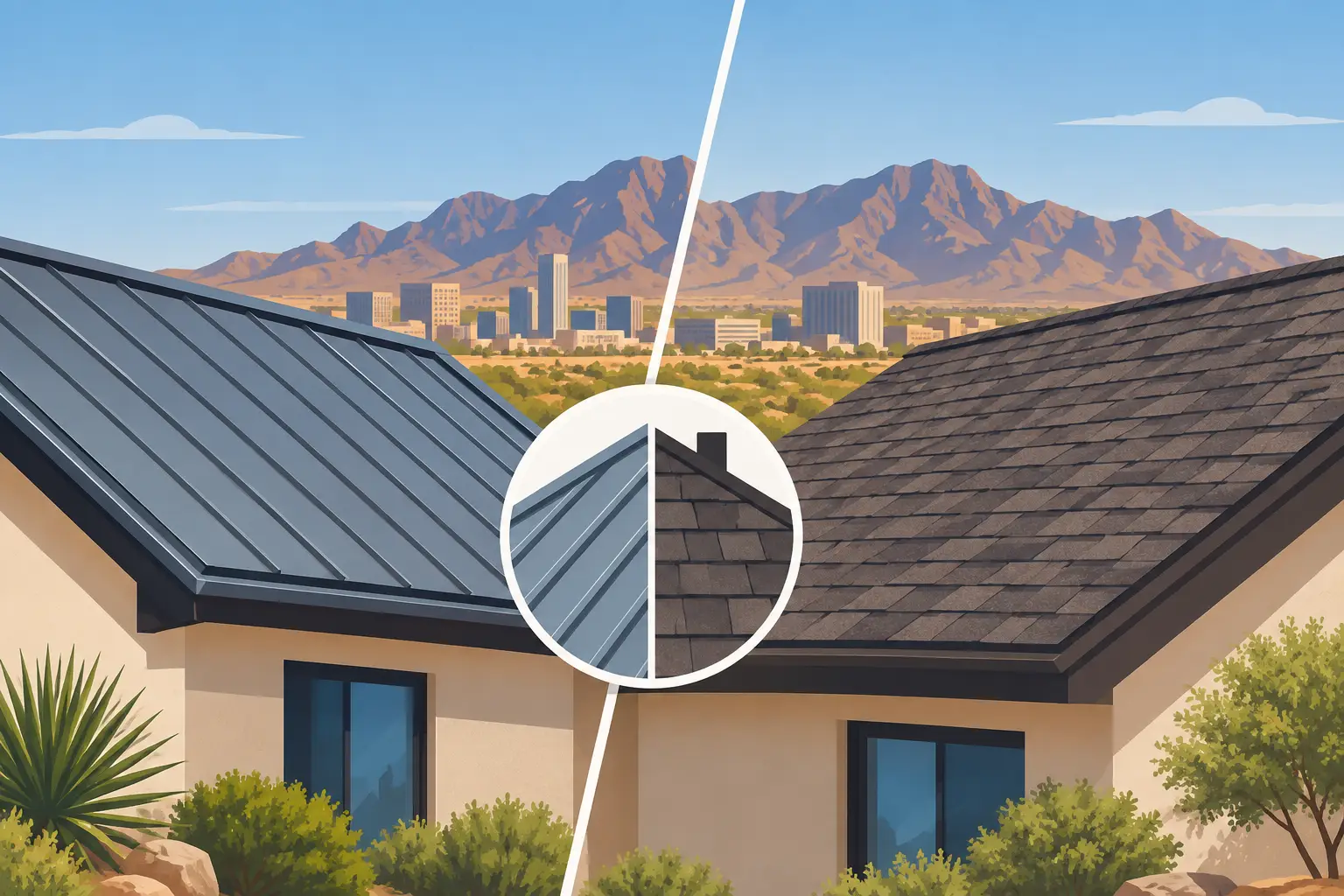
A roof replacement in El Paso is not a cosmetic decision. It has to stand up to relentless sun, sharp temperature swings, high winds, blowing dust, and the occasional hard hailstorm. When comparing metal roofs versus shingles, the better choice comes down to your building, budget, long-term plans, and the condition of the existing roof structure.
Both materials can protect a home or commercial property when they are properly specified and professionally installed. The key is not picking the product with the loudest sales pitch. It is choosing a complete roofing system that fits the way your property handles heat, weather, drainage, and daily use.
Metal Roofs Versus Shingles: The Main Difference
Asphalt shingles are the familiar choice on many El Paso homes. They use layered materials with a protective granule surface and are installed in overlapping courses. Shingles come in a wide range of colors and architectural styles, making them a practical fit for many traditional homes.
Metal roofing uses panels or shingles made from steel, aluminum, or other metal products with protective finishes. Standing seam panels are a common residential and commercial option because their concealed fasteners create a clean appearance and reduce exposed points where water can enter. Metal can also be formed to complement ranch, Southwestern, contemporary, and commercial building styles.
The biggest difference is service life. A quality shingle roof may provide roughly 20 to 30 years of service, depending on the product, installation, ventilation, and weather exposure. A properly installed metal roof can often last 40 to 70 years or more. That longer lifespan is a major reason property owners consider metal, but it also comes with a higher upfront investment.
Cost: Upfront Budget vs. Long-Term Value
For most properties, asphalt shingles cost less to install than metal roofing. The materials are generally less expensive, labor is more familiar, and repairs can be straightforward when damage is limited to a small area. For a homeowner who needs a dependable replacement now and may not plan to own the property for decades, shingles can make excellent financial sense.
Metal costs more at the start because of material pricing, custom fabrication, specialized flashing details, and installation requirements. The roof deck must be measured carefully, panels must be handled correctly, and penetrations around vents, skylights, and equipment need precise flashing. Saving money with an inexperienced installer can lead to leaks, loose panels, noise concerns, or finish damage that defeats the purpose of choosing metal.
Long-term value changes the picture. A metal roof may require fewer replacements over the life of a building, and its reflective finish can help reduce heat absorption. That does not mean every metal roof automatically produces the same energy savings. Panel color, insulation, attic ventilation, roof slope, building orientation, and air-conditioning use all affect results. Still, for owners planning to stay in place for many years, metal can be a strong investment in durability and comfort.
How Each Roof Handles El Paso Weather
El Paso roofs take a beating from ultraviolet exposure. Shingles can gradually lose granules, become brittle, curl, or crack as they age in intense sun. Higher-quality architectural shingles typically hold up better than basic three-tab products, but every shingle roof should be inspected regularly for early signs of wear.
Metal roofing resists UV damage well, especially when it has a quality factory-applied finish. Light-colored or reflective metal panels can help limit rooftop heat gain. The roof still needs proper insulation and ventilation underneath. A reflective surface cannot solve an under-insulated attic or poorly sealed ductwork by itself.
Wind is another local consideration. Shingles depend on correct nailing patterns, starter strips, sealant activation, and edge detailing. Missing or lifted shingles after a wind event often point to aging materials, poor installation, or both. Metal systems can perform very well in high winds when panels, clips, underlayment, and edge metal are designed and installed as a coordinated system.
Hail requires a closer look. Metal panels can dent, particularly with softer metals or severe hail. Some homeowners do not mind minor cosmetic dents, while others want a roof that keeps a smooth, uniform appearance. Impact-resistant shingles are available and may be a better fit for a property owner who prefers the look of shingles but wants added hail protection. The right choice depends on the roof product, its rating, the building location, and what matters most to the owner.
Appearance and Property Style Matter
A roof covers a large portion of your property, so appearance deserves more than an afterthought. Shingles offer texture, depth, and many color blends. They often complement stucco homes, brick exteriors, and established neighborhoods where a conventional roof profile fits the surrounding architecture.
Metal offers a sharper, more defined appearance. Standing seam panels are especially popular on modern homes, additions, patios, and commercial properties. Metal can also work beautifully with Southwestern design when the panel color and trim details are selected with the rest of the exterior in mind.
If you are planning exterior improvements such as stucco repair, new windows, painting, or an addition, consider the roof as part of the full project. Roof color, fascia, gutters, wall finishes, and patio covers should work together. Coordinating these decisions before construction begins avoids an exterior that looks pieced together later.
Maintenance and Repairs
Neither roof type is maintenance-free. Shingle roofs should be checked for damaged tabs, exposed nails, flashing failures, granule loss, and debris that blocks drainage. A small repair made early can prevent water from reaching the decking, insulation, drywall, and interior finishes.
Metal roofs need inspections too. Fasteners, sealants, panel seams, flashing, pipe boots, and transitions should be examined, especially after strong wind or hail. On exposed-fastener metal systems, screws and washers need particular attention as the roof ages. Standing seam systems reduce exposed fasteners across the field of the roof, but their details still need professional review.
Repairs can be simpler on shingles when only a few pieces are damaged. With metal, matching an older panel color or profile can be more complicated if the original product is no longer available. That is one reason it pays to keep records of the manufacturer, color, panel type, warranty information, and installation details after any roof replacement.
When Shingles Are the Better Choice
Shingles are often the right answer when the property needs a cost-conscious roof replacement, the existing home design calls for a traditional textured look, or the owner expects to sell within a shorter time frame. They also provide many dependable options, including architectural and impact-resistant products.
The best shingle roof is not simply the least expensive bundle available. Quality underlayment, proper ventilation, correctly installed flashing, and manufacturer-approved installation methods matter just as much as the visible shingles. A good roofing system protects the areas where leaks usually begin: valleys, wall intersections, chimneys, vents, and roof edges.
When Metal Is Worth the Investment
Metal is often worth serious consideration for owners who expect to keep the property for the long haul, want a low-maintenance exterior, or need strong performance under sun and wind. It can be particularly attractive for homes with simple roof lines, new construction, major additions, patios, and commercial buildings where a long service life is a priority.
It is not automatically the best option for every roof. Complex roof geometry with many penetrations, valleys, and intersecting elevations can increase metal fabrication and installation costs. A careful inspection should determine whether the deck is sound, whether ventilation or insulation improvements are needed, and how the new roof will tie into walls, drains, parapets, solar equipment, or existing exterior features.
Start With a Roof Inspection, Not a Guess
The right roofing decision starts with an on-site evaluation of your existing system. A professional should look beyond the visible surface for soft decking, moisture concerns, inadequate ventilation, flashing problems, drainage issues, and damage around penetrations. Those conditions affect whether metal roofs versus shingles will deliver the value you expect.
MAK Roofing & Construction can help El Paso property owners assess the full scope of a replacement, from roofing materials and weather protection to related exterior repairs. Ask clear questions about the proposed system, warranty coverage, installation details, financing options, and how the crew will protect your property during construction.
Your roof has one job that cannot wait for a second chance: keep the weather outside. Choose the material that fits your property and plans, then make sure the installation is handled by a team prepared to stand behind the work.