

- BY
- POSTED IN Blog
- WITH 0 COMMENTS
- PERMALINK
- STANDARD POST TYPE
Table of Contents
- Why Roof Maintenance Matters in El Paso’s Climate
- Your Seasonal Roof Maintenance Checklist
- Signs of Roof Damage After a Storm
- Roof Inspection Cost El Paso: What to Expect
- Best Roofing Materials for El Paso Climate
- DIY vs Professional Roof Maintenance
- When to Call a Professional
- Frequently Asked Questions
Last Updated: September 28, 2026
Why Roof Maintenance Matters in El Paso’s Climate
Roof maintenance in El Paso is not optional. It is the single biggest factor in how long your roof lasts. This guide from MAK Roofing & Construction covers what to check, when to check it, and when to call a pro.
The desert climate here is brutal on shingles. Summers push past 100°F for weeks. UV rays break down asphalt. Then monsoon season arrives in July and August with sudden heavy rain and wind. That one-two punch of extreme heat followed by fast water is what kills roofs in the Borderland.
Most homeowners only think about their roof when it leaks. By then, the damage has been building for months. A small cracked flashing or a loose shingle lets in water during one storm, and you may not notice until a ceiling stain shows up.
The good news: simple checks twice a year prevent most of this. Below, we’ll show you exactly what to look for and how often.
Your Seasonal Roof Maintenance Checklist
A seasonal routine keeps small problems from becoming big ones. In El Paso, your schedule should follow the monsoon calendar, not the traditional four seasons.
Here is the yearly rhythm most local roofs need:
| Season | Main Task | Why It Matters | Frequency |
|---|---|---|---|
| Spring | Pre-monsoon inspection | Catch damage before heavy rain | Once, in April or May |
| Summer | Heat and UV checks | Find sun damage and cracked sealant | Once, in June |
| Fall | Post-monsoon repairs | Fix what the storms loosened | Once, in September or October |
| Winter | Quick visual check | Catch freeze-thaw and wind damage | Once, in January |
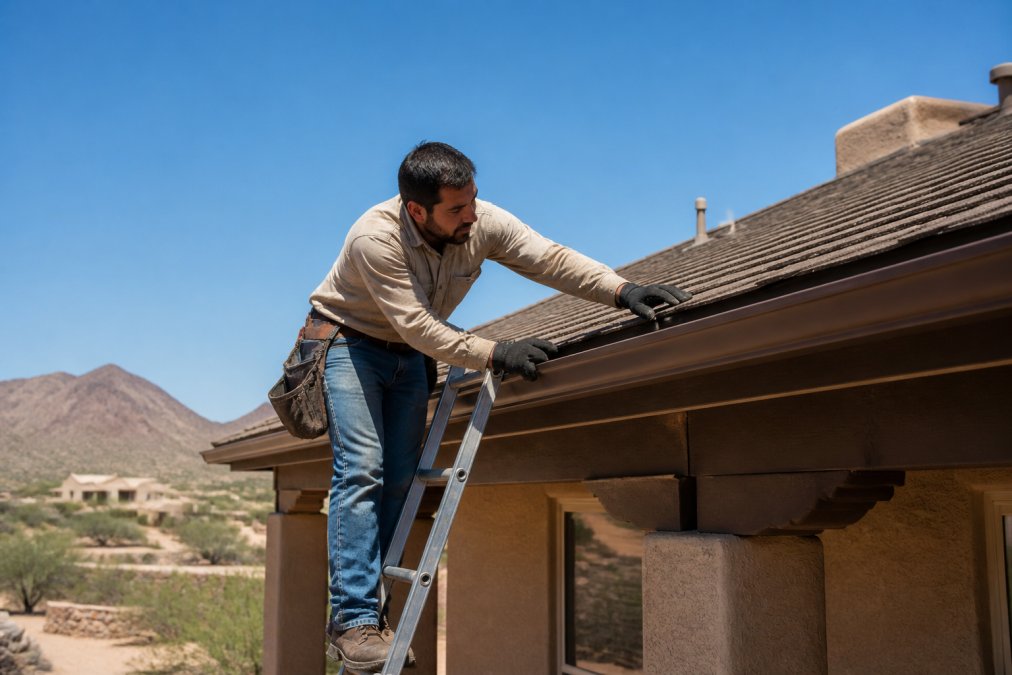
Spring: Pre-Monsoon Preparation
Spring is your last chance to fix problems before the rain hits. Do this in April or May.
- Clear debris from valleys and gutters
- Check flashing around chimneys and vents
- Look for loose or missing shingles
- Seal small cracks in caulk and sealant
- Trim tree branches that touch the roof
A common mistake is skipping the gutters. Clogged gutters push water under the roof edge during the first big storm.
Summer: Heat and UV Protection
Summer heat does quiet damage. Asphalt shingles dry out and curl. Sealant around vents cracks.
Walk the roof only in early morning. The surface gets hot enough to damage shingles underfoot. Look for:
- Curling or blistering shingles
- Cracked pipe boots and vent seals
- Faded or granule-bare areas
Fall and Winter: Post-Monsoon Repairs
Monsoon season leaves a trail. Wind lifts shingles. Rain finds every weak spot.
In fall, check for lifted shingles, water stains in the attic, and loose nails. Winter is mostly about a quick look after any hard freeze or wind event. Freeze-thaw cycles can widen existing cracks.
After any storm with wind over 40 mph, do a quick ground-level check. You can often spot missing shingles from the yard without climbing up.
Signs of Roof Damage After a Storm
The clearest signs of roof damage after a storm are missing shingles, granules in your gutters, and water stains on ceilings or attic walls. Catching these early prevents a small repair from turning into a full replacement.
Check these spots after every major storm:
- Granules in gutters or at downspouts mean shingles are wearing out
- Curling, cracking, or missing shingles show wind or age damage
- Dark spots on ceilings signal a leak above
- Daylight in the attic means a hole or gap exists
- Dented flashing or vents point to hail or debris impact
If you see any of these, get the roof looked at soon. Water damage spreads fast once it starts.
Roof Inspection Cost El Paso: What to Expect
Roof inspection cost in El Paso depends on the roof size, type, and whether you need a full report. Most homeowners pay for a basic inspection only when a problem is suspected. Many local contractors offer a video estimate so you can see the issue before you commit.
Pricing varies by company and scope. A simple visual check usually costs less than a full inspection with a written report. For current rates, ask for a quote directly.
What affects the price:
- Roof size and pitch
- Number of stories
- Whether drones or ladders are needed
- Whether you need a report for insurance
Never pay for an inspection before you understand what it covers. Ask whether the fee is credited toward repairs if you hire the company.
Best Roofing Materials for El Paso Climate
The best roofing materials for the El Paso climate handle intense UV, heat, and sudden rain. The right pick depends on your budget and roof shape.
| Material | Heat and UV Resistance | Lifespan | Best For |
|---|---|---|---|
| Asphalt shingles | Moderate | 15-25 years | Budget-friendly homes |
| Tile (clay or concrete) | High | 40+ years | Pueblo and stucco homes |
| Metal | High | 40-70 years | Energy savings, low upkeep |
| TPO (flat roofs) | High | 15-25 years | Commercial and flat roofs |
Tile and metal cost more upfront but hold up better in desert heat. Asphalt is the cheapest option but fades faster under strong sun. For flat commercial roofs, TPO membranes resist UV well and reflect heat.
If energy bills worry you, ask about reflective or “cool” roofing. These materials bounce sunlight instead of absorbing it, which can lower cooling costs.
DIY vs Professional Roof Maintenance
Some tasks are safe for homeowners. Others are not worth the risk.
Safe to do yourself:
- Clearing gutters and debris
- Trimming nearby branches
- Visual checks from the ground
- Checking the attic for leaks
Call a professional for:
- Walking or climbing on the roof
- Replacing shingles or flashing
- Sealing leaks
- Any work on steep or two-story roofs
Falls are the real danger. If your roof is steep or high, stay off it. A pro has the gear and the training.
Do the ground-level checks yourself. Leave anything that requires getting on the roof to a licensed pro.
When to Call a Professional
Call a professional when you spot leaks, missing shingles, or storm damage you cannot safely inspect. Fast action matters in El Paso, where the next storm is often only days away.
Reach out right away if you notice:
- Water stains on ceilings or walls
- Missing or torn shingles
- Hail dents on vents or flashing
- A roof older than 15 years with new problems
MAK Roofing & Construction has served El Paso for over 16 years. The team handles both residential and commercial roofs, from repairs to full replacements, and offers bank financing if you need it. For storm damage, ask about a video estimate.
Frequently Asked Questions
How often should I have my roof inspected in El Paso?
Most El Paso homes benefit from a professional roof inspection twice a year: once in spring before monsoon season and once in fall after the rains end. If your home sits near the Franklin Mountains or in an area with frequent dust storms, schedule an extra check after any major weather event. Regular roof maintenance catches small issues before they become expensive repairs.
What are the most common roof problems in El Paso, TX?
El Paso roofs face intense UV exposure, temperature swings from 30s to over 100 degrees, and monsoon-driven rain. Common problems include cracked or curled shingles from heat, loose flashing around vents and chimneys, granule loss on asphalt, and ponding water on flat roofs. Dust accumulation can also hide damage until a leak appears indoors.
Does the El Paso climate require specific roofing maintenance?
Yes. The combination of extreme heat, dry winds, and sudden monsoon rain stresses roofing materials differently than in milder climates. You should check sealant around penetrations more often, clear debris from drains before monsoon season, and choose materials rated for high UV and thermal cycling. Roof maintenance schedules here should account for both heat damage and storm impact.
How do I prepare my roof for the El Paso monsoon season?
Start by clearing gutters and downspouts of debris, then inspect flashing and sealant around vents, skylights, and chimneys. Replace any cracked or missing shingles. On flat roofs, verify drains are clear and the membrane has no blisters or ponding. Schedule a professional inspection in April or May so repairs are done before the first heavy rains arrive.
El Paso roofs face heat, UV, and monsoon rain every single year. Waiting for a leak to appear costs more than a twice-a-year check. MAK Roofing & Construction brings over 16 years of local experience, custom roofing systems built for the desert climate, and full-service project management from start to finish. Get started with MAK Roofing & Construction and protect your home before the next storm hits.