

- BY
- POSTED IN Blog
- WITH 0 COMMENTS
- PERMALINK
- STANDARD POST TYPE
Table of Contents
- Why Energy Efficient Roofing Matters in El Paso
- How El Paso’s Heat Drives Cooling Costs
- The Dust and UV Problem Standard Shingles Face
- Best Roofing Materials for Desert Climates
- How to Reduce Home Cooling Costs in El Paso
- Energy Efficient Roof Insulation Pricing 2026: What Drives the Number
- Rebates and Utility Programs for El Paso Homeowners
- What to Ignore When Shopping for an Energy Efficient Roof
- Frequently Asked Questions
Last Updated: September 29, 2026
Why Energy Efficient Roofing Matters in El Paso
Energy efficient roofing matters in El Paso because the city’s extreme heat turns your roof into the single biggest driver of summer cooling bills. With over 300 days of sunshine a year and summer highs that regularly push past 100°F, a dark, poorly insulated roof radiates heat straight into your attic and living space. This guide from MAK Roofing & Construction breaks down what actually works in the desert, from reflective materials to insulation and utility programs.
The core problem is simple physics. Your roof absorbs solar radiation all day, then releases that heat into the attic well into the evening. Standard asphalt shingles in dark colors make this worse, and the region’s dust and relentless UV exposure age them faster than in milder climates. Choosing the right roof and pairing it with proper insulation is the difference between a home that stays livable and one where the air conditioner never shuts off.
Below, we’ll show you exactly which materials hold up, how to cut cooling costs, and what drives insulation pricing in 2026.
How El Paso’s Heat Drives Cooling Costs
A roof that reflects sunlight instead of absorbing it lowers the heat load on your entire home. In a desert climate, the roof surface can run dozens of degrees hotter than the air temperature, and that heat has to go somewhere. It conducts through the decking, radiates into the attic, and eventually seeps into your living space, forcing your air conditioner to work harder and run longer.
The financial effect compounds. Cooling already dominates summer energy use in El Paso, and an under-insulated attic lets that conditioned air escape while pulling heat in. Homeowners who address both the roof surface and the attic insulation typically see the biggest improvement, because the two systems work together. Fixing only one leaves the other as a weak link.
The takeaway: treat your roof and attic as one thermal system, not two separate projects.
The Dust and UV Problem Standard Shingles Face
Standard three-tab shingles take a beating in the desert. Between the abrasive dust that scours granules off the surface and the intense ultraviolet radiation that breaks down asphalt binders, ordinary shingles age faster here than almost anywhere else in the country. Once granules wear away, the shingle loses both its protective layer and its reflective ability, and it starts absorbing more heat.
This is the part most product guides skip. A shingle rated for a humid climate may perform poorly in a dry, dusty one because it was never tested against this combination of stressors. Cracked, curling, or granule-bare shingles don’t just look bad; they let heat through and invite leaks.
When you’re evaluating any roofing material for a desert climate, ask two questions: how well does it reflect solar heat, and how does it hold up against dust and UV over time?
Best Roofing Materials for Desert Climates
The best roofing materials for desert climates combine high solar reflectance with resistance to UV degradation and dust abrasion. That narrows the field to a handful of options that genuinely perform in El Paso’s conditions. Here’s how the leading choices compare.
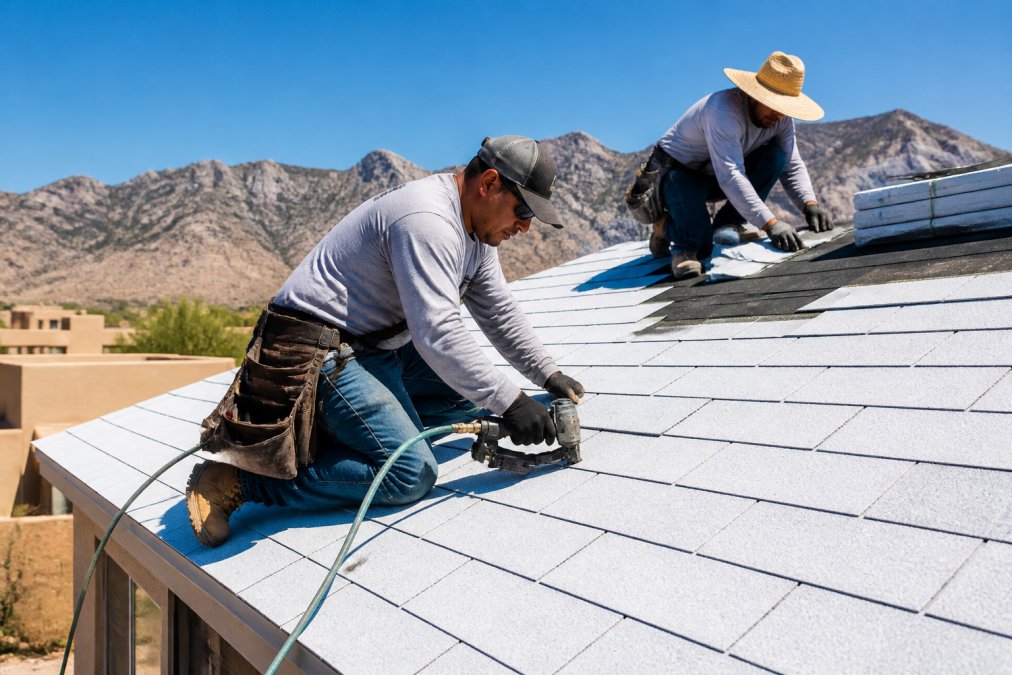
Reflective Shingles, Tile, and TPO Compared
Reflective asphalt shingles use specially engineered granules and lighter colors to bounce solar radiation away. They cost less than tile and install quickly, but they still rely on asphalt, so UV and dust will eventually wear them down.
Clay and concrete tile last decades and handle heat exceptionally well. The trade-off is weight, which may require structural reinforcement, and higher upfront cost.
TPO (thermoplastic polyolefin) is a single-ply membrane common on flat and low-slope commercial roofs. It reflects heat effectively and resists UV, making it a strong fit for El Paso commercial buildings with flat roofs.
| Material | Reflects Heat | Lifespan | Best For |
|---|---|---|---|
| Reflective shingles | Good | Moderate | Budget-conscious pitched roofs |
| Clay/concrete tile | Excellent | Long | Long-term residential durability |
| TPO membrane | Excellent | Long | Flat commercial roofs |
On a flat commercial roof, TPO’s seams are the weak point. Ask your installer how seams are heat-welded, because a poor weld fails long before the membrane itself does.
How to Reduce Home Cooling Costs in El Paso
The most effective way to reduce home cooling costs in El Paso is to attack heat gain from two directions at once: reflect it at the roof surface and block it at the attic. A reflective roof slows how much heat enters; insulation and ventilation stop what does get in from reaching your living space.
Start with the attic. Adding insulation to the recommended level for the region slows heat transfer into the home. Then address ventilation, because a hot, sealed attic traps heat that radiates down through the ceiling. Ridge vents, soffit vents, and, where appropriate, solar-powered attic fans keep air moving and flush hot air out.
- Seal gaps around recessed lights, vents, and the attic hatch to stop air leaks
- Verify insulation depth meets current U.S. Department of Energy recommendations for the region
- Keep intake and exhaust vents clear so air actually circulates
- Choose a reflective roofing surface to reduce the heat load from the start
Together, these steps cut the amount of heat your air conditioner has to remove.
Insulation without ventilation traps heat; ventilation without insulation lets it back in. Do both, or you’re paying for half a solution.
Energy Efficient Roof Insulation Pricing 2026: What Drives the Number
Energy efficient roof insulation pricing in 2026 depends on R-value, material type, attic square footage, and whether the job requires removing old material first. There is no single number that fits every home, and any contractor quoting one without seeing your attic is guessing.
R-value measures how well insulation resists heat flow; higher R-values mean better performance. The U.S. Department of Energy publishes recommended R-values by climate zone, and El Paso’s zone calls for a meaningful amount. Material choice matters too: blown-in insulation fills irregular spaces well, while rigid foam boards offer higher R-value per inch.
Access and prep drive cost as much as the material. A cramped attic with limited access, existing insulation that must be removed, or added ventilation work all raise the total. For a current figure specific to your home, request an on-site assessment rather than relying on a phone estimate.
Rebates and Utility Programs for El Paso Homeowners
Utility and efficiency programs can offset part of the cost of an energy efficient roof or insulation upgrade, but the available amounts change and vary by provider. Rather than quoting a figure that may be outdated, the right move is to check current offerings directly.
Start with your electricity provider and confirm whether they run residential efficiency rebates for insulation or reflective roofing. Then check federal resources through the U.S. Department of Energy homeowner efficiency guidance, which outlines efficiency improvements and available incentives. The ENERGY STAR program is another reliable starting point for verifying product ratings before you buy.
- Confirm your provider’s current rebate list before signing a contract
- Keep receipts and product documentation; most programs require proof of purchase
- Ask your contractor whether they handle rebate paperwork or leave it to you
Programs and amounts shift year to year, so verify before you commit.
What to Ignore When Shopping for an Energy Efficient Roof
Ignore marketing labels that promise savings without a solar reflectance rating to back them up. “Cool roof” and “energy-saving” are thrown around loosely, and without a measured reflectance value, you’re buying a color, not a performance spec.
Also ignore any quote built entirely over the phone. Insulation and roofing performance depend on your attic, your existing layers, and your ventilation, none of which a phone call can assess. A contractor who won’t inspect first is selling a number, not a solution.
Finally, ignore the temptation to chase the cheapest line item. In a desert climate, a bargain roof that fails early or a thin layer of insulation that misses the recommended R-value costs more over its life than doing it right once. Match the material to the climate, verify the ratings, and let the numbers guide the decision.
El Paso’s heat is unforgiving, and a roof that wasn’t chosen for this climate will quietly drain your budget every summer.
Frequently Asked Questions
How does a cool roof help reduce energy bills in El Paso?
A cool roof reflects more sunlight and absorbs less heat than a standard dark roof, so the attic stays cooler and your air conditioner runs less. In El Paso’s long cooling season, that reduced heat gain translates directly into lower monthly electric bills. Pairing a reflective roof with proper attic insulation and ventilation gives the biggest drop in cooling demand, since each part of the system supports the others.
What are the best roofing materials for desert climates?
Clay tile, concrete tile, and reflective asphalt shingles all handle intense sun and heat well. For flat commercial roofs, TPO membrane holds up in high-heat desert environments and resists UV breakdown. The best roofing materials for desert climates share three traits: high solar reflectance, resistance to thermal cycling, and the ability to shed dust without trapping it. Your roof’s pitch and structure decide which options fit your home.
Does El Paso Electric offer rebates for energy-efficient roofing?
Utility rebate programs change from year to year, so check El Paso Electric’s current offerings directly before you budget a project. Some programs cover attic insulation or reflective roof coatings rather than full roof replacement. A licensed contractor can tell you which upgrades qualify and help you document the work for a rebate application. Ask for the program details in writing before signing anything.
How long does an energy-efficient roof last in West Texas?
A well-installed energy-efficient roof in West Texas typically outlasts a standard dark shingle roof because reflective materials run cooler and expand and contract less. Tile systems can last several decades with routine maintenance, while reflective shingles generally fall in the 20-to-30-year range. Dust buildup and monsoon-season hail are the main threats, so schedule an inspection after major storms to catch damage early.