

- BY adminMak
- POSTED IN Blog
- WITH 0 COMMENTS
- PERMALINK
- STANDARD POST TYPE
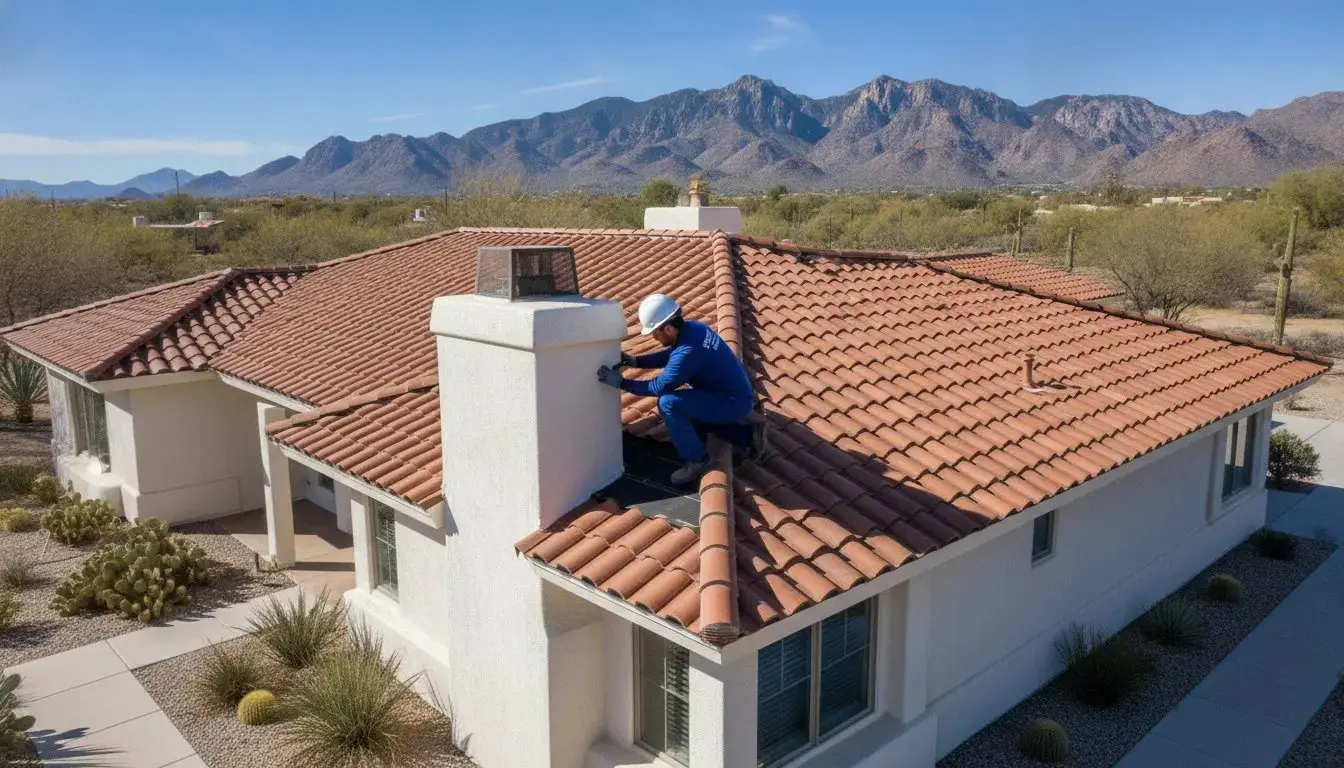
Quick Summary
A commercial roof inspection is a close look at the roofing system on a business, office, retail, warehouse or multifamily building. A trained technician checks the surface, membrane, flashing, drains and penetrations to find wear, leaks and damage early. Regular inspections catch small problems before they spread into insulation and decking.
- Inspections check the roof surface, membrane, flashing, seams, drains and penetrations.
- Flashing failures are one of the most common causes of leaks on commercial roofs.
- Water lingering on the roof for 48 hours or more can damage the membrane.
- A common recommendation is at least two inspections a year, in spring and fall.
- Schedule an extra inspection after severe storms, heavy ponding or a reported leak.
Table of Contents
- What Is a Commercial Roof Inspection and Why It Matters
- What a Commercial Roof Inspection Covers
- Step-by-Step: How the Commercial Roof Inspection Process Works
- Commercial Roof Inspection Checklist for Property Managers
- Commercial Roof Inspection Cost and What Affects the Price
- How Often to Inspect a Commercial Roof in El Paso’s Climate
- Reading Your Commercial Roof Inspection Report and Booking Your Next Step
- Frequently Asked Questions
What Is a Commercial Roof Inspection and Why It Matters
Last Updated: November 21, 2026
A commercial roof inspection is a close look at the roofing system on a business, office, retail, warehouse or multifamily building. A trained technician checks the roof surface, membrane, flashing, drains and rooftop penetrations to find wear, leaks and damage before they cause bigger problems.
Commercial roofs take a beating. They sit in full sun, absorb heavy rain and wind, and carry rooftop equipment. Most commercial roofs are low-slope or flat, which means water has to drain off the surface instead of running down a steep pitch. When drainage fails, water sits and slowly works its way into the building.
Problems on a commercial roof often start small and stay hidden. A loose seam, a cracked sealant bead or a clogged drain may not show up inside the building for months. By the time a stain appears on a ceiling tile, the damage has often spread into insulation and decking. A regular inspection can find these issues while repairs are still small.
Inspections matter for more than leaks. A good inspection report gives property managers and owners a clear record of the roof’s condition. That record helps with budgeting, planning repairs and keeping warranty requirements in place. Many roofing manufacturers require routine maintenance and documentation to keep warranty coverage valid.
Here is why the inspection is worth scheduling:
- It catches leaks and water entry points early
- It shows how much service life the roof has left
- It prioritizes repairs by urgency and cost
- It documents conditions for warranties, insurance and lenders
- It helps plan budgets and avoid surprise emergency bills
Owners who skip inspections often pay more later.
What a Commercial Roof Inspection Covers
A thorough inspection looks at the whole roofing system, not just the visible surface. The technician walks the roof, checks each component and records what they find. The scope usually includes the roof covering, the edges, the drainage and the rooftop equipment. It often continues inside the building to look for moisture that the roof may be causing.
Inspectors typically document several main areas:
- The roof surface and membrane condition
- Flashing, seams and edge details
- Drains, gutters and scuppers
- Roof penetrations and rooftop equipment
- Ponding water and drainage patterns
- Interior signs of leaks or moisture
Each area reveals different types of problems. Surface wear points to aging material. Failed flashing points to leak paths at walls and curbs. Clogged drains point to maintenance gaps. Taking all of these into account gives a complete picture.
Roof Surface, Membrane, and Flashing
The roof membrane is the main waterproof layer, and it takes the most punishment from sun and weather. Inspectors look for blistering, cracking, splitting, punctures and granule loss on shingle or cap sheet systems. They also check for rust or corrosion on metal components.
Flashing is the material that seals the roof where it meets walls, curbs, pipes and parapets. Flashing failures are one of the most common causes of leaks. A cracked sealant, a lifted edge or a gap at a corner can let water travel behind the membrane.
Inspectors also check seams, the joints where membrane sheets overlap. Open or lifting seams let water in and should be repaired quickly. Photos and notes of each defect help the building owner track changes from one inspection to the next.
Drains, Gutters, Penetrations, and Ponding Water
Drains and gutters carry water off the roof. A drain blocked by debris can cause water to back up across the surface. Inspectors clear what they can, check that drains sit at the lowest points and look for cracks or damaged strainers.
Penetrations are anything that pierces the roof, such as vents, pipes, exhaust fans, HVAC units and antennas. Each penetration is a possible leak point. Inspectors check that curbs are sealed and that equipment is secured.
Ponding water is standing water that stays on the roof for more than a short time after rain. A small amount of ponding is common, but water that lingers for 48 hours or more can damage the membrane and speed up deterioration. Standing water also adds weight, which matters on older structures.
Step-by-Step: How the Commercial Roof Inspection Process Works
A commercial roof inspection follows a clear sequence. A good inspector works the same way every time, so results can be compared from year to year. Here is what the process usually looks like.
- Review the background. The inspector checks prior reports, warranty documents, roof age and any repair history.
- Walk the roof. The technician inspects the surface, seams, flashing, drains and penetrations on foot, following a set path.
- Check the interior. Ceilings, walls and areas below the roof are checked for stains, soft spots or musty odors.
- Document conditions. Photos, measurements and notes record each defect and its location.
- Test where needed. Some inspectors use moisture meters or infrared scans to find wet insulation that is not visible.
- Write the report. The findings are organized by priority, from urgent repairs to routine maintenance.
Access and safety matter throughout. Access and safety matter throughout, and property managers should coordinate timing with tenants and operations.
The inspection follows a set sequence, which keeps results comparable from one visit to the next.
| Step | What the inspector does | Note |
|---|---|---|
| Review the background | Checks prior reports, warranty documents, roof age and repair history | Before the visit |
| Walk the roof | Inspects surface, seams, flashing, drains and penetrations on a set path | On foot |
| Check the interior | Looks for stains, soft spots or musty odors below the roof | Ceilings, walls, areas below |
| Document conditions | Records photos, measurements and notes for each defect | Ties findings to locations |
| Test where needed | Uses moisture meters or infrared scans to find hidden wet insulation | Optional |
| Write the report | Organizes findings by priority, urgent repairs to routine maintenance | Final step |
Commercial Roof Inspection Checklist for Property Managers
Property managers can use a simple checklist to prepare for the inspection and review the report. Share this list with your inspector, and keep a copy in your records.
- Gather prior inspection reports and warranty documents
- Note roof age and any past leak locations
- Clear access routes, roof hatches and ladders
- Notify tenants about the visit and any roof access needs
- Confirm which rooftop equipment owners need to be contacted
- Ask the inspector to check drains and ponding areas
- Request photos and a prioritized repair list in the report
- Schedule follow-up repairs based on the urgency ranking
- Set the next inspection date in your maintenance calendar
Keeping these records in one place makes future inspections faster and gives you a clear history of the roof’s condition.
Commercial Roof Inspection Cost and What Affects the Price
Inspection pricing is not one-size-fits-all, and most commercial roofing contractors in the El Paso market quote it per building rather than per square foot. The final number is driven by how much roof there is, how hard it is to reach, and how much documentation the owner needs. Understanding those drivers lets a property manager budget realistically and compare quotes on equal terms instead of chasing the lowest number.
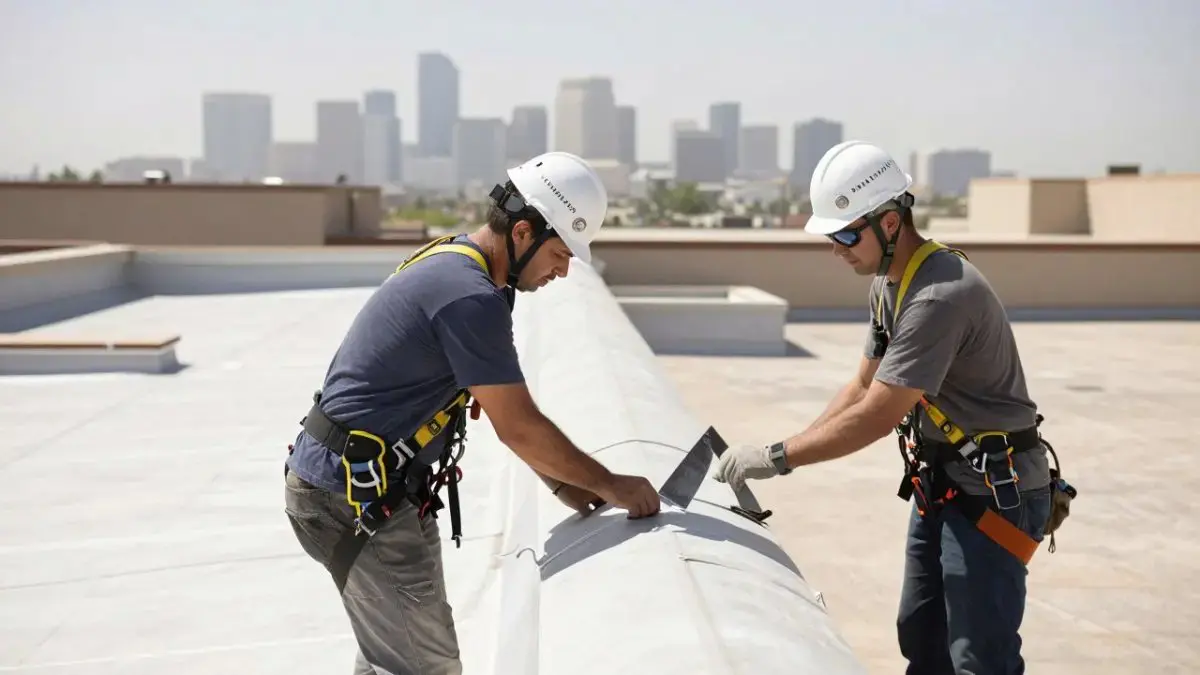
The factors that move the price most are:
- Roof size and complexity. A simple flat warehouse roof is faster to walk than a multi-level retail center with dozens of curbs, setbacks and parapet walls. More roof area and more changes in elevation mean more time on the roof.
- Roof system type. Single-ply membrane, modified bitumen, built-up roofing, metal and tile each require different inspection techniques and defect criteria. Systems with many seams or fasteners take longer to evaluate.
- Number of penetrations and rooftop units. Every vent, pipe, exhaust fan, HVAC curb and antenna is a potential leak point that has to be checked and photographed. A roof crowded with equipment takes longer than a clean deck.
- Access and safety. Roof hatches, ladders, interior stair access and fall-protection setup all affect labor time. Buildings where the inspector must coordinate tenant access or use a lift add cost.
- Scope depth. A visual walk-through costs less than an inspection that includes interior review, moisture metering or infrared scanning to find hidden wet insulation. Reports prepared for lenders, insurers or warranty claims also take more time to assemble.
- Report deliverables. A photo log with a prioritized repair list is more work than a brief summary email, and the documentation is often what owners actually use after the visit.
Pricing depends on roof size, complexity, access, and the scope of documentation requested. For current prices or a quote, visit the MAK Roofing & Construction website. Owners comparing coverage can also review a commercial roofing warranty guide that explains maintenance rules.
A better way to think about cost is against the downside. Regular documented inspections can support manufacturer warranty compliance. For a quote scoped to your specific building, visit the MAK Roofing & Construction website.
How Often to Inspect a Commercial Roof in El Paso’s Climate
A common recommendation in roofing is at least twice a year, typically in spring and fall. Spring catches damage from winter weather and freeze-thaw cycles, and fall shows how the roof held up through the summer.
El Paso’s climate makes that baseline more important than it is in milder markets. The region sees long stretches of intense sun and high ultraviolet exposure, which dries out and cracks membrane and sealant over time.
Beyond the calendar, schedule an inspection after any of these events:
- A severe storm, hail event or high-wind day
- Heavy rain that leaves visible ponding for more than 48 hours
- A leak reported by a tenant, staff member or alarm sensor
- Major rooftop equipment work, such as an HVAC replacement or new antenna
- A pending sale, refinance, lease commencement or insurance renewal
- A warranty milestone that requires documented maintenance
Event-triggered inspections matter because storm and wind damage is often invisible from the ground. A lifted seam or a punctured membrane may not leak immediately, but it will once the next storm pushes water against it. Catching it in the days after an event keeps a small repair from becoming an interior water loss.
Transaction timing is its own category. Before buying, leasing or refinancing a commercial building, an inspection gives the parties a documented condition baseline and a repair list to negotiate against. After a storm, an inspection report supports an insurance claim with dated photos and notes.
Waiting until a ceiling stain appears can mean water has already traveled through insulation and decking. Set the next inspection date in your maintenance calendar before the current one ends, and add event-triggered checks when the weather or a transaction demands it.
Reading Your Commercial Roof Inspection Report and Booking Your Next Step
A good report should be easy to act on. Start by reading the summary and the priority list. Items marked urgent should be addressed first, especially any active leaks or failed flashing near openings. Routine maintenance items can be scheduled into your yearly budget.
Review the photos along with the written notes. Photos show exactly where each defect sits and how severe it looks. If something is unclear, ask the inspector to explain it. A knowledgeable contractor will walk you through the findings and help you decide what to fix now and what to monitor.
Once you have the report, take these steps:
- Sort findings into urgent, near-term and monitor-only groups
- Get written repair estimates for the urgent items
- Confirm any warranty requirements before work begins
- Keep the report on file for insurers, lenders and future inspections, and read whether commercial roof coating is worth the cost for minor surface wear.
- Book the next inspection date before the current one fades from memory
For a clear next step, request a video estimate or contact MAK Roofing & Construction to talk through your roof’s condition. Protecting a commercial roof starts with knowing its condition.
Want to know what your roof needs before problems spread? Get started with MAK Roofing & Construction and schedule a Video Estimate for a clear, honest look at your commercial roof.
Frequently Asked Questions
How much does a commercial roof inspection cost?
Cost depends on roof size, roof type, access requirements, the number of penetrations and drains, and whether an interior moisture scan is included. Because pricing varies by project, the most accurate figure comes from a written quote. Ask for a scope that lists exactly what is inspected, whether photo documentation is included, and how the inspection report will be delivered. Visit the MAK Roofing & Construction website to request a quote or schedule a video estimate.
How often should a commercial roof be inspected?
Many property managers schedule a professional commercial roof inspection once a year, and often in both spring and fall. Additional inspections are wise after severe weather, hail, or wind events, and before a property sale or refinancing. Roofs that already show ponding water, leaks, or flashing problems usually need more frequent checks until repairs are completed. Following a regular schedule makes it easier to spot small problems before they become costly interior damage.
What should a commercial roof inspection report include?
A useful commercial roof inspection report includes a summary of overall roof condition, photos of each defect with location references, notes on flashing, seams, drains, and penetrations, and observations from any interior moisture check. It should also prioritize repairs, separating urgent items from routine maintenance, and give recommendations for preventive maintenance. Clear documentation helps property managers budget, track changes over time, and coordinate repairs.
What can cause a commercial roof to fail an inspection?
Common causes include ponding water that lingers longer than expected, cracked or blistered membrane, open or lifting seams, damaged flashing at walls and penetrations, clogged or missing drains, and rust or corrosion on metal components. Interior staining or moisture also raises concerns. Addressing these items early, especially after storms, helps keep the roof in good standing and reduces the risk of water intrusion.
