

- BY
- POSTED IN Blog
- WITH 0 COMMENTS
- PERMALINK
- STANDARD POST TYPE
Table of Contents
- Cool Roof vs Traditional Roof: The Core Difference
- How Cool Roofs Perform in El Paso’s Climate
- Cool Roof vs Standard Roof Cost Comparison
- Reflective Shingles in El Paso: Material Options
- Cool Roof Energy Savings: What to Expect
- Cool Roof Installation in El Paso: Process and Timeline
- Which Roof Type Fits Your Home
- Conclusion
- Frequently Asked Questions
Last Updated: October 10, 2026
Cool Roof vs Traditional Roof: The Core Difference
A cool roof vs traditional roof decision comes down to one fundamental factor: how much solar heat your roofing material reflects versus absorbs. Cool roofs use light-colored or reflective materials that bounce sunlight away from your home, while traditional dark roofs absorb that heat. In El Paso’s intense desert climate, this difference translates directly into energy costs and indoor comfort.
The distinction matters because El Paso experiences extreme summer temperatures that regularly exceed 95 degrees. When a traditional dark roof absorbs solar radiation, it can reach surface temperatures of 150-180 degrees on a hot day. That heat radiates downward into your attic and living spaces, forcing air conditioning systems to work harder. A cool roof, by contrast, reflects much of that energy back into the atmosphere, keeping surface temperatures 30-50 degrees cooler.
At MAK Roofing & Construction, we’ve helped El Paso homeowners understand this choice. The decision isn’t just about immediate comfort, it affects your utility bills, roof lifespan, and how your home performs year-round. Below, we’ll show you exactly how these two approaches compare in El Paso’s specific environment and which one makes sense for your situation.
How Cool Roofs Perform in El Paso’s Climate
El Paso presents unique roofing challenges that make cool roof technology particularly effective. The region receives over 300 days of sunshine annually, with intense UV exposure and low humidity. These conditions mean solar heat gain dominates your cooling costs during nine months of the year.
Cool roofs excel in this environment because they reduce the temperature differential between your roof and the outside air. When your roof surface stays cooler, less heat transfers into your home’s interior. This creates a cascading benefit: your air conditioning doesn’t need to work as hard, which means lower energy consumption and reduced strain on equipment.
Traditional roofs in El Paso tend to deteriorate faster due to extreme heat cycling. The constant expansion and contraction from 150+ degree days stresses roofing materials, leading to premature cracking and deterioration. Cool roofs experience less thermal stress because they maintain lower surface temperatures, which can extend roof lifespan by several years in desert climates.
One practical consideration: cool roofs perform best when your home has adequate attic ventilation. If your attic lacks proper airflow, some of the heat-reflection benefit diminishes because trapped hot air still radiates downward. This is where professional installation matters, contractors who understand El Paso’s climate design systems that work together rather than in isolation.
Cool Roof vs Standard Roof Cost Comparison
The upfront cost difference between a cool roof and a traditional roof varies based on materials and installation complexity. Cool roof materials typically cost more initially because they require specialized reflective coatings or lighter-colored shingles manufactured to specific standards.
However, the cost comparison must include energy savings over time. Homeowners in El Paso using cool roofs typically see reduced cooling costs during peak summer months. The exact savings depend on your home’s size, current insulation, air conditioning efficiency, and how much time you spend cooling versus letting the home reach ambient temperature.
For a fair cost comparison, consider both the installation investment and the operational savings across 10-15 years. Many homeowners find that energy bill reductions can help offset the higher initial material cost, especially if they’re replacing an aging traditional roof anyway.
Financing options can make either choice more accessible. At MAK Roofing & Construction, we offer bank financing for roofing projects, which allows you to spread the cost over time while you’re already seeing energy savings.
| Roof Type | Initial Material Cost | Typical Lifespan in El Paso | Primary Benefit |
|---|---|---|---|
| Cool Roof | Higher | 20-25 years | Lower energy bills |
| Traditional Roof | Lower | 15-20 years | Familiar appearance |
Reflective Shingles in El Paso: Material Options
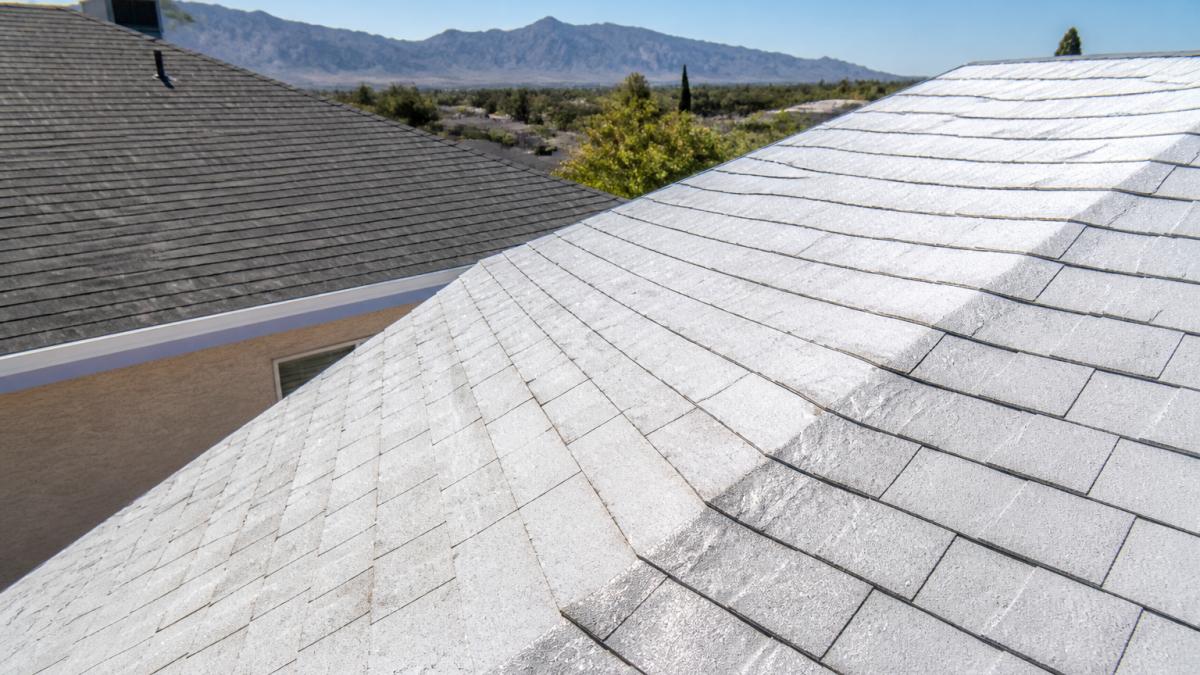
Reflective shingles are the most common cool roof material for residential homes in El Paso. These shingles use light-colored granules or specialized coatings that reflect solar radiation rather than absorbing it. Common options include light gray, white, tan, and silver finishes designed specifically for desert climates.
Metal roofing represents another reflective option gaining popularity in El Paso. Standing-seam metal roofs with light finishes reflect significant solar heat while offering excellent durability in the region’s dry climate. Metal reflects heat more effectively than asphalt shingles, though it comes at a higher initial cost.
Tile roofing, common in El Paso’s Southwestern architecture, can be manufactured in light colors that provide cool roof benefits while maintaining the aesthetic character homeowners want. Light-colored clay or concrete tiles reflect heat effectively and age gracefully in the desert sun.
The key specification to look for is Solar Reflectance (SR) rating. Materials with higher SR values reflect more sunlight. Cool roof products typically have higher SR ratings compared to traditional dark roofing. This technical difference translates to real performance differences in El Paso’s intense sun.
Cool Roof Energy Savings: What to Expect
Energy savings from cool roofs vary based on several factors specific to your home and usage patterns. The amount of cooling you use, your current roof condition, attic insulation, and air conditioning efficiency all influence potential savings.
Homes that run air conditioning continuously during summer months typically see more dramatic savings than homes that use natural cooling strategies. In El Paso, where nighttime temperatures drop significantly, some homeowners can cool their homes during evening hours and maintain comfort through the day with minimal air conditioning use. For these households, cool roof benefits combine with smart usage patterns.
The timing of energy savings matters in El Paso’s climate. Peak cooling loads occur during mid-afternoon when outdoor temperatures peak and solar gain is highest. Cool roofs reduce cooling demand precisely when the electrical grid experiences peak demand, which can also qualify you for utility rebates or time-of-use rate advantages.
Professional installation ensures your cool roof system performs as designed. Improper ventilation, air sealing gaps, or installation errors can reduce the effectiveness of even premium cool roof materials. This is why working with experienced contractors who understand El Paso’s specific climate challenges makes a measurable difference.
Cool Roof Installation in El Paso: Process and Timeline
Installing a cool roof follows standard roofing procedures with attention to materials and specifications. The process begins with a thorough roof inspection to assess current conditions, structural integrity, and ventilation adequacy.
Preparation involves removing existing roofing materials if you’re replacing an older roof, or applying cool roof coatings over existing material if you’re upgrading. The substrate must be clean, dry, and properly prepared to ensure reflective coatings or shingles perform optimally.
Installation timeline depends on roof size and complexity. Weather in El Paso is generally favorable for roofing work, though extreme heat can affect some installation procedures. Professional crews schedule work during cooler morning hours when possible.
After installation, proper ventilation setup becomes critical. Your attic needs adequate intake and exhaust ventilation to allow hot air to escape rather than accumulating. This ventilation, combined with your cool roof surface, creates the complete system that delivers energy savings.
At MAK Roofing & Construction, we manage every aspect of the installation process from start to finish. Our team handles permits, inspections, and ensures your new cool roof system integrates properly with your home’s existing structure. We provide comprehensive project management so you’re not juggling multiple contractors or worrying about timelines.
Which Roof Type Fits Your Home
The right choice between a cool roof and traditional roof depends on your priorities and circumstances. If energy efficiency is your primary concern and you plan to stay in your home for 10+ years, a cool roof typically delivers the best long-term value in El Paso’s climate.
Consider a traditional roof if you’re replacing a roof that still has several years of life remaining and budget is your primary constraint. If your home has excellent attic ventilation and you’re disciplined about using natural cooling strategies, the energy savings from a cool roof may be modest.
Architectural considerations matter too. Some El Paso neighborhoods have specific aesthetic preferences, and cool roof materials come in limited color options compared to traditional roofing. However, modern reflective materials now include earth tones and grays that blend well with Southwestern architecture.
Your roof’s age and condition should factor into the decision. If your current roof is failing and needs replacement anyway, upgrading to a cool roof makes financial sense because you’re already making the investment. If your roof is relatively new, the cost of upgrading to cool roof materials may not justify the switch until replacement becomes necessary.
A contractor experienced in El Paso homes can assess your specific situation, attic insulation, ventilation, air conditioning efficiency, and usage patterns, to help you understand potential energy savings. This data takes the guesswork out of the decision.
Conclusion
The choice between a cool roof vs traditional roof in El Paso comes down to balancing upfront costs against long-term energy savings and comfort. Cool roofs excel in El Paso’s desert climate by reflecting intense solar heat, reducing cooling costs and extending roof lifespan. Traditional roofs cost less initially but require more air conditioning work to maintain comfort during extreme heat.
For El Paso homeowners planning a roof replacement or upgrade, a cool roof typically delivers superior performance over 15-20 years. MAK Roofing & Construction specializes in custom roofing systems designed for El Paso’s specific climate challenges. Our team can evaluate your home’s current condition, calculate potential energy savings, and install a cool roof system with proper ventilation and professional craftsmanship. Contact MAK Roofing & Construction for a video estimate and discover how a cool roof can reduce your energy bills while improving your home’s durability and comfort.
Frequently Asked Questions
What is the difference between a cool roof and a traditional roof?
A cool roof uses reflective materials that bounce sunlight away, while a traditional roof absorbs heat. Cool roofs typically have a higher Solar Reflectance (SR) value compared to dark traditional roofs. This difference directly affects attic temperature and cooling costs, especially in hot climates like El Paso.
Do reflective shingles lower energy bills in El Paso?
Yes. Reflective shingles reduce the heat absorbed by your roof, which lowers attic temperatures and reduces air conditioning workload. In a hot, sunny climate like El Paso, homeowners typically see measurable reductions in cooling costs during peak summer months. The actual savings depend on your current roof color, insulation levels, and cooling system efficiency.
Does a cool roof cost more than a traditional roof?
Cool roofs generally have a higher upfront cost because reflective materials and coatings cost more than standard shingles. However, the energy savings over time can offset the initial investment. Your actual pricing depends on roof size, material choice, and installation complexity. Contact a local contractor for a detailed quote comparing both options for your specific home.
Can you install a cool roof over an existing roof?
In some cases, yes. Cool roof coatings can be applied over existing roofs if the surface is in good condition. However, if your current roof has damage, leaks, or structural issues, a full replacement is recommended. A professional inspection determines whether a retrofit coating or full replacement makes sense for your home.